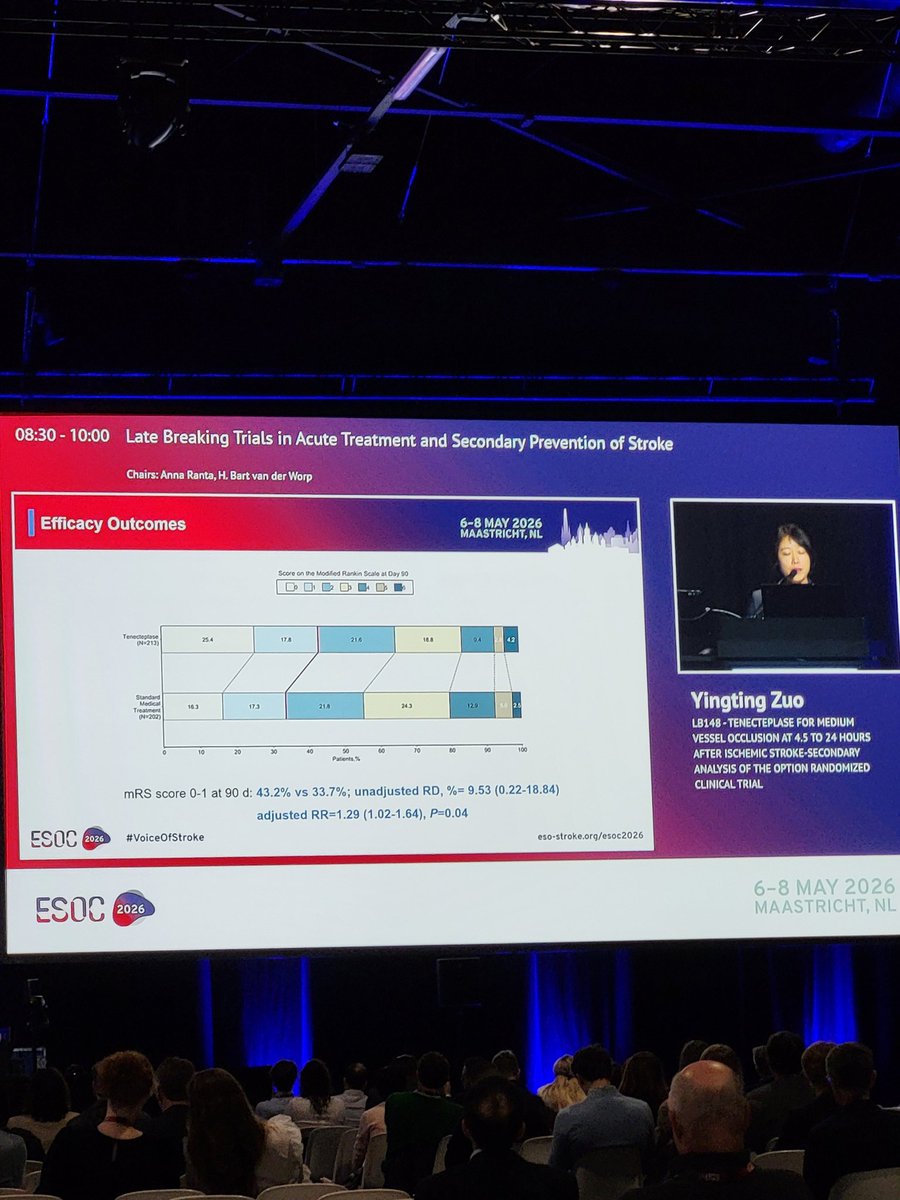
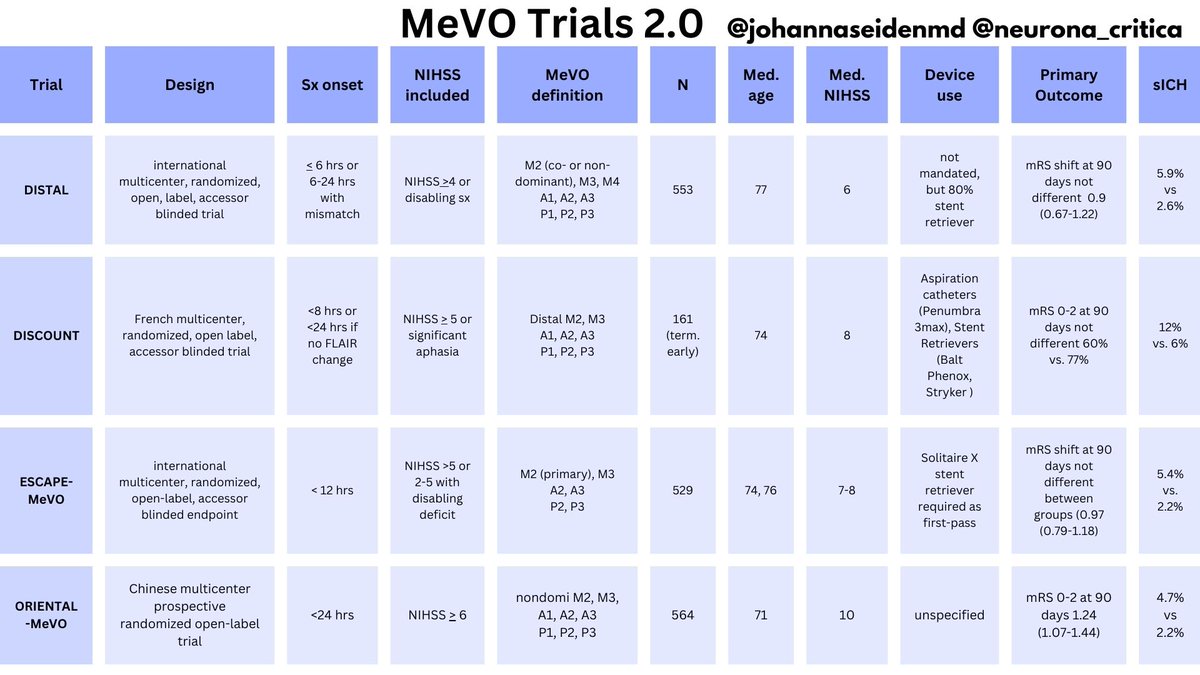
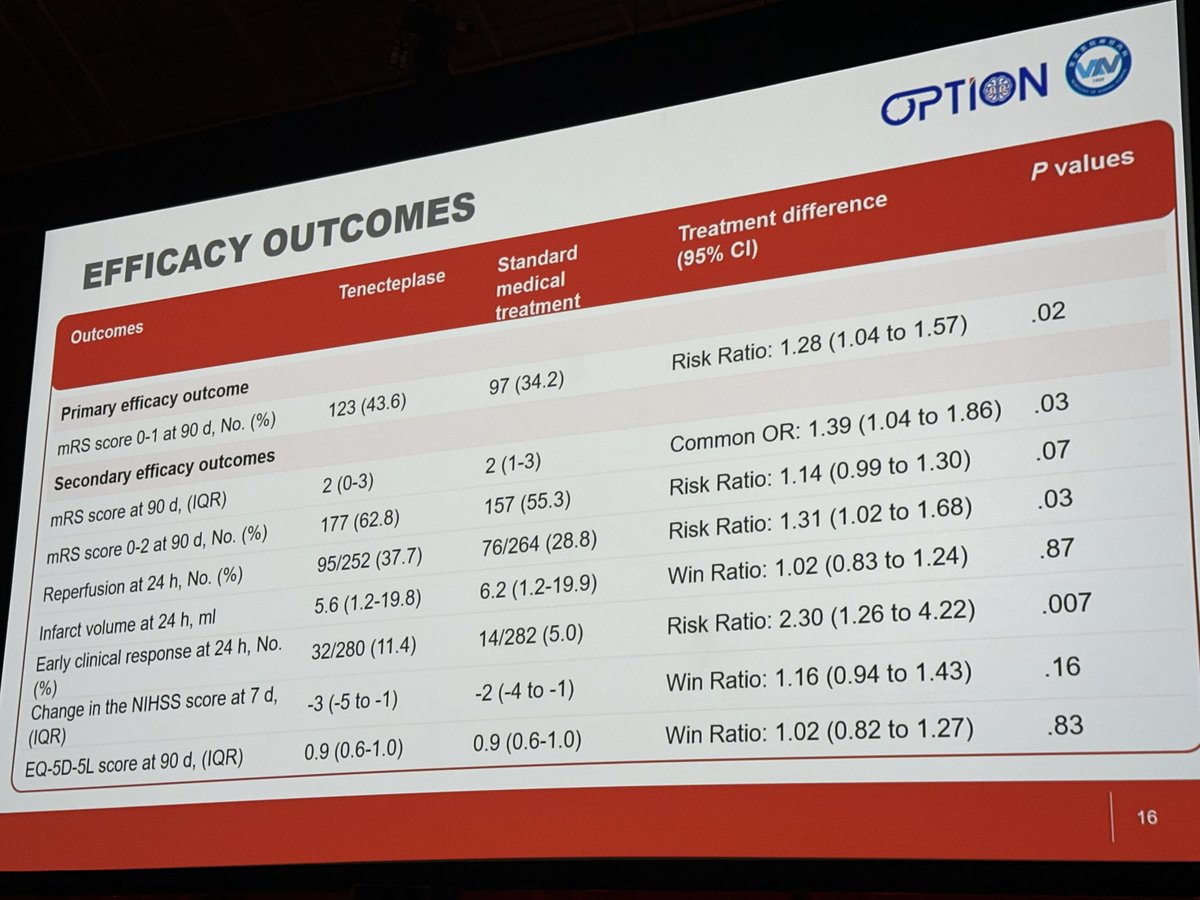
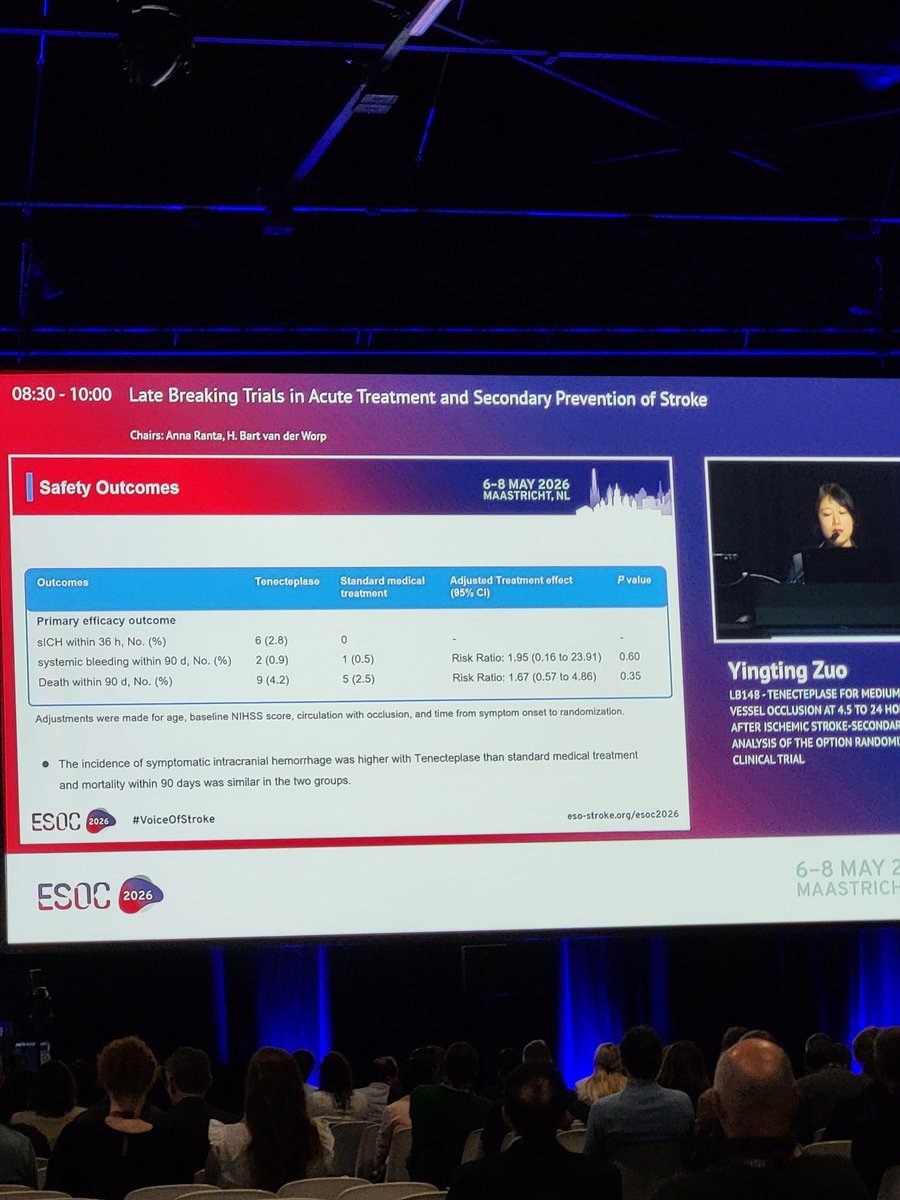
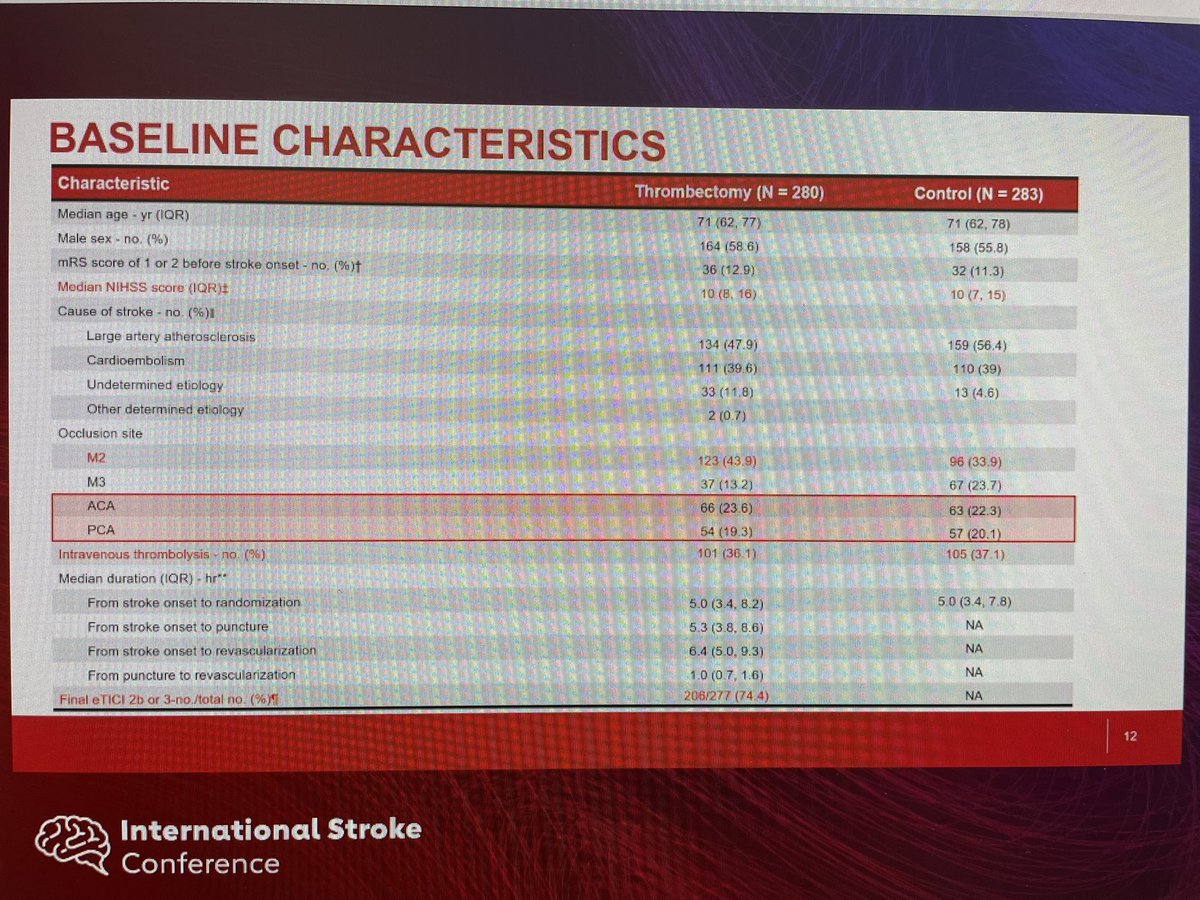
OPTION trial evaluated IV TNK for patients with MDVOs and salvageable tissue in the 4.5–24h window.
mRS 0-1 at 90 days: 43.2% vs 33.7% (p=0.04%)
sICH: 2.8% vs 0%
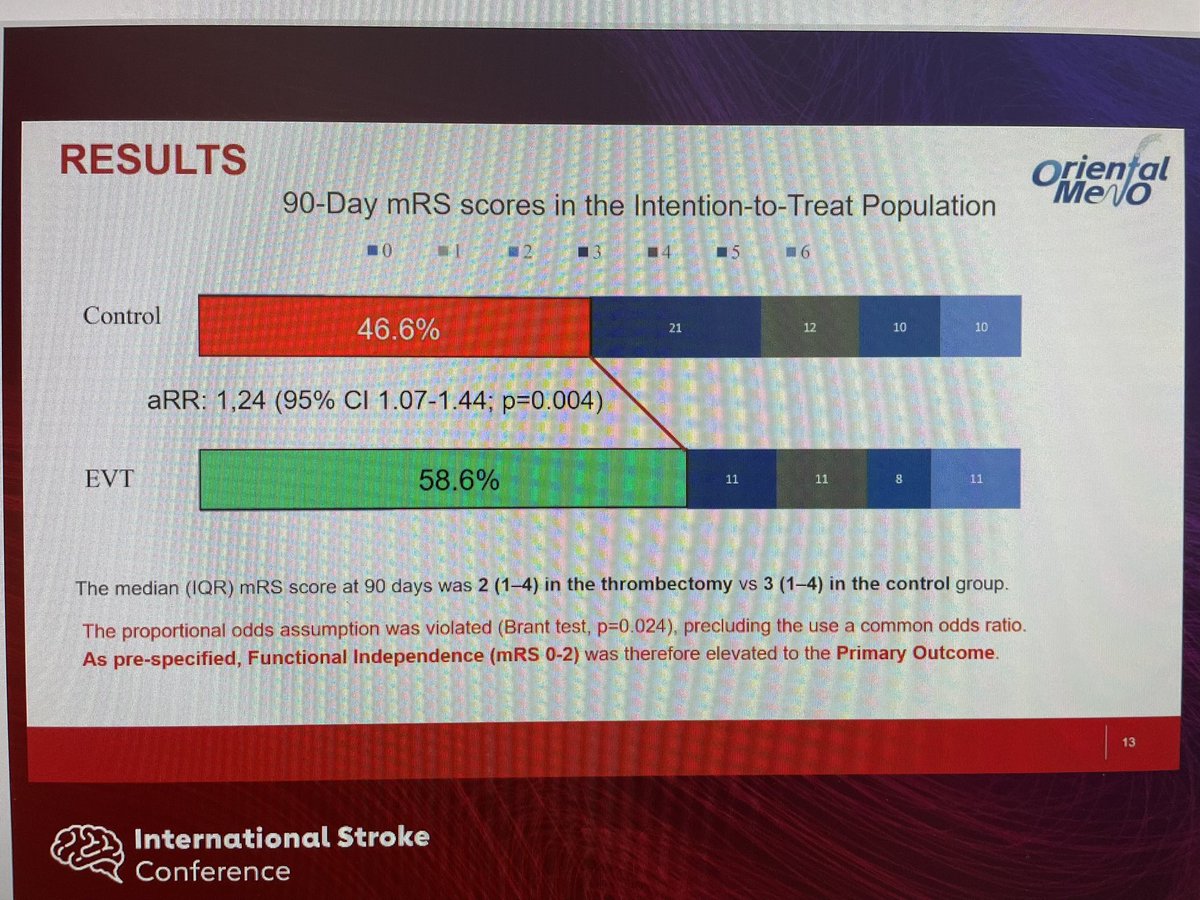
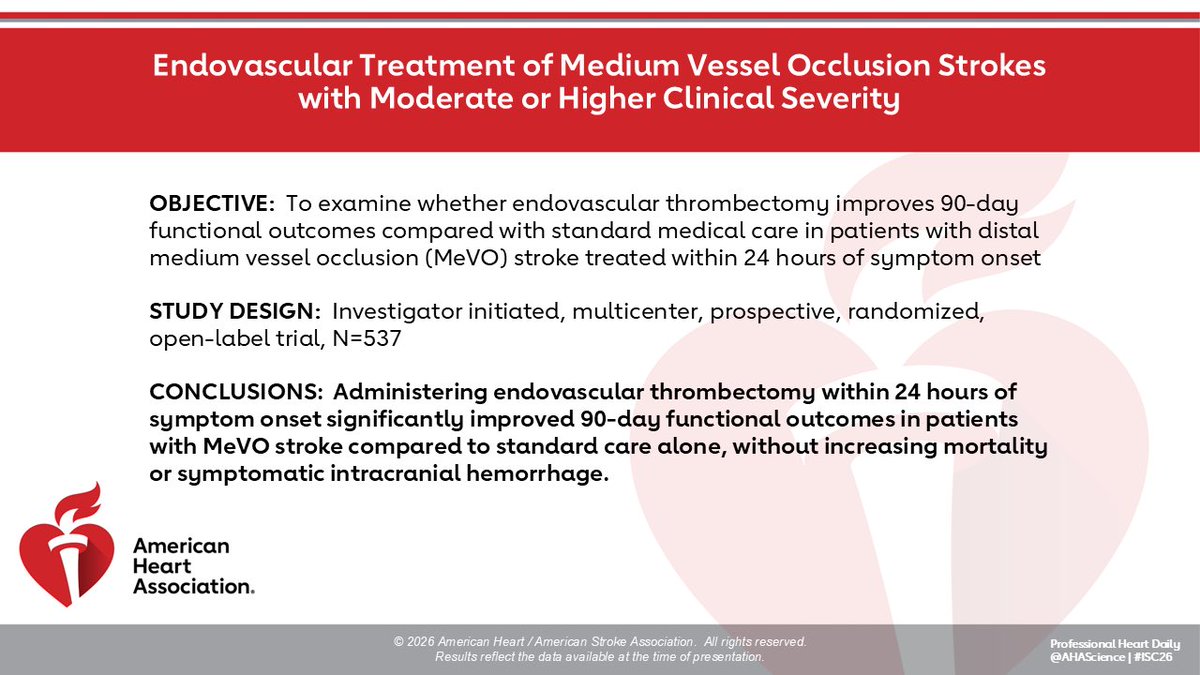
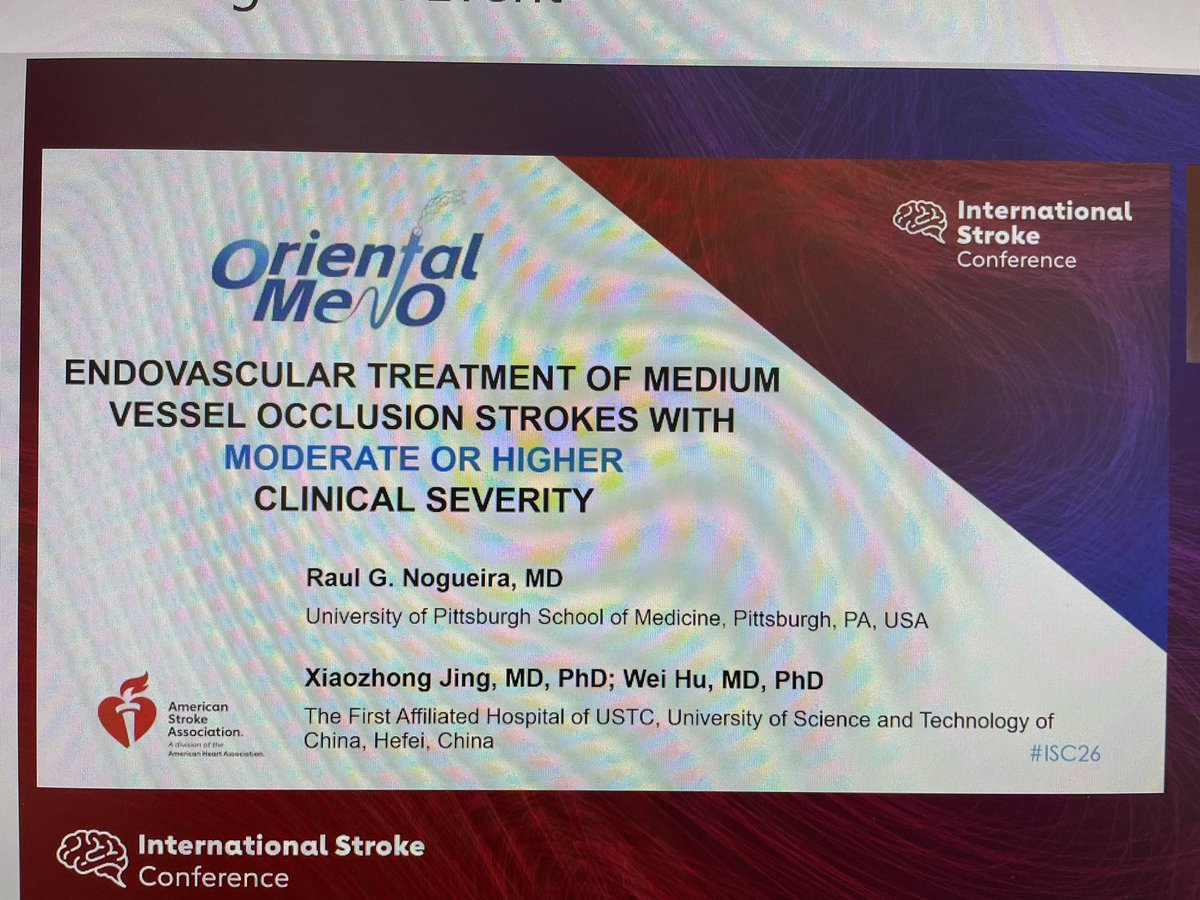
Expanding the treatment window for MDVOs stroke!
#ESOC2026@ESOstroke
🚨EXCOA-CVT results
Extending oral anticoagulation from 3–6 months to 12 months did not significantly reduce recurrent venous thromboembolism after cerebral venous thrombosis (CVT) in the EXCOA-CVT study.
@ESOstroke#Stroke #Neuroimaging#ESOC2026
Segmental differences in LAA attenuation on cardiac CT could be a valuable biomarker for pts with AF. Also appears to be very infrequent in ESUS patients. #ESOC2026
Faster Thrombolysis, Sharper Minds: Early Alteplase or Tenecteplase Linked to Better Poststroke Cognition
In this #BloggingStroke post, Anel Karisik discusses #Stroke article by Sujanthan et al. https://t.co/VRnsNUJy6L
On behalf of the large core trials principal investigators, immensely proud and honored to present primary results of the ATLAS IPD meta-analysis @ESOstroke with simultaneous publication in
@TheLancet -https://t.co/uY3DlB6KPJ
EVT not only improved outcomes compared to medical care, but functional independence and independent ambulation were also achieved in a meaningful proportion of patients. Additionally, EVT was life-saving, as one of the few reperfusion therapies to achieve it. With the exception of patients with very large core (volume ≥150 ml) in the late time window, where evidence is limited because of wide confidence intervals but benefit could not be excluded, EVT demonstrated consistent benefit regardless of ASPECTS and ischaemic core strata.
Our deepest gratitude to the patients, their families, and all investigators and coordinators at the trial sites. A mammoth collective effort over 3 years from 6 trials with practice changing results that improve care for 20% LVOs! #stroke #EVT #largecore #NoLVOleftbehind @XiaochuanHuo@VCostalat@oozaidat@VYogendrakumar@deeppujara@dliebesk@ARazzakMD@NguyenThanhMD@samialkasab@AmeerEHassan@Michael3Abraham@FelixSun1230@HiroshiYamagam2@SunilAShethMD@Fie0815@RaulNogueiraMD@rgrandhi@PascalJabbourMD@shazamhussain@dr_mchen@mihill68@lapergue6@TudorGJovin@AlbertJYoo
#STROKE: Simultaneous publication at #ESOC2026 🔴🔵: In a multicenter study, core blood-brain disruption correlated with clinical/imaging variables and was independently associated with poor functional outcome at 3 months. https://t.co/Rh8cgAcS43
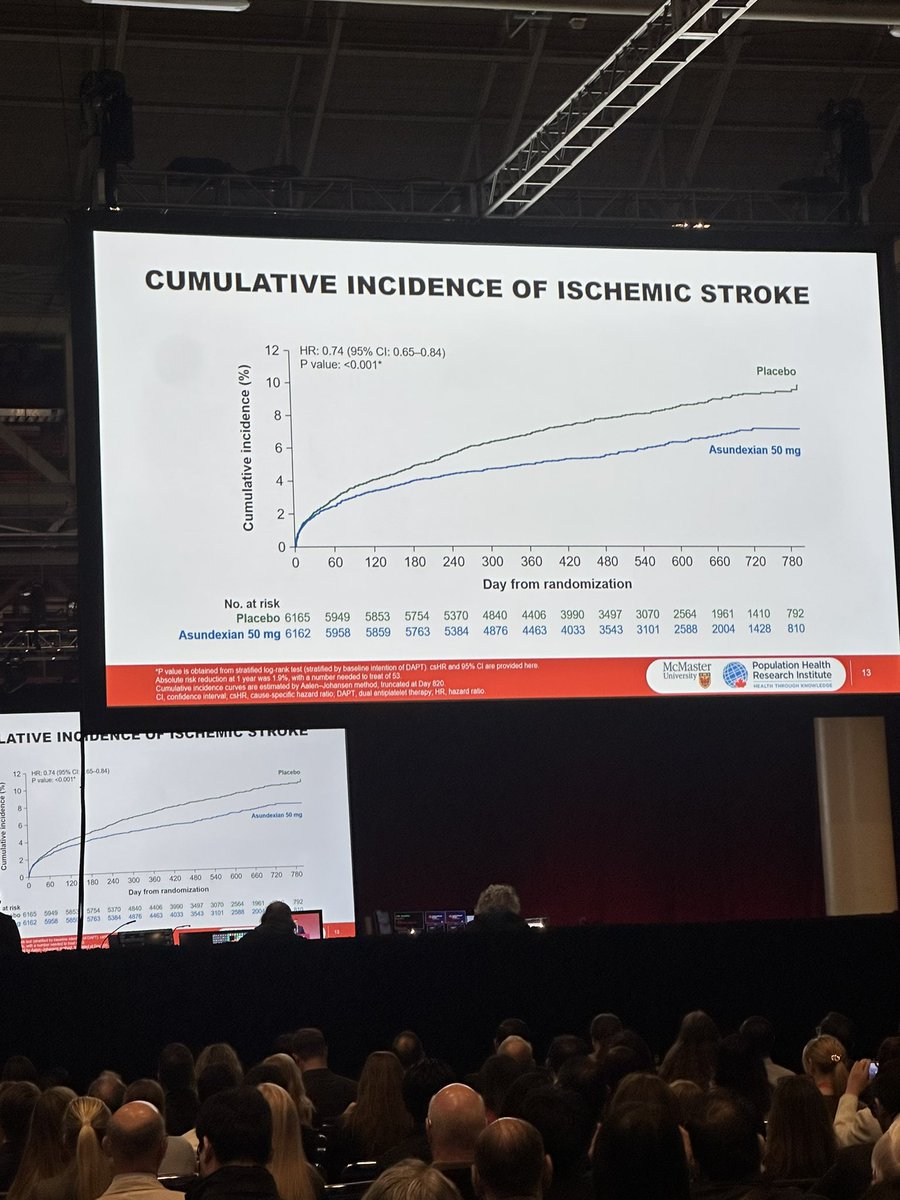
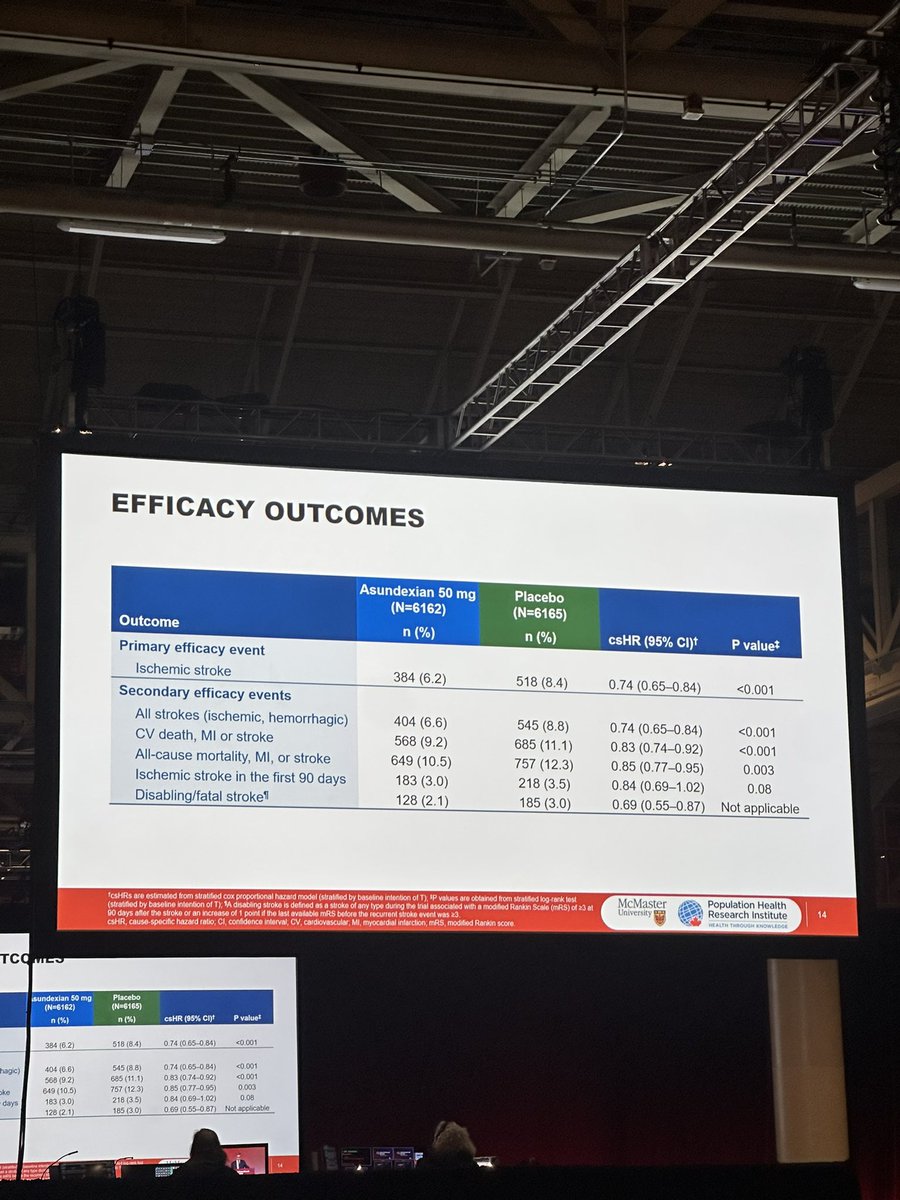
In OCEANIC STROKE, pts with stroke during the trial had lower likelihood of having NIHSS of 8 or higher with asundexian treatment #ESOC2026 @AANmember
🧵1/6 Exciting results from the #TECNO trial presented at @ESOstroke in Maastricht 🇳🇱
Despite successful thrombectomy, up to ~40% of patients have incomplete reperfusion (TICI <3) and worse outcomes.
Can administering intra-arterial thrombolysis after EVT help❓️
#ESOC2026
#STROKE: Simultaneous publication at #ESOC2026 🔴🔵: In RASUNOA-Prime prospective multicentric study, atherosclerosis represents a frequent comorbidity in patients with breakthrough strokes, which may contribute to their high risk of recurrence. https://t.co/Segn79VWJ4
HOPE trial reports improved outcome with post EVT SBP management tailored to reperfusion status. Needs to be reconciled with earlier negative trial results with BP lowering following EVT #ESOC2026 @svinsociety
#STROKE: Simultaneous publication at #ESOC2026 🔴🔵: Unsuccessful recanalization occurs in ~30% of all EVT cases, and it remains highly challenging to predict which patients will experience it. EVT should still be offered to all eligible patients. https://t.co/yH9in3OjOI
How low can you go??
All the hype nowadays is about high field MRI, but what about low field??
Read on for this month’s @the_AJNR for what you need to know about what may be the next biggest thing in MRI!
https://t.co/zBiePKlfFo
The growing strength is for larger & larger field strengths for higher & higher resolution
So why would we go backwards to lower field strength?
There are advantages.
(1) More flexbility
Can be put in non-traditional settings (clinics) & moved to the bedside (POC MRI)
(2) Less susceptibility artifact
Lower field strengths may make the canal MORE visible in patients w/hardware.
But how does it perform?
--Good for detecting large abnormalities, but may miss smaller findings like tiny infarcts
--But deep learning AI algorithms are improving image quality to mitigate missing findings
But how good does the quality HAVE to be?
Yes, we may love amazing 3T images, but often, we don’t need that degree of image quality or detail to make the correct diagnosis.
It’s like food.
Would you like a Michelin starred meal? Yes.
Do you really need it? No.
Regular food is good enough to suffice.
Low field strengths may be enough
Hopefully now you know that good things can often come in small field strengths!!
But this only scratches the surface!
Follow check out the article for yourself:
https
A breakthrough in secondary prevention. Asundexian reduced ischemic stroke risk without increased bleeding. Congratulations to Mike Sharma and @Ash_Shoamanesh and the OCEANIC-STROKE team. Well done 👏 #ISC26