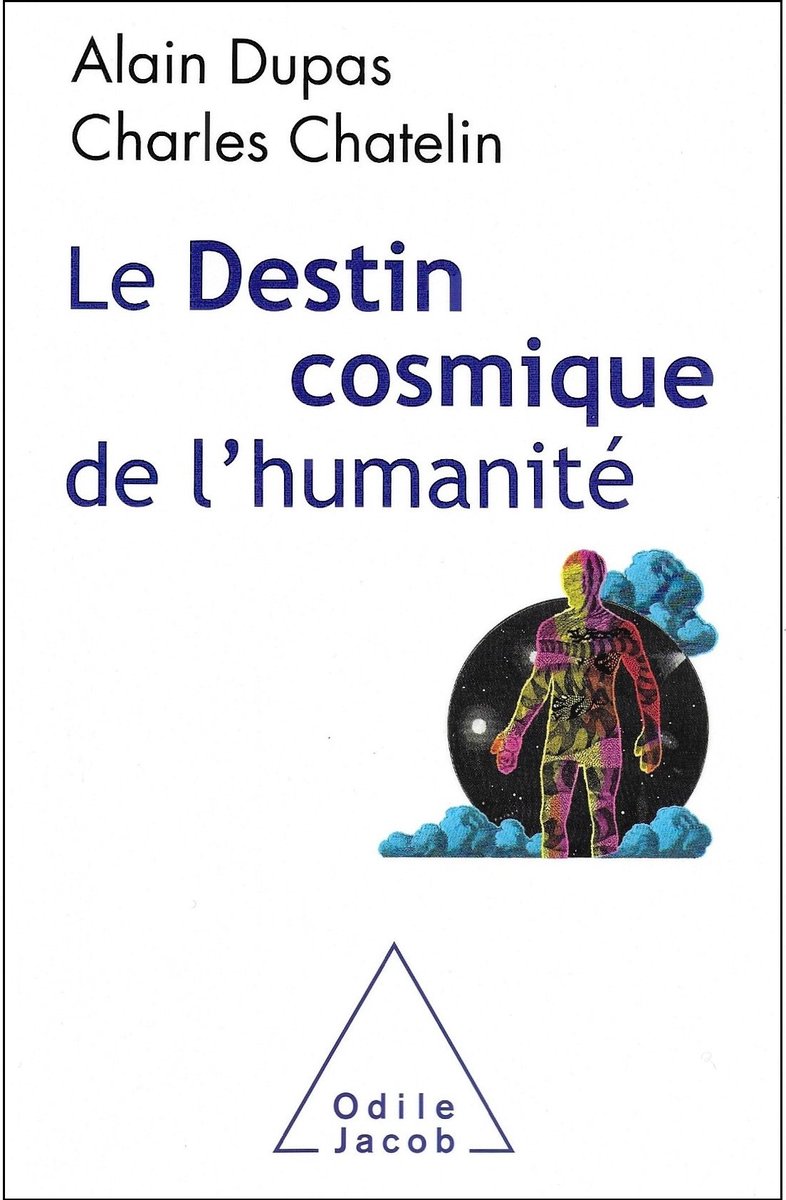
Il est paru ! Piquez une tête dans les étoiles : passez chez votre libraire ou commandez-le sur Internet (aussi disponible en e-book).
Bonne lecture à tous.
USS Enterprise CVN-65 in 2019 being inactivated at Newport News in 2019. Unlike later carriers (which use two), the Enterprise was built with eight A2W nuclear reactors originally designed for submarines. This made refueling and maintaining the obsolete technology incredibly
Deal To End Hostilities Between U.S. And Iran Faces Most Serious Challenge Yet
Both Trump and Iran declare the ceasefire is over in the wake of the latest flare-up in fighting.
https://t.co/j4fZs3pA7u
NASA's New Horizons probe has woken up in good health nearly 6 billion miles away beyond Pluto after spending nearly a year in hibernation. https://t.co/kxo59Yax3b
From the Caribbean to Hormuz: The Global Conflict No One is Seeing
⚓Caribbean Operations: A look at Operation Southern Spear and the controversial 66 strikes against suspected narco-terrorist boats.
⚓Black Sea Offensive: Analyzing Ukraine’s strike on 21 Russian ships within 72 hours and the shift toward targeting bridge and accommodation areas.
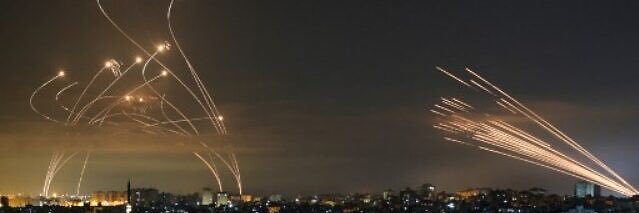
⚓Hormuz Crisis: The breakdown of the U.S.-Iran ceasefire after three commercial tankers were struck by Iranian UAVs and projectiles.
⚓Historical Context: Why maritime incidents—from unrestricted submarine warfare to tanker wars—historically lead to major global declarations of war.
⚓The "Fainting Goat" Effect: How the fear of predators in the shipping lanes causes global trade to lock up and freeze in place.
Video: https://t.co/4tJUg9Tamv
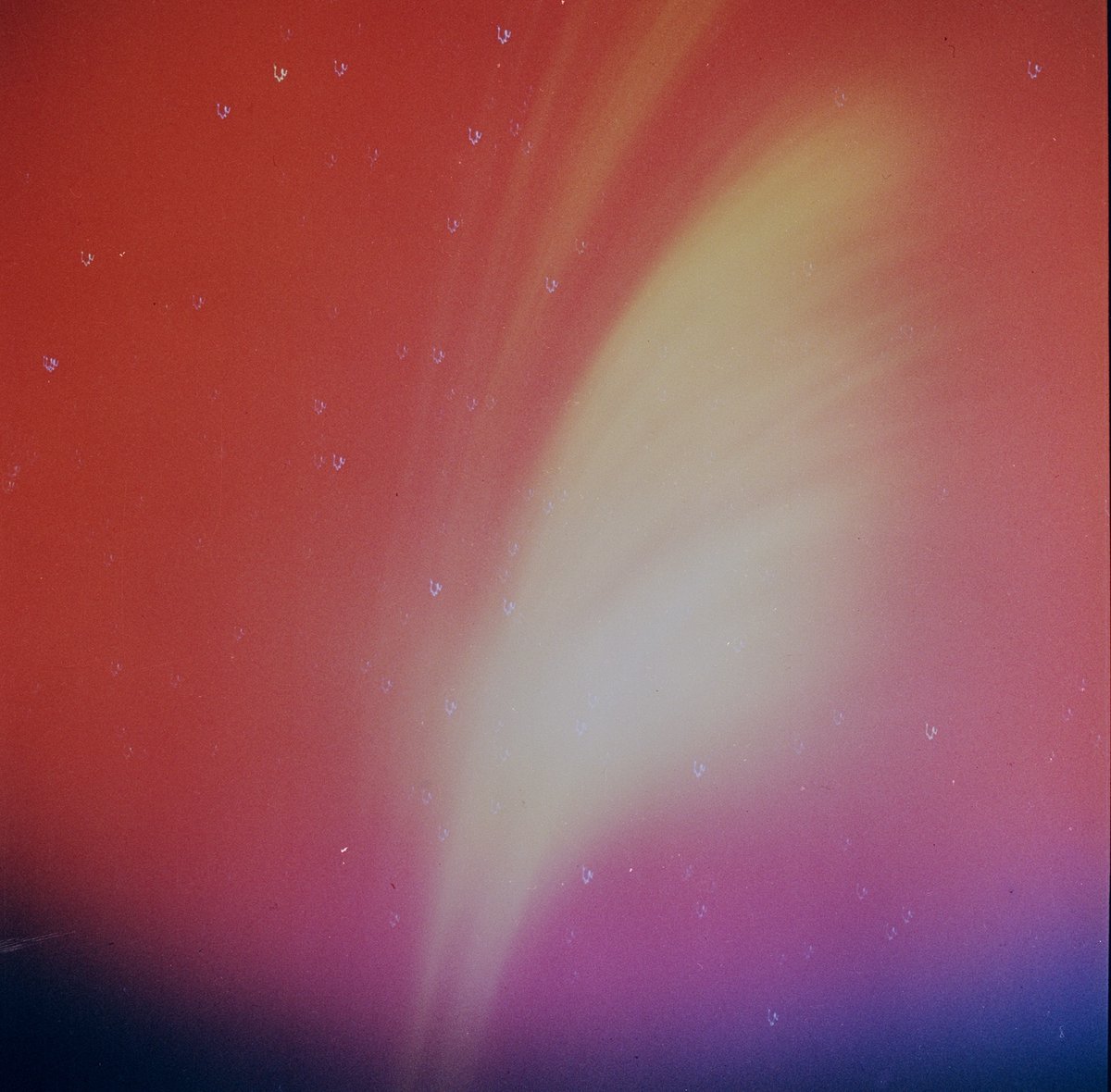
What are these two bands in the sky?
The more commonly seen band is on the left and is the central band of our Milky Way galaxy. Our Sun orbits in the disk of this spiral galaxy so that from inside, it appears as a band of comparable brightness all the way around the sky. The less commonly seen band, on the right, is zodiacal light -- sunlight reflected from dust orbiting the Sun in our Solar System. Zodiacal light is brightest near the Sun and so is best seen just before sunrise or just after sunset. On some evenings, this ribbon of zodiacal light can appear quite prominent. It was discovered only in this century that zodiacal dust was mostly expelled by comets that have passed near Jupiter. The featured image was captured about a year ago from the Atacama Desert in Chile.
Image Credit & Copyright: Julien Looten
#PPOD: Kamoʻoalewa 🪨
China’s Tianwen-2 spacecraft has arrived at Kamoʻoalewa, a tiny #asteroid that travels alongside Earth as one of only a handful of known quasi-satellites. Some researchers suspect this unusual object may be a fragment blasted from the Moon long ago, and Tianwen-2 is now poised to help solve the mystery.
The mission marks the start of an ambitious investigation. Tianwen-2 will attempt to collect a sample from Kamoʻoalewa’s surface before spending months mapping and studying the asteroid from orbit, gathering clues about its composition, history, and possible lunar origin.
Credit: @CNSA_en
#planetaryscience
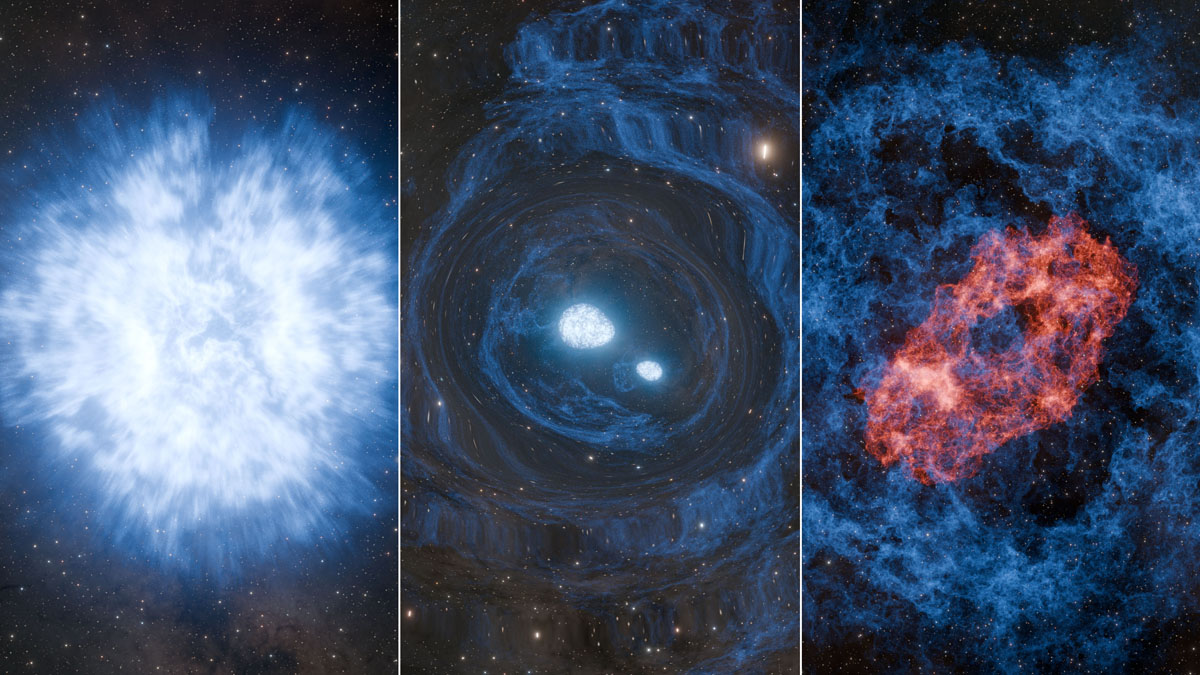
A supernova marks the death of a star. But in the case of supernova AT2025ulz, it seems a star died twice.
A massive star exploded. Its dense, spinning remains clumped into two neutron stars, like newborn planets, which collided & exploded again. Whoa!
https://t.co/dkX40sClCi
Hormuz recovery faces fresh pressure
Traffic through the monitored Strait of Hormuz zone strengthened on 7 July, with 41 verified crossings compared with 36 the previous day. Commercial west to east movements continued to dominate, while sanctioned vessel activity eased and laden crude, dry bulk and #LPG voyages remained significant. However, the operating picture became more complex. Use of the Iranian route declined as IMO routing recovered, but elevated Dark or Unknown movements highlighted uneven confidence across the market. The backdrop also deteriorated after two newly confirmed tanker incidents near Oman and OFAC’s replacement of General License X with GLX1, tightening the sanctions framework for Iranian related trade. The focus is now shifting from traffic recovery towards security, compliance and route risk management.
Stay ahead of the market with #Kpler Insight: https://t.co/PrYNHGSKm9
July 8, 1962, at 11:00 p.m. the most powerful space nuclear explosion was carried out. Launched by a Thor missile, the 1.44 Mt W49 thermonuclear warhead was detonated at an altitude of 400 km above Johnston Atoll. The explosion caused an extremely powerful EMP and artificial aurora.
Sometimes we can all use a little help from a friend.
NASA's Neil Gehrels Swift Observatory needs a boost to stay in orbit after almost 22 years of service.
This video shows an artist's visualization of the Swift Boost Mission: The Katalyst's LINK spacecraft was launched aboard a Northrop Grumman Pegasus XL rocket on July 3 and it is now en route to rendezvous with Swift and boost it to a higher orbit over the course of the next several months.
This type of maneuver has never been attempted before. If successful, it will be the technology demonstration of a new key capability to extended the lifetime of spacecraft in low Earth orbit, whose orbits decay over time.
Swift has an array of instruments that observe the most energetic explosions in the Universe in gamma-rays, X-rays and ultraviolet, and the unique ability to repoint in their direction within tens of seconds. Astronomers around the world, and indeed all fans of cosmic explosions, are anxiously hoping for a successful mission!
Image Credit: Katalyst Space
Text: Cecilia Chirenti (NASA GSFC, UMCP, CRESST II)
Jour 145, orbite 2248– 🎉 Youhou ! Très heureuse d’avoir pu réaliser la mise en service et l’activation de notre tout nouvel équipement européen d’exercice physique : E4D, ou European Enhanced Exploration Exercise Device.
Je sais combien les équipes se sont investies – et ont transpiré ! – pour développer et tester cet appareil au sol, et je suis ravie de prendre le relais depuis l’orbite ! 😅 J’adore faire du sport ! C’est depuis toujours un élément essentiel de mon quotidien, et je suis très contente de pouvoir ajouter un peu de variété 🚣 aux séances d’entraînement dans l’espace !
L’E4D est un démonstrateur technologique : nous allons évaluer sa conception, son fonctionnement en conditions réelles, mais aussi son efficacité pour contrer le déconditionnement physique qui guette les astronautes en mission. Une fois que nous l’aurons testé sous toutes ses coutures, de futures versions pourraient trouver leur place à bord de véhicules spatiaux où l’espace disponible (à l’intérieur 😉) sera encore plus limité qu’à bord de la Station spatiale internationale.
👏 Félicitations à toutes les équipes qui ont travaillé sur ce projet ! Vive l’ESA ! Vive l’Europe ! Vive le partenariat NASA-ESA !
��� @esa / @NASA
#εpsilon • @space_station • @esaspaceflight • @NASAJohnson • @ESA_fr
🚨 BREAKING: A Boeing 737-400 freighter has gone missing in the Indian Ocean, just past the Gulf of Oman, after taking off from the UAE
Flight tracking data shows an EXTREMELY rapid descent, dropping approximately 35,000 feet in less than 2 minutes, before disappearing from radar entirely.
Pray for the souls on board. A search and rescue operation has been launched.
It's not currently known what would have brought down the plane.
The K2 Airways cargo plane (AP-BOI) was reportedly en route to Karachi, Pakistan.
Jour 144, orbite 2233 — Vous avez été nombreux à faire des commentaires sur l’ambiance rose dans les récents timelapses réalisés dans Columbus… Le responsable : Veggie 🌱, notre petit jardin à bord de la Station spatiale internationale ! La lumière rose-magenta caractéristique de Veggie provient des LED qui diffusent un spectre lumineux idéal pour la croissance des plantes.
Pendant l’Expédition 74, Veggie a accueilli l’expérience Veg-06, qui avait deux principaux objectifs. Premièrement, étudier comment la luzerne et des bactéries symbiotiques collaborent en micropesanteur pour capter l’azote présent dans l’air et le transformer en nutriments assimilables par les plantes. Deuxièmement, comprendre comment évolue la lignine, le matériau qui aide les plantes à se tenir droites sur Terre, lorsqu’elles poussent dans l’espace.
Les plants de luzerne 🌿 ont bien poussé, arrosés et entretenus par l’ensemble de l’équipage! Ils ont ensuite été récoltés (parties aériennes et racines), stockés dans un congélateur puis renvoyés sur Terre à bord du vaisseau-cargo Dragon CRS SpX-34 afin d’être analysés plus en détail.
Pour nous, travailler sur Veggie, c’est retrouver un petit coin de Terre dans l’espace – un précieux rappel visuel et olfactif de ce qu’est un jardin… C’est très touchant de voir les plantes grandir et de s’en occuper au fil des jours. J’ai adoré travailler sur cette expérience 💚
Il sera essentiel pour les futures missions d’exploration de longue durée d’avoir cette capacité de production d’aliments frais 🌶, non seulement pour l’alimentation, mais aussi pour le moral des équipages. Mieux comprendre le mécanisme de fixation de l’azote, c’est la possibilité d’améliorer la qualité des sols sur Terre, et l’étude de la lignine pourrait bénéficier à long terme à l’agriculture et à la foresterie.
Vive la science !
🎥 @esa / @NASA
#εpsilon • @Space_Station • @NASAKennedy • @NASAJohnson • @esaspaceflight • @ESA_fr
Our space telescope Euclid has discovered 31 ancient quasars in the early Universe, including the two oldest ever observed.
Their light has travelled for more than 13 billion years, taking us back to when the cosmos was just 5% of its current age. 🌌
Read more 👉 https://t.co/qNfbebKeHd
A single bird has just accomplished one of the most extraordinary feats in the animal kingdom — flying nearly one-third of the way around the Earth without stopping to eat, drink, or rest.
The record-breaker is a five-month-old Bar-tailed Godwit that flew nonstop from Alaska to Tasmania, Australia. Covering 8,425 miles in just over 11 days, it set a new record for the longest nonstop flight ever documented in any bird.
What makes this journey even more astonishing is that it was the young godwit’s very first migration. The entire route took place over the open Pacific Ocean, with no chance to land. Despite that, the bird navigated thousands of miles of featureless water with pinpoint accuracy.
This incredible endurance is made possible by remarkable physiological adaptations. Before takeoff, the godwit packs on enormous fat reserves — nearly half its body weight — to fuel the flight. At the same time, many of its internal organs, including parts of the digestive system, temporarily shrink to lighten the load and maximize energy efficiency.
Unlike many seabirds that depend heavily on gliding, this godwit flapped continuously for the entire journey, battling shifting winds and weather systems the whole way.
Researchers at the Pūkōroro Auckland Shorebird Centre say discoveries like this are transforming our understanding of migratory birds. Their astonishing endurance, navigation skills, and energy management demonstrate biological capabilities that can match — and in some ways surpass — even the most advanced human engineering.
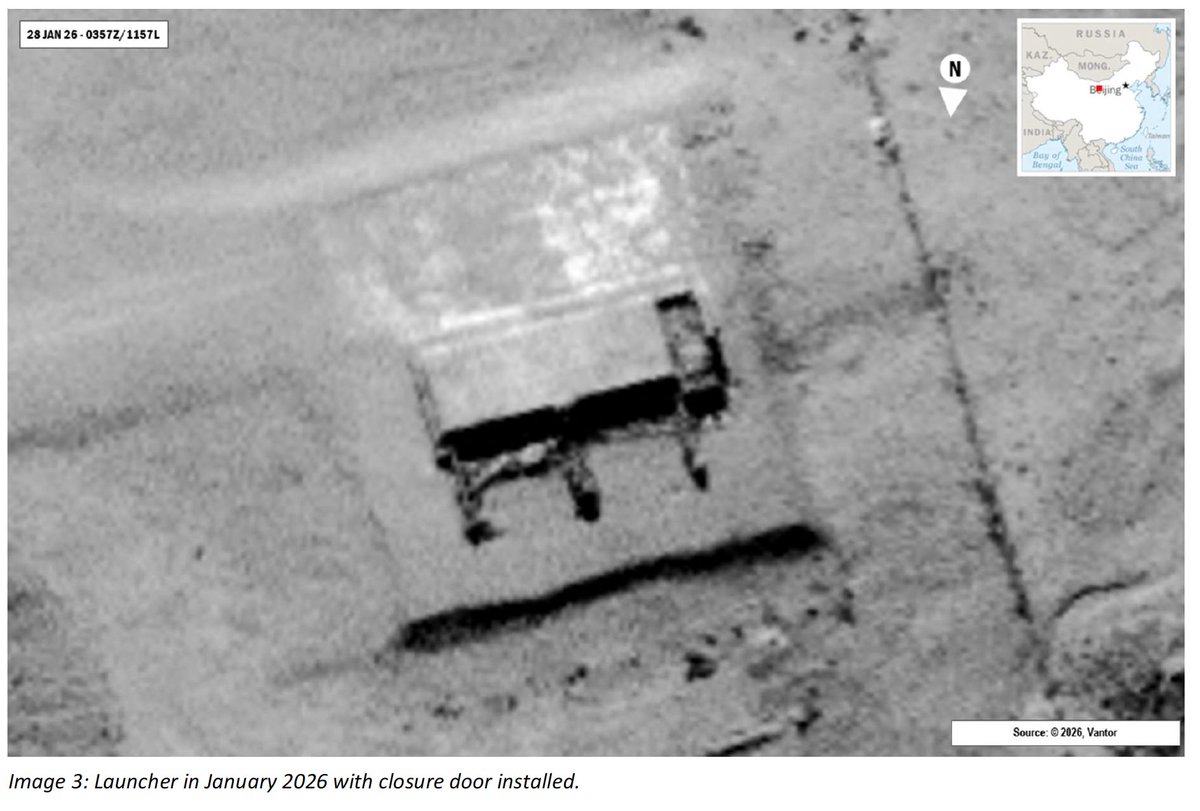
This is unlikely to make the news but is IMO potentially a quite important—and ominous—development.
Bottom line: the PLA Rocket Force appears to be testing a land-based fixed multiple-missile launch system, for up to MRBM-sized missiles—a system most useful for a first strike.