By severing HIV treatments and food aid to the poorest nations on earth, he signed the death warrants for thousands.
He is a man who traded human lives for a rounding error in the US budget
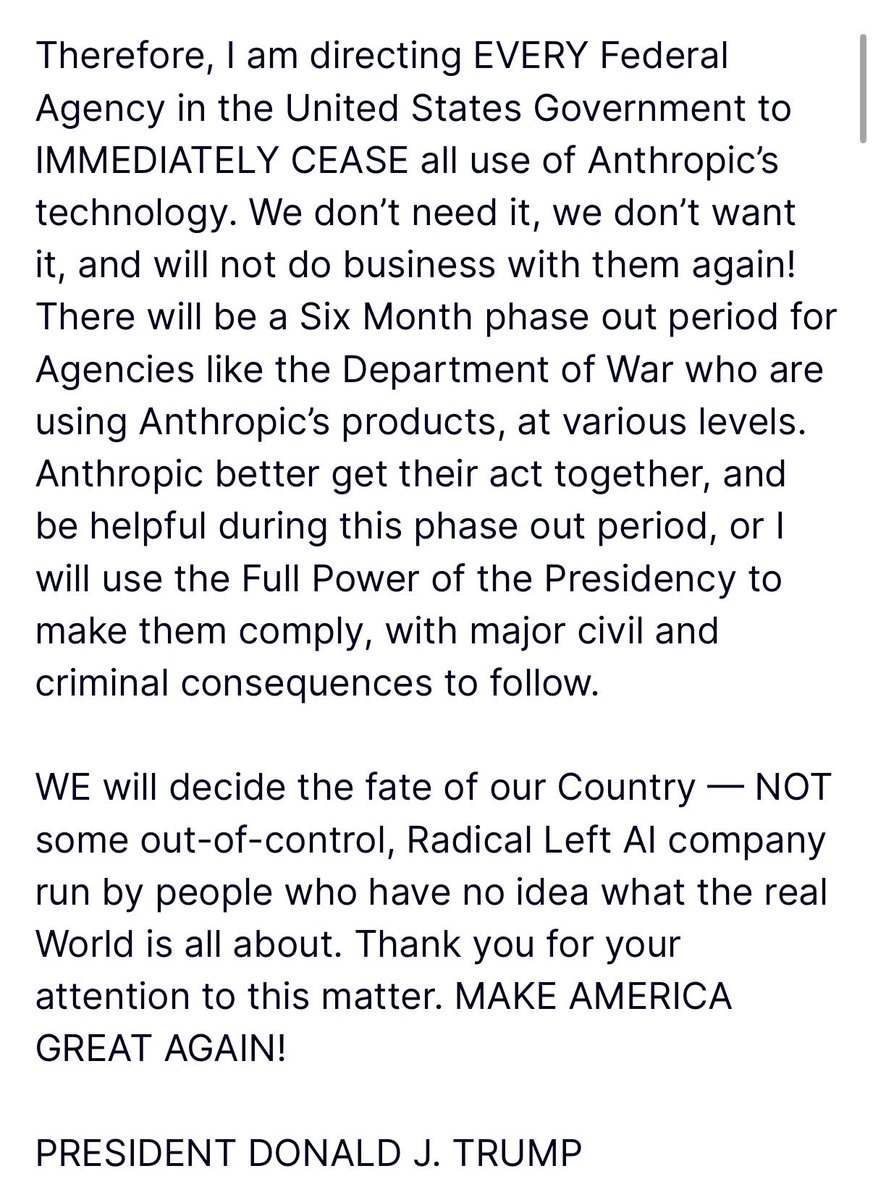
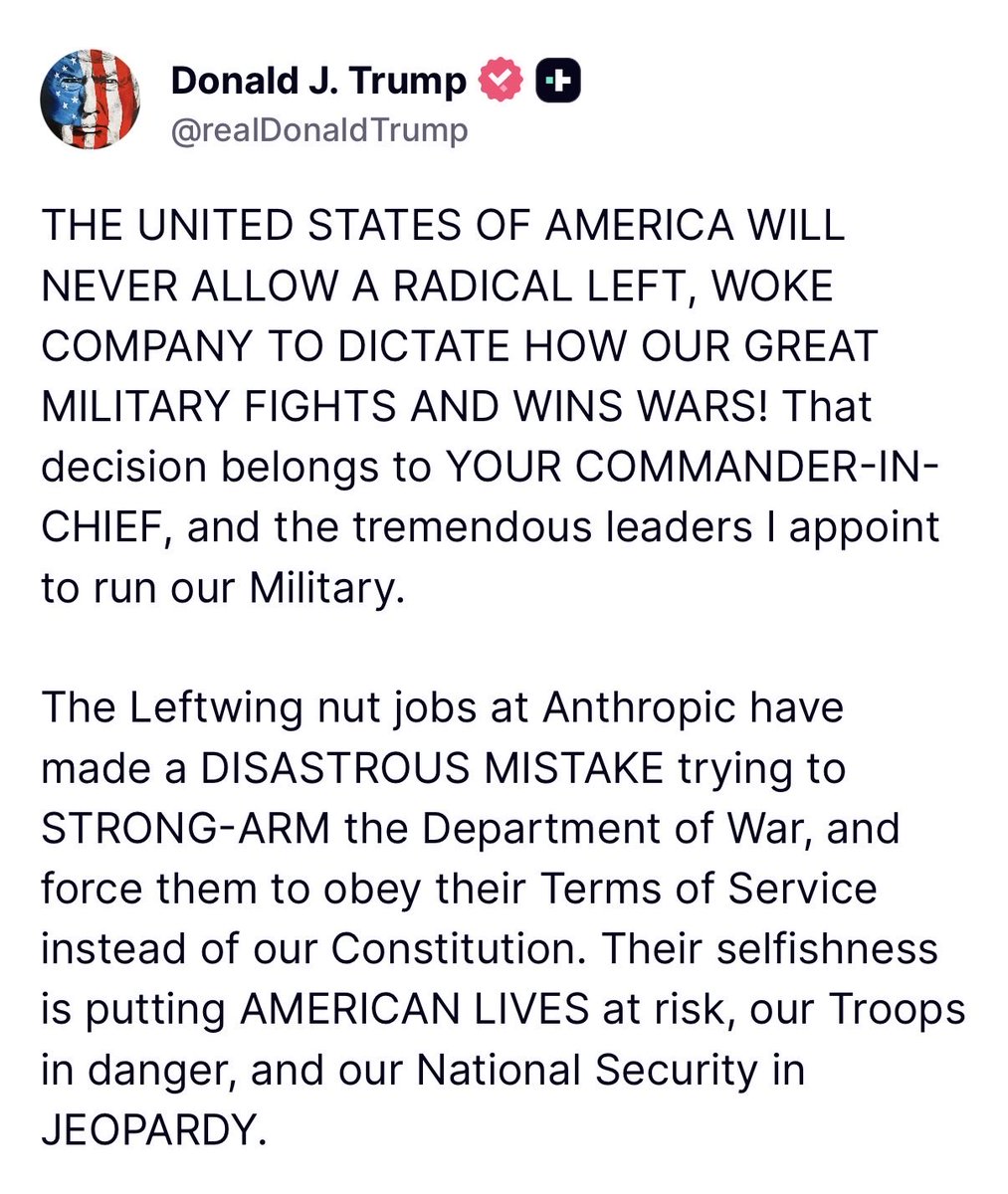
US Government: MAKE THE FUCKING KILLER ROBOT THING
Anthropic: We think that's unethical. We won't do that. All customers have the same Terms of Service for Claude
US Government: YOURE A FUCKING COMMUNIST AND YOU HATE FREEDOM
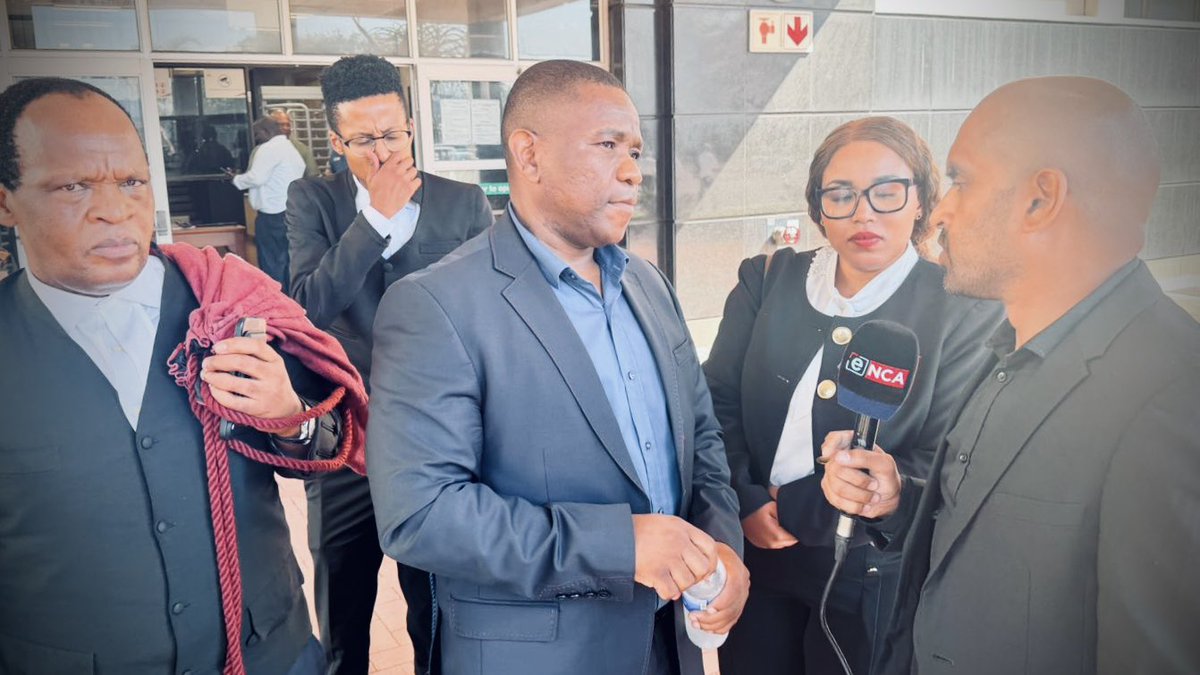
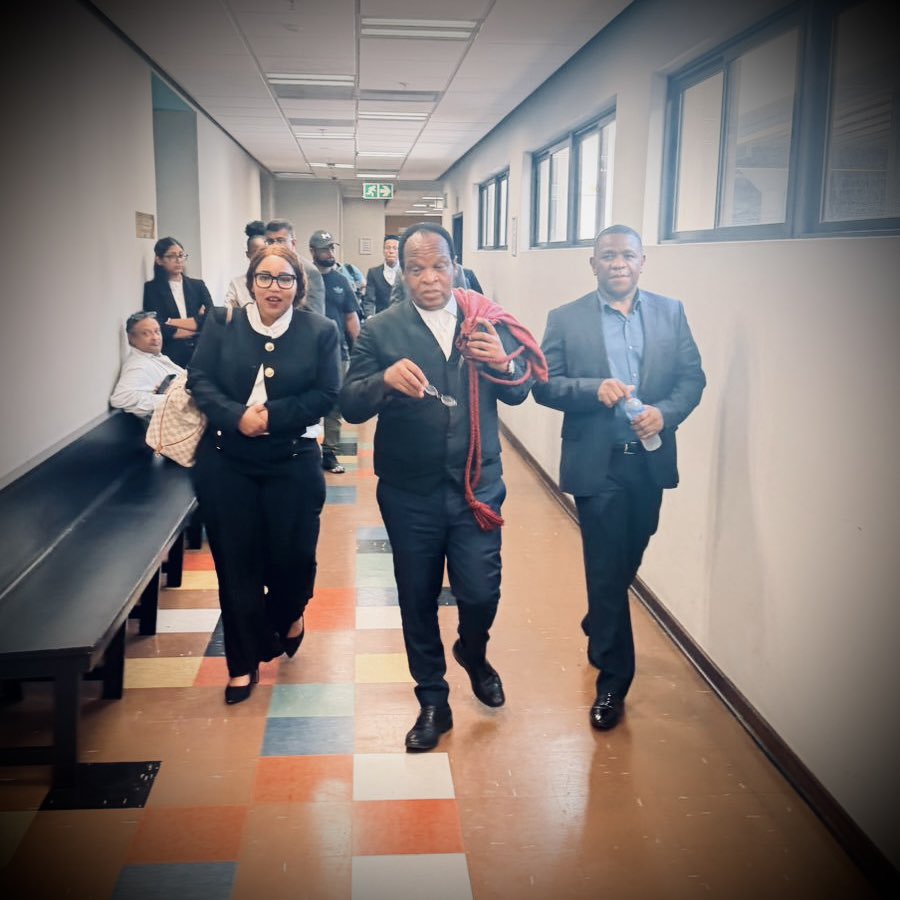
BREAKING NEWS | The KZN High Court in Durban has ruled in favour of Lt-Gen Nhlanhla Mkhwanazi in his matter against businessman Calvin Mathibeli.
Mathibeli is ordered to retract all statements implying Mkhwanazi is corrupt or a criminal, or that he abuses police authority and orchestrates unlawful killings.
In the case of mainstream media interviews, he will have to utilise the same platforms to withdraw his statements and is prohibited from repeating them.
He is also liable for the costs relating to the court application.
Details on @eNCA.
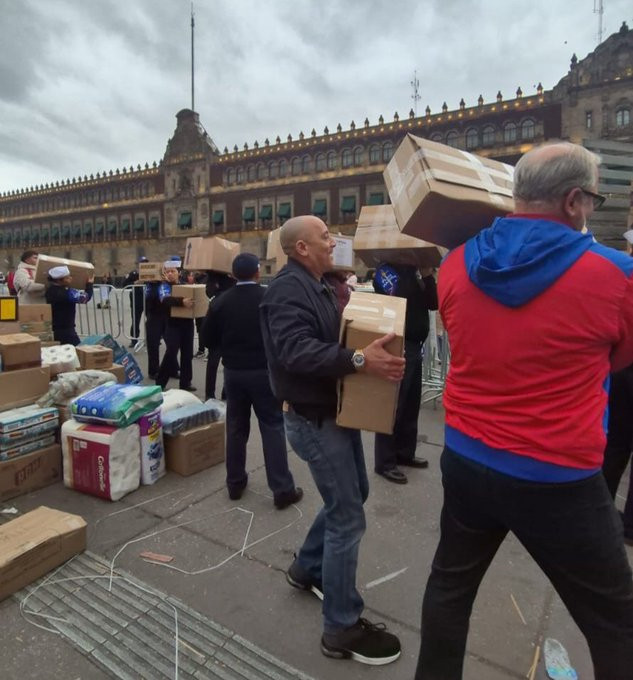
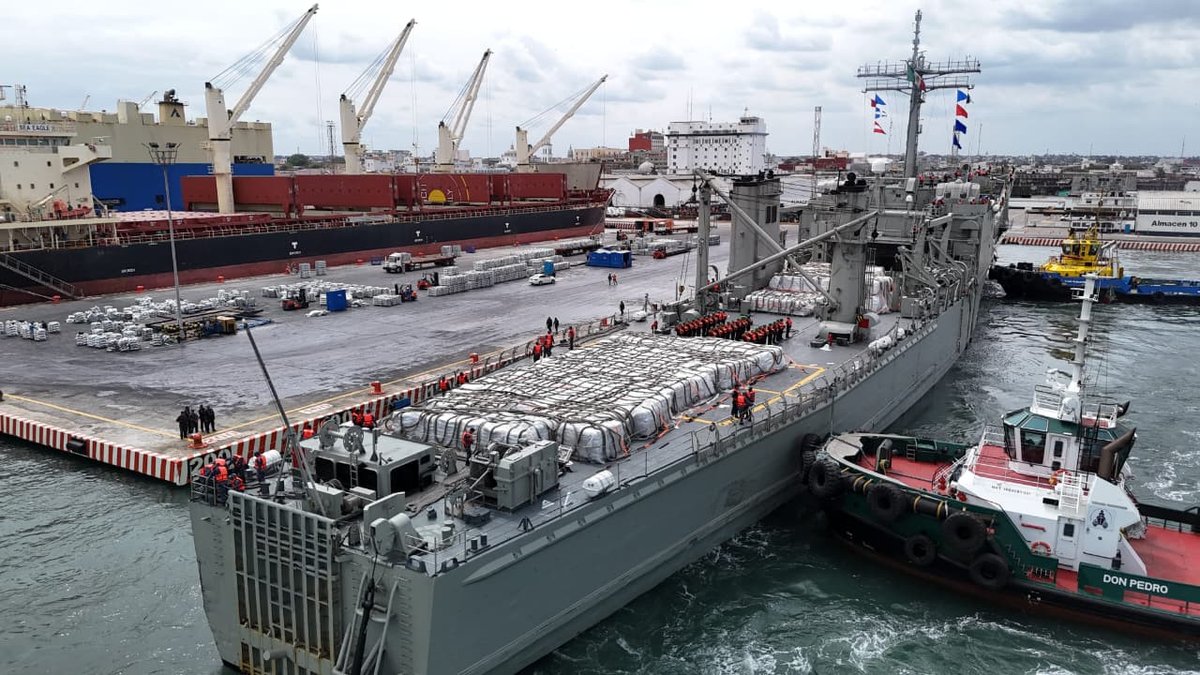
Mexico has invited countries worldwide to send aid to them, they'll deliver it to Cuba, officially becoming an aid bridge to the Island. Mexico rejects the US blockade, and the Navy will continue to escort humanitarian ships to protect them from the US.
"Cuba is not alone."
I don’t want everything optimized. I don’t want AI polishing my writing. I don’t want apps summarizing my life, tracking my sleep, counting my steps. I don’t need an algorithm telling me how I feel. Or another tool turning ordinary moments into metrics. I want a simple life. A slow life. Waking up. Making coffee. Watch the sunrise. Go for a walk. Listen to the birds. Staring at a wall for 2 hours straight. Get bored. Get inspired. Write a couple of X posts or a long form letter. And go back to living life. Imperfectly. Some things just need to stay human. And I’m okay being a slow, flawed human. That’s enough for me.
Kodak filed for bankruptcy in 2012. Fujifilm, their closest competitor, had the same problem: digital cameras killed film. Fujifilm's response was to repurpose its chemical expertise. The same particle science that put emulsion on film now produces CMP slurry, the polishing compound that flattens every chip layer to atomic smoothness. Nearly half the world's copper CMP slurry comes from Fujifilm. They spent $700 million acquiring a high purity process chemicals business from Entegris and built a new plant in Kumamoto, right next to TSMC's first Japanese fab. Revenue target for electronic materials by 2030: $3.3 billion. While Kodak saw a dying business, Fujifilm saw the chemistry underneath.
Not too many people know about how, in the 1970s and ’80s, North Korea sent 3000 troops to fight against South Africa in Angola.
Even fewer people know about North Korea’s role in the anti‑Apartheid movement.
From training guerrilla fighters to denouncing South Africa in its propaganda, North Korea supported South African liberation movements during Apartheid.
As a member of the Non‑Aligned Movement, North Korea believed that southern African nations, still suffering under White minority rule, should overthrow their oppressors.
In its media, North Korea frequently referred to the South African government as the “South African racist clique”, an imperialist force in southern Africa that prevented the independence of Black South Africans and the neighbouring countries of Namibia, Lesotho, and Zimbabwe.
Kim Jong Un’s grandfather, Kim Il Sung, sent military advisors, doctors, and engineers to Africa. Meanwhile, North Korean officials aided Umkhonto Wesizwe by providing military training in camps set up in Angola, where they taught guerrilla tactics.
North Korea also trained and equipped several countries and non‑state actors in Africa during the Cold War.
The Rodong Sinmun, the official newspaper of the Korean Workers’ Party, announced that “The South African racists’ brigandish armed invasion of Angola and other countries of Southern Africa shows their manoeuvres to block the road of independent development and the building of a new society in these countries.”
So, while North Korea was training the ANC’s military wing, the US government officially designated the ANC as a “terrorist organisation”.
In the 1970s, North Korean military advisors brought members of Robert Mugabe’s Zimbabwean African National Liberation Army to training camps in North Korea, where they were taught how to use explosives and arms. During the Rhodesian Bush War, these North Korean‑trained militants fought against South African‑backed Rhodesian troops.
According to North Korea scholar Andrei Lankov, these North Korean efforts “reflected sincere idealism and solidarity, the belief in the unity of what was seen as the ‘downtrodden nations’ of the world.”
North Korea’s involvement with liberation movements was not limited to Africa.
Between August 1945 and July 1994, the DPRK assisted four nations in conducting revolutionary wars and offered military support to 53 countries for the establishment of their national armies.
During the United States’ war of aggression in Vietnam, North Korea provided 100 000 weapons and one million uniforms to Vietnam, along with sending combat and engineering units to the front lines to help secure victory against the US’s control of the skies.
Also, Korea fully backed the efforts of the Syrian and Egyptian people in their fight against Israeli forces during the Middle East War in 1973.
The West’s current obsession with North Korean “arms sales” is the direct descendant of these 1970s policies. Because North Korea built deep relationships with Syria, Iran, and various African nations through military aid, the US now uses a “maximum pressure” campaign as it fears that the same networks used to send doctors and engineers in the ’80s are now being used to smuggle missile components and cyber-warfare capabilities.
Throughout history, North Korea has been involved in numerous conflicts. Some might argue that North Korea, being a socialist nation, was exporting revolution like Cuba. Just as Cuba sent its troops to various countries to promote revolution, it’s not surprising that North Korea has also engaged in wars, effectively doing something similar.
North Korea’s historical actions are fundamental to understanding why the US and the West view the DPRK as a “rogue state” that challenges the Western-led international order.
Between August 1945 and July 1994, the DPRK assisted four nations in conducting revolutionary wars and offered military support to 53 countries for the establishment of their national armies.
During the United States’ war of aggression in Vietnam, North Korea provided 100 000 weapons and one million uniforms to Vietnam, along with sending combat and engineering units to the front lines to help secure victory against the US’s control of the skies.
Also, Korea fully backed the efforts of the Syrian and Egyptian people in their fight against Israeli forces during the Middle East War in 1973.
The West’s current obsession with North Korean “arms sales” is the direct descendant of these 1970s policies.
Because North Korea built deep relationships with Syria, Iran, and various African nations through military aid, the US now uses a “maximum pressure” campaign as it fears that the same networks used to send doctors and engineers in the ’80s are now being used to smuggle missile components and cyber-warfare capabilities.
Throughout history, North Korea has been involved in numerous conflicts. Some might argue that North Korea, being a socialist nation, was “exporting revolution like Cuba.” Just as Cuba sent its troops to various countries to promote revolution, it’s not surprising that North Korea has also engaged in wars, effectively doing something similar.
North Korea’s historical actions are fundamental to understanding why the US and the West view the DPRK as a “rogue state” that challenges the Western-led international order.