@bgarlinghouse@SECPaulSAtkins O esquema da Ripple é simples: eles imprimiram 100 bilhões de suas moedas XRP do nada de graça e as venderam para hamsters. Ainda restam 40 bilhões de moedas.
Even if I was a Bitcoin maxi I would never deal commercially with a firm or company that is this unprofessional. Would you trust your Bitcoin with them?
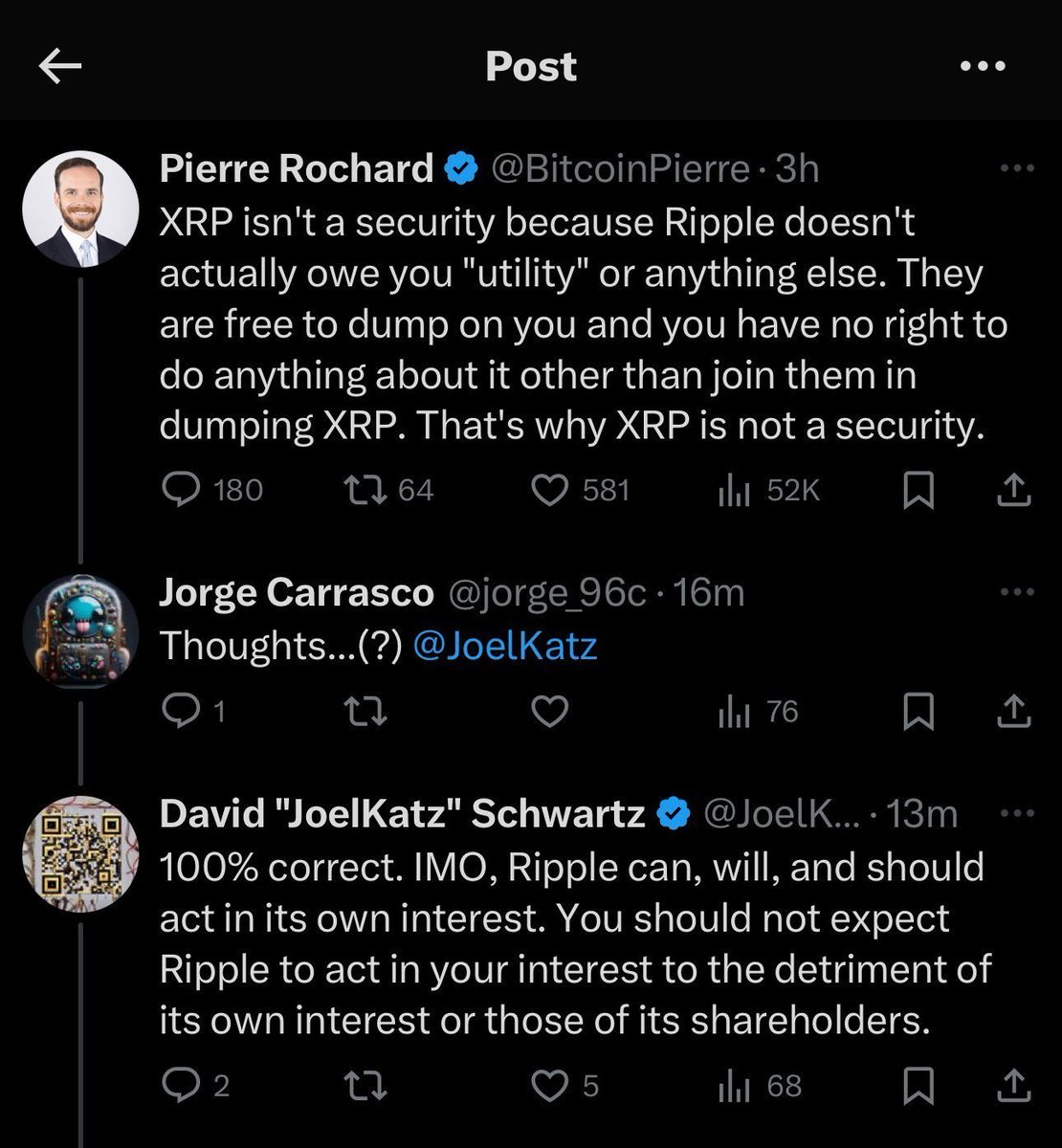
By owning XRP, you are funding a company that has openly stated it will prioritize its equity shareholders over you.
Let me explain.
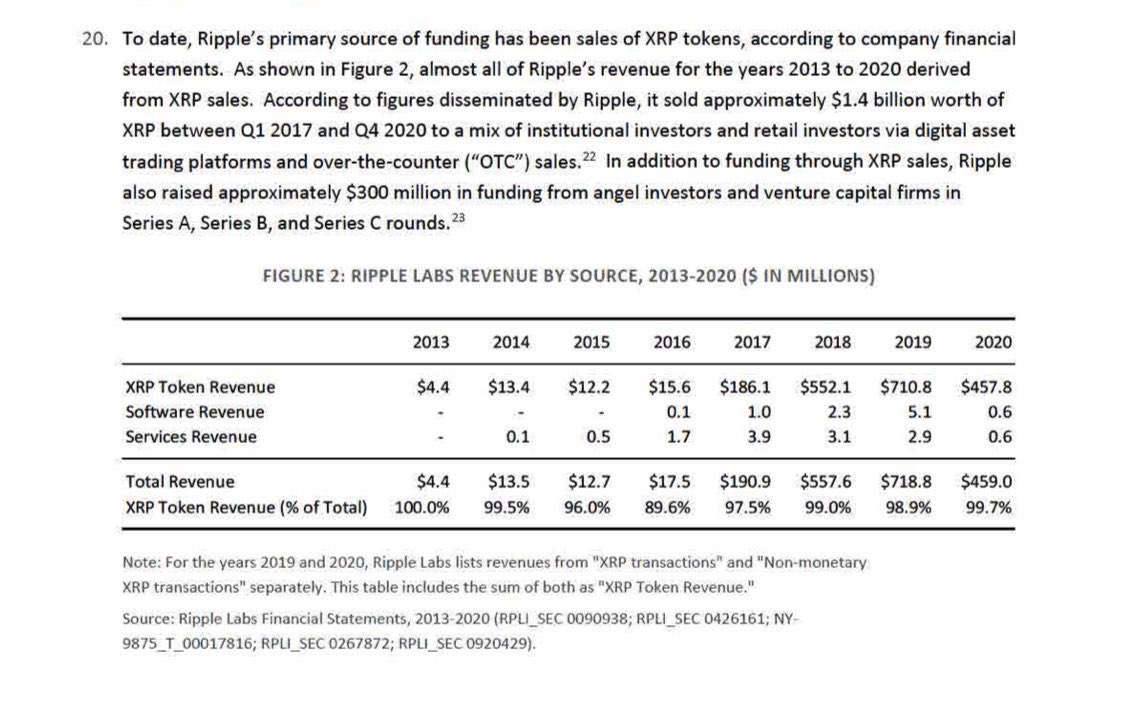
Ripple has spent the past decade selling XRP to retail while promoting a narrative of inevitable institutional adoption.
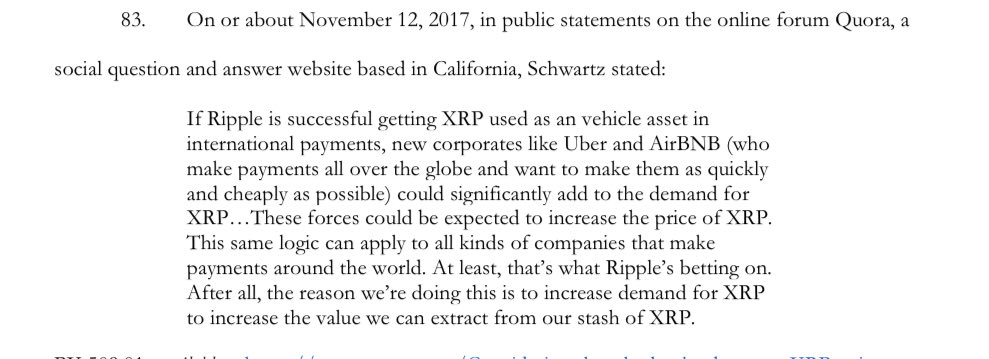
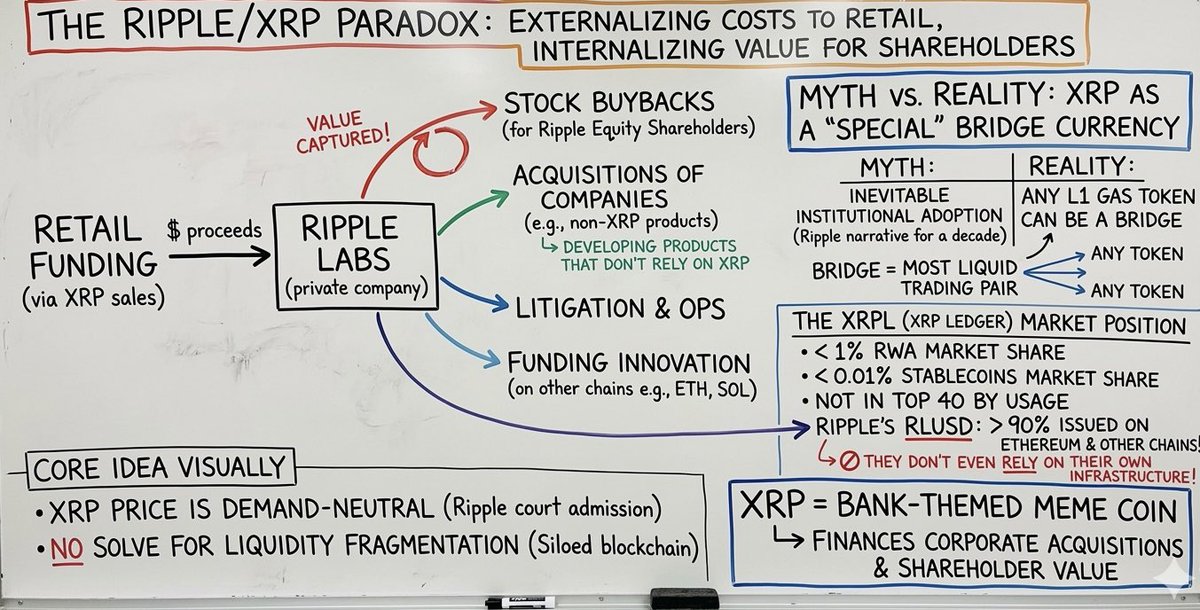
In reality, Ripple uses the proceeds from XRP sales to acquire real companies, develop products that don’t rely on XRP, and fund Ripple Labs’ stock buybacks. All of this benefits Ripple Labs’ shareholders, with little to no value created for the XRP token itself.
But it gets worse.
The idea that XRP is a special bridge currency doesn’t hold up. Any token can fulfill that role. Every Layer 1 gas token already does.
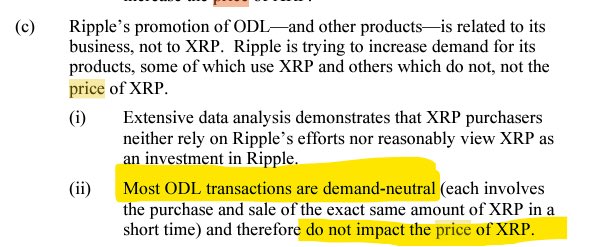
Being a bridge currency simply means being the most liquid and widely used trading pair on a blockchain. There is nothing inherently unique about XRP in this regard. Ripple even admitted in court filings that XRP’s bridge currency use case is demand-neutral.
It does not impact price.
While XRP can act as a bridge currency on its own chain, the XRP Ledger has relatively low adoption among asset issuers. It’s not even in the top 40 by usage, with less than 1% market share in real-world assets and less than 0.01% in stablecoins.
Ripple itself issued 90% of its $RLUSD stablecoin on Ethereum and other non-XRP Ledger chains. They don’t even rely on their own infrastructure.
No single bridge currency on a siloed blockchain solves liquidity fragmentation, especially when the majority of global value exists outside the XRP Ledger.
At this point, XRP’s role appears to be that of a bank-themed meme coin that Ripple sells to retail investors to finance corporate acquisitions and stock buybacks.
It’s simple: Ripple externalizes costs to $XRP holders while internalizing value for its shareholders.
This is clear to anyone who has spent time critically analyzing Ripple, exploring the counter-thesis, or examining the broader competitive landscape.
The only people who don’t see it are those who remain in an echo chamber and never question their assumptions.
It’s not too late to step back.
By owning $XRP, you are funding a company that has openly stated it will prioritize its equity shareholders over you
Ripple wrote the playbook on this. Let me walk you through how it works👇
When a company sells both tokens and equity to investors, it creates two competing stakeholder groups whose economic interests may not, and often do not, align
For example, when there’s excess revenue or profits, where does that value ultimately go: to equity holders via buybacks/dividends, to token holders via buybacks/staking rewards, or some split between the two?
There is a fixed pot of revenue to distribute, and equity investors often have superior, clearer economic rights to that revenue that can be legally enforced, while token investors often do not
Look at Circle’s recent acquisition of Interop Labs (Axelar team), Coinbase’s acquisition of Tensor, PumpFun’s acquisition of Padre, Ripple vs XRP. etc
These are all situations in which equity holders benefited at the expense of, or isolation from, token holders
In Ripple’s case, they have spent the past decade+ systematically selling XRP to retail while spinning a story of inevitable institutional adoption
In reality, Ripple uses the proceeds of XRP sales to acquire real companies and fund Ripple Labs stock buybacks, to the sole benefit of Ripple Labs shareholders
No value is created for the XRP token, even Ripple admitted under oath in court filings that the bridge currency use case of XRP is demand neutral and does not impact price
Ripple Labs socializes its costs to XRP holders to fund product launches and corporate acquisitions, then privatizes the value for its own shareholders
XRPL is an obsolete ghost chain that's not even in the top 40 chains by usage. It has less than 1% marketshare in RWAs and less than 0.01% in stablecoins. There is no metric the chain leads in
Ripple themselves issued 90% of RLUSD on Ethereum and have now expanded it to even more chains outside of XRPL including BNY Mellon's private EVM chain and L2s
The list goes on
By owning XRP, you do not have complete exposure to the success of the ecosystem Ripple is building, because you do not own the equity, you own some undefined percentage of the success
This issue doesn’t exist for Chainlink, because there are no equity investors. There is only the $LINK token to accrue value from the network’s growth. Even CLL employees receive long-term incentives rewards in LINK, not equity
Unfortunately, depending on how you want to put it, there is no mass social media misinformation campaign driving retail towards Chainlink like we see with XRP
However, Chainlink‘s clear dominance in DeFi (70%+ marketshare w/ $60B in DeFi TVL secured) and its tangible verifiable institutional adoption by the largest institutions in the world (Swift, DTCC, Euroclear, SBI, UBS, JP Morgan, Fidelity, ANZ, etc) will inevitably become too impossible to ignore
While the XRP army comes up with bizarre conspiracy theories about why institutions don’t talk about XRP, enterprises adopting Chainlink have no issue publicly talking about their use of Chainlink
And before you say Chainlink and Ripple/XRP are not competitors bc they do different things, I would agree from tech perspective, Chainlink actually offers useful products for banks and isn’t a retail grift
Chainlink is the only unified platform that provides the critical data, interoperability, compliance, privacy, and orchestration standards that financial institutions need for advanced tokenization use cases
None of these institutional use cases Chainlink powers have ever required a “bridge currency”, that is a fantasy narrative dreamt up by retail
This has been proven time and time again
The reality is that $LINK is the best index bet on the institutional adoption of blockchain, while $XRP is a bank themed memecoin that Ripple sells to retail to fund corporate acquisitions and stock buybacks
Documented.📝