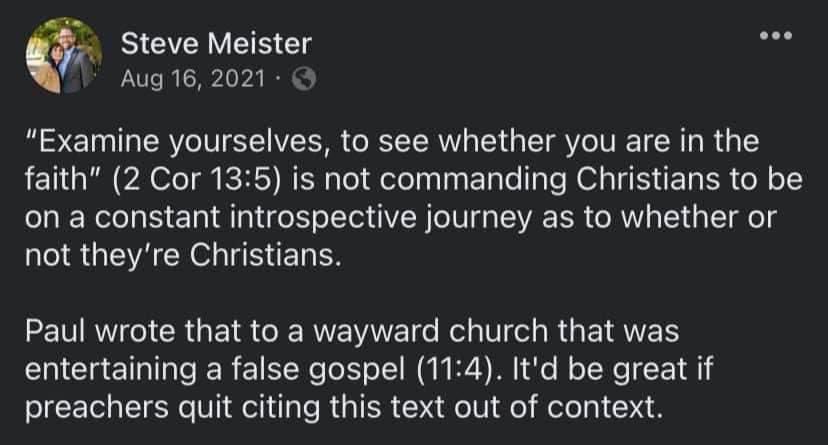
1/2 Paul was NOT telling the Corinthians to examine their works to see if they were in the faith. He was telling them to examine what they believed. They were in danger of believing a false gospel.
It's natural for us to reserve our compassion for horrible things that happen that are out of our hands. We had no control. It was an accident. It was done to us.
What's beyond amazing is God's compassion is for those who get themselves in trouble. It's for the prodigal who wasted his inheritance on debauchery. It's for the woman caught in adultery. It's for sinners. He came to seek and save the sinners. And through Christ, his grace endures, again, and again, and again. Our sin cannot overpower it.
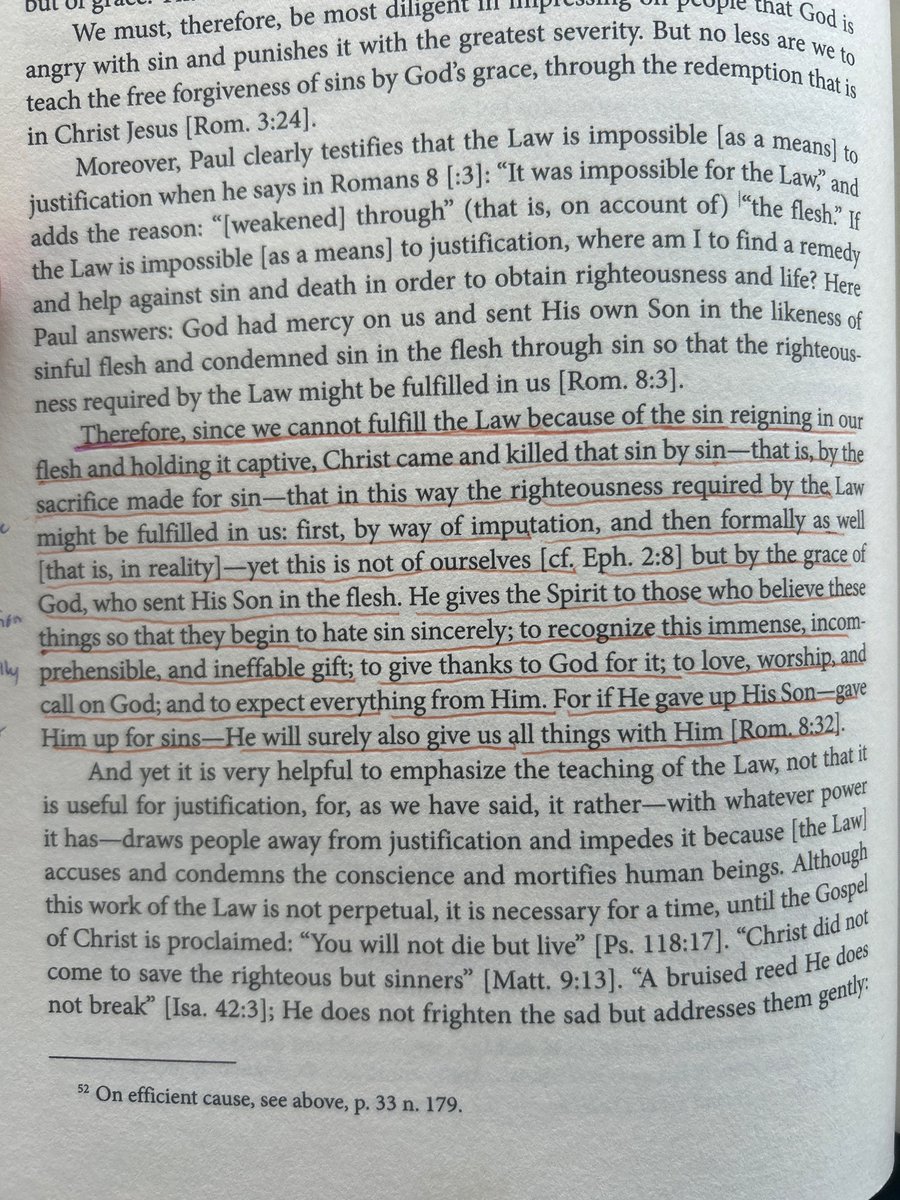
Luther taught that we fulfill the law perfectly in Christ via imputation, and then formally (by the Spirit) fulfill its righteous requirements imperfectly until one day (in heaven) we render perfect obedience.
The more I read Baxter in light of Luther, Calvin, Beza, Turretin, etc., the more it seems to me that his teaching on justification was in fact divergent, and in some respects highly problematic. Will probably share a longer post in the future outlining his view (in his own words), and comparing it with others.
One reason I had to leave my previous denomination was because after 20 years I never got any of this from the vast majority of preaching I heard. After 20 years, you can't cope without Christ.
Quick story in which my mom teaches me about loving people.
When my big sister got married, they pulled away from the family a lot. In hindsight, she was the oldest daughter who did too much for all of us, and her husband helped her put down boundaries with us, and it was new and painful.
The first few years of their marriage they didn’t come to a lot of family functions. But they were sometimes there and my BIL was super polite, but also a big introvert. About 4 years into it, on Christmas Eve, when all of us were just grazing food in my mom’s kitchen, and talking about life as we often did on holidays, I looked over and saw BIL was sitting in a recliner in the other room, reading a book.
Annoyed, I went over to my mom, to tattle. (I was also a married adult at this time.) “Mom, do you see he’s just in the other room, reading? It’s Christmas Eve for goodness sake.”
My mom gasped and quietly peeked into the other room. “It worked!” She said.
“What worked?” I asked.
“He’s just so shy around us, and I’ve been brainstorming ways to help him relax when he’s at our house. So I found out who his favorite author was, and bought the newest book just published. I set it right by the recliner, hoping he’d feel comfortable enough to just pick it up and read it. I got him to relax over here! It worked!”
I was humbled. Astounded. Her goal wasn’t to get him to get with the program. Her goal wasn’t to assimilate him to what the rest of our family was doing. Her goal was to help him feel loved when he was with us.
I will never ever forget this lesson she taught me.
You might be in the habit of thinking of January 1 as a day for resolutions for the new year, a day to think about what you’ve failed at and want to do better. But the feast of the Circumcision points us to something grace-filled: Jesus Christ has already kept the law for you.
Genesis 1 is Part of God’s Preparation for Our Salvation
When God planted the trees in Eden, he was making sure there would be wood for both a manger and a cross.
When God poured out oceans and rivers, he was preparing for our baptism into Christ in the waters of the Jordan.
When he sowed the fields with wheat, he was readying the world for bread that would clothe Christ’s body in the meal of meals.
When he made the heavenly lights, he ensured there’d be a star to guide wise men from the East, and a sun to darken when fools affixed his Son to a tree.
And when the Lord made Adam and Eve in his own image, he was prophetically winking at his Incarnation, when he would make our nature his own everlastingly.
From the beginning of the world, God so loved the world that he prepared it for the day when he would remake it—remake us!—in his Son.
We say, “I can’t go on.”
Jesus says, “I will hold you so you can.”
We say, “But I don’t think I can even believe that.”
Jesus says, “Even when you are faithless, I will be faithful to you.”
We say, “But I feel so alone.”
Jesus says, “I am Immanuel, God-with-you, God-never-leaving-your-side.”
We say, “But what’s the point? My life is over.”
Jesus says, “I am your life. And I am never over.”
We say, “But look at what I’ve done. I’m dirty.”
Jesus says, “Look at what I’ve done for you. I have taken your dirt and smeared it all over me. You are clean, I am filthy. See me dirty on the cross. See you clean beneath it.”
We say, “Nobody wants me.”
Jesus says, “I want you—desperately, lovingly, crazily, I want you.”
All I want for Christmas is a God like that.
The Moscow Mood is Rotten Fruit From a Rotten Tree 🧵:
As much as I appreciate most of this article, I think Kevin does a disservice to his readers by ignoring the theological underpinnings of Moscow.
1/
In this episode of Outside Ourselves, Jon and Justin from @theocast_org join me to talk about what the gospel is and how we often misunderstand it. We cover a lot of ground in this episode!
Getting Used to Forgiveness
In Christ, we are free. God does not know or remember our sins. The Lord says, “I, I am he who blots out your transgressions for my own sake, and I will not remember your sins" (Isaiah 43:25).
They have been buried so deeply in the flesh of Jesus that they will never be seen or heard from again. Mention them to God and he will say, "My child, I have no idea what you’re talking about.”
They're that gone.
This does not mean, of course, that they are gone from our memory. Very often, at least with some of our actions, we spend the rest of our lives "getting used to forgiveness." I know I do.
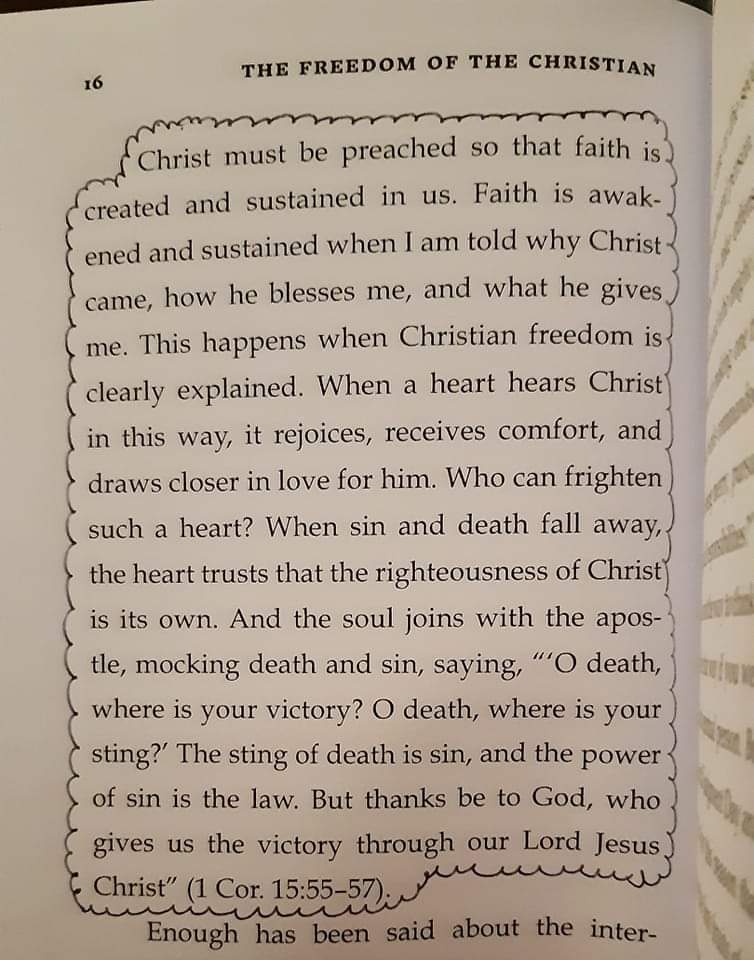
That is why hearing the Gospel is never a one-time act. We need to hear it all the time. Imagine a marriage where the husband only told his wife one time that he loved her, but never again. Or only once a year. She needs to hear of his love all the time, as of course, he needs to hear of her love.
So it is with us and Christ. And, thank God, he never tires of telling us this, for he sings over us, delights over us, and rejoices to give us his mercy.
The night is dark, but I am not forsaken,
For by my side the Savior He will stay.
I labor on in weakness and rejoicing,
For in my need His power is displayed.
To this I hold: my Shepherd will defend me;
Through the deepest valley He will lead.
Oh, the night has been won, and I shall overcome!
Yet not I, but through Christ in me.
CityAlight
Photo: Cliford Mervil
God sees through the smoke and mirrors of social media; around the lies we concoct online and in daily life to make ourselves appear happier, healthier, and more successful than we are. He sees us as we truly are.
All the self-hatred and self-love, the ugly envy, the doubt and despair, the dead relationships, the nasty fights, the pills and booze. He sees it all. And he loves us nonetheless.
But he loves us in a weird, God-like way. He loves us by calling us to a repentance that takes us into death and back into life. He is a God who kills and makes alive. He finds us ugly and hurting and hateful and mean, and he wraps his arms around us and falls with us into a watery grave.
There with him, in him, embraced by him, we drown. We die. We die to self. And in the shock of a lifetime, we open our eyes outside the watery grave, standing alongside our Lord, as newly resurrected people who are the apple of God’s eye.
The Lord with whom we die is Jesus, the Son of God. In that watery grave we are crucified with him. We die and are buried with him. We rise and live with him. And in so doing, who he is becomes who we are. He is the Son of God; in him we become the sons of God. He is beloved of the Father; in him we are beloved of the Father. He is holy, righteous, perfect; in Jesus we are the same.
All we sought to achieve by controlling our image was in vain. The image that brings true peace and contentment is not one we achieve but one we receive. It is the image of Christ, likeness to him, that we receive in the watery, crucifixion grave of baptism.
There, in Christ, we are accepted, loved, embraced by the Father. All of who we are—not the edited us—is enveloped in the Son of God, dies with him, rises with him, and lives with him.
Use Scripture to point to Jesus. Point to God’s character. Point to passages that describe who we are in Christ. Highlight stories that show God’s love for us. We don’t have all the answers to peoples’ trauma. We can point them to God who is with us in our trauma 10/11
I remember hearing sermons, with no law/gospel distinctions and getting a "conviction high." A sermon was awesome if I got super convicted and called out. Like, the more convicted I felt, the more awesome I felt all at the same time. I'd think, "hey! I haven't been doing this thing. I need to pump up my faith so I'm REALLY on fire for God, so I can do the thing."
And there was no gospel. That's why it was never sustainable.