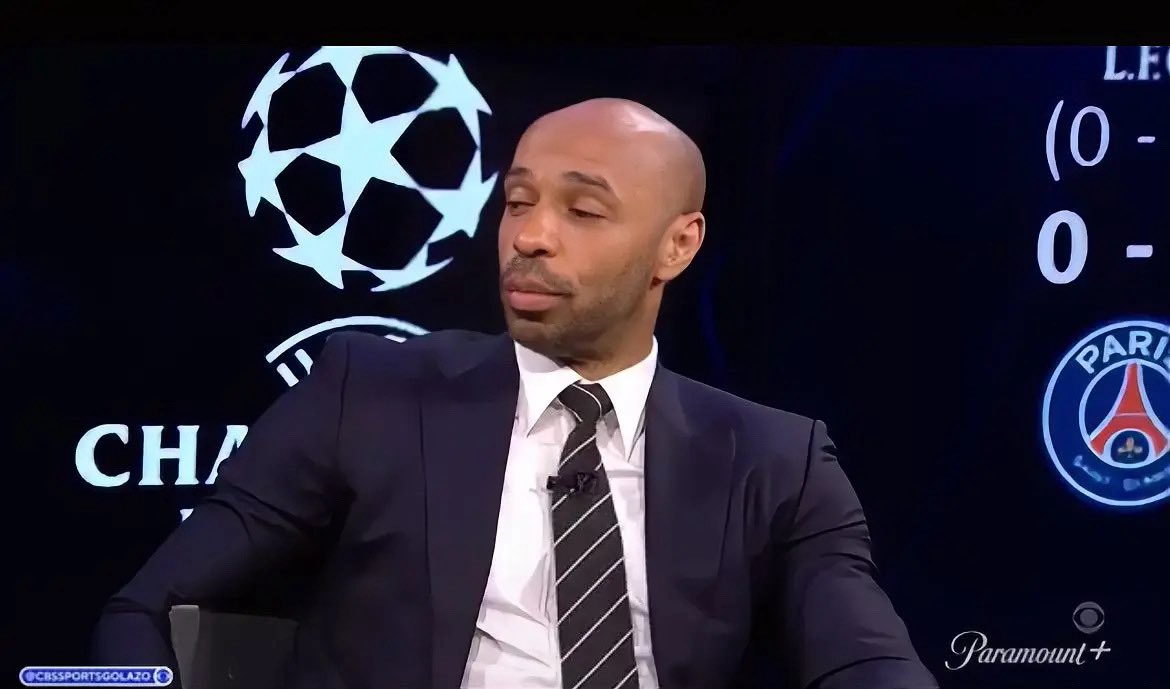
🚨🗣️ Thierry Henry on Barcelona Vs Atletico Madrid both-leg officiating controversy:
“I’m sorry, but what did I just watch over two legs? Because that’s not football, that’s decisions deciding games.
First leg, you send off Cubarsí for that? Minimal contact, the boy barely touches him and suddenly it’s a red card that flips the entire tie. Then you have a clear handball inside the six-yard box from Pubill, he literally stops the ball with his hand like he’s playing basketball and VAR just… goes quiet? How is that even possible at this level?
Koke is out there doing late challenges, off-ball stuff all game, no cards. Not even a warning. But on the other side, Eric García gets a straight red when Koundé is literally right there to cover? So now we’re rewriting the ‘last man’ rule as we go?
And don’t get me started on Olmo, pushed from behind, clear as day, no penalty. Then you count the fouls Atlético made… how many yellows? Zero? Come on. You can’t tell me that’s normal.
Then Ferran scores, and we’re talking about offside on a rebound situation? That goal should stand. Simple.
At some point, you stop calling it ‘bad luck’ and you start asking real questions. Because when every big decision goes one way, it’s not coincidence anymore. Barcelona didn’t just lose this tie… they were taken out of it.”
Concering issues as India Surpasses Japan: A Stark Reminder of Nigeria’s Decline
Over the weekend, it was announced that India has become the fourth-largest economy in the world, in terms of nominal GDP, surpassing Japan. According to IMF estimates for 2025, India’s GDP is projected to be about $4.187 trillion, while Japan’s GDP is approximately $4.186 trillion. India now aims to overtake Germany, which has a GDP of around $4.74 trillion, to become the third-largest economy.
While this is a remarkable achievement for India, it raises questions about Nigeria’s economic performance. I have undertaken a comparison of the two countries, as they once shared a similar economic trajectory.
According to historical estimates from the World Bank, at the end of 2007 (during Obasanjo’s presidency), India’s nominal GDP per capita was about $1,022, while Nigeria’s was approximately $1,816.
By 2015 (at the end of the Yar’Adua/Jonathan era), India’s nominal GDP per capita had risen to around $1,584, compared to Nigeria’s GDP per capita of about $2,586, as stated by World Bank data.
However, based on IMF World Economic Outlook projections, by 2025, India’s nominal GDP per capita is estimated to be about $2,878, while Nigeria’s is expected to decline to about $807.
Despite significant subsidy savings, substantial revenue growth, and excessive borrowing (more than all previous governments combined from 1999 to 2023), Nigeria's performance remains troubling. The combined revenue for 2023 to 2025 amounts to approximately ₦200 trillion ($135 billion), yet there has been no meaningful improvement in critical areas such as healthcare, education, or poverty alleviation.
In spite of these resources, issues like poverty, insecurity, healthcare, and education have worsened. Businesses, particularly small and medium enterprises, are closing daily due to lack of support, electricity remains erratic and expensive, and the costs of basic necessities—such as rent, transport, and food—continue to rise beyond the reach of ordinary Nigerians.
I continue to call for national unity to build a leadership consensus anchored on competence, compassion, and character. This leadership must prioritize the welfare of Nigerians and invest in essential areas such as healthcare, education, infrastructure, agriculture, and technology. It should also focus on cutting waste, reducing the cost of governance, and ensuring full transparency and accountability so citizens can track and assess national progress.
Such a government must empower citizens economically, create jobs, support businesses, strengthen security, provide reliable energy and food security, promote innovation and human capital development, and restore trust in public institutions by holding officials accountable. This way, Nigeria’s vast resources can be directed toward building a prosperous, equitable, and secure nation for all.
Only through united collective action, transparency, and visionary leadership can Nigeria close the gap with nations like India and ensure that its wealth translates into prosperity, security, and opportunity for all citizens. Other countries are already setting an example—the time for Nigeria to act, catch up, and reclaim its potential is now.
A new Nigeria is POssible. -PO
Update: A victim who managed to escape from the Kabba Kogi Kidnappers, narrates his experience.
“We crossed 7 different rivers. When it got dark I ran away. I met some villagers who didn’t know I could understand their language. They conta..
WATCH: Chilling Livestream from CAC Church in Eruku Town in Kwara State Captures Final Moments Before Gun-Wielding Terrorists Struck During a Church Service
I was watching MTV for the first time in months, and it struck me that Nigerian artistes now display and spray only dollars in their videos. The reason is not far-fetched: the Naira is in the trenches.
The state of the Nigerian economy is on display—talk about dollar dependency.
Dear @mreazi , please find attached my application to join you on your acoustic tour. What I bring to your table:
1. I know the lyrics to your songs. From this video you’ll see that I can be original with them too
2. I am a guitarist with dynamic vocal range
3. I am a hard worker
The fast-moving consumer goods (FMCG) sector remains one of Nigeria’s most active markets, but also one of its most heavily scrutinised. Between March and August 2025, the Federal Competition and Consumer Protection Commission (FCCPC) recorded 1,543 consumer complaints,
Happy Customer Service Week from all of us at Stren & Blan Partners!
This week, we celebrate the SBP Team who show up with dedication every day, and our clients, whose trust drives us to do better.
This year’s theme, “Mission Possible”, is a reminder that great service
#horizon2025speaker
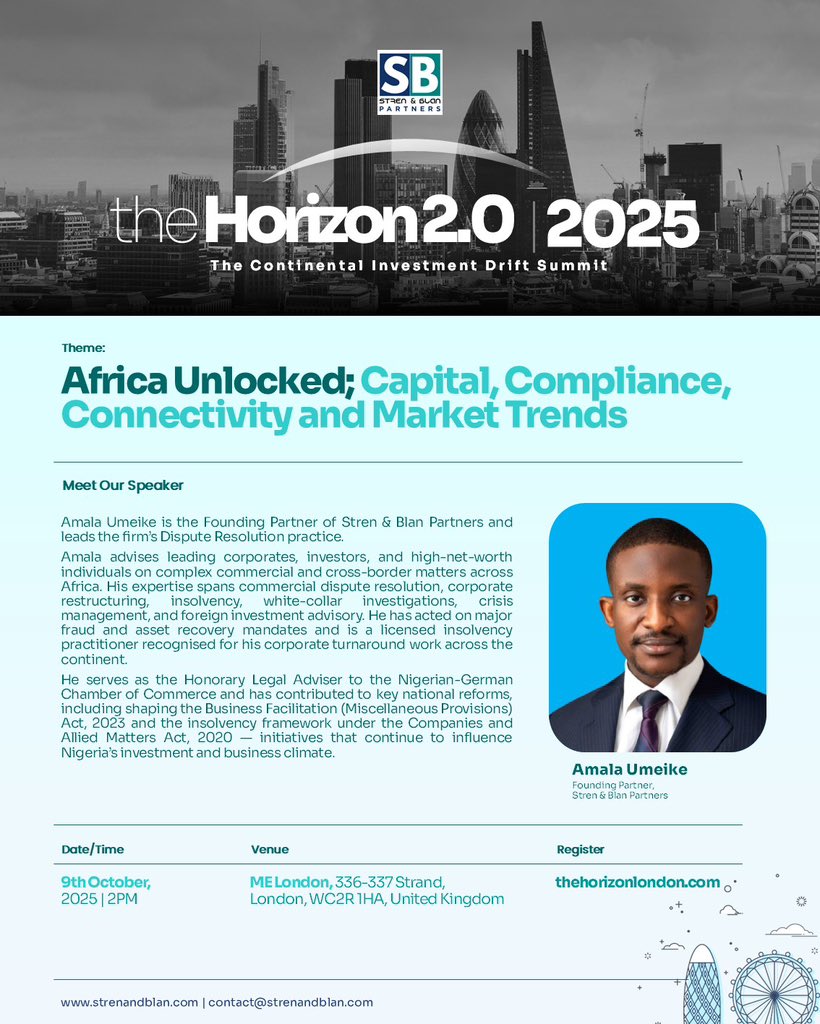
Our Partner, Amala Umeike, will be speaking at Horizon 2.0 – The Continental Investment Drift Summit, hosted by Stren & Blan Partners.
Amala leads the Firm’s Dispute Resolution practice, where he advises corporates, investors, and institutions on complex
#horizon2025speaker
Our Managing Partner, Christian Aniukwu, will be speaking at Horizon 2.0 – The Continental Investment Drift Summit, hosted by Stren & Blan Partners.
Christian leads the Firm’s Intellectual Property, Data Protection, and Corporate Services practices, and is
#horizon2025speaker
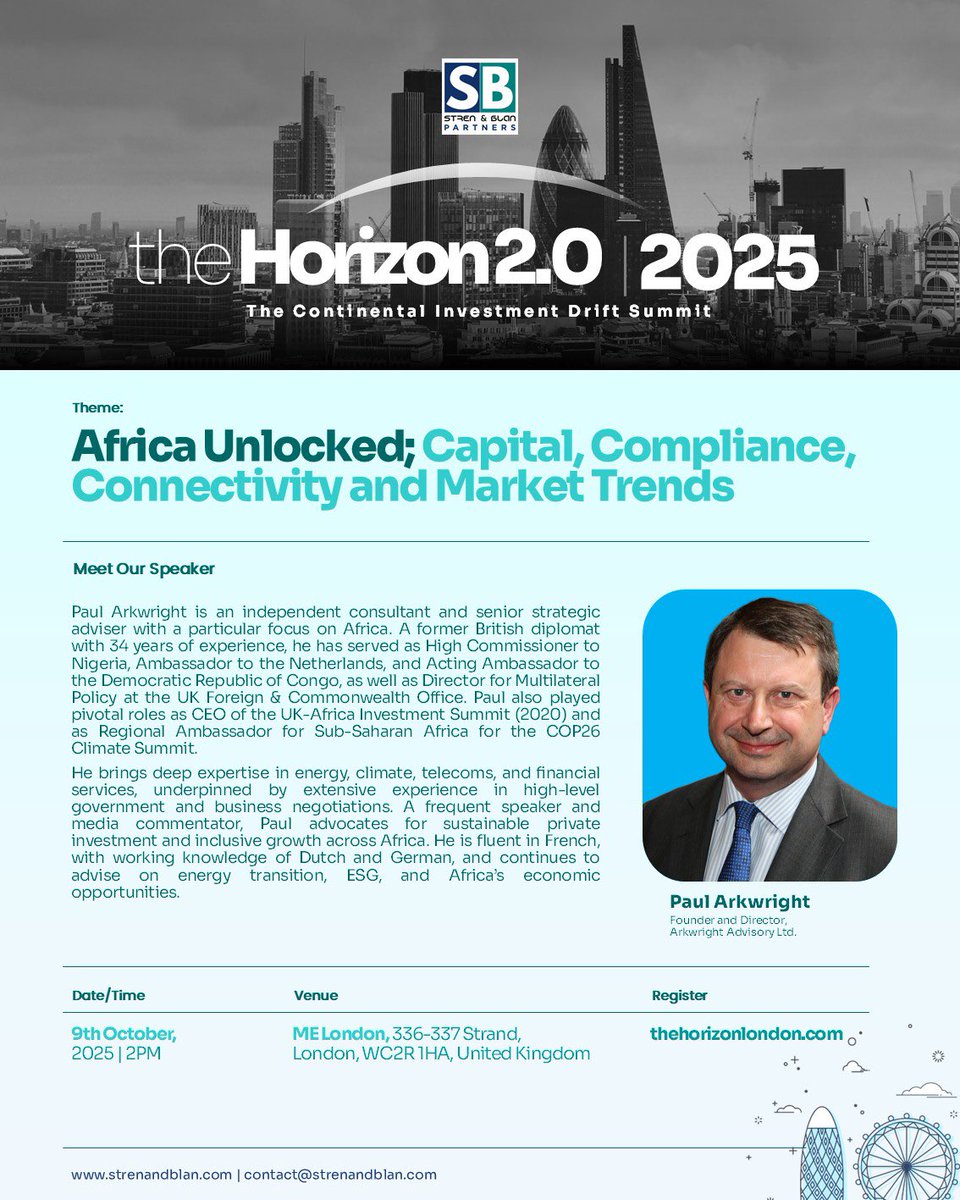
Paul Arkwright, former British diplomat and senior strategic adviser, will be speaking at Horizon 2.0 – The Continental Investment Drift Summit, hosted by Stren & Blan Partners.
Over his 34-year diplomatic career, he held senior roles including
#sbpphotos
Our Associates Stanley Umezurike and Lynda Agukwe attended the GITEX Nigeria 2025 Tech Expo & Future Economy Conference, held at the Landmark Centre in Lagos.
The Lagos edition of GITEX highlighted Nigeria’s emergence as a hub
Sustainability is no longer a voluntary initiative for Fast-Moving Consumer Goods (FMCG) companies, it has become a regulatory and strategic necessity. With packaging alone contributing nearly 40% of global plastic waste, regulators in Nigeria and abroad are setting stricter