@Chiliz Quick reminder for $CHZ holders 🌶️
Voting is live to decide our next rewards date. Make sure to participate—active voters get a bonus allocation at launch!
Vote here: https://t.co/oKHpvkrf7t
@Chiliz Quick reminder for $CHZ holders 🌶️
Voting is live to decide our next rewards date. Make sure to participate—active voters get a bonus allocation at launch!
Vote here: https://t.co/oKHpvkrf7t
> Iran called MBS and gives him the list of ARAMCO facilities they were going to blow up if US attacked theirs
> MBS knows the whole region is low on air defences and calls Trump
> MBS reminds Trump KSA will sell US Treasuries and stocks to pay for war damages
> Trump TACO
Trump announced that US has cancelled its attack on Iran.
And that they’ve agreed to the perimeters of a deal to open the Strait and end the nuclear program.
Anyone else feel like they’ve aged a few years in the past 6 months?
🇯🇵🇺🇸 People don’t understand how dangerous this is. Here is a bit of what’s going on. We’re selling Euros (destabilizing Europe) to buy Yen (stabilizing Japan) which isn't really a sign of control, it's actually a desperate operational patch on a breaking U.S. yield curve.
The "everything is under control" narrative is not really working here because it’s missing what is actually happening. The US govt didn't step in to preemptively smooth out the market ahead of the midterms, they stepped in because a massive global unwinding is already threatening the plumbing.
When Japan is forced to defend a crashing yen unilaterally, it has to dump U.S. Treasuries which directly spikes 10Y and 30Y yields in DC. Selling EUR reserve assets lets the NY Fed shore up JPY liquidity without openly flooding the market with U.S. paper... but running this play exposes just how trapped the Fed really is.
This time they're coordinating, but forced intervention at this scale historically signals that the dam is about to break…you know what to do!
The world doesn't slow down. Neither do we. Follow @EagleIntReports for real-time geopolitical analysis, global news, and foreign policy intelligence. 🌍
@Chiliz The community is deciding the next Chiliz rewards date.
Vote now to secure your bonus allocation ahead of the rewards launch.
Learn more:
https://t.co/oKHpvkrf7t
@Chiliz The community is deciding the next Chiliz rewards date.
Vote now to secure your bonus allocation ahead of the rewards launch.
Learn more:
https://t.co/oKHpvkrf7t
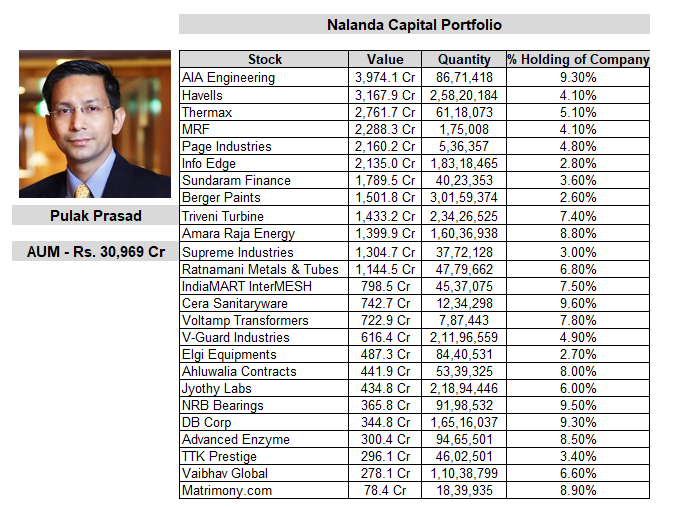
Pulak Prasad's Nalanda Capital latest portfolio.
Nalanda Holds 25 stocks worth Rs. 30,969 Crores. 19 of which are more than a decade old.
Recent addition includes IndiaMart Intermesh bet of Rs. 800 Crores🔥
#RossellTechsys
Rossell Techsys Block Deal: Understanding with some recent examples
The Deal:
Promoters Rishab Mohan Gupta and Harsh Mohan Gupta & Son HUF sold a combined 18.47 lakh shares (4.89% stake) for ₹166.24 crore at ₹900/share. Kotak Mahindra Mutual Fund bought the entire block in one clean transaction.
Why It Matters
Promoter holding was 74.80% before the sale — still very high after, so this isn't a control or confidence issue.
A single Tier-1 institutional buyer taking the whole block (rather than the shares scattering into the open market) is generally read as a positive signal — it suggests conviction, not distress selling.
Stock rose 3% intraday to ₹951, touching ₹974 — the market reacted to the trade itself before the formal disclosure even came out post-market.
What to Watch Next
The real test of a block deal usually isn't the day it happens — it's the day after, once the official disclosure confirms who sold and why. A few recent examples from June 2026 show how this plays out both ways.
On June 2026, when GNG Electronics saw a promoter block deal, the stock rallied over 6% on the trade day itself, closing at ₹418.60. The following session, once the disclosure confirmed the sale was purely to meet SEBI's public float norms and that marquee names like Goldman Sachs had picked up the stake, the rally extended - the stock climbed as much as 9% to ₹455.
Around the same time, Ajanta Pharma cleared a much larger ₹1,024 crore promoter block. The stock moved up cleanly on the trade day, and the momentum held into the next session once the market learned that Kotak Mutual Fund and Aditya Birla Sun Life Mutual Fund had absorbed the entire stake between them. Knowing two Tier-1 funds - not scattered retail or unknown buyers - had taken up the shares removed any fear of a negative corporate event and anchored the price for the sessions that followed.
The pattern isn't always positive, though. Also in June 2026, Vedanta saw its stock slump 7–9% intraday to ₹279 after a 7.3-crore-share block hit the market at a discount. The next day's disclosure confirmed that promoter entity Twin Star Holdings was selling to help meet broader group debt obligations. That's a red flag for investors, because it signals the promoter needed cash under some pressure, not that they were making a strategic choice. Once that reason came out, selling pressure extended rather than eased, with a weak recovery in the sessions that followed.
DOMS Industries followed a similar script that same month. The stock crashed nearly 5% intraday to ₹2,200 as a large 7.3% stake hit the market. Some institutional buying stepped in near the lows, but the next day's disclosure showed that corporate promoter FILA had sold a large chunk of its holding — and simply cutting a big stake, without a clear compliance or portfolio-related reason attached, made investors uneasy about how much confidence the promoter still had in the stock. Retail sentiment turned cautious, and the stock settled into a range-bound, mildly bearish consolidation.
Investor Takeaway
For Rossell Techsys, the sale size (4.89%) is small against the promoter group's remaining ~70% stake, and the buyer — Kotak Mahindra Mutual Fund — is a recognizable Tier-1 name. That combination looks closer to the Ajanta Pharma and GNG Electronics pattern than to Vedanta or DOMS. Watch the next 1–2 sessions: holding above the ₹900 deal price supports the positive read; a slide back to or below ₹900 would signal more caution than the headline suggests.
[Not investment advice, DYOR]
clean max results are good . if you connect the commentary from HFCL, STLTECH on DC AI runway in india ., its best is 12-18 months away.
for CleanMax, EV/EBITDA is the better primary valuation method, not P/E. Heavy project debt, depreciation and commissioning ramp-up suppress PAT during the growth phase.
if it trades at current 17.5 EV/EBITDA u can easily calculate the upside for fy27 and fy28 .
A New AI Shortage Is Coming. One CEO Just Predicted it Will Be “Bigger Than Memory.”
Indium (In) and indium phosphide (InP) are facing a severe supply shortage driven by explosive AI data center demand, strict Chinese export controls, and low manufacturing yields.
Shift from "copper wires to optical fibers" (800G and 1.6T transceivers) requires massive quantities of InP-based lasers. Industry demand sits near 2.6 to 3 million substrates against an effective capacity of only 750,000 pieces (a 70% supply gap).
NVDA invested in both Lumentum and Coherent, the two dominant InP producers, as Lumentum's supply-demand iZmbalance now exceeds 30%.
The Incumbent Oligopoly: Concentrated and Constrained
Global indium phosphide substrate supply is extraordinarily concentrated. Three players control over 90% of the market: Japan’s Sumitomo Electric ~42% share,~800,000 wafer annual capacity), U. S.-based AXT including its Chinese subsidiary Beijing Tongmei (~36%share,~300,000 wafer capacity), and Japan’s JX Nippon Mining & Metals (~13% share, ~200,000 wafer output)..
Source ~yahoofinance , global semi research Substract
If AWS can grow into a trillion dollar revenue business, imagine what a company like $NBIS could become.
AWS is a $169 billion run rate business today, so Jassy is telling you the market has room for one player to 6x from there. That means the total pie is measured in multiple trillions.
Nebius does about $3 billion.
They aren't fighting for a slice of a fixed market. They're operating in a market where the largest incumbent on earth, spending $220 billion a year, publicly says it cannot build fast enough to serve demand through 2027.
Everything AWS turns away has to go somewhere, and there are only a handful of companies that can take it.
Now stack what Nebius has been doing. Revenue growing 684%. Contracts with Meta, Microsoft, and Reflection stacking past $46 billion.
An asset light model that lets them scale on partner capital. PUE of 1.25 against a 1.54 global average, meaning better margins per megawatt than almost anyone. And Nvidia holding a 9.3% stake.
A company at $3 billion of revenue with $46 billion already contracted, inside a market the leader says is heading toward trillions.
That's what real upside looks like.
The US just bought yen for the first time since 1998.
This isn't about saving Japan. It's about saving the US bond market.
What just happened:
- Yen hit ¥164 last week, weakest since 1986
- Japan spent a record $52.8B defending it on Thursday
- Friday, the US joined in: NY Fed sold euros to buy yen, via Goldman & Morgan Stanley
- First joint US-Japan intervention in nearly 30 years
Why Washington cares:
- Japan is the biggest foreign holder of US Treasuries
- Tokyo defending the yen alone means selling dollars
- And Japan's dollars sit in Treasuries
- Every solo intervention = UST selling, with 30Y yields already at 19-year highs
The elegant part:
- The US sold euros, not dollars
- Firepower for Tokyo without forcing it to dump Treasuries
- Defending the yen IS defending the US bond market
The catch:
- The Fed is expected to hike. The BoJ just held at 1%
- Intervention buys time. Only rate convergence fixes this
- Shorts are already targeting ¥162
America just chose its bond market over the dollar's rally.
That tells you which one it's worried about.
Gavin Baker: "the cheapest producer of intelligence will win the AI race
if Anthropic's neocloud and cloud providers were using Arya, maybe they wouldn't have $30 billion in revenue - they'd be at $60 billion"
this is him naming the companies he just bought and giving investing advice
His words:
"I'm a Crusoe, CoreWeave and Nebius shareholder - I love you all"
"Apple isn't worth three trillion because they make the cheapest smartphones. Nvidia isn't worth five trillion because they make the cheapest chips - they're just the best - AI is fundamentally different"
"why was I one of the earliest investors in Tesla and Nvidia?
Musk - said "that's crazy" and put the battery at the bottom of the car
Huang - gaming chips and AI chips needed the same math - he bet everything on it"
"every 100 millisecond delay in Google search results cost them 1% of revenue"
"fortune favors the bold. Be bold"
bookmark & watch today ↓
While everyone's distracted by the Leopold fund collapse, Japan could crash the world economy.
Here's what nobody connected this week.
The Bank of Japan held its rates. No hike.
Then it did something it almost never does. It stepped into the market and bought its own currency.
Then the part that should be front page everywhere.
The US Treasury bought Japanese yen. First time in decades.
America is now defending Japan's currency.
Why?
Because the yen is what paid for America's party.
Japan is the largest foreign holder of US treasuries. For decades, investors borrowed yen at nearly 0% and pumped it into US markets. Stocks, tech, AI. It's called the yen carry trade, and it's been quietly funding America's debt for thirty years.
Until now.
Japan already spent $74 billion trying to stop the slide this year. It failed. The yen hit its weakest level since 1986.
So this week, both governments went in together. The yen ripped 4% in two days.
Currencies aren't supposed to move like that. When they do, someone is being forced out.
The same borrowed yen that pumped the AI trade is the money now leaving it. Leopold's fund wasn't a one-off. It was the first exit in a crowded theater.
Wall Street knows. They've been piling into the carry trade harder than they have in decades. [SHOW: 'Carry Trade Returns Soar Most in Decades' 7/21]
Not because they know something you don't. Because the returns were too good to leave.
And crowded exits are how small moves turn into crashes.
In 1987, Germany raised rates against a weak dollar. Two months later, the S&P fell over 20% in one day. Black Monday.
In 2026, it's Japan.
Except this time, the US government is already in the market - buying yen with its own reserves, trying to control the exit.
Governments don't do that unless the alternative is worse.
🚨 Speculators betting against the yen may have dramatically underestimated how far the U.S. and Japan are prepared to go.
The U.S. and Japan are now openly coordinating to crush traders betting against the Japanese yen-
In what will become one of the most consequential currency battles in decades.
Japan reportedly spent roughly $53 BILLION buying yen in a single day, the largest intervention in its history.
U.S. Treasury Secretary Scott Bessent publicly called the yen “very undervalued,” while a photographed notepad in front of him reportedly included the instruction:
“Buy Japanese Yen (JPY) $5–10 bil.”
The New York Fed also reportedly contacted major banks for yen exchange-rate quotes, a classic signal that authorities may be preparing to intervene—or, in this case, already are.
The yen has been collapsing under the weight of Japan’s low interest rates, rising oil costs and the enormous interest-rate gap between the U.S. and Japan.
Investors have been borrowing cheap yen and moving that money into higher-yielding assets around the world.
That strategy works beautifully while the yen keeps weakening.
But when the yen suddenly surges, those trades violently unwind.
Traders are forced to sell stocks, bonds and other risk assets to repay their yen-denominated borrowing.
That is how a currency intervention in Japan can create volatility across global markets.
There is also a very dangerous catch for the United States.
Why?
Japan is one of the largest foreign holders of U.S. government debt.
If Japan needs more dollars to continue defending the yen, it will eventually be forced to sell U.S. Treasuries.
That will push Treasury prices lower, send U.S. yields higher and increase borrowing costs for American households, businesses and the federal government.
And the timing could not be worse.
The U.S. government now owes more than $39 trillion.
But when does that debt actually come due?
🟢 Less than 1 year: ~32%
🔵 1–5 years: ~36%
🔴 5–10 years: ~14%
🟡 10–20 years: ~9%
🔵 20–30 years: ~9%
That means nearly 70% of all Treasury debt matures within the next five years.
The U.S. will be forced to refinance trillions of dollars at whatever interest rates prevail.
So if defending the yen causes Japan to sell Treasuries, U.S. yields could rise at the exact moment America needs to refinance the largest debt load in its history.
That is why Washington suddenly cares so much about the yen.
This is no longer just verbal intervention.
It is a fight to stabilize Japan’s currency, prevent a global carry-trade unwind and stop America’s own borrowing costs from spiraling higher.
@jugeshinder Both stalwarts are right and worth learning a great deal from.
Equity terminal value changes for the next decade, beginning yesterday ;
40 years of borrowing to justify tomorrow's earnings ends today.








![casper_smc's tweet photo. While everyone's distracted by the Leopold fund collapse, Japan could crash the world economy.
Here's what nobody connected this week.
The Bank of Japan held its rates. No hike.
Then it did something it almost never does. It stepped into the market and bought its own currency.
Then the part that should be front page everywhere.
The US Treasury bought Japanese yen. First time in decades.
America is now defending Japan's currency.
Why?
Because the yen is what paid for America's party.
Japan is the largest foreign holder of US treasuries. For decades, investors borrowed yen at nearly 0% and pumped it into US markets. Stocks, tech, AI. It's called the yen carry trade, and it's been quietly funding America's debt for thirty years.
Until now.
Japan already spent $74 billion trying to stop the slide this year. It failed. The yen hit its weakest level since 1986.
So this week, both governments went in together. The yen ripped 4% in two days.
Currencies aren't supposed to move like that. When they do, someone is being forced out.
The same borrowed yen that pumped the AI trade is the money now leaving it. Leopold's fund wasn't a one-off. It was the first exit in a crowded theater.
Wall Street knows. They've been piling into the carry trade harder than they have in decades. [SHOW: 'Carry Trade Returns Soar Most in Decades' 7/21]
Not because they know something you don't. Because the returns were too good to leave.
And crowded exits are how small moves turn into crashes.
In 1987, Germany raised rates against a weak dollar. Two months later, the S&P fell over 20% in one day. Black Monday.
In 2026, it's Japan.
Except this time, the US government is already in the market - buying yen with its own reserves, trying to control the exit.
Governments don't do that unless the alternative is worse.](https://pbs.twimg.com/media/HOm6tJYXMAAyHBV.jpg)