A bad day doesn’t mean a bad week
A bad week doesn’t mean a bad month
A bad month doesn’t mean a bad year
Stop letting one mistake stop you from achieving your goals.
All that shit is just a bump in the road.
You gotta keep going.
Foundational trading/investing mindset
The power of small daily gains and compounding is massively underestimated, especially within the trading bubble on CT.
Chasing quick riches rarely leads anywhere. Long term, steady profitability always wins.
The key mindset: consistency.
For me, a world ETF savings plan and chill approach makes the most sense in times like these.
Summer is coming. Stay positive and enjoy life, most things are beyond our control anyway. Just keep working toward your goals.
If you’re young and have surplus monthly cash flow, prolonged downtrends can actually work in your favor. You don’t need to get wealthy in your 20s, 30s, or even 40s, why chase fuller bank accounts if you’re not spending more? No need for hectic moves, focus on long term consistency and the power of compounding.
For many, a 9to5 job feels frustrating, and world events can make it easy to fall into the trap of wanting to get rich fast. Social media shows young people becoming millionaires in their 20s, distorting the picture for an entire generation.
You know that the urgency to “make it as fast as possible” is toxic for your mindset, your life, and your long term profitability. Don’t be blinded, stay the course. Be deliberate, calculated, and make decisions based on experience.
Life is good. No rush.
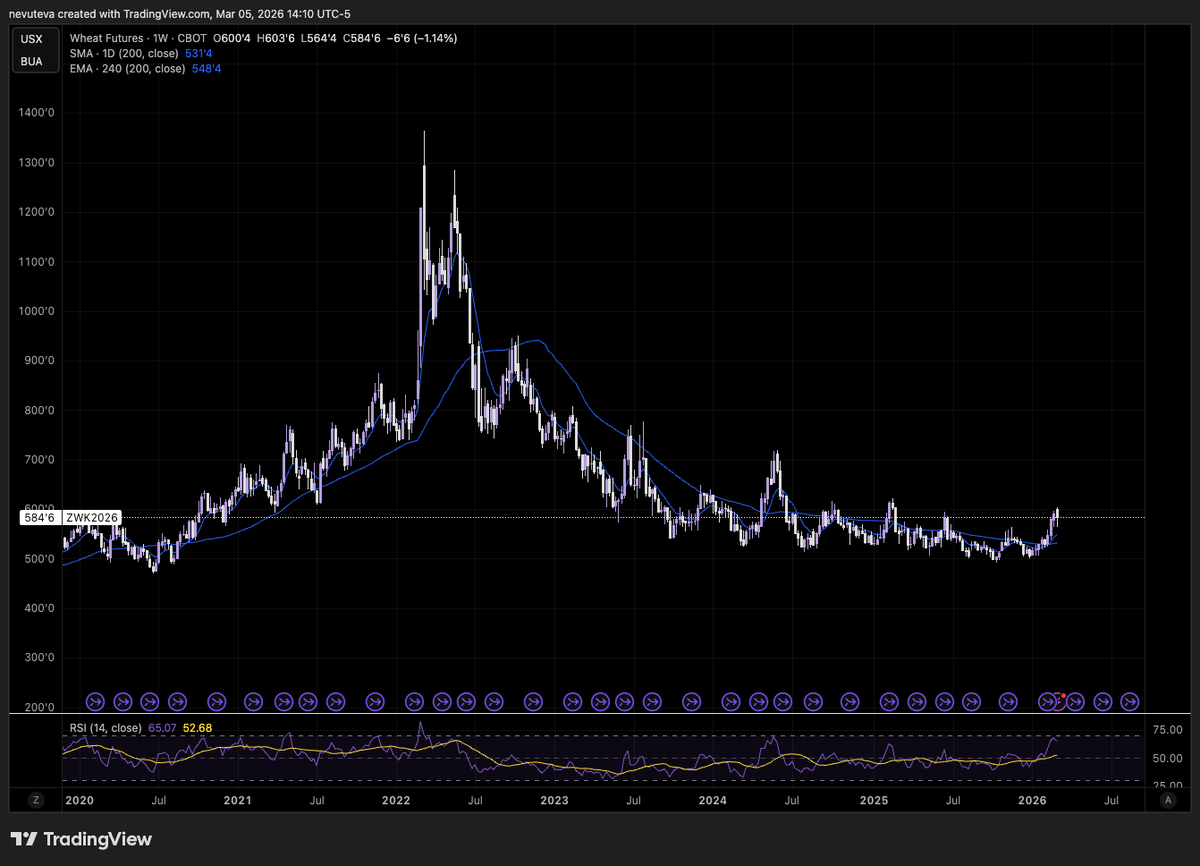
Do everything in your power to buy as many wheat futures as possibly can right now. Sell your house if you have to
You can't eat an NVDA share or an ounce of Gold, but 5000 bushels will secure you and your family for generations
The Psychology of Greed in Day Trading🧠
Greed is one of the most destructive emotions in trading. It’s not just the desire for more money, it’s a neurochemical hijack: seeing a big green P&L (yours or someone else’s) triggers a dopamine surge that feels identical to winning a jackpot.
Your prefrontal cortex (the rational part) gets temporarily drowned out by the limbic system screaming “NOW! MORE!” The result? You abandon your edge, oversize, revenge trade, or chase setups that aren’t there.
Almost every blown-up retail account has greed (often mixed with envy) at the crime scene.
3 Practical Steps to Take the Moment Greed or Envy Hits
10-Second Physiological Reset
As soon as you feel that chest tightness, heat, or the urge to click “buy” on something you weren’t planning, force yourself to stand up, look away from the screens, and do 5 slow nasal breaths (4-second inhale, 6-second exhale). This activates the parasympathetic system and lowers cortisol/dopamine enough for your rational brain to come back online. Most impulsive trades are executed within 30 seconds of the emotional spike, break that window and you usually win.
Ask the “ Funeral Question” Out Loud
Literally say to yourself (or whisper if you’re in an office):
“If this trade blows up my account, will I be able to look at myself in the mirror tomorrow and say I followed my plan?”
Verbalizing it engages Broca’s area (language center) and forces the prefrontal cortex to re-engage. It sounds silly, but it works because it shifts the frame from short-term reward to long-term identity (“I am a disciplined trader”).
Envy → Data Exercise (60 seconds max)
When you see someone else’s massive green day and feel that stab of envy, immediately open a blank note or journal and write: Their posted win: +$25k
Their probable risk on that trade: ? (you don’t know)
Their screen time/experience: ? (usually years more than you)
Sample size you’ve seen: 1 day
Your edge today: [insert your actual setup or “none”]
This turns the emotional trigger into a quick rational audit. Nine times out of ten you realize you’re comparing your Chapter 3 to someone’s highlight reel (or survivorship bias).
Do these three things every single time the greed/envy spike appears and you’ll cut 80–90 % of emotional mistakes out of your trading. The remaining 10–20 %? That’s just being human, manage it with position sizing and you’ll still compound beautifully.
Share it with someone who needs to see this,most traders won't survive long enough to make it because nobody talks about the psychology. RT if you found this valuable. 🧠
There’s a man lying on his bed right now, fighting cancer, praying for one more sunrise. He doesn’t dream of wealth or fame he just wants to live, to breathe without pain, to walk outside and feel the wind on his face one more time.
There are people in this world who can’t see the sky, who can’t walk on their own feet, who can’t hear their mother’s voice or say “I love you.” They would give everything every drop of blood, every last heartbeat just to have what you already have. But they never will. No amount of money can buy what they lost.
And then there’s you.
You can see. You can walk. You can talk. You can hear. You wake up every morning with a body that works, a roof over your head, food on your plate and still, you complain. You chase what you don’t have, while ignoring the miracles you live with every single day.
You think you deserve them, that they’ll last forever. But one day, one single moment, you’ll realize the truth nothing is guaranteed. And by then, it might be gone.
We humans are strange. Never satisfied. Never grateful. Always wanting more.
But if you ever feel lost or broken, look below not above. Look at those who have less, yet smile more. Look at those who pray for the very things you forget to thank God for.
Gratitude is not just saying “thank you.” It’s realizing how rich you already are.
If you have health, a home, and food to eat you are already living someone else’s greatest dream.
So stop complaining. Bow your head. Whisper to God, “Thank you for everything I never earned but still have.”
Because one day, when it’s gone, you’ll finally understand what it was worth.
When You Have Nothing, You Have Everything
The younger and poorer you are, the greater your license to risk everything.
The best ally of risk is spreads.
Specifically, the spreads of age and money.
They define how much room you have to make mistakes, and how freely you can move without breaking.
Age Spread: The Motor of Youth
Your age spread is the distance between your current age and the average lifespan. The bigger that spread, the more you should lean toward risk. When you’re young, you have decades of recovery ahead of you. That time is your insurance. It’s your unfair advantage.
If you’re twenty, you can start from zero ten times and still be early.
That’s the luxury of time, it forgives failure.
Which is why hesitation is such an expensive mistake when you’re young. Those years never come back, and playing it safe too early is the fastest way to waste them.
The system gets it backward.
Most young people spend their prime years accumulating credentials and seeking stability.
They go to college, graduate, get a job, and only then think about taking risks, by which time their spread has narrowed, and their risk tolerance has withered.
The order should be reversed: go all in first, take absurd risks when you have nothing to lose, and let failure educate you. Even if you end up working a job later, you’ll do it with experience, not naivety.
The size of your age spread should dictate your aggression. The younger you are, the more recklessly you should experiment. As that spread narrows, caution becomes a necessity, but until then, risk is your greatest ally.
Money Spread: The Advantage of the Broke
The same logic applies to money, but inversely.
The smaller your financial spread, the greater your edge.
If you have little, you can afford to lose it all, because the climb back from zero is short.
The ability to go broke repeatedly is one of the greatest privileges you’ll ever have.
That’s an enormous advantage people overlook.
If your net worth is $10,000, the distance between you and zero is small enough to bet it all and rebuild easily. But if you have $1 million, that same fall would take years to recover from.
This is why the early stages of building wealth are the most explosive, because you can take bets that the wealthy can’t.
You can go broke repeatedly without catastrophe.
You can swing harder, move faster, and reset endlessly.
In markets like crypto, that asymmetry is everything. A few well-timed, all-in bets when you have nothing can alter your trajectory forever.
So if you’re young and broke, understand this: you are not at a disadvantage.
You are sitting on the rarest combination of edges: time and freedom.
You can risk everything, again and again, while others can’t risk anything at all.
When your spread is wide, you experiment.
When it narrows, you protect.
Life tends to move in inverse for most.....they protect early and regret late.
If you’re young and broke, the universe has given you permission to go all in. Don’t waste that license.
Just cuz it’s a lot of money in other places in the world or means a lot to some people doesn’t mean you should lower the standard you want.
Live life to the caliber that you resonate with, whether it be high or low, don’t let the standards or opinions of the masses define your thinking.
Often times I get told by people, “you know 99% of people would be happy with what you got”
That’s nice, I don’t want to be the 99%