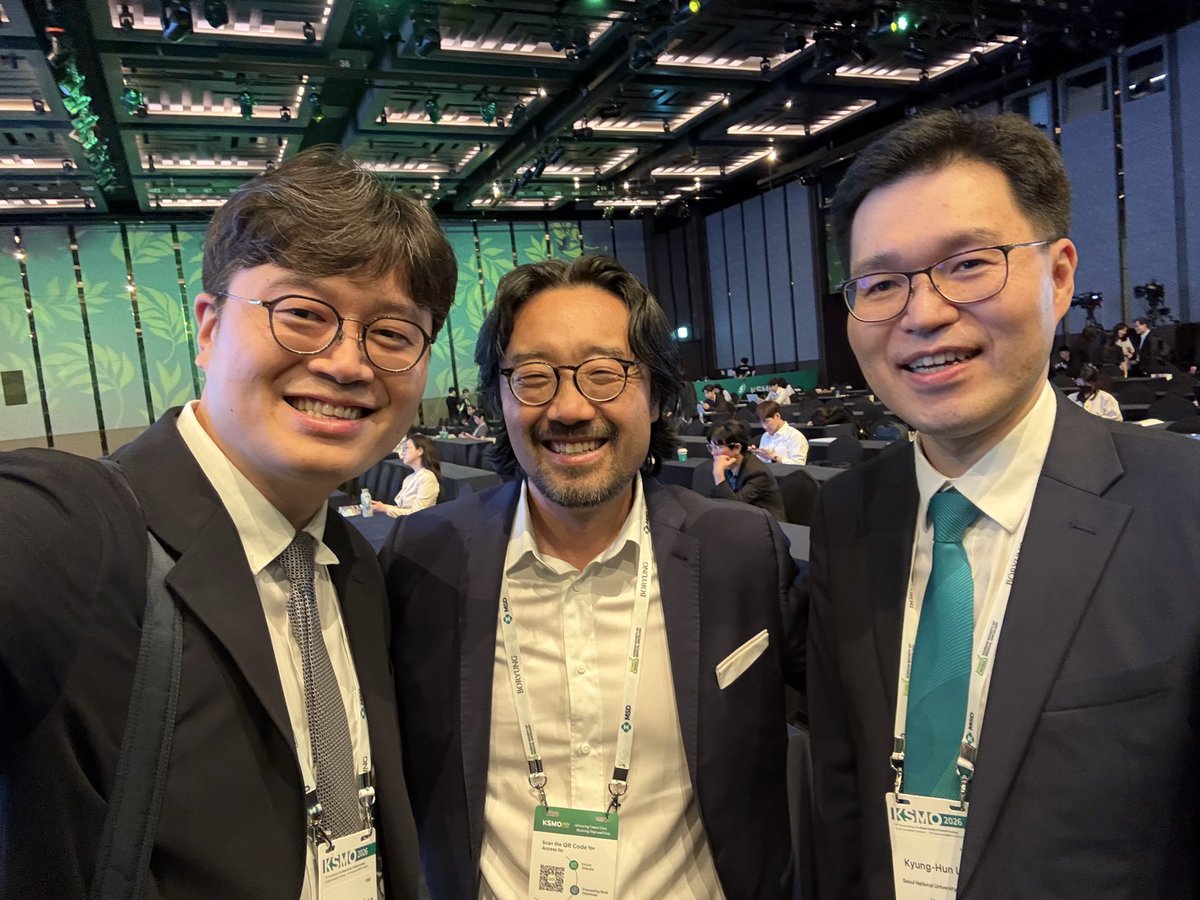
Looking forward to future collaborative translation in pancreatic and biliary tract cancer research with @choong_kun congrats on exciting research fronts!
#GRIT to the world~ 🌎
@oncodaily@OncoDailyGI
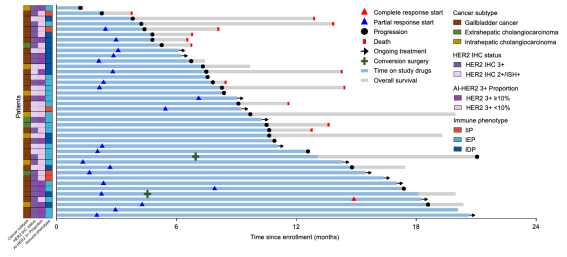
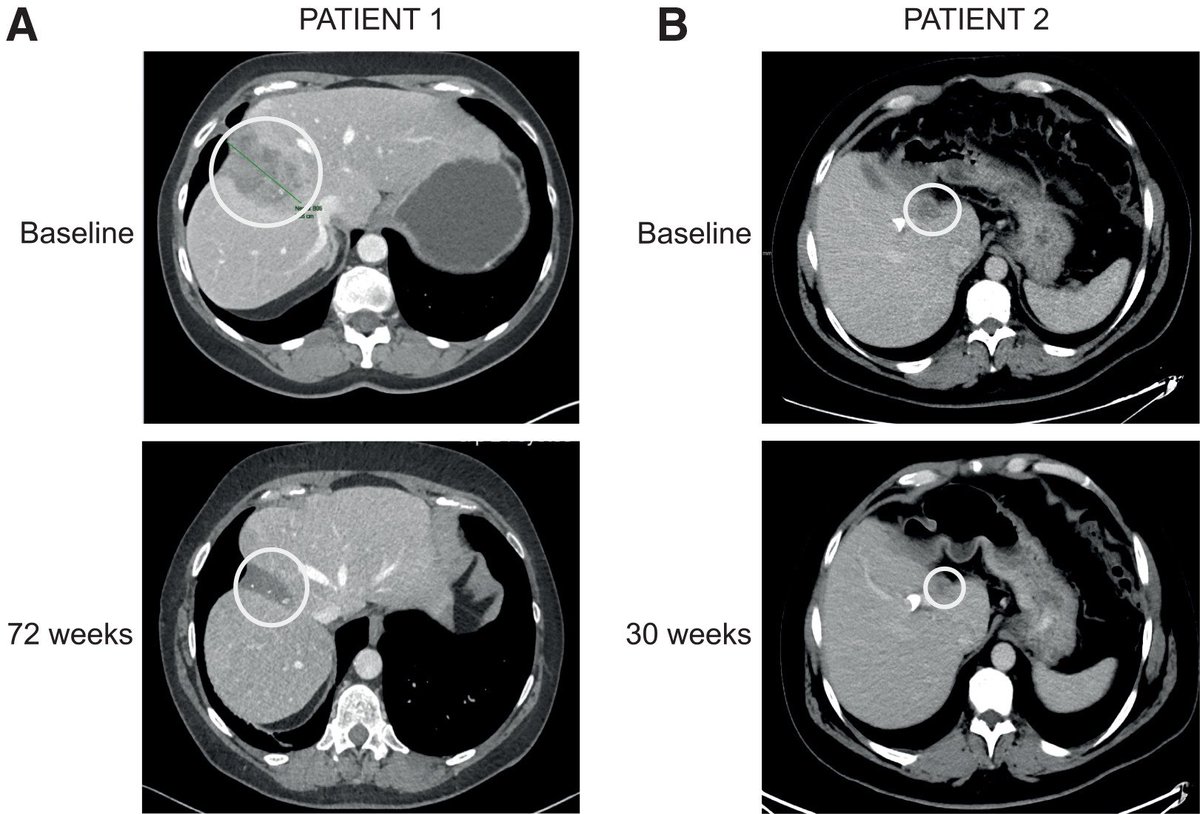
A phase Ib/II trial of first-line trastuzumab, nivolumab, gemcitabine, and cisplatin in HER2-positive BTC (HERBOT): Korean Cancer Study Group.
#ASCO26
👉ORR 55%, DCR 95%, DoR 12.6mo
👉mPFS 10.5 mo
🧐great data, mainly gallbladder..
@myesmo@ASCO
Come to see my poster! Our post-hoc multi-omics profiling (AI-pathology, RNAseq, ctDNA) revealed different response and resistance mechanisms in #TGF-beta inhibition compared to conventional IO in #AGC. #ASCO26.
Excited to present the #HERBOT trial at #ASCO26. Phase Ib/II study of 1L Trastuzumab + nivolumab + gem/cis in HER2+ #BTC. Please join us at the Rapid Oral Session—hope to see many colleagues there in Chicago! @ASCO#biliary
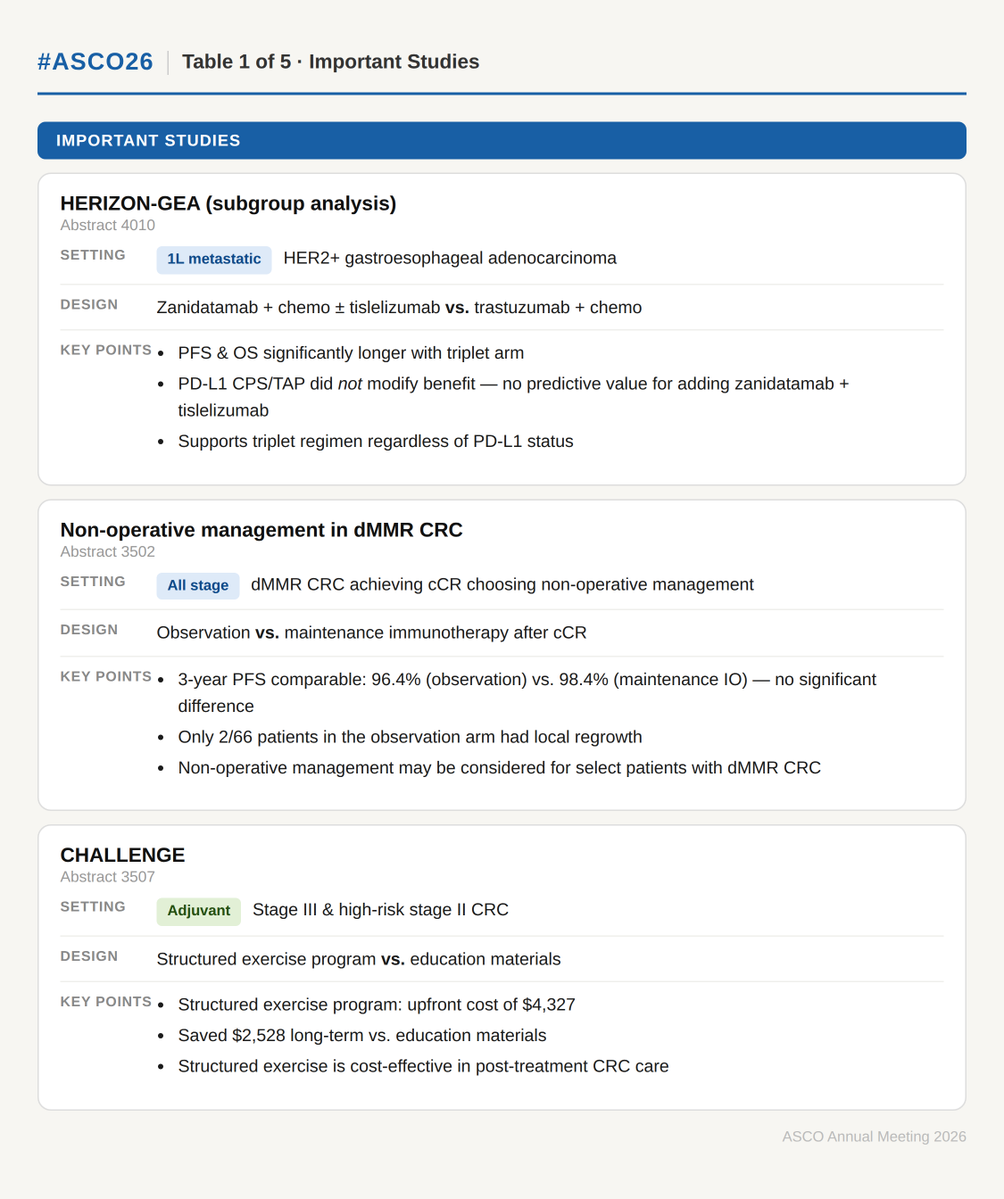
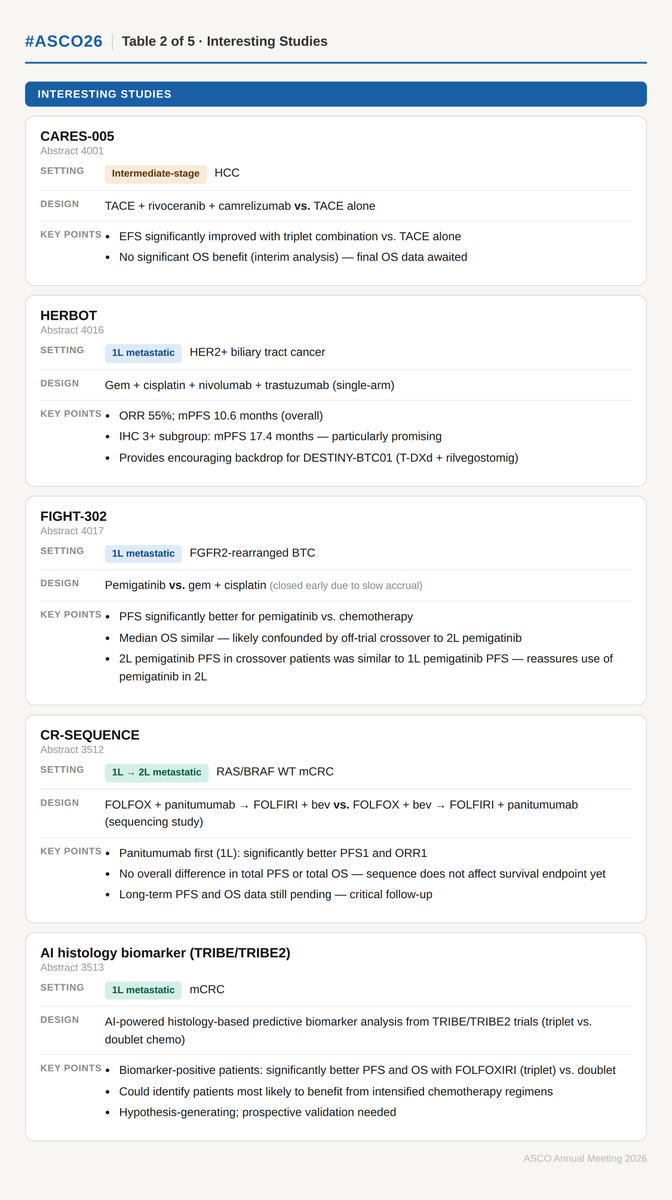
#ASCO26 has released most abstracts. I will break down GI cancer-related abstracts to five tables:
Important studies
Interesting studies
Important negative studies
Novel agents
Practice re-affirming studies
Abstracts that have not been released but are eagerly anticipated: RASolute-302, EMERALD-3, CIRCULATE (AIO), Episode-3, BREAKWATER update, PUMP.
Please see the tables below for the first two tables (important studies, interesting studies). More to come.
@OncoAlert@jgong15 #GIcancer
Nice preclinical & limited, promising clinical data for @RevMedicines Daraxonrasib in Bile Duct cancers (#Cholangiocarcinoma)
https://t.co/ArnvGUbYBm
Much like in #PancreaticCancer, resistance converges on reactivation of RAS signaling via KRAS amplification or upstream SHP2.
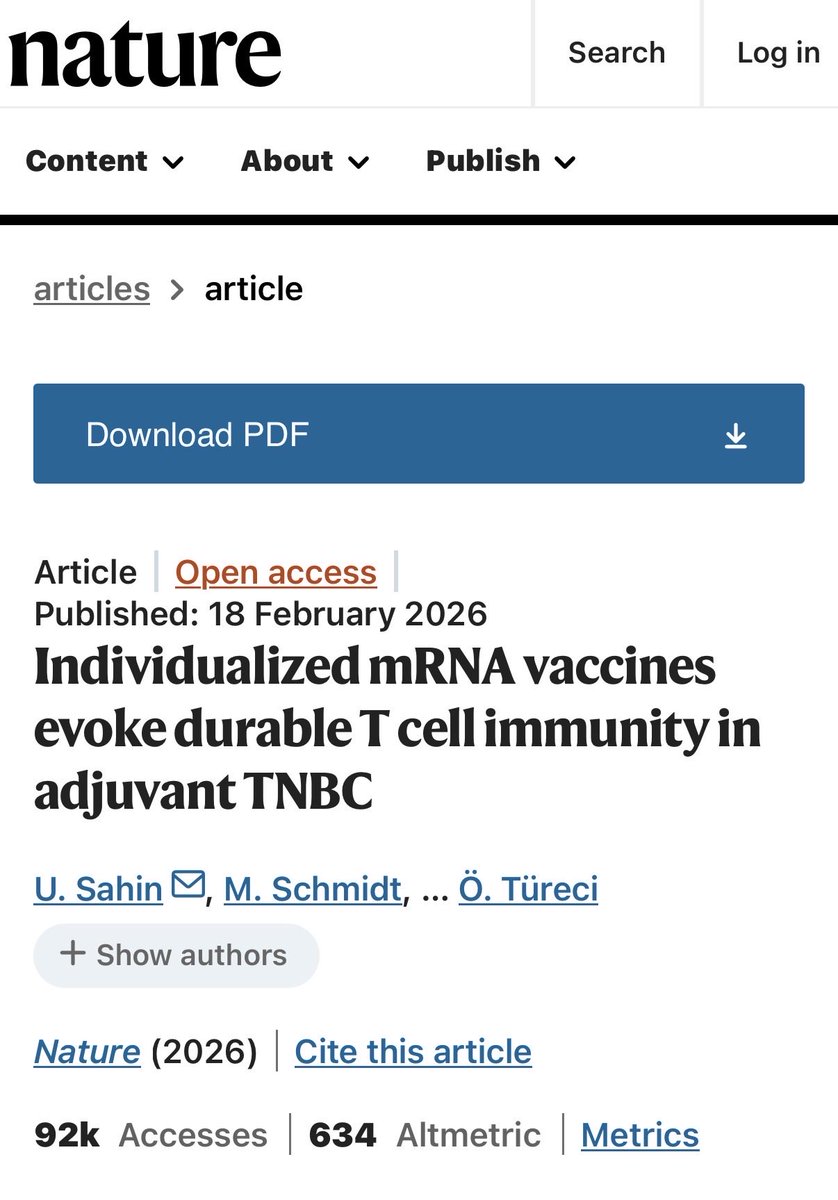
Everyone is talking about personalized mRNA cancer vaccines.
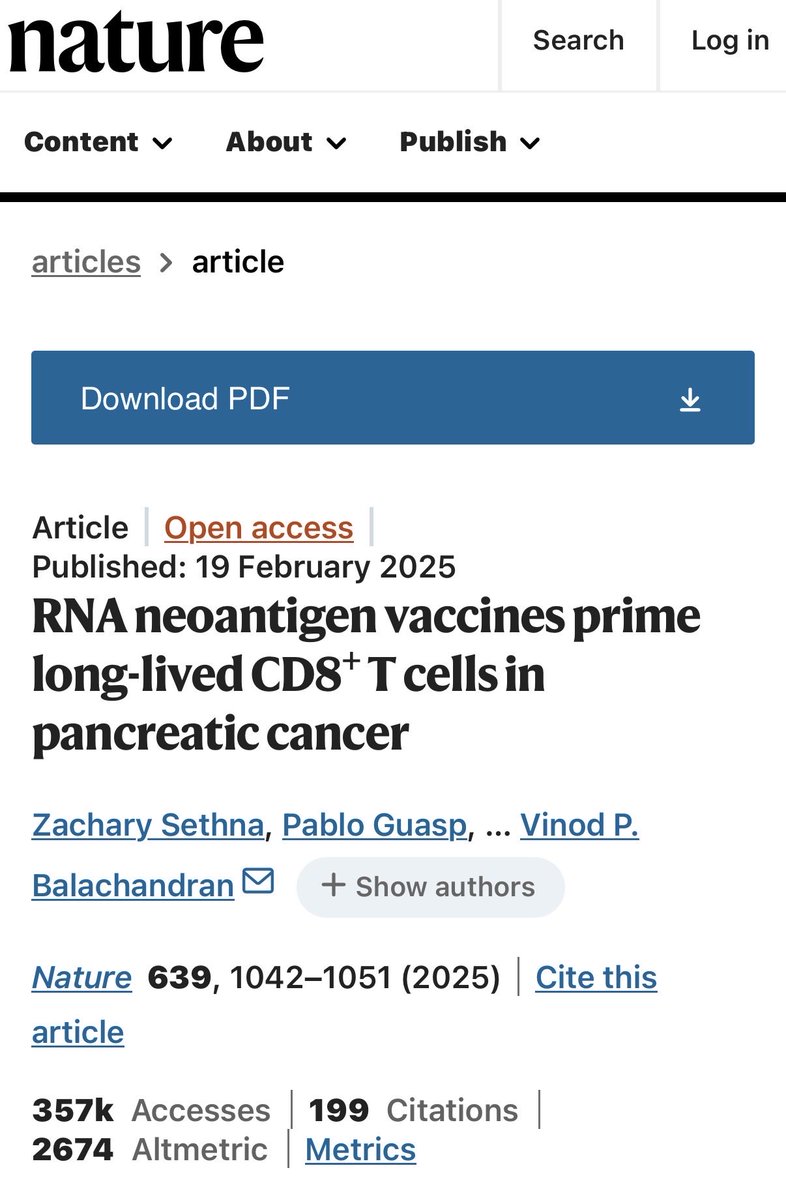
I want to share two recent Nature papers that cut through the excitement and reveal something the viral posts aren't telling you: the approach works — but only in patients whose immune system actually responds to the vaccine. In the PDAC trial, that was half.
Papers:
— TNBC-MERIT trial (Nature 2026): https://t.co/pCpKdgtWbw
— PDAC 3-year follow-up (Nature 2025): https://t.co/1oJxjJSPhS
Here's the exact number that explains why.
The PDAC trial: at 3.2 years median follow-up, vaccine responders had median recurrence-free survival that was never reached. Non-responders: 13.4 months. HR = 0.14. The T cell memory is real — some clones are projected to persist for over a decade.
The TNBC trial: 10 of 14 patients remained relapse-free at 5 years. One patient has been in remission for over 6 years, with neoantigen-specific T cells still circulating at ~2% of her CD8 repertoire.
So what separates responders from non-responders?
Across both trials: only 41 of 251 neoantigens actually triggered a T cell response. That's 16%.
Each vaccine encodes up to 20 neoantigens — the algorithm's best guess at which tumor mutations will be immunogenic. Most don't work. Half the PDAC patients didn't respond — not because they couldn't mount an immune response (they responded fine to concurrent COVID vaccines) — but because their selected neoantigens happened to miss.
This is the core unsolved problem: predicting, from sequence alone, which mutations will produce peptides that a specific patient's immune system will actually recognize.
It sounds like an MHC binding problem. It isn't. Tools like NetMHCpan handle binding affinity reasonably well. What they miss is the full causal chain:
1. Proteasomal processing — will the protein actually be cleaved into this exact peptide?
2. TAP transport — will it reach the ER for MHC loading?
3. HLA-peptide stability — across the patient's specific HLA alleles (10,000+ variants in the population)
4. T cell repertoire availability — has central tolerance already deleted the clones that would recognize it?
5. Tumor clonal architecture — is this mutation in every tumor cell, or just 30%? Targeting subclonal neoantigens leaves most of the tumor untouched.
Every step is a filter. Current prediction stops at step one.
Compounding everything: average manufacturing time in the TNBC trial was 69 days (range: 34–125) from sample to vaccine release. For pancreatic cancer, where non-responders recur at 13.4 months post-surgery, that's not a footnote. It's a window closing.
The good news: the T cell biology is sound. The mRNA platform works. The immunology is spectacular — when it works.
The bottleneck is the first step: choosing which 20 neoantigens go in the vaccine. Get that prediction right, and the responder rate moves.
This is where AI in cancer immunotherapy has to go next. Not mRNA design. Not LNP formulation. Immunogenicity prediction — integrating mutation calling, HLA typing, T cell repertoire sequencing, and single-cell tumor expression simultaneously, as a causal inference problem, not a binding affinity lookup.
We don't have a model that does this well. That's the gap.
Impact of #HER2 positivity in #BTC published in @CCR_AACR. Includes: HER2 IHC-NGS concordance; prognostic/predictive value; genomic analyses.
Successful cross-continent collaborative work with @JavleMilind and @sunyoungslee!
https://t.co/a5GN3ZJDbQ
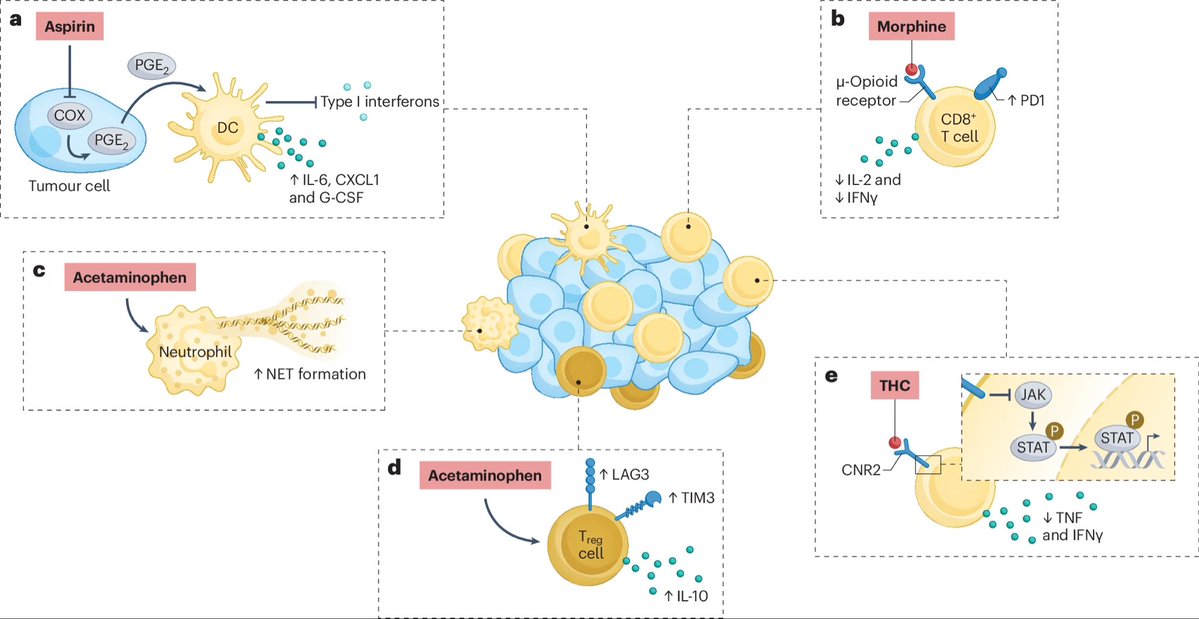
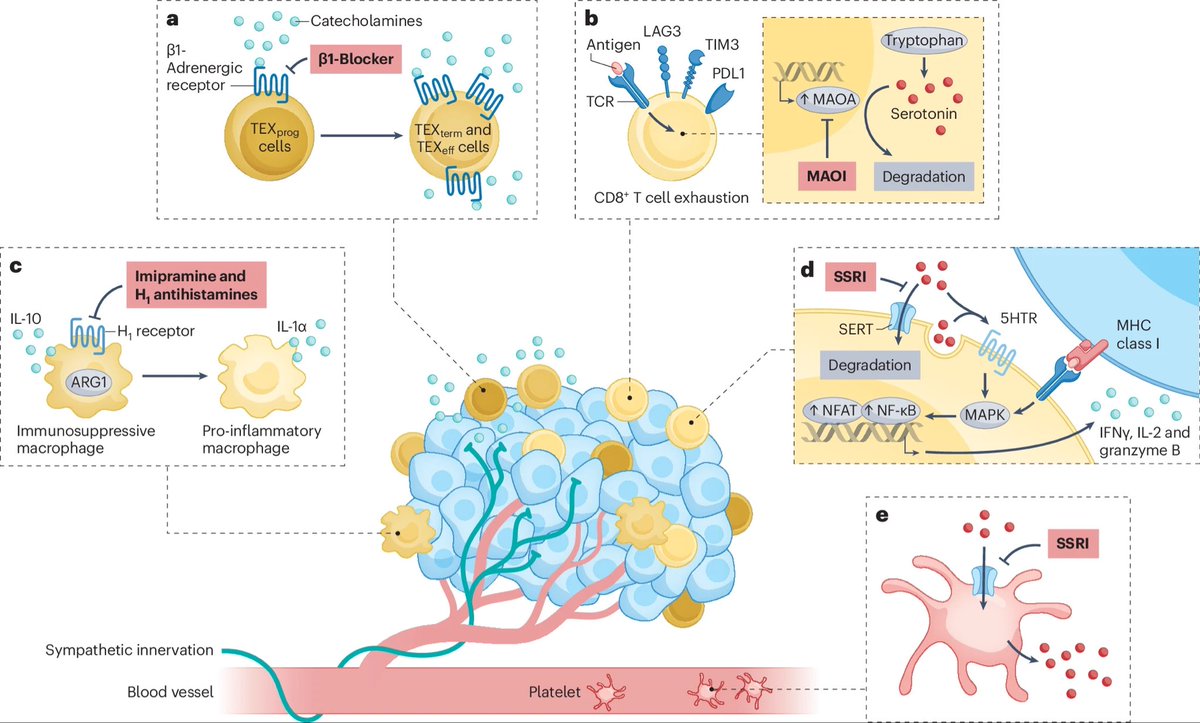
This was a really useful and DETAILED review in @NatureRevCancer on the impact of concomitant medications on treatment outcomes in patients with cancer receiving immune checkpoint inhibitors (everything from antibiotics to analgesics to supplements)
https://t.co/OjIY4XdQKM
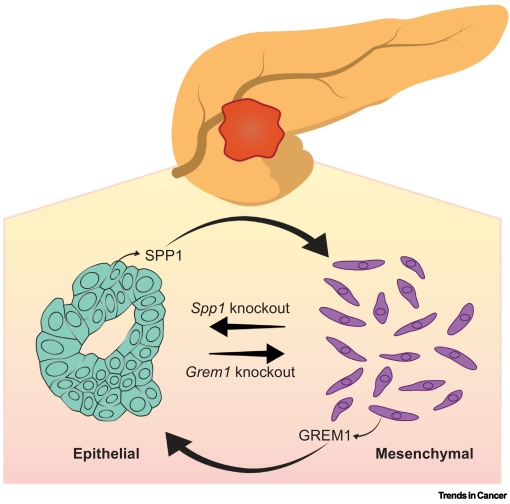
New @trendscancer commentary:
Tumor-intrinsic dichotomy shapes cellular heterogeneity in #PancreaticCancer
https://t.co/cdZzPTzgcZ
Original paper:
SPP1 is required for maintaining mesenchymal cell fate in pancreatic cancer
https://t.co/zpwlhNvIV6
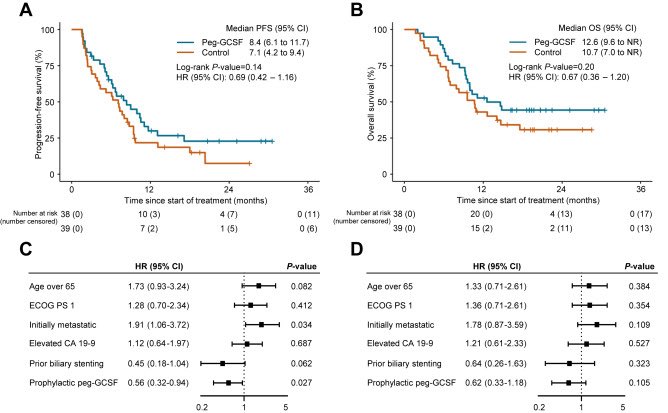
Peg-GCSF Primary Prophylaxis in mFOLFIRINOX for Pancreatic Cancer
🧬 Randomized phase II trial
🛡️ Peg-GCSF cut grade 3–4 neutropenia 2.6% vs 38.5%
🔥 FN only in control arm (12.8%)
📈 Trend to better survival + improved QoL
👍 No increase in bone pain
🔗 https://t.co/ryYXG2c10q
A new Nature paper just delivered a shock to a long-lived oncology myth.
🔗 https://t.co/gVGM9QvQqw
For years we’ve been told that radiotherapy—and its cousins like SBRT, TARE, Y-90—might trigger the “abscopal effect,” a systemic immune response that helps control distant disease.
This study shows the opposite: radiation induces Amphiregulin (AREG) and can stimulate distant metastasis through myeloid-cell reprogramming.
So what does this mean for HPB oncology?
👉 The “abscopal effect” is not a clinical strategy. It’s a story.
👉 Radiation-driven systemic benefit is, at best, unreliable—and at worst, misleading.
👉 Surgery remains the only method of local control with reproducible impact on survival.
The first prospective randomized trial to show benefit of primary prophylactic #pegGCSF in #PDAC treated with 1L #mFOLFIRINOX!
Just published in @eClinicalMed.
https://t.co/AbZ15hrJQq