If the Indus Waters Treaty, signed in 1960, was a vital instrument of regional peace, stability, and cooperation, how come Pakistan initiated the 1965 war, the war in 1971 took place.
Pakistan has discarded the 1972 Simla Agreement.
In the 1990s Pakistan made terrorism an instrument of state policy.
Mumbai and several other terror attacks,even against the Indian parliament, were sponsored.
The Kargil aggression occurred after Vajpayee made the Lahore visit.
Army Chief Munir openly talks of irreconcilable differences between Hindus and Muslims in saying that their "religion, customs, traditions, thoughts, and ambitions" are entirely different.
Teror can be used as a weapon but “shared waters must never be weaponized.”
Other bridges, including trade, can be broken, but water “ must remain a bridge between nations”.
Even under the IWT Pakistan did all it could to complicate and delay Indian run of the river projects permitted by the IWT on rivers allotted to Pakistan.
@MIshaqDar50
WHO says we should have 9 sqm open space per person. Mumbaikars are surviving on just 0.87 sqm. And now even that tiny bit is under attack.
Bandra’s Neville D’Souza Ground, the ONLY FIFA-standard ground in the whole city, where 10,000 young kids train every year; they want to use it for a convention centre.
They are snatching the last proper ground from our children so builders can make more money. Their dreams of playing proper football? Gone. Just like that.
We’re fighting to save Neville D’Souza Ground. If you’re from Mumbai and you care even a little, share this and join the fight. Before it’s too late. #SaveNevilleDsouzaGround #MumbaiOpenSpaces
@Bogachan_1971 $MSTR is/was trying to become valuable by hoarding BTC. however, BTC becomes more valuable if used by more and more people (network effect). Saylor's Idiocy was evident from the scratch
6th reason that Nagarro has fallen roughly 75 % from peak is actually favouring the acquisition, but 140% premium is treating this as approx 40% fall only from peak. ERP of Nagarro getting mixed with core digital engineering of Persistent is double edged sword. +ve but DYOR
Why is the Street cautious on Persistent’s big deal?
@GhaiJasmeetS breaks down 6 key concerns, from growth slowdown to margin risks.
Watch to understand what’s worrying investors.
In Western framework, religion is a closed box of Belief vs. Heresy. If you do not believe the book, you are an infidel.
In Indic framework, it is Darshana. Philosophy categorizes systems based on Astika (accepting Vedic authority) & Nastika (rejecting Vedic authority).
Sanatan Dharma is the civilizational canopy that contains both the Astika & Nastika schools.
⚡️Higher education is entering its liquidation phase as a mass middle-class belief system.
The demographic cliff is only the visible trigger. The deeper break is that the entire college model was built on three assumptions: there would always be more students, families would always treat college as mandatory, and employers would always reward the credential enough to justify the cost. All three are now weakening at the same time.
That is why this matters.
A fertility decline from 2007 shows up in college admissions with an 18-year delay, but the enrollment shock lands inside a system already overbuilt. Colleges expanded staff, facilities, administrative layers, debt loads, athletic budgets, student-life amenities, DEI bureaucracies, marketing machines, and low-ROI programs during an era when the college-going population was bigger and the credential premium felt unquestioned. Now the customer base is shrinking while the product is being repriced.
That creates a financial vise.
The elite tier survives because it sells scarcity, network, status, marriage markets, recruiting access, and proximity to power. A Harvard or Stanford degree is not mainly a classroom product. It is a social-routing asset. Those schools can keep demand even if people lose faith in “college” broadly.
The practical tier survives because it has obvious economic utility. Engineering, nursing, accounting, skilled health fields, hard technical programs, logistics, applied AI, defense-adjacent disciplines, and high-placement public universities can still justify themselves. Cheap public options also survive because affordability becomes a weapon.
The exposed layer is the bloated middle: expensive private colleges without elite status, regional schools with weak draw, generic master’s programs, low-placement liberal arts degrees, weak online MBAs, tuition-dependent institutions, and universities that confuse branding with value. Those schools are going to face the hardest truth: students were not loyal to them. Students were loyal to the belief that the system required them.
That belief is cracking.
AI makes the break sharper because it attacks the bottom rung of the white-collar ladder. College made sense when the degree bought access to entry-level knowledge work. If entry-level knowledge work gets compressed by AI, the bridge weakens. Families will not pay unlimited tuition for a credential that leads into a shrinking first rung. They will ask harder questions: what job, what network, what income, what debt, what skill, what proof?
The cultural layer is even bigger. College used to be the default coming-of-age institution for the American middle class. It replaced church, apprenticeship, local adulthood, early marriage, and family formation as the official bridge from youth into adult status. Now that bridge is expensive, delayed, ideologically contested, economically uncertain, and increasingly detached from real capability.
So the enrollment cliff is really a legitimacy cliff.
The schools will respond by discounting tuition, poaching students, merging departments, cutting humanities programs, chasing international enrollment, adding AI buzzwords, expanding career services, begging donors, leaning harder into athletics, and selling “community” because the economic case is weaker. Some will survive. Many will shrink. Some will close. The sector will consolidate because the old demand curve is not coming back.
The brutal truth: higher education became a credential factory priced like a luxury good, staffed like a bureaucracy, and justified by an employment ladder AI is now destabilizing.
Demography lit the fuse.
AI removes the escape route.
The next decade is going to separate institutions that actually create human capital from institutions that merely certify participation in a fading social ritual.
The economic and demographic effects of corruption.
Cost of land in our urban areas is far higher than what our GDP per capita would dictate. The ratio of land value to per capita GDP is probably higher in India than anywhere else. As an example, land prices in Chennai or Bengaluru rival that of cities like New York which has a vastly higher per capita GDP.
The key reason?
First, vast sums of political corruption money is parked in real estate. This raises real estate prices and high real estate prices affect everything downstream.
Second, corruption in building approvals and the like - the famous DTCP - raises construction costs, on top of already higher real estate costs.
Third, corruption in private school regulatory compliance enforcement raises school fees.
Fourth, corruption in private hospital regulatory compliance enforcement raises health care costs.
Fifth, household goods need sales outlets and those pay higher rents due to high real estate prices and construction costs.
So housing, education, healthcare and household goods - all of these now cost higher.
As a direct consequence, the economic burden on the average person gets worse. Young people, facing all these costs, postpone marriage, and postpone children or have fewer children.
That directly affects our demographics.
While this issue exists in many parts of India, Tamil Nadu, being the most urbanized of the bigger states, is particularly hit hard.
So corruption is becoming an existential threat to our society.
If you worry about the super-low birth rate in Tamil Nadu, way below replacement, understand that corruption raising our cost of living is one of the major causes, not the only cause, but a big one in our context.
BREAKING: China's most prominent bubble-callers say the AI rally is about to collapse.
Wealspring Asset, run by Yang Dong, who called the 2007 market top, said the "collapse point may not be far away."
Shanghai Banxia went further: "the trigger for the AI bubble to burst has already appeared," citing concerns over Anthropic's revenue growth falling short of expectations.
At least 6 of 11 Chinese hedge funds surveyed have no positive stance on AI right now, and Wealspring said some of China's hottest AI-linked stocks could crash more than 80%.
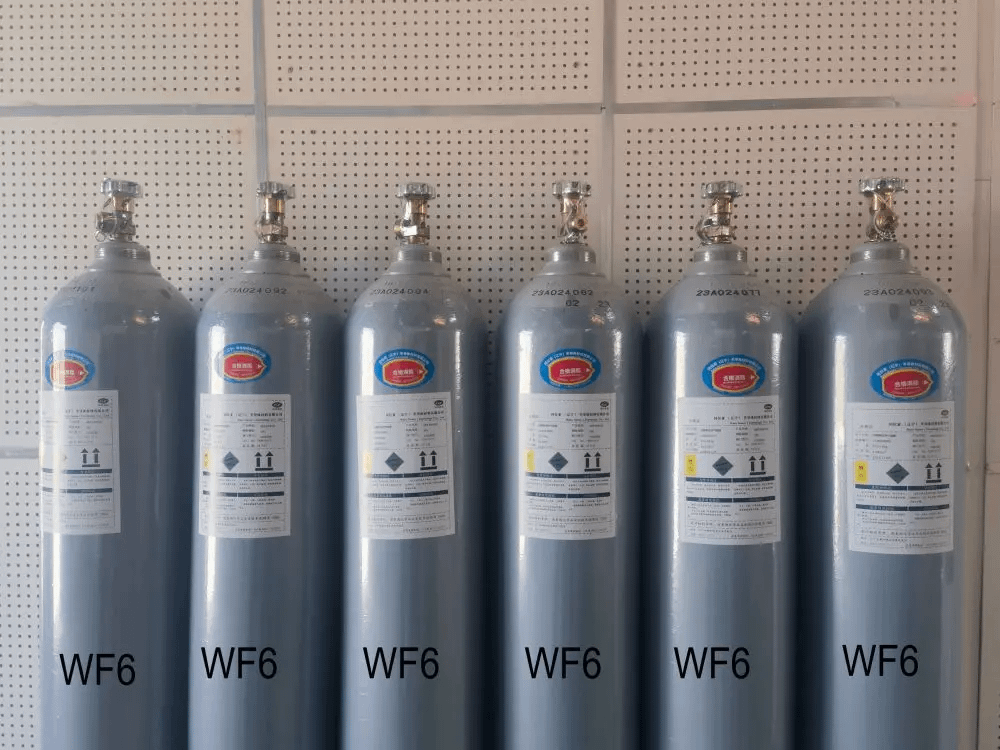
Samsung, SK Hynix, and TSMC source 80% of their WF6 from Japan. Two Japanese companies produce 25% of the world's tungsten hexafluoride. Both Kanto Denka and Central Glass are stopping all WF6 production on July 1. We manufacture chemicals. WF6 is a chemical. The semiconductor industry never asked what it's made from. WF6 deposits the tungsten contact plugs inside every advanced chip on Earth. There is no substitute for running production lines. Qualifying a new supplier takes 12 to 18 months. Building new capacity takes two to three years. China controls 80% of the tungsten powder WF6 is made from. Japan's tungsten imports from China have been zero since February. The two producers survived on stockpiles for five months. The stockpiles are gone. WF6 prices are up 232.7% year over year. Upstream tungsten powder is up 557%. Only six companies produce 90% of the world's supply. Two just quit. Every AI accelerator, smartphone chip, and SSD depends on a gas about to lose a quarter of its supply.
This is Pimpri-Chinchwad. 50 kms from
Central Pune. Show a single place like this in suburbs of Chennai. Even the core Chennai has 3-4 places at max like this. People like you have convinced TN People of this mediocrity mentality that we are the best!!
Stole the dummy copy of How the International Monetary Fund Strangles Africa by @gchelwa and myself from @inkanibooks. The book itself, an honest but tough critique of the @IMFNews, will be out very soon from https://t.co/gpDZw2mkWh. For a taste of the medicine, see the latest @tri_continental newsletter on Brain Capture: https://t.co/L4Kg6C4fRx
BREAKING: Iranian state media says the IRGC has targeted several locations of US Army deployment in the Middle East following US strikes on Iran.
The IRGC says any further attacks by the US will draw a "broader response."