The EU's #biofuel policies are reshaping the automotive industry. The pace of #EV adoption and long-term competitiveness for automotive companies depends on varying regulations and the biofuel market. Read more to learn about which #EU nations face risks:
https://t.co/u0UsJLyNDN
The food & beverage industry, known for high water intensity and dependence, faces significant challenges in agriculture, manufacturing, and distribution. Read more to learn about solutions to minimize impact and ensure business resilience for the future: https://t.co/LSuaMXhZoQ
The complexity of EU regulations harbors hidden risks: policy blind spots. These policies extend beyond their immediate purview, impacting energy and finances throughout supply chains- all interconnected with water. Read more: https://t.co/oAS13kJDta
Driven by market demand, financial performance, and regulatory pressure, sustainable transformation needs a role that can tie different aspects & guide the organization. Enter the CSO. Read to learn about why CSOs can potentially play a conducting role: https://t.co/u9HiUB1fKI
Research shows that clean energy production costs are significantly lower than what is projected by up to 15%, further emphasizing:
◾️Green investments and planning cannot be formulated using historical trends.
◾️ Learning rates and technology directly correlate with investments.
◾️Regardless of which scenario, producing clean hydrogen will only increase export volume. A fast ramp of #H2 production shows greater profit margins and long-term competitiveness.
◾️ A hydrogen economy has a higher market potential as demand for oil & gas decreases over time.
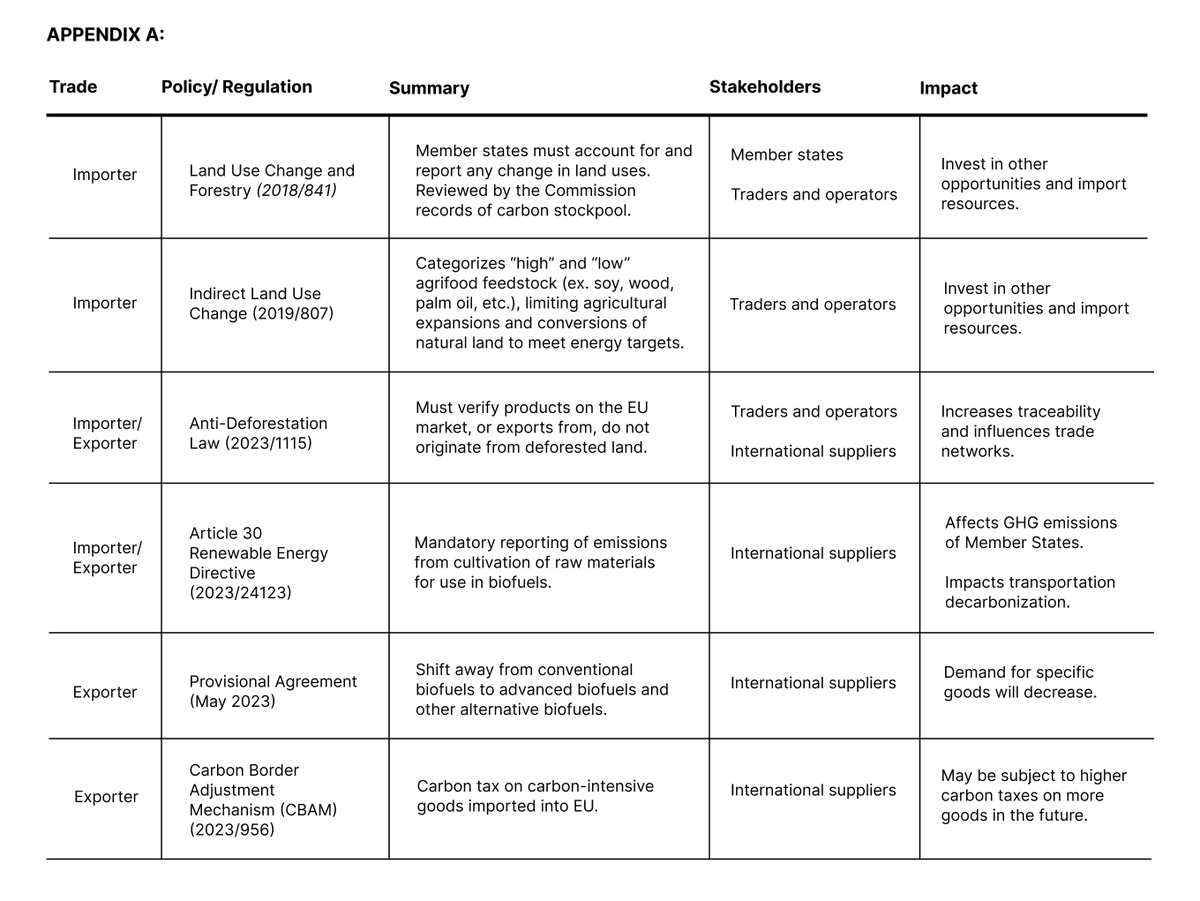
Listed below are EU regulations that will impact the #Chemicals industry's supply chain.
Read more here: https://t.co/6Odbd9R08v
(Source: EU Biomass Policies Will Change Your Supply Chain, @ActualHQ )
The EU has implemented strict regulations on domestic land-use and global #biomass imports to support renewable energy targets, impacting various industries, notably chemicals, as #SupplyChains adapt to sustainable practices.
https://t.co/0gQ5f6umnH
Alternative financial framework for #LossandDamage Fund: What if state (or private) #reinsurance companies pay premiums to an L&D fund:
▪ Demands accountability and investments from ALL nations
▪ Promotes economic growth and improved infrastructure @BloombergNEF@WorldBank@UN
Rapid expansion of AI will increase energy demands by 80% by 2030, rivaling the consumption of some of the largest cities. Read to learn about why supplying energy for data centers is not only a power generation but also a power distribution challenge:
https://t.co/kGrga0EAFQ
How much would it cost for cities to invest in energy efficient homes? Investing in #EnergyEfficient homes will conserve energy, reduce costly utilities generation and distribution investments, and, ensure an equitable transition. Read more: https://t.co/5H15qzqYAm @ActualHQ
Around half of all households nationwide need financial assistance to make their homes net-zero. Investing in #EnergyEfficient homes will conserve energy, reduce costly utilities generation and distribution investments, and, ensure an equitable transition. https://t.co/yKMQ4SiCHY
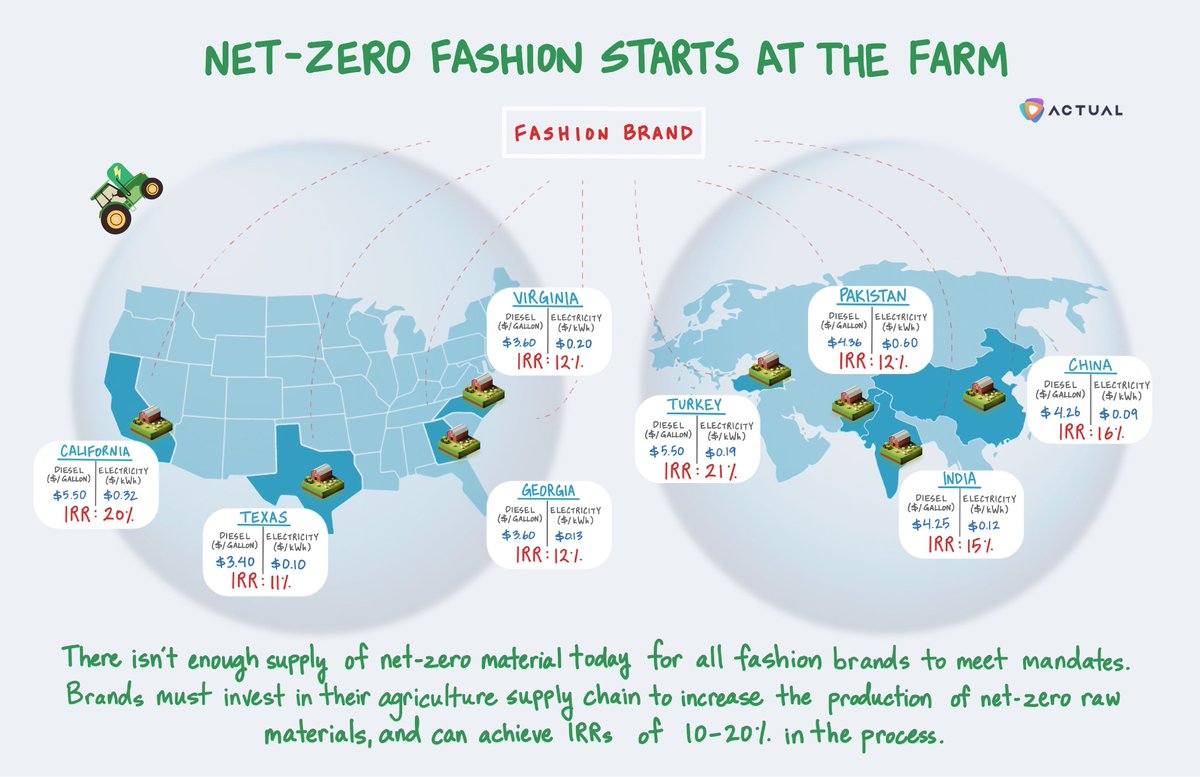
@UNIDO@theGEF@UNDP@FAO@UNEP@ActualHQ's recent newsletter explores how fashion brands can drive substantial change by investing directly in farms. Electrifying diesel-fueled farm equipment will reduce emissions, provide financial returns, and increase IRRs.
https://t.co/WN2ZUm04uO
Fashion companies that invest directly into their farms will see value both environmentally (reduced emissions) AND financially (high returns and increased IRRs). Make sure to check out @ActualHQ 's newsletter: https://t.co/WN2ZUm04uO
#Sustainability#SupplyChain#fashion
Fashion brands can drive substantial change by investing directly in farms. Read more to learn about how electrifying diesel-fueled farm equipment will reduce emissions and provide financial returns and increased IRRs: https://t.co/vE09nbUTuj
#SupplyChain#FashionIndustry
Read more about how three states (ND, WY, LA) have streamlined the #permitting processes for #ClassVI wells (#carboncapture systems that inject CO2 underground). Across all 3 state policies, varying risks differ for responsible entities: https://t.co/RnOwz8PmLM
@ActualHQ@EPA
Fossil fuel companies are adopting #carboncapture systems to cut emissions, prompting 3 states (ND, WY, LA) to streamline #permitting for Class VI wells. Read below to learn more about risks that impact responsible entities on state-level policies: https://t.co/P4qJisMnKl