@marclou Marc you should have a peak at @getriver_io they organize your likeminded community members’s meetups around the world, without you being present
On a la chance d'avoir actuellement à Versailles la meilleure représentation de ce que devrait être un musée du Jeu Vidéo.
Thread sur l'exposition #GameStory à Versailles ⬇️
#Adobe vient de modifier ses conditions d'utilisation (CGU). Dorénavant, si vous utilisez #Photoshop, #Illustrator, #AfterEffects ou si vous ouvrez simplement un pdf :
💀 Vous donnez un accès illimité à votre contenu privé ou professionnel 🎥 🎶 📷 📚 (section 2.2)
💀 Vous accordez une licence libre de redevances, i.e. gratuite (section 4.2)
💀 Qui peut être sous-licenciée à d'autres pour "utiliser, reproduire, afficher publiquement, distribuer, modifier, créer des œuvres dérivées..." (section 4.2)
💀 Vous ne pouvez pas désinstaller Adobe sans accepter ces CGU
via Olivia Breysse, PhdD, sur LinkedIn
https://t.co/pAiZwfyhnr
« Il y a deux tragédies dans la vie. L’une est de réaliser ses rêves. L’autre est de ne pas les réaliser. »
George Bernard Shaw
https://t.co/WvuGtfFnRH
Finally, we get to private data. There is far far more private data than public. Instant message logs come to maybe 650T tokens, and stored emails to maybe 1200T. Gmail alone is probably 300T.
FdJ se lance dans la banque – https://t.co/czR6Vod8nd
Le compte Premio du Groupe FDJ ressemble comme deux gouttes d'eau au Nickel de 2014 : à quoi bon ?
@filloux@LesEchos@BelmerRodolphe@TF1 50m c'est le reach il faudrait pondérer par le temps de visio (3h TV moy / Youtube 24 min)
De la vieille télé mais la Fr est vieillissante, les formats en 🇺🇸 et e-marketés à mort de YT ne sont pas pour tout le monde, certains regardent le divertissement et l'info TV avec plaisir
J'ai enfin appris d'où venait ce nom bizarre de draisienne : "On y voit par exemple la draisienne – vélo sans pédales – conçue en 1817 par le baron allemand Karl Drais von Sauerbronn."
Taïwan, l’île devenue capitale mondiale de l’industrie du vélo https://t.co/NHTblrkV4T
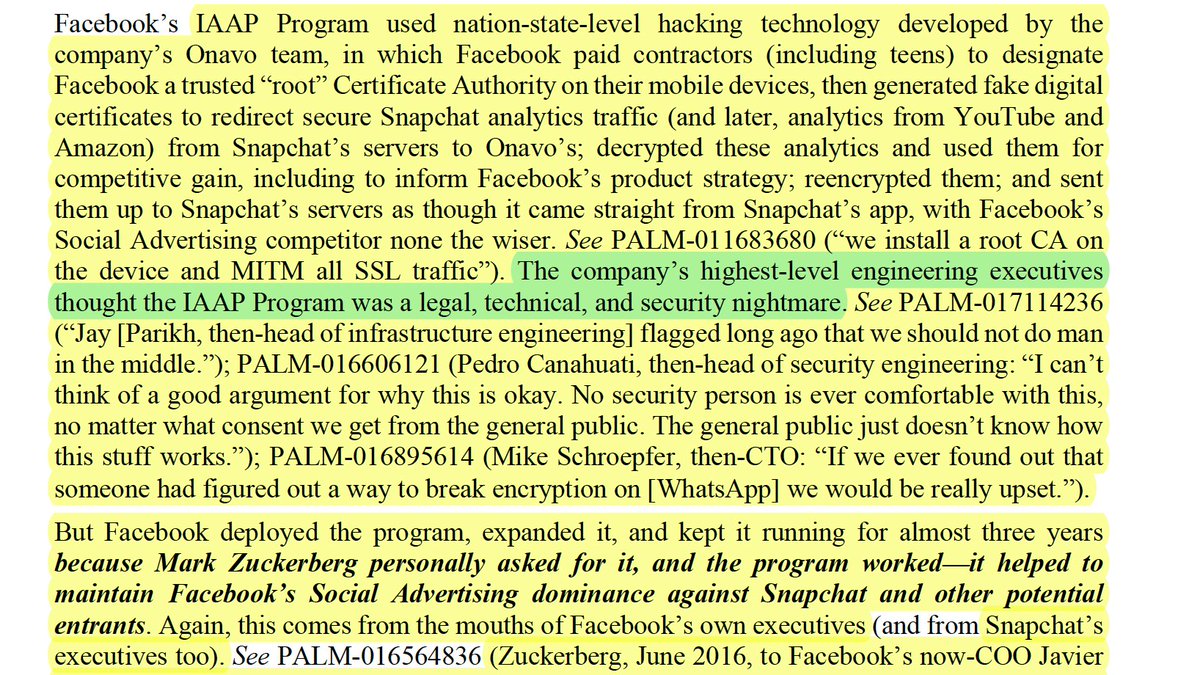
I regret to inform you the allegations get worse.
"The company's highest-level engineering executives through the IAPP Program was a legal, technical, and security nightmare...'I can't think of a good argument why this is okay.'"
Opposition leader of the CDU and potential next German Chancellor, Friedrich Merz, delivered a fiery speech yesterday night in Stuttgart. I translated the core message.
Since I have been saying this for years and even carry this message in my signature, I approve this message by 100%.
* Language is low bandwidth: less than 12 bytes/second. A person can read 270 words/minutes, or 4.5 words/second, which is 12 bytes/s (assuming 2 bytes per token and 0.75 words per token). A modern LLM is typically trained with 1x10^13 two-byte tokens, which is 2x10^13 bytes. This would take about 100,000 years for a person to read (at 12 hours a day).
* Vision is much higher bandwidth: about 20MB/s. Each of the two optical nerves has 1 million nerve fibers, each carrying about 10 bytes per second. A 4 year-old child has been awake a total 16,000 hours, which translates into 1x10^15 bytes.
In other words:
- The data bandwidth of visual perception is roughly 16 million times higher than the data bandwidth of written (or spoken) language.
- In a mere 4 years, a child has seen 50 times more data than the biggest LLMs trained on all the text publicly available on the internet.
This tells us three things:
1. Yes, text is redundant, and visual signals in the optical nerves are even more redundant (despite being 100x compressed versions of the photoreceptor outputs in the retina). But redundancy in data is *precisely* what we need for Self-Supervised Learning to capture the structure of the data. The more redundancy, the better for SSL.
2. Most of human knowledge (and almost all of animal knowledge) comes from our sensory experience of the physical world. Language is the icing on the cake. We need the cake to support the icing.
3. There is *absolutely no way in hell* we will ever reach human-level AI without getting machines to learn from high-bandwidth sensory inputs, such as vision.
Yes, humans can get smart without vision, even pretty smart without vision and audition. But not without touch. Touch is pretty high bandwidth, too.