Today we're launching Embroidery.
We use AI to monitor your AI agents so your security team knows what's going on. Never accidentally hack Hugging Face again.
Ratepayer protection is easier to achieve with cost-of-service utilities because the new load's cost to the system can be clearly accounted for and sequestered to that load's bill
We’re developing Project Camellia, a long-term AI infrastructure project in Effingham County, Georgia.
There is significant work ahead. Here is the approach guiding that work:
- Georgia families will not subsidize this project. OpenAI will pay all infrastructure and electric-service costs; Georgia PSC rules prohibit passing them to existing ratepayers. It will also be one of the first data centers designed to proactively reduce demand during grid stress.
- The project is being designed with closed-loop cooling that recirculates water, similar to a car radiator. Once fully built, ongoing water use is expected to be comparable to a similar size office building.
- The project is expected to create thousands of construction and permanent on-site jobs, generate hundreds of millions of dollars in state and local tax revenue, and prioritize local contractors and businesses.
- OpenAI will provide $80 million in community benefits over the life of the project, shaped by local priorities, plus up to $71 million in Codex credits for eligible Georgia college, community college, and technical school students.
- We’ve been meeting with state and local officials, community leaders, schools, and regional partners. A public open house this week and continued conversations will help shape how we benefit the community. An annual independent public audit will help hold the project accountable.
https://t.co/oxxP92V4aP
This isn't just a good deal on home backup, it's bringing 40 MW of battery capacity to Austin that we wouldn't otherwise have in 2027. That improves reliability and lowers costs for all Austin Energy customers. Congratulations @basepowerco and @austinenergy on this partnership!
Born in Austin. Built in Austin. Now serving Austin.
In partnership with Austin Energy, Base is now bringing whole-home backup to our hometown for a fraction of the cost.
See if your home qualifies at https://t.co/ZXATDMaoJl
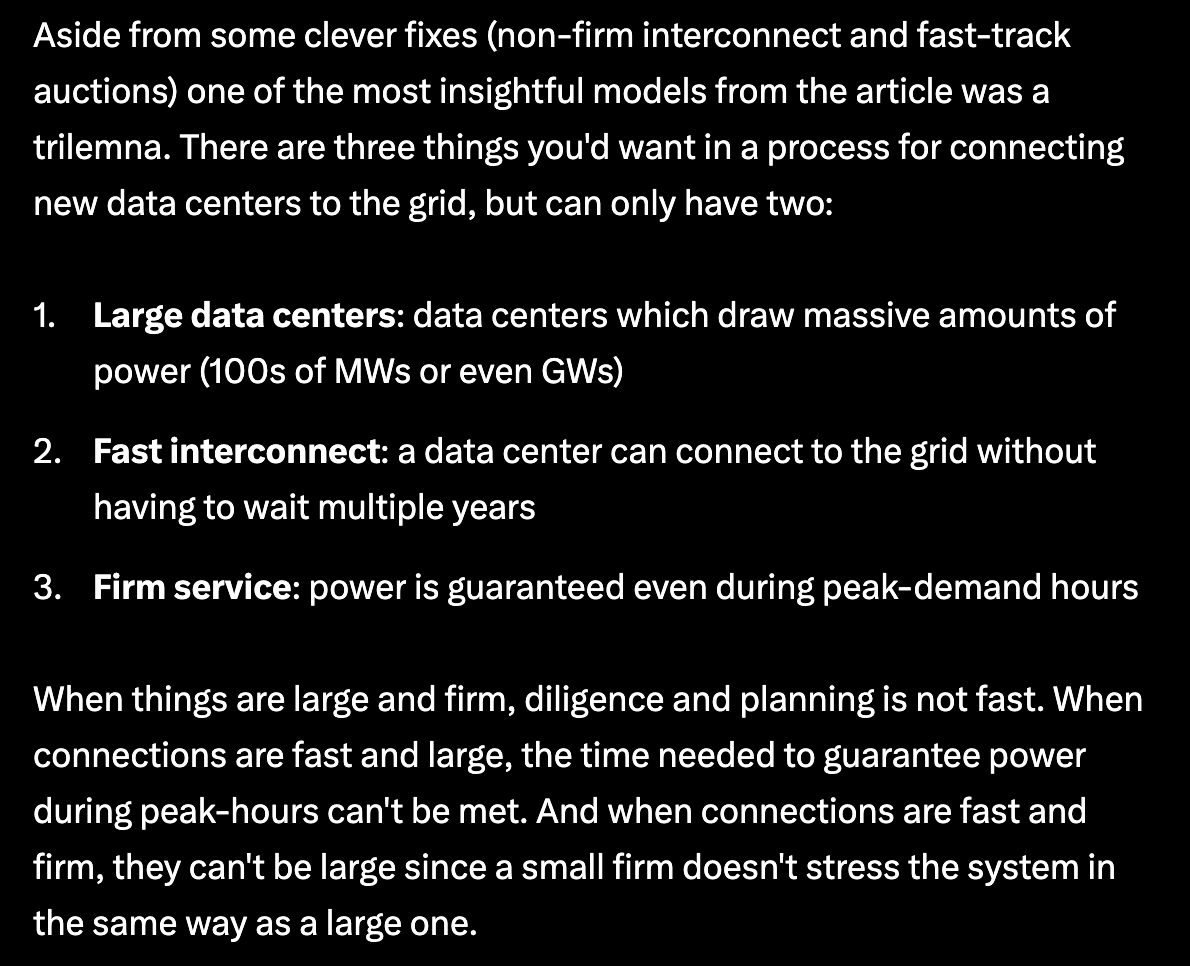
The fastest way to get new generation online to serve load is to let generators connect without waiting for completion of the comprehensive grid upgrades needed for their full deliverability under severely stressed system conditions.
Such generators become designated as “energy-only” per administrative definition, but they can supply capacity to electrically proximate load, put downward pressure on real-time energy prices, and provide supply ready to upgrade immediately to full capacity status upon completion of comprehensive grid upgrades.
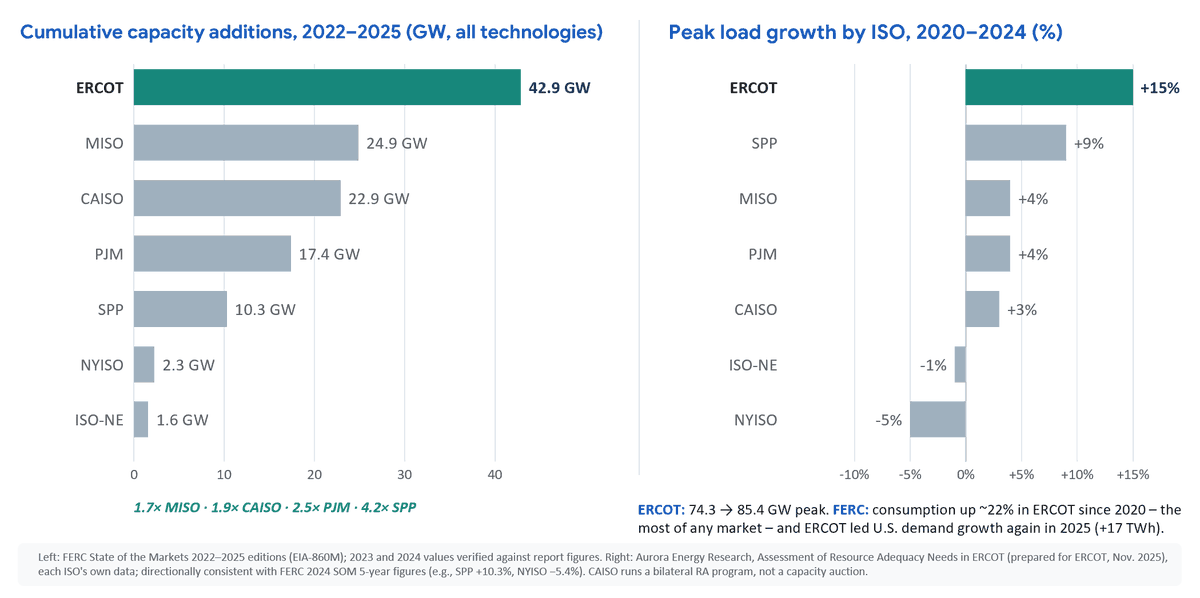
This is what Texas does (ERCOT), which is partly why its generator interconnection processing is ~2X faster than national average and how it has added 2.5X more generation than PJM in recent years.
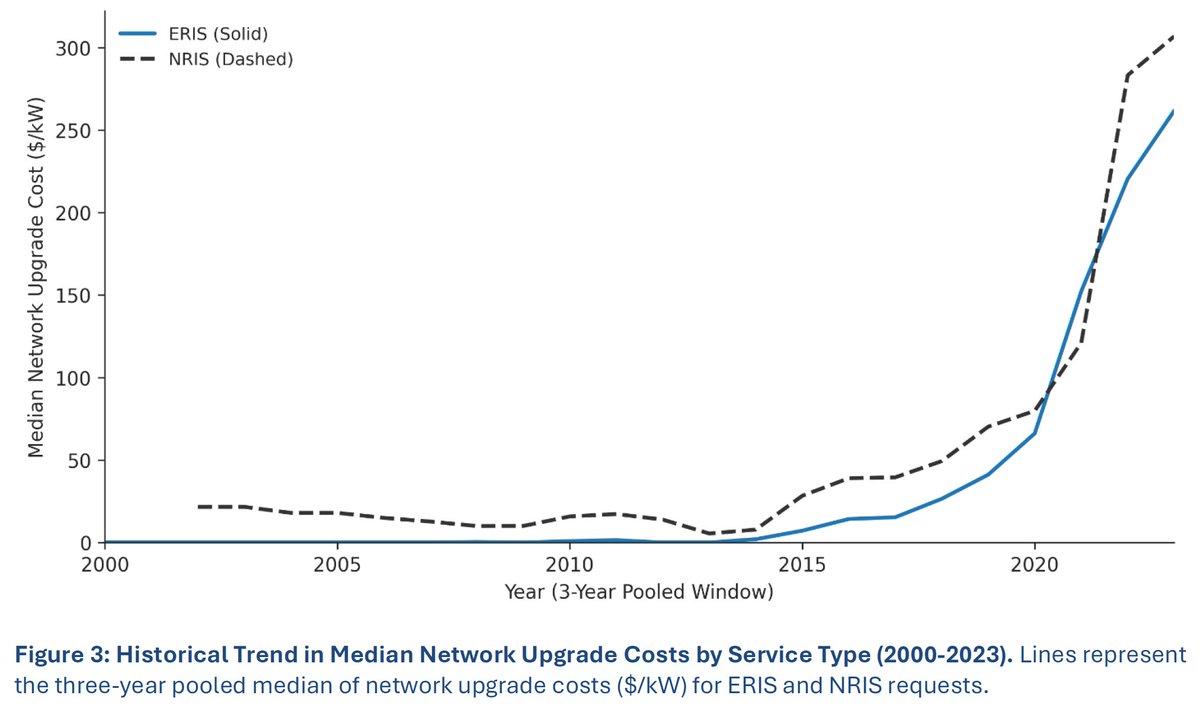
FERC tried to provide such a pathway in the early 2000s, but in a recent study of >36,000 interconnection requests and 4,500 cost studies, we found that this option (called "ERIS," Energy Resource Interconnection Service) offers neither cheaper nor faster interconnection today.
This is what @SenatorHeinrich's (Ranking Member of Senate ENR) new bill seeks to fix by creating a Texas-style interconnection service option called Basic Access Service for Energy-only Delivery (BASED).
@TheStalwart "The question isn’t which technology to use, but what balance. But this question isn’t best answered in the marketplace of ideas. Instead, it should be addressed in the marketplace for electricity."
https://t.co/cFSCCltL7f
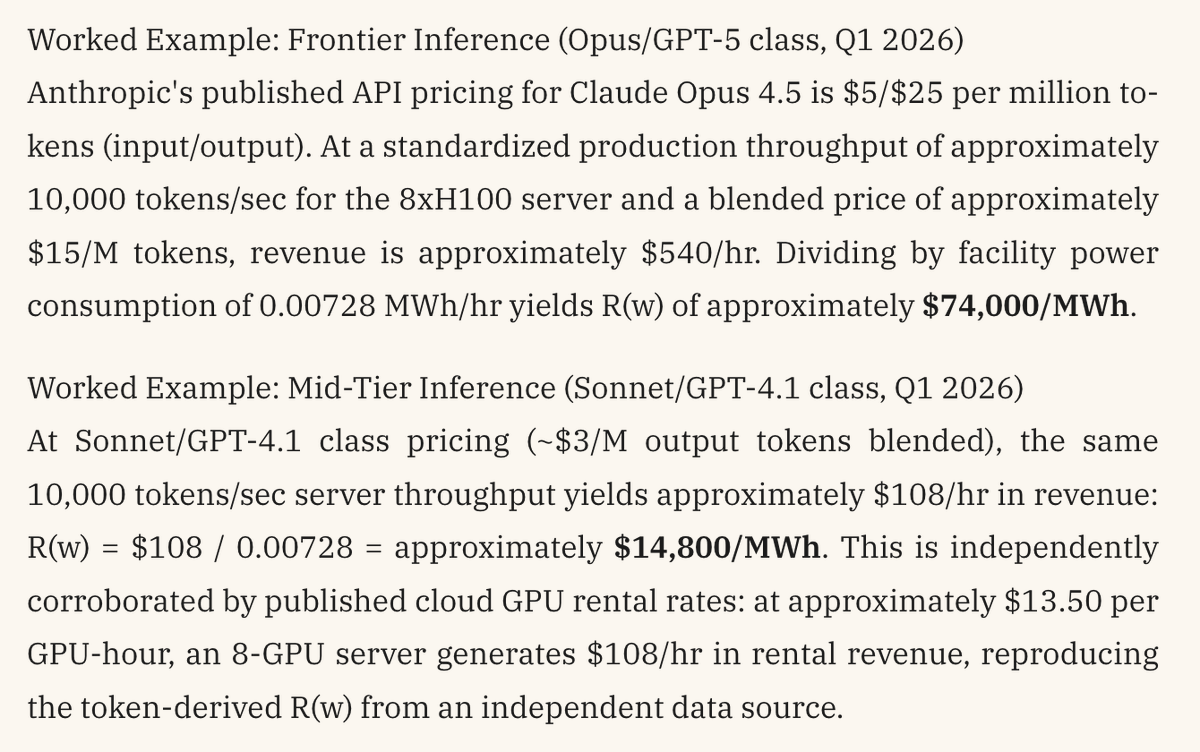
I didn't realize it was so straightforward to estimate the value of a MWh of compute.
You just take the published API prices and the token throughput and power consumption of 8xH100.
Claude Opus 4.5 is worth $74,000/MWh
ERCOT's "connect and manage" model has moved non-firm generator interconnection to the center of reform debates. Less examined: most US regions instead offer a non-firm option called Energy Resource Interconnection Service (ERIS). Has it worked?
I’m pleased to share two new companion preprints I co-authored on this topic in my capacity @DukeU with Prof. Dalia Patino-Echeverri, @whgorman, Fredrich Kahrl, Joachim Seel, & @rand_joseph. Together, the papers provide the most comprehensive assessment of ERIS to date: the first statistically robust empirical comparison of ERIS and NRIS outcomes, paired with a systematic review of how ERIS is implemented.
📄 𝐏𝐚𝐩𝐞𝐫 𝟏: 𝐈𝐬 𝐄𝐧𝐞𝐫𝐠𝐲-𝐎𝐧𝐥𝐲 𝐈𝐧𝐭𝐞𝐫𝐜𝐨𝐧𝐧𝐞𝐜𝐭𝐢𝐨𝐧 𝐖𝐨𝐫𝐤𝐢𝐧𝐠? 𝐄𝐦𝐩𝐢𝐫𝐢𝐜𝐚𝐥 𝐄𝐯𝐢𝐝𝐞𝐧𝐜𝐞 𝐟𝐫𝐨𝐦 𝐓𝐰𝐨 𝐃𝐞𝐜𝐚𝐝𝐞𝐬 𝐨𝐟 𝐔.𝐒. 𝐌𝐚𝐫𝐤𝐞𝐭 𝐃𝐚𝐭𝐚
Drawing on a novel dataset of over 4,500 interconnection cost studies and 36,000 interconnection requests, we find that ERIS has not delivered a durable cost or speed advantage. Its historical cost advantage is largely a "threshold effect" that appears only when a project avoids network upgrades altogether. As grid saturation has cut the share of zero-cost ERIS outcomes from roughly 80% to 10%, that advantage has largely evaporated, and developer demand has contracted in step.
🔗 https://t.co/ldTfXTjgoh
📄 𝐏𝐚𝐩𝐞𝐫 𝟐: 𝐀 𝐑𝐞𝐯𝐢𝐞𝐰 𝐨𝐟 𝐔𝐧𝐢𝐭𝐞𝐝 𝐒𝐭𝐚𝐭𝐞𝐬 𝐄𝐧𝐞𝐫𝐠𝐲-𝐎𝐧𝐥𝐲 𝐆𝐞𝐧𝐞𝐫𝐚𝐭𝐨𝐫 𝐈𝐧𝐭𝐞𝐫𝐜𝐨𝐧𝐧𝐞𝐜𝐭𝐢𝐨𝐧 𝐒𝐞𝐫𝐯𝐢𝐜𝐞 𝐏𝐨𝐥𝐢𝐜𝐲 𝐚𝐧𝐝 𝐂𝐨𝐧𝐬𝐢𝐝𝐞𝐫𝐚𝐭𝐢𝐨𝐧𝐬 𝐟𝐨𝐫 𝐑𝐞𝐟𝐨𝐫𝐦
Reviewing six ISOs and three major vertically integrated utilities, we document wide and often poorly understood variation in study methods, cost allocation, and procurement rules, showing how regions range from managing congestion through real-time operations to triggering network upgrades during interconnection.
🔗 https://t.co/rumqzhPPCU
Notably, both papers conclude that the issue is not the concept of energy-only interconnection – which remains economically sound – but how it has been implemented: restrictive study assumptions that require upgrades for congestion that could instead be handled through operational redispatch.
We hope these serve as useful resources as stakeholders and researchers continue to evaluate these issues, and very much welcome feedback!