Houdini 20.5 Sneak Peek - check out some of the upcoming new tools and enhancements that will be in the next public version of Houdini! More information to be revealed at the Paris launch on June 18, 2024.
https://t.co/iFiuiKJESJ
Manu & Mo are back, exhausted and excited. Now you can get a master's degree with them! (Applications open May 2nd - https://t.co/tqOpHiZ45T)
@danialghods_@tokyomegaplex I can really recommend reading through the great Karma Pyro Shader docs. Things like the multiscatter extinction falloff can greatly reduce the bounces needed for good results.
https://t.co/aVXBt7Xjur
@zachlieberman This demo is built around a plugin for Houdini FX, however I'm pretty sure you could built the same thing in something like Comfy UI or just using the Diffusers python module.
@zachlieberman For diffusion models, exploring the embedding space of a prompt can result in lots of weird and wonderfull outputs. We did a couple of experiments with this last year:
https://t.co/lkYPHdWihy
original idea is based on a concept called dubins path, a method to connect points using the shortest curves an object would need to travel. mix that math with houdini's extrusions/vdb tools and you get some interesting looking furniture
@edbrown3d You can find some models on huggingface that are trained exclusively on CC0 or Public Domain images (mitsua-diffusion, for example). Obviously they won't perform as good as models trained on the whole internet, but I think @ugstuho had good success finetuning them with his works.
@3Dmattias@FreyaHolmer@entagma Yup, Mo did a little series of them in our advanced setups course on Patreon. I can also highly recommend everything about the poisson equation from Matt Ferraro. With bonus cat caustics in his blog post!
https://t.co/vJFX7FUfUV
Oldies but goldies: L.E. Dubins, On Curves of Minimal Length with a Constraint on Average Curvature, and with Prescribed Initial and Terminal Positions and Tangents, 1957. Dubins paths are the shortest path for cars that can only move forward.
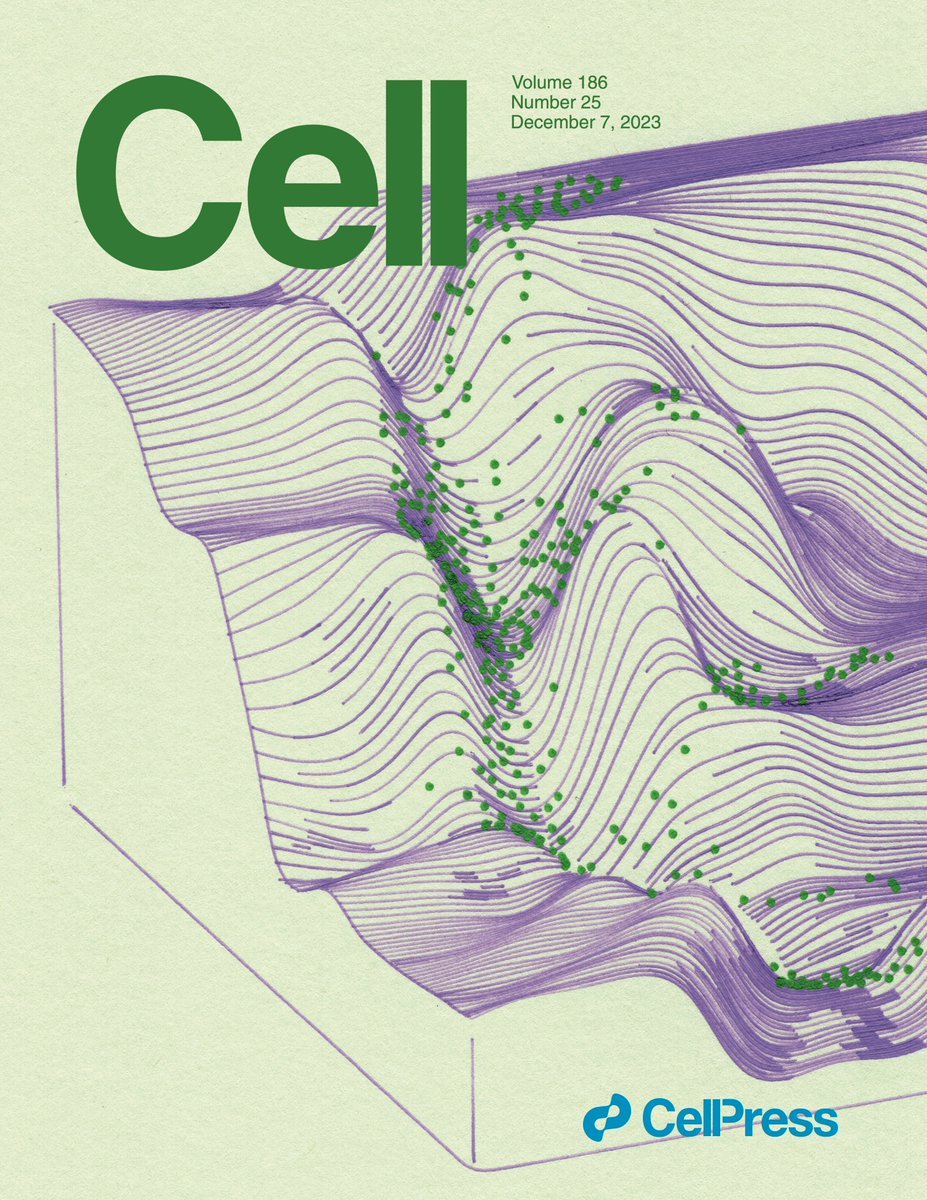
@christophertape@CellCellPress Our friends at @entagma (themselves big fans of turning scientific papers into 3D artwork) were kind enough to host this step-by-step tutorial where we show you how to use @sidefx Houdini to generate data-driven Waddington landscapes. https://t.co/OL4yxAux3C
🚨New @CellCellPress cover! We’ve been working with the great @christophertape again, visualising the Tape lab’s single cell colorectal cancer signalling data in two new papers out today. But wait! There’s a lot more to this story than just the cover… 🧵
Very excited to share two papers published today in @CellCellPress describing stem cell plasticity in CRC. (1/22)
https://t.co/jQxR7PCwh7
https://t.co/P9QaEsqkko
@PaulEsteves28 I'm going to hate me for this but: Just wrangles! No transform sops, no sweeps, no subdivides, nothing but wrangles. Solvers or For Loops only when absolutely necessery. Let's see how many I can do....
@planetzomax@danialghods_ FDM is easier. There's a risk of burning yourself from the hot nozzle, but that's generally about it. There may be a risk of plastic particulates while printing (one study 8 years ago suggested that) but this is still debatable. I'm fine with having one in my living room 🤷♂️
@planetzomax@danialghods_ In terms of safety: For a resin printer you really want a cellar or garage to put the printer in. Resin is nasty stuff that I wouldn't want anywhere near my living space. FDM printing is easier.
@planetzomax@danialghods_ I had good results from the ideenbaeckerei. But that was over a year ago, don't know their quality now. But your typical resin model was around 5-10€, so easy on your wallet!