I'm happy to share KaroSpace, which is a rapid-access framework for interactive exploration of multi-sample spatial omics data. The preprint can be accessed here: https://t.co/H8JMnlmydh.
To showcase the usefulness of KaroSpace, we created viewers across 18 datasets and 8 platforms, including Xenium, MERFISH, DBiT, Visium, OpenST, and CODEX and they can all be seen on https://t.co/R4VtU16po0.
What’s going on in #multiplesclerosis lesions? How do they impact disease & why does their location in the CNS matter? See how researchers used #singlecellspatial tools to plot the course of MS pathology & give us a better understanding of this illness. https://t.co/DEYoje6y8I
Excited to share our cell atlas of early human brain development! @MiriDanan@slinnarsson Thanks to all, especially: @LarsBorm, Elin Vinsland, Lijuan Hu, Peter Lönnerberg, @ka_wai_rine@ErnestArenasSWE, Xiaoling He, Roger Barker, Xiaofei Li, Erik Sundström
https://t.co/L0eWGjRZuD
Hot on the heels of our adult human cell atlas, we present the emergence of human brain cell types during the critical first trimester! Fabulous work led by @EmelieBraun1 and @MiriDanan with many collaborators. Tweetorial 🧵below 👇🏼with links to preprint, data, and code. https://t.co/ZYsiGOteCk
🔥New publication🔥from @M_Hilscher together with @GoCasteloBranco@chrislangseth@PKukanja
Here, authors revealed spatial gradients and neighboring preferences of fine oligodendrocyte lineage cells in young and adult brain and spinal cord
@BMCBiology
https://t.co/cn5gqFXcOc
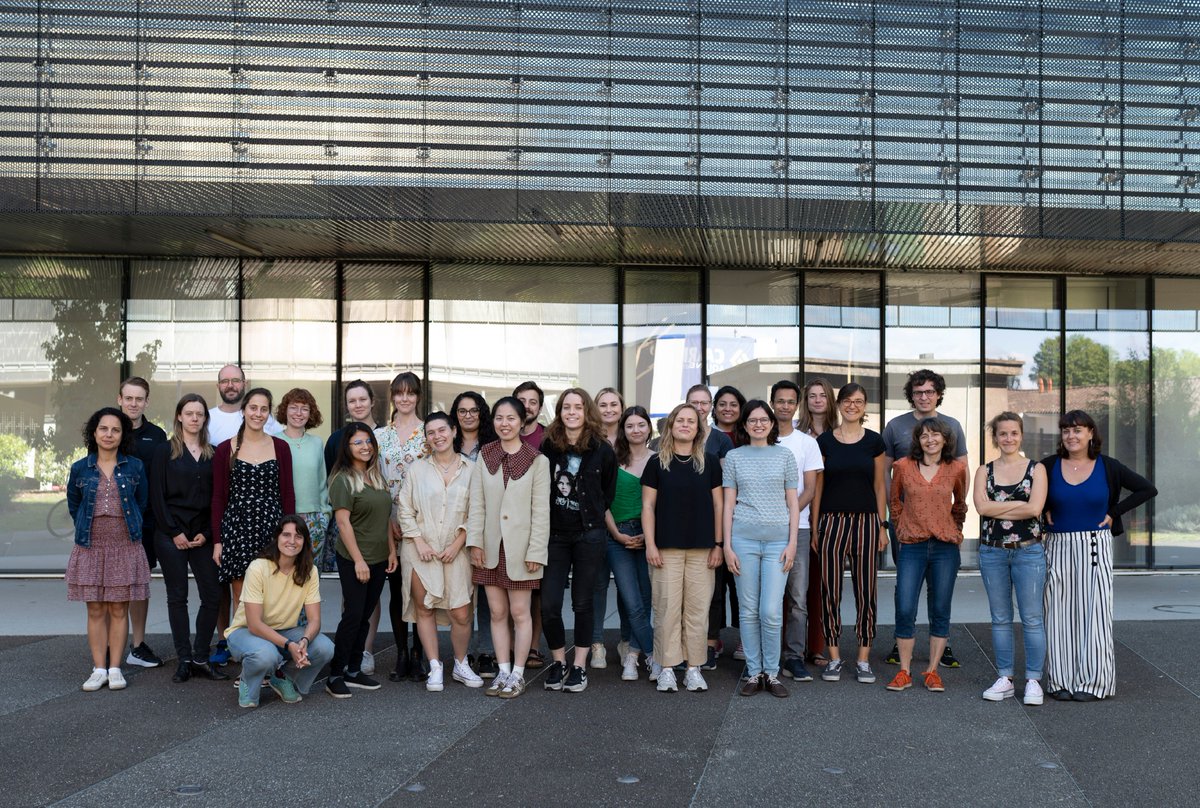
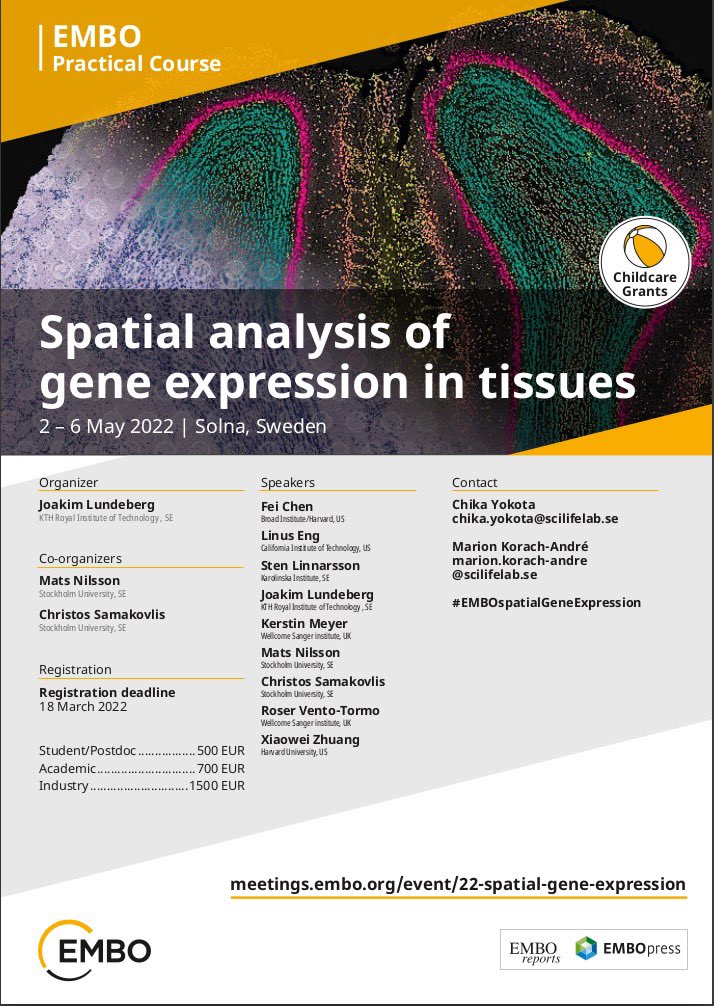
Tgt w @joalunatkthse, @EMBO and Samakovlis Lab, we successfully concluded the first “Spatial Analysis of Gene Expression in Tissues” course @ @scilifelab last week. A huge thank you to all the course instructors and participants that made this event an overwhelming success 🤩
We are proud of @lee_hower and @chrislangseth whom contributed #InSituSequencing data with #HybISS to the fantastic paper from @dvd_bruggen et al identifying oligodendrocyte lineage cells in the human forebrain at PCW8.
Congrats to all authors! 🎉🎉🎉🎉🎉
Cool new preprint! snRNA-seq data of the largest MS cohort to date, with a total of 83 control & progressive MS donors, different types of lesions, WM and GM.