New #OpenAccess paper! We use #AIS data from @GlobalFishWatch to analyse #fishing activity at #seamounts globally. Seamounts in the Pacific Island Group and Mediterranean Sea experienced the highest levels of longlining and trawling respectively. https://t.co/zsh6q3A04P 1/3
🐟 We're reflecting on #WorldFisheriesDay and global efforts to safeguard fisheries livelihoods.
🌊 Global Fishing Watch is looking for a Fisheries Analyst to provide technical support on our #SmallScaleFisheries work and deliver on key impact goals: https://t.co/5KeddiHuYh
I’ve handled the review of > 1000 papers at @nature. Over time, you notice aspects of presentation on which reviewers tend to comment. In the interests of minimizing hassles during review, I offer the following suggestions (a bit targeted to climate papers).
How did illegal fishing behaviour change during the pandemic?
Our team's latest publication, out today in @CurrentBiology is revealing a worrying picture.
Read on...
📷 @clairesjcollins
COVID-19 contributed to changes in fisheries management and a massive spike in illegal fishing for sharks and reef species in an Indian Ocean area...we highlight the importance of a wide toolkit including bilateral cooperation to combat illegal fishing
https://t.co/vzcdKOCOXR
On a small island with limited resources and only a small boat, protecting all 445,000 square km of our MPA may seem impossible. However, using satellite data provided by @GlobalFishWatch we can monitor our MPA with swift efficiency and with much less drama than you might think.
Fancy living in Cornwall and visiting Canada to conduct groundbreaking #research? An exciting postdoc job is available in #marine#historical ecology, come work with me, @ProfCallum, and @ExeterMarine folks! Deadline 20 Jan, apply at https://t.co/uqQZOaOC7A
#AIS has revolutionized the way fishing activity is monitored across the ocean. But AIS devices can be switched off to conceal a vessel’s activity. We seek to identify when and why fishing vessels intentionally stop broadcasting their position.
https://t.co/N0SXoEx1kP
A recently published #OpenAccess paper by @ChrisRKerry shows how open source datasets can quantify fishing at remote, poorly monitored seamounts.
https://t.co/9ppBkcAvVP
Our interview with @GlobalFishWatch about our research into fishing activity at seamounts using their #openaccess datasets! @DrMJWitt @OwenExeter @ExeterMarine
New @GlobalFishWatch dataset! We matched our global AIS data of vessel locations with detections of vessels using lights. This reveals large fleets of likely fishing vessels that don’t broadcast AIS, helping us better map human activity at sea. https://t.co/ZQ4PGiRC7M
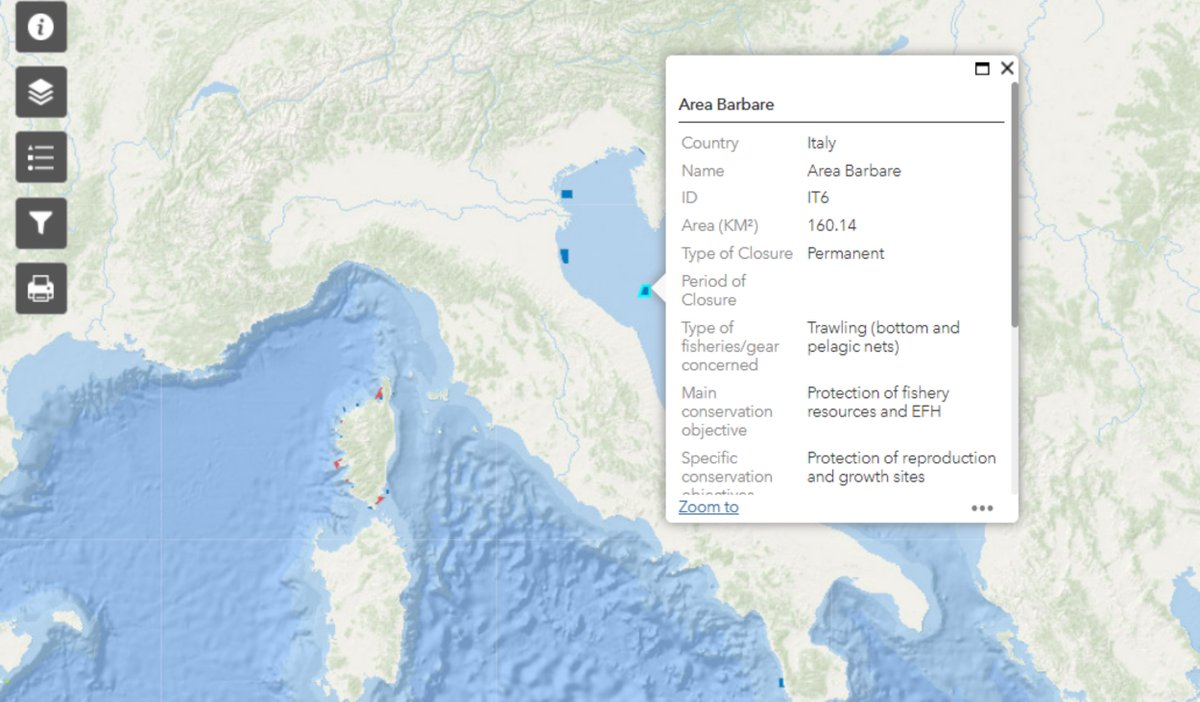
#JustPublished a new GFCM database on national fisheries closures👏
1⃣st time ever, all areas closed to all or some fishing activities, within national waters of #Mediterranean & #BlackSea countries are centralized in one single interactive map❗️
🗺️https://t.co/vqmMQzuWpl