Jeff Galloway, a 1972 U.S. Olympian and beloved coach, but perhaps best known for teaching the world that slowing down was the secret to going further, has died at the age of 80. 🕊️
His revolutionary run-walk-run method (affectionately known around the world as “Jeffing”) transformed marathon running from an elite pursuit into something beautifully ordinary, accessible to anyone willing to lace up their shoes.
He survived a devastating heart attack in 2021, where his heart stopped for four and a half minutes before five stents brought him back. Doctors credited his decades of endurance training with helping keep him alive. True to form, he responded not by resting on his laurels, but by relearning to walk and then planned to return to the marathon. Before an injury forced him to scratch from last December’s Honolulu Marathon, Galloway was set to become the first person to complete a marathon in eight consecutive decades. He was planning to return in 2026.
“My mission now, at the age of 80-plus, is to show that people can do things that are normally not done, and can do them safely,” he told The New York Times last month.
Galloway’s Book on Running is considered probably the best-selling running coaching book of all time.
Jeff Galloway opened up running to everyone. He is survived by every single person who ever doubted themselves, took their first step and made it to the other side of a finish line that they initially didn’t think would be possible. ♥️
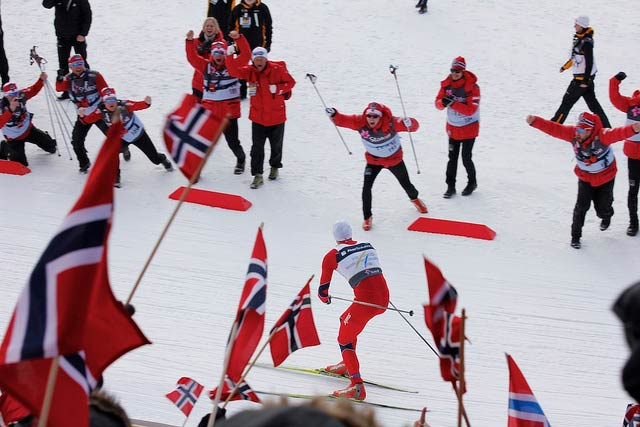
Norway consistently wins the most medals at the Winter Olympic Games, with a population of just 5.6 million people.
A big part of their success is how they treat youth sports—and it’s the opposite of what we do in the US. Here’s what we can learn from Norway:
1. Scorekeeping:
In the US: Youth sports tend to be hyper competitive even at early ages. Leagues almost always keep score.
In Norway: Scorekeeping isn’t even allowed until age 13.
Removing winners and losers keeps the focus on the process not outcomes. It keeps kids engaged longer because it minimizes pressure (and tears) and maximizes fun, learning, and growth. The goal isn’t to win a third grade championship. It’s to love sport and keep playing.
2. Trophies:
In the US: If you give everyone a trophy, you’re creating snowflakes who will never gain a competitive edge.
In Norway: Whenever trophies are awarded, they are handed out to everyone.
If getting a trophy makes young kids feel good, we should give them trophies. Maybe they’ll come back and play again next year!!
As for the creation of snowflakes with no competitive edge—Norway’s athletes are tough as nails and all they do is win.
3. Prioritizing Fun:
In the US: Far too often, the goal is to win.
In Norway: The national philosophy is “joy of sport.”
Youth sports in the US are driven by adults, ego, and money. Youth sports in Norway are driven by fun.
Only half of kids in the US participate in sports. The number one reason they drop out: because they aren’t having fun anymore. In Norway, 93% of kids participate in youth sports. Fun is the foremost goal.
4. Playing Multiple Sports:
In the US: There’s pressure to specialize early and play your best sport year round.
In Norway: Try as many sports as you can before specializing as late as college.
Norway encourages kids to try all types of sport. This reduces injury and burnout and increases all-around athleticism. It also helps promotes match quality, or finding the sport you are best suited for as your body develops, which is impossible if you commit to a single sport too early.
5. Affordability
In the US: There is increasingly a pay-to-play model with high fees for leagues, equipment, and travel. This excludes many kids from playing.
In Norway: It’s a national priority to keep youth sports affordable and therefore accessible for all.
Kids aren’t priced out, which creates opportunities for everyone to participate (and develop into athletes), regardless of their parents’ income level.
We could learn a lot from Norway:
In the US, 70% of kids drop out of youth sports by age 13. This not only diminishes an elite-athlete pipeline, but it also destroys an opportunity for healthy habits and all the character lessons kids can learn from sport.
In Norway, lifelong participation in sport is the norm. The goal isn’t to have the best 9U team. It’s to develop the best athletes. Those are two very different things. And Norway has the gold medals to prove it.
Layer! Layer! Layer! The secret to staying warm during winter runs. Mittens also are warmer than fingered gloves. Start your runs heading out into the wind so you can cruise wind at your back returning. Don’t stay indoors just because of cold weather. #RunWithHal
One of running’s appeals is its simplicity. You don’t need membership in an expensive club. You don’t need a playing field. Step out your front door, and you’ve found your first running arena. #RunWithHal
Keep long runs aerobic. Conversational. Try not to push too hard in workouts or get out of breath, particularly in the early miles of long runs. You'll be able to finish stronger if you start slow. And in a race, you'll pass a lot of people in the closing miles. #RunWithHal
7 Running DON’T’s:
1. Don’t try anything new on race week.
2. Don’t run too hard, too often.
3. Don’t be afraid to walk.
4. Don’t stress too much about your mechanics.
5. Don’t forget to enjoy it.
6. Don’t ignore your body.
7. Don’t be rigid in your approach.
If racing, never wear anything new, particularly if you’re running a marathon. Test your race clothing during training runs--the longer the better.#RunWithHal
“In youth sports, when we create these hyped-up All-Star games or eliminate participation trophies or focus on scholarships or only play the "good" kids, we are telling our kids that their performance in this moment is more important than their learning, than their development, than their participation, than their effort, and guess what? It's not.”
Read blog here: https://t.co/FPPB7YeKEE
@davidalso what has been your longest tempo run so far? you just don't want to make too big of a jump. That's when the risk of injuries/overtraining goes up. It sounds like you've been very smart and effective in your training so far. Nice work!
@FueledbyLOLZ Do it! Just did the Publix half marathon there last month. Super easy to get from the airport to midtown via Martha. I took Marta to and from the start/finish and the trains were packed with runners. Such a great race city!
Youth sports coaches: please don't use running as punishment in your practices. Running can be fun for kids, but you're making kids see it as a negative thing. Pushups too.
I'm mostly thinking of travel basketball, but I assume other sports have this issue too.
Run coaches and runners: what running pants do you love? And what features are must-haves? I'm researching an article and want to know runners' favorite pants.
Your impact on other people is bigger than you think. Someone still giggles when they think of that funny thing you said. Someone still smiles when they think of the compliment you gave them. Someone silently admires you. The advice you give has made a difference for people...