Dear fellow Africans, it is also okay to say “man, this is awful conduct by one of our own” without self hating on Africans. More than ever, we gotta avoid playing the game that has been set for us.
I can tell a Cecil student (a serious one) from a mile away. The way they speak, write, think and carry themselves is different (better) because they all try to be like him. His influence is unmistakable. Few lecturers leave so clear an imprint on their students. Huge props.
We're glad to report that our Safety Evaluations Head @gathoni_ireri actively participated in the Delphi process of Evals Consensus https://t.co/NsUsW0fCE7 We're looking forward to the results of the process.
In a new policy brief for @BrookingsInst, Joanna Wiaterek, Cecil Abungu, and I advocate to the forthcoming Africa AI Council for deliberate action to comprehensively address concerns around AI safety and security.
https://t.co/QBCNkXjmOa
New post: Huge technological revolutions aren't usually positive for those living through them - and this bodes poorly for AI even if it is a normal technology.
In collaboration with our partners UCT AI Initiative, AI Safety South Africa, and Action Lab Africa, we recently prepared and submitted written feedback for the UN Global Dialogue on AI Governance. You can read our joint written submission here: https://t.co/srOdGvGR85
After a rigorous application and assessment process, we're pleased to introduce our 2026 ILINA Junior Research Fellows. We look forward to working with them closely as they grow in AI safety. Read more about them on our website: https://t.co/NxSqJf3TdM
There will be no AI jobpocalypse.
The story that AI will lead to massive unemployment is stoking unnecessary fear. AI — like any other technology — does affect jobs, but telling overblown stories of large-scale unemployment is irresponsible and damaging. Let’s put a stop to it.
I’ve expressed skepticism about the jobpocalypse in previous posts. I’m glad to see that the popular press is now pushing back on this narrative. The image below features some recent headlines.
Software engineering is the sector most affected by AI tools, as coding agents race ahead. Yet hiring of software engineers remains strong! So while there are examples of AI taking away jobs, the trends strongly suggest the net job creation is vastly greater than the job destruction — just like earlier waves of technology. Further, despite all the exciting progress in AI, the U.S. unemployment rate remains a healthy 4.3%.
Why is the AI jobpocalypse narrative so popular? For one thing, frontier AI labs have a strong incentive to tell stories that make AI technology sound more powerful. At their most extreme, they promote science-fiction scenarios of AI “taking over” and causing human extinction. If a technology can replace many employees, surely that technology must be very valuable!
Also, a lot of SaaS software companies charge around $100-$1000 per user/year. But if an AI company can replace an employee who makes $100,000 — or make them 50% more productive — then charging even $10,000 starts to look reasonable. By anchoring not to typical SaaS prices but to salaries of employees, AI companies can charge a lot more.
Additionally, businesses have a strong incentive to talk about layoffs as if they were caused by AI. After all, talking about how they’re using AI to be far more productive with fewer staff makes them look smart. This is a better message than admitting they overhired during the pandemic when capital was abundant due to low interest rates and a massive government financial stimulus.
To be clear, I recognize that AI is causing a lot of people’s work to change. This is hard. This is stressful. (And to some, it can be fun.) I empathize with everyone affected. At the same time, this is very different from predicting a collapse of the job market.
Societies are capable of telling themselves stories for years that have little basis in reality and lead to poor society-wide decision making. For example, fears over nuclear plant safety led to under-investment in nuclear power. Fears of the “population bomb” in the 1960s led countries to implement harsh policies to reduce their populations. And worries about dietary fat led governments to promote unhealthy high-sugar diets for decades.
Now that mainstream media is openly skeptical about the jobpocalypse, I hope these stories will start to lose their teeth (much like fears of AI-driven human extinction have).
Contrary to the predictions of an AI jobpocalypse, I predict the opposite: There will be an AI jobapalooza! AI will lead to a lot more good AI engineering jobs, and I’m also optimistic about the future of the overall job market. What AI engineers do will be different from traditional software engineering, and many of these jobs will be in businesses other than traditional large employers of developers. In non-AI roles, too, the skills needed will change because of AI. That makes this a good time to encourage more people to become proficient in AI, and make sure they’re ready for the different but plentiful jobs of the future!
[Original text in The Batch newsletter.]
South Africa has withdrawn its first draft national AI policy after revelations that it contained fictitious sources in its reference list which appeared to have been AI-generated. https://t.co/KGdln6WrSw
African governments must strengthen AI coordination and funding for innovation.
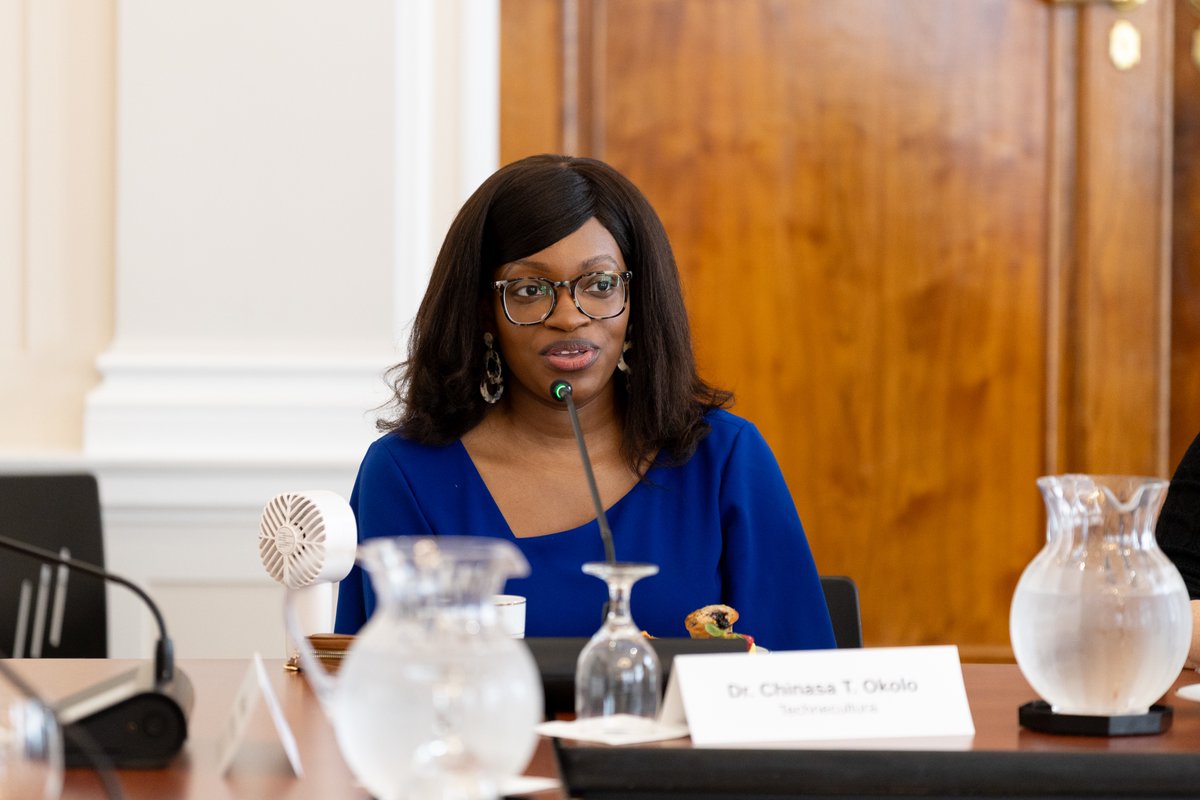
Last Friday, against the backdrop of the IMF-WBG Spring Meetings, I joined the Meridian Center @MeridianIntl for its inaugural AI Horizons: Africa roundtable. https://t.co/p5MUmJF1Id
📸: Jess Latos
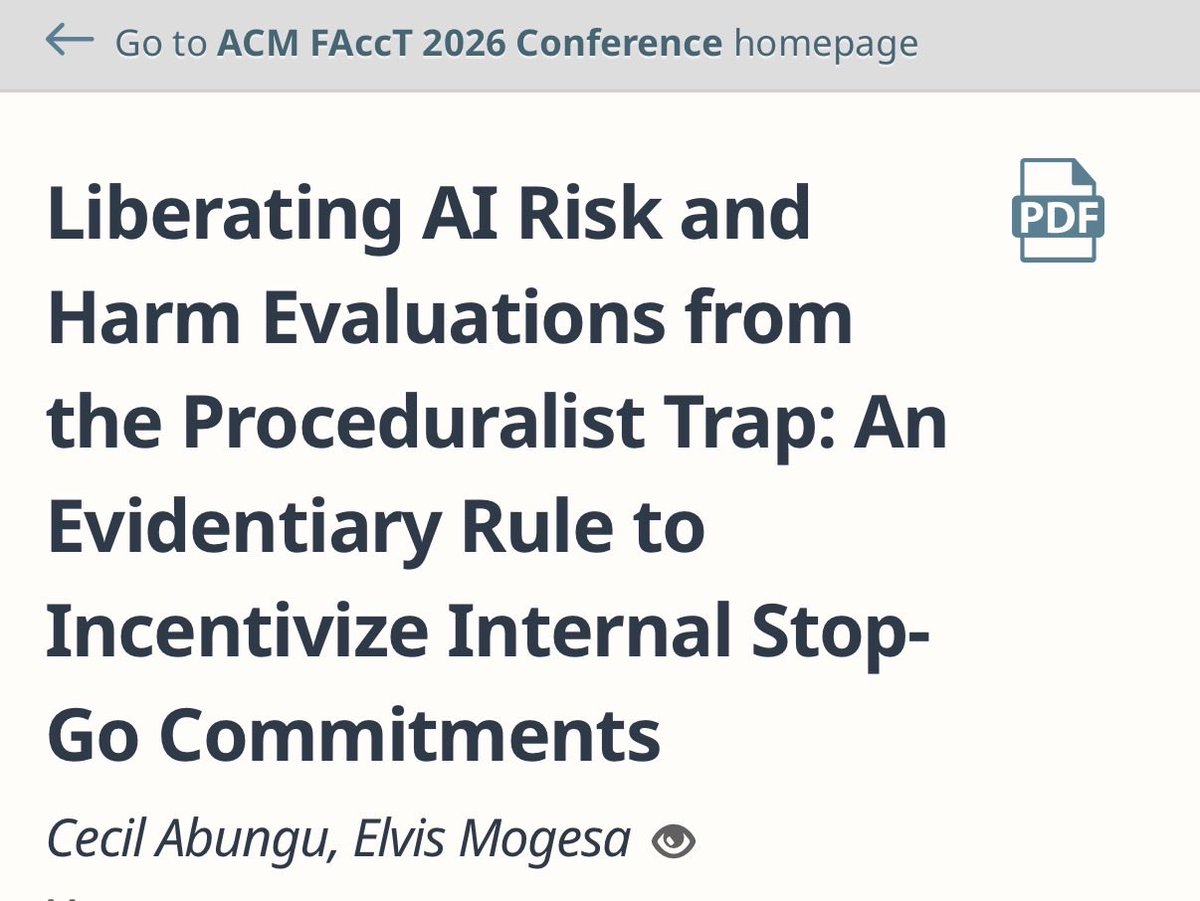
Ion @mogesa_elvis and I got our research paper accepted for FAccT this year. I’ve never been to FAccT or got a paper accepted there. Looking forward to it ✨
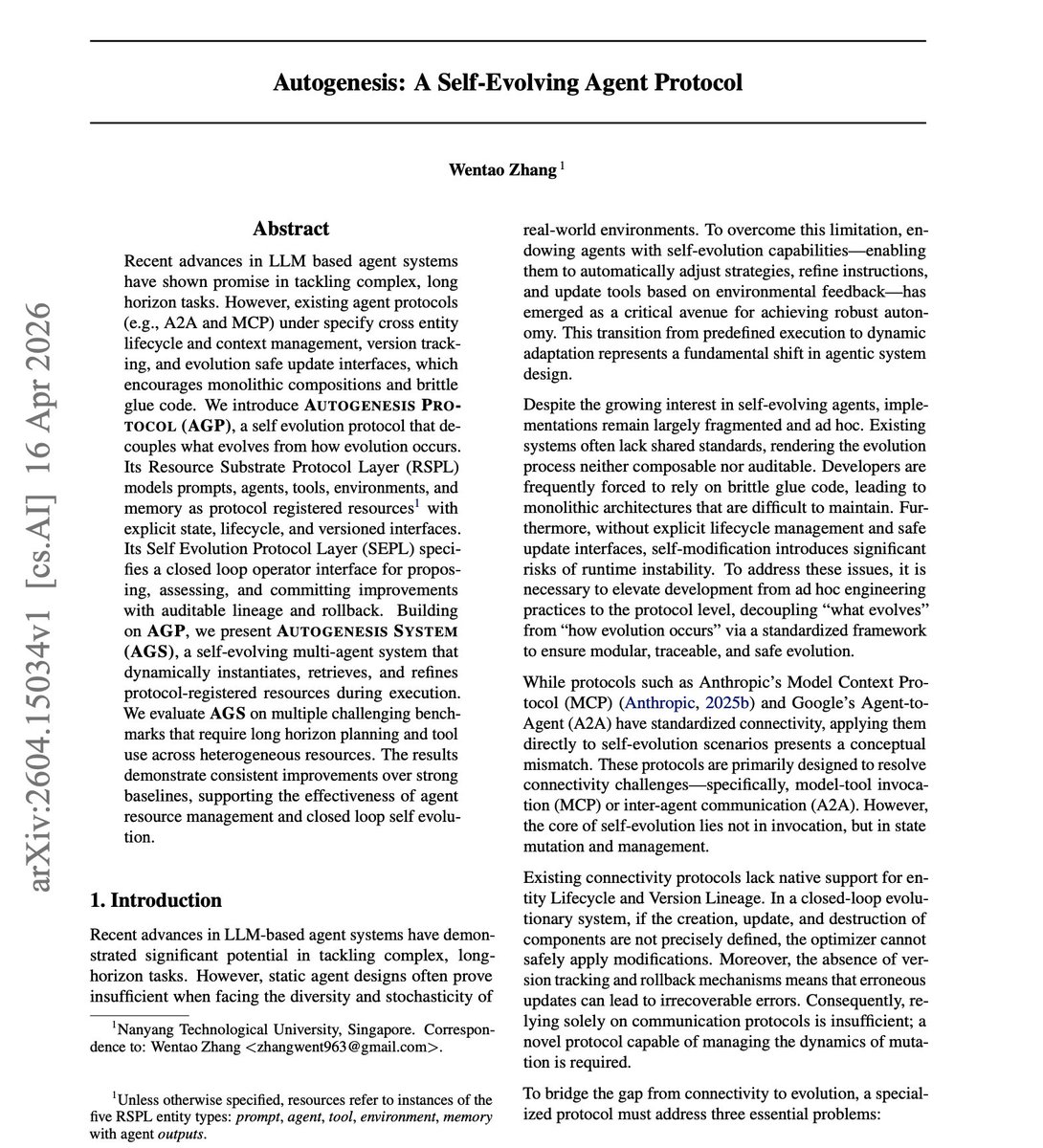
// Self-Evolving Agent Protocol //
One of the more interesting papers I read this week.
(bookmark it if you are an AI dev)
The paper introduces Autogenesis, a self-evolving agent protocol where agents identify their own capability gaps, generate candidate improvements, validate them through testing, and integrate what works back into their own operational framework.
No retraining, no human patching, just an ongoing loop of assessment, proposal, validation, and integration.
Why it's worth reading this paper:
Static agents age quickly.
As deployment environments change and new tools arrive, the agents that survive will be the ones that can safely rewrite themselves. Autogenesis is part of a growing wave of self-improving agent systems, alongside work like Meta-Harness and the Darwin Gödel Machine line, and it's one of the cleaner protocol-level takes on continual self-improvement so far.
Paper: https://t.co/3aj9LLjSbk
Learn to build effective AI agents in our academy: https://t.co/1e8RZKs4uX
Warm take. No human would be flooding Paris or Beijing streets to cheer some HR/o4 pro with lithium batteries for running a half-marathon. Tools will remain tools and humans will converge to ensure that, even if they disagree on everything else.
A humanoid robot won a half-marathon in Beijing in 50 minutes and 26 seconds, finishing faster than Ugandan runner Jacob Kiplimo's world record.
Read more: https://t.co/9dAhROVvPn














![AndrewYNg's tweet photo. There will be no AI jobpocalypse.
The story that AI will lead to massive unemployment is stoking unnecessary fear. AI — like any other technology — does affect jobs, but telling overblown stories of large-scale unemployment is irresponsible and damaging. Let’s put a stop to it.
I’ve expressed skepticism about the jobpocalypse in previous posts. I’m glad to see that the popular press is now pushing back on this narrative. The image below features some recent headlines.
Software engineering is the sector most affected by AI tools, as coding agents race ahead. Yet hiring of software engineers remains strong! So while there are examples of AI taking away jobs, the trends strongly suggest the net job creation is vastly greater than the job destruction — just like earlier waves of technology. Further, despite all the exciting progress in AI, the U.S. unemployment rate remains a healthy 4.3%.
Why is the AI jobpocalypse narrative so popular? For one thing, frontier AI labs have a strong incentive to tell stories that make AI technology sound more powerful. At their most extreme, they promote science-fiction scenarios of AI “taking over” and causing human extinction. If a technology can replace many employees, surely that technology must be very valuable!
Also, a lot of SaaS software companies charge around $100-$1000 per user/year. But if an AI company can replace an employee who makes $100,000 — or make them 50% more productive — then charging even $10,000 starts to look reasonable. By anchoring not to typical SaaS prices but to salaries of employees, AI companies can charge a lot more.
Additionally, businesses have a strong incentive to talk about layoffs as if they were caused by AI. After all, talking about how they’re using AI to be far more productive with fewer staff makes them look smart. This is a better message than admitting they overhired during the pandemic when capital was abundant due to low interest rates and a massive government financial stimulus.
To be clear, I recognize that AI is causing a lot of people’s work to change. This is hard. This is stressful. (And to some, it can be fun.) I empathize with everyone affected. At the same time, this is very different from predicting a collapse of the job market.
Societies are capable of telling themselves stories for years that have little basis in reality and lead to poor society-wide decision making. For example, fears over nuclear plant safety led to under-investment in nuclear power. Fears of the “population bomb” in the 1960s led countries to implement harsh policies to reduce their populations. And worries about dietary fat led governments to promote unhealthy high-sugar diets for decades.
Now that mainstream media is openly skeptical about the jobpocalypse, I hope these stories will start to lose their teeth (much like fears of AI-driven human extinction have).
Contrary to the predictions of an AI jobpocalypse, I predict the opposite: There will be an AI jobapalooza! AI will lead to a lot more good AI engineering jobs, and I’m also optimistic about the future of the overall job market. What AI engineers do will be different from traditional software engineering, and many of these jobs will be in businesses other than traditional large employers of developers. In non-AI roles, too, the skills needed will change because of AI. That makes this a good time to encourage more people to become proficient in AI, and make sure they’re ready for the different but plentiful jobs of the future!
[Original text in The Batch newsletter.]](https://pbs.twimg.com/media/HIIb1VGaUAAZoAB.jpg)