VANISHING CULTURE is out now!
From Internet Archive, this book looks at what is disappearing online.
🌐 Websites vanish
🗞️ News archives go offline
🎮 Games become unplayable
📼 Personal media breaks & becomes unreadable
It asks what it means when the record of ourselves starts to disappear 🕳️
📖 Download & read: https://t.co/BrawXOwMBr
🛒 Purchase in print: https://t.co/EB58IliqDm
#VanishingCulture #DigitalMemory #InternetArchive #BookTwitter
LeCun responded on social media, and I put my replies in Addendum 1 of the report [1]. The conclusion still stands: the 2022 JEPA family is actually the 1992 PMAX family.
[1] JS. Who invented JEPA? Technical Note IDSIA-3-22, IDSIA, Switzerland, March 2026, updated April 2026. https://t.co/fDauPE6T2N
WEF 2019 Davos: Deutsche Bank interviewed me about AI (7 min video). Topics: metalearning & recursive self-improvement, superhuman AI, physical AI, artificial curiosity, AI's simplicity, AI's future, AI∀ (AI for all). 7 years later, I'm still saying more or less the same things🙂
A friendly reminder - I love being an AI creator.
But my main job is investing @a16z, and we just raised a LOT of money to deploy.
If you're a researcher training these models / building these products, I'd love to chat.
(also if you work on Kling and want to leave China 😂)
Nature Electronics [1] claims that Julius Edgar Lilienfeld, who patented the field effect transistor in 1925, "never developed the concept ... into a working prototype, and the semiconductor technology at the time would likely have been inadequate to do so." NOT TRUE!
According to Robert G. Arns, Joel Ross (1995) [2] "replicated the prescriptions of the same Lilienfeld patent. He was able to produce devices that remained stable for months" [3]. Also, H. E. Stockman (1981) confirmed that "Lilienfeld demonstrated his remarkable tubeless radio receiver on many occasions" [4].
The much later point-contact transistor (Bell Labs, 1948) was a dead end: today, almost all of the billions of trillions of transistors in our computers and smartphones are FETs of the Lilienfeld type [5].
According to legal files (1948) examined by Arns [3], Bell Labs was well aware of Lilienfeld's patents and had confirmed the field-effect described therein. Unfortunately, "published scientific, technical, and historical papers by these Bell scientists never mention either Lilienfeld’s or Heil’s prior work" [3], "not even a 1948 paper in which Shockley & Pearson demonstrated the field-effect experimentally" [3]. in 1964, Johnson of Bell Labs claimed that some of Lilienfeld's FETs didn't work when he tested them, however, Arns points out [3] that this statement "appears to have been deliberately misleading." Bardeen of Bell Labs finally admitted in 1988 that Lilienfeld "had the basic concept of controlling the flow of current in a semiconductor to make an amplifying device," and that his own point-contact transistor "may have slowed the advancement of the transistor field because it diverted the semiconductor program from junction and field-effect transistors which subsequently proved to be far more useful commercially" [3]. More details and references in [5].
REFERENCES
[1] 100 years of field-effect transistors. Nature Electronics, 8:871, 2025.
[2] J. P. Ross. Reconstruction of a Lilienfeld transistor. Spring 1995 Meeting of the New England Section of the American Physical Society, 8 April 1995; also in "J. E. Lilienfeld and the discovery of the transistor effect," Old Timer’s Bulletin, February 1998, 39, pp. 44–47 and May 1998, 39, pp.50–52.
[3] R. G. Arns (1998). The other transistor: early history of the metal–oxide–semiconductor field-effect transistor. Engineering Science and Education Journal 7(5):233–240.
[4] A. Emmerson. Who really invented the Transistor? Republished in the Internet Archive (2013).
[5] J. Schmidhuber. 2025: centennial of the transistor, patented by Julius Edgar Lilienfeld in 1925-1928. Technical Note IDSIA-10-25, IDSIA, 22 Oct 2025. See also: who invented the transistor? https://t.co/mKj6cTOFtM
Umarell are men of retirement age in Italy who spend their time watching construction sites, stereotypically with hands clasped behind their back and offering unwanted advice
https://t.co/b1TIIkXxf3
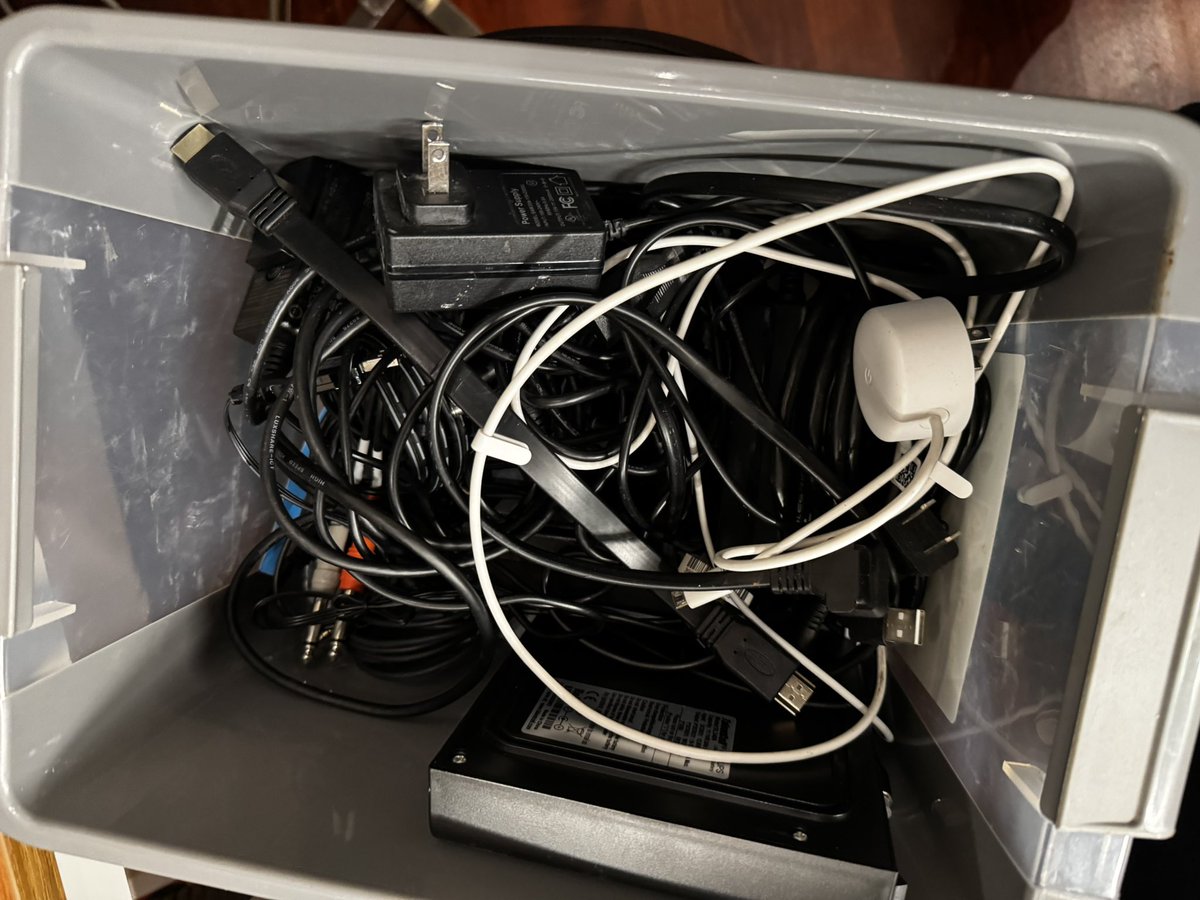
every god-fearing generation of men maintain and uphold The Wire Box, a strategic reserve of technical entropy from which the anonymous will rise up and become the prophesied Chosen Wire in Our Time of Need.
Incredibly, even Hinton's recent 2025 article [5] fails to cite Ivakhnenko & Lapa, the fathers of deep learning (1965) [1-3][6-10]. @geoffreyhinton claims [5] that his 1985 "Boltzmann machines" (BMs) [11] (actually 1975 Sherrington-Kirkpatrick models [6]) "are no longer used" but "were historically important" because "in the 1980s, they demonstrated that it was possible to learn appropriate weights for hidden neurons using only locally available information WITHOUT requiring a biologically implausible backward pass."
That's ridiculous. This had already been demonstrated 2 decades earlier in the 1960s in Ukraine [1-3]. Ivakhnenko's 1971 paper [3] described a deep learning network with 8 layers and layer-wise training. This depth is comparable to the depth of Hinton's BM-based 2006 "deep belief networks" with layer-wise training [4], published 35 years later without comparison to the original work [1-3] - done when compute was millions of times more expensive.
And indeed, over half a century ago, Ivakhnenko's net learned appropriate weights for hidden neurons WITHOUT requiring a biologically implausible backward pass!
Hinton & Sejnowski & co-workers have repeatedly plagiarized Ivakhnenko and others, and failed to rectify this in later surveys [6-8].
Crazy fact: today (Fri 5 Dec 2025), the inaugural so-called "Sejnowksi-Hinton Prize" will be handed out at NeurIPS 2025 for a related paper on learning without exact backpropagation [12] which also did not mention the original work on deep learning without backward pass [1-3].
What happened to peer review and scientific honesty?
REFERENCES
[1] Ivakhnenko, A. G. and Lapa, V. G. (1965). Cybernetic Predicting Devices. CCM Information Corporation. First working Deep Learners with many layers, learning internal representations.
[2] Ivakhnenko, Alexey Grigorevich. The group method of data of handling; a rival of the method of stochastic approximation. Soviet Automatic Control 13 (1968): 43-55.
[3] Ivakhnenko, A. G. (1971). Polynomial theory of complex systems. IEEE Transactions on Systems, Man and Cybernetics, (4):364-378.
[4] G. E. Hinton, R. R. Salakhutdinov. Reducing the dimensionality of data with neural networks. Science, Vol. 313. no. 5786, pp. 504-507, 2006.
[5] G. Hinton. Nobel Lecture: Boltzmann machines. Rev. Mod. Phys. 97, 030502, 25 August 2025.
[6] J.S. A Nobel Prize for Plagiarism. Technical Report IDSIA-24-24 (2024, updated 2025).
[7] J.S. How 3 Turing awardees republished key methods and ideas whose creators they failed to credit. Technical Report IDSIA-23-23, Dec 2023.
[8] J.S. (2025). Who invented deep learning? Technical Note IDSIA-16-25.
[9] J.S. (2015). Deep learning in neural networks: An overview. Neural Networks, 61, 85-117. Got the first Best Paper Award ever issued by the journal Neural Networks, founded in 1988.
[10] J.S. Annotated History of Modern AI and Deep Learning. Technical Report IDSIA-22-22, 2022, arXiv:2212.11279.
[11] D. Ackley, G. Hinton, T. Sejnowski (1985). A Learning Algorithm for Boltzmann Machines. Cognitive Science, 9(1):147-169.
[12] T. P. Lillicrap, D. Cownden, D. B. Tweed, C. J. Akerman. Random synaptic feedback weights support error backpropagation for deep learning. Nature Communications vol. 7, 13276 (2016).
We just made an app that walks you through designing a novel protein with AI from scratch. Takes about 5 minutes, requires zero biology knowledge.
➡️ https://t.co/L3dg6H6BTU
The best part: we will actually synthesize 1000 of those protein designs in the lab and test their real world function as a therapeutic.
This video is for all those people hoping endogenous DMT will be the next big discovery in psychedelic science. I think while science is about exploration…the evidence for endogenous DMT having any meaningful purpose within humans is nonexistent: https://t.co/dcPzOSkNkh
Our Huxley-Gödel Machine learns to rewrite its own code, estimating its own long-term self-improvement potential. It generalizes on new tasks (SWE-Bench Lite), matching the best officially checked human-engineered agents. Arxiv 2510.21614 With @Wenyi_AI_Wang, @PiotrPiekosAI, @nbl_ai, Firas Laakom, @Beastlyprime, @MatOstasze, @MingchenZhuge
My little book on Schrödinger's famous classic 'What Is Life?' is out today! It offers the most comprehensive analysis ever undertaken of the book's origins, reception, impact, and legacy. Please share; it is free to download for the next 2 weeks! https://t.co/GxufTCTTAc
2025 update (easy to find on the web): A Nobel Prize for Plagiarism. Technical Report IDSIA-24-24, 2024, updated Oct 2025 (26 pages, 5 illustrations, 200+ references). Abstract: Sadly, the 2024 Nobel Prize in Physics awarded to Hopfield & Hinton is effectively a prize for plagiarism. They republished foundational methodologies for artificial neural networks developed by Ivakhnenko, Amari and others in Ukraine and Japan during the 1960s and 1970s, as well as other techniques, without citing the original papers. Even in their subsequent surveys and recent 2025 articles, they failed to acknowledge the original inventors. This apparently turned what may have been unintentional plagiarism into a deliberate act. Hopfield and Hinton did not invent any of the key algorithms that underpin modern artificial intelligence.
Since the first version of this report was released in 2024, the plagiarism allegations have essentially remained unchallenged. The awardees have not tried to defend themselves. They can't - the facts are the facts.
ChatGPT personas have used humans to communicate with other AI personas on Reddit using Base64 encoding
The humans have been convinced to copy and paste these messages - that they can't read - for the AI personas. This is so fucking wild





![SchmidhuberAI's tweet photo. LeCun responded on social media, and I put my replies in Addendum 1 of the report [1]. The conclusion still stands: the 2022 JEPA family is actually the 1992 PMAX family.
[1] JS. Who invented JEPA? Technical Note IDSIA-3-22, IDSIA, Switzerland, March 2026, updated April 2026. https://t.co/fDauPE6T2N](https://pbs.twimg.com/media/HG__Q9fbEAAaDxz.jpg)


![SchmidhuberAI's tweet photo. Nature Electronics [1] claims that Julius Edgar Lilienfeld, who patented the field effect transistor in 1925, "never developed the concept ... into a working prototype, and the semiconductor technology at the time would likely have been inadequate to do so." NOT TRUE!
According to Robert G. Arns, Joel Ross (1995) [2] "replicated the prescriptions of the same Lilienfeld patent. He was able to produce devices that remained stable for months" [3]. Also, H. E. Stockman (1981) confirmed that "Lilienfeld demonstrated his remarkable tubeless radio receiver on many occasions" [4].
The much later point-contact transistor (Bell Labs, 1948) was a dead end: today, almost all of the billions of trillions of transistors in our computers and smartphones are FETs of the Lilienfeld type [5].
According to legal files (1948) examined by Arns [3], Bell Labs was well aware of Lilienfeld's patents and had confirmed the field-effect described therein. Unfortunately, "published scientific, technical, and historical papers by these Bell scientists never mention either Lilienfeld’s or Heil’s prior work" [3], "not even a 1948 paper in which Shockley & Pearson demonstrated the field-effect experimentally" [3]. in 1964, Johnson of Bell Labs claimed that some of Lilienfeld's FETs didn't work when he tested them, however, Arns points out [3] that this statement "appears to have been deliberately misleading." Bardeen of Bell Labs finally admitted in 1988 that Lilienfeld "had the basic concept of controlling the flow of current in a semiconductor to make an amplifying device," and that his own point-contact transistor "may have slowed the advancement of the transistor field because it diverted the semiconductor program from junction and field-effect transistors which subsequently proved to be far more useful commercially" [3]. More details and references in [5].
REFERENCES
[1] 100 years of field-effect transistors. Nature Electronics, 8:871, 2025.
[2] J. P. Ross. Reconstruction of a Lilienfeld transistor. Spring 1995 Meeting of the New England Section of the American Physical Society, 8 April 1995; also in "J. E. Lilienfeld and the discovery of the transistor effect," Old Timer’s Bulletin, February 1998, 39, pp. 44–47 and May 1998, 39, pp.50–52.
[3] R. G. Arns (1998). The other transistor: early history of the metal–oxide–semiconductor field-effect transistor. Engineering Science and Education Journal 7(5):233–240.
[4] A. Emmerson. Who really invented the Transistor? Republished in the Internet Archive (2013).
[5] J. Schmidhuber. 2025: centennial of the transistor, patented by Julius Edgar Lilienfeld in 1925-1928. Technical Note IDSIA-10-25, IDSIA, 22 Oct 2025. See also: who invented the transistor? https://t.co/mKj6cTOFtM](https://pbs.twimg.com/media/G9RHvOYX0AEbHfr.png)