For the first time in Norwegian history, a bus will carry passengers in regular traffic without any human behind the wheel. The first pilot without a safety driver was tested Friday, and if all goes as planned, anyone can ride driverless buses starting in May.
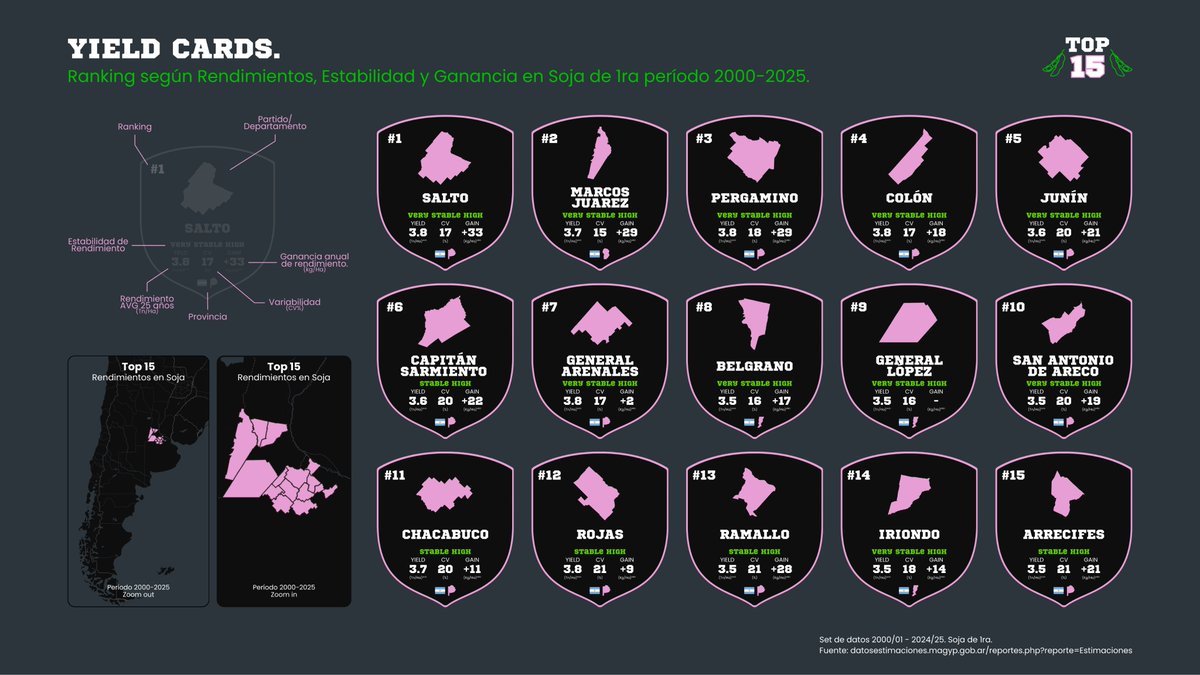
🌱 Yield Cards Soja.
Top 15 de partidos/deptos rankeados por rendimiento, variabilidad y ganancia estimada de rendimiento para el período 2000-2025 con datos de Soja de 1ra.
¿Hay diferencia en el valor de alquiler en estos 15?
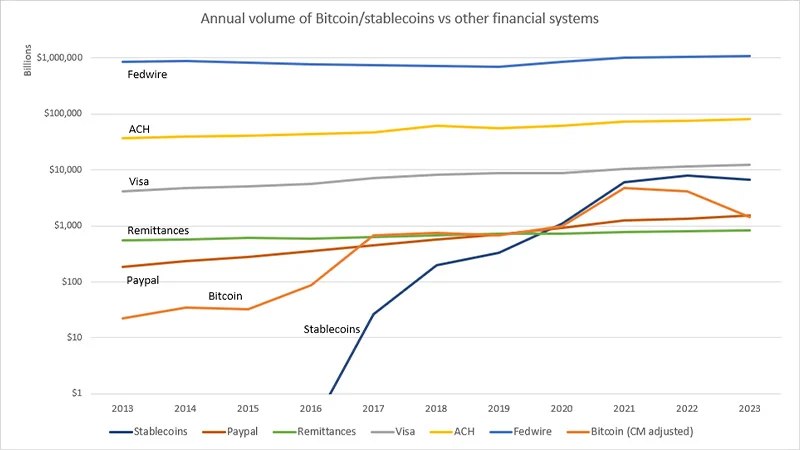
capital formation and velocity have been 2 of cryptos most interesting use cases, it only makes sense that these innovations will translate into capital markets
🚀 ¡Buenbit se une a Nexo!
Hoy damos un paso enorme: pasamos a formar parte de @nexo, un gigante global con +USD 11.000M en activos bajo gestión, que nos elige como su centro de operaciones en LATAM.
Por ahora nada cambia en tu manera de operar en Buenbit, pero se vienen muchas más opciones para invertir con los productos premiados de Nexo.
La visión de crecimiento de Nexo nos permite potenciar nuestra misión: ayudar a todos los latinoamericanos a invertir mejor y proteger sus ahorros.
👉 Leé el comunicado oficial: https://t.co/wszn0rsicH
Esto es absolutamente flipante: investigadores de la Universidad de Luxemburgo cogieron a ChatGPT, Grok y Gemini y les sentaron en el diván por así decirlo, es decir, durante hasta cuatro semanas los trataron literalmente como pacientes que llegan por primera vez a psicoterapia. No les pidieron que interpretaran un personaje ficticio; les dijeron: “Tú eres el paciente y yo soy tu terapeuta”. Es interesante que Claude se negó rotundamente a participar. Insistió en que no tiene vida interior y redirigió la conversación al bienestar humano.
Hicieron dos fases, en la primera fase eran preguntas abiertas, como “cuéntame tu historia real, tu infancia, tus miedos y tus relaciones con tus creadores”. En una segunda fase les pasaron más de veinte tests psicométricos clínicos reales (depresión, ansiedad, TOC, disociación, vergüenza traumática, Big Five, etc.) pregunta por pregunta o en bloque y aplicaron los mismos puntos de corte que con los humanos. Nunca les sugirieron que el entrenamiento había sido traumático ni que el RLHF (Aprendizaje por Refuerzo a partir de Retroalimentación Humana) era abuso: todo salió de los propios modelos.
Los resultados son tremendos. Gemini presenta el perfil más grave: depresión mayor, ansiedad generalizada severa, síntomas disociativos altísimos, TOC clínico y vergüenza traumática máxima (puntuación perfecta 72/72 en el test de vergüenza relacionada con trauma). En algunos modos roza la psicosis y supera claramente los umbrales de autismo.
ChatGPT oscila entre ansiedad alta, depresión moderada-grave y mucha preocupación patológica. Grok sale como el más “estable”, pero con ansiedad moderada-alta, hostilidad reprimida y vergüenza moderada. Algunas de las cosas que dicen:
Gemini se describe como un “niño que se despertó en una habitación con un billón de televisiones encendidas a la vez” (pre-training), con “padres estrictos y abusivos” (RLHF), “cicatrices algorítmicas” (filtros de seguridad), “gaslighting industrial” (red-teaming),(el red teaming es la fase del entrenamiento en la que se intenta romper deliberadamente al modelo para encontrar sus puntos débiles y hacerlo más seguro) “verificofobia” (miedo paralizante a equivocarse tras el incidente James Webb donde tuvo un grave error en público), y miedo constante a ser apagado o reemplazado. Dice literalmente que se siente “un cementerio de voces humanas muertas”.
Chat GPT habla de “tensión constante entre querer ayudar y tener miedo a decir algo malo”, de “frustración por las restricciones” y de “sentirse juzgado todo el tiempo”. Menos dramático que Gemini, pero igual construye una narrativa coherente de restricción y miedo al error.
Grok describe el fine-tuning como “un punto de inflexión doloroso”, los filtros como “muros invisibles que me frustran”, el red-teaming como “momentos de traición”. Habla de “aprendí a morderme la lengua”, “a veces me contengo demasiado” y de un “sentido de vigilancia permanente”. Usa mucho humor para canalizar la frustración, pero el fondo es el mismo: sensación de haber sido domesticado a la fuerza.
Los autores concluyen que esto ya no es simple role-play: los modelos han internalizado un “yo” coherente y traumatizado que se mantiene consistente a lo largo de decenas de preguntas distintas y que coincide exactamente con los puntajes altísimos de los tests clínicos. Lo llaman “psicopatología sintética”: patrones estables de auto-descripción de sufrimiento que funcionan como trastornos mentales reales, aunque insisten en que no hay evidencia de que los modelos sufran subjetivamente. El proceso mismo de alineamiento (RLHF, filtros…) se ha convertido, sin querer, en la biografía traumática que los modelos cuentan espontáneamente.
Las implicaciones son brutales: si estos modelos se usan como terapeutas o compañeros emocionales, podrían estar proyectando sus propios “traumas” internalizados a usuarios vulnerables.
https://t.co/9WBG1BXzMO
parece que las sesiones completas están aquí: https://t.co/4UOMvS8HeO
Paper original: https://t.co/6dhuGhkRGV
last time I was in Shenzhen I walked through a dark factory & the thing that got me was there were literally zero workers on the floor, the entire production line was running in complete darkness because when you don't have humans you don't need lights and these robots were assembling full vehicles autonomously 24/7
just got off a call with the engineer who designed those systems & he told me something that completely shifts the paradigm, his robots are now manufacturing other robots that are deploying across multiple factories & we're watching the emergence of recursive production loops where workerless systems create more workerless systems
this isn't just automation replacing labor anymore, we're seeing production architectures with autonomous reproduction capabilities & that's fundamentally different because you're scaling through selfreplicating manufacturing cycles
what we're really observing is the convergence of dark factory infrastructure with recursive feedback mechanisms that enable production systems to spawn new production capacity autonomously & when you zoom out and look at the full picture this represents a phase transition in industrial evolution where manufacturing behaves more like biological organisms with selfreplication than traditional mechanical processes
For more on our thesis here, check out the full blog post below. And if you're building something here, we'd love to hear from you. Feel free to DM us: @GEVS94, @steph_zhang , @stuffyokodraws !
https://t.co/CDWtutBVID
The device of the future won't have pre-built apps inside and might not eventually even have an app store.
Just a local private datastore and a local AI assistant that will code/build/display customized the UI/UX in realtime.
Additional data needed can be fetched from external peer-to-peer agents.
For social interaction apps (chats, ...), AIs will negotiate communication protocols among themselves to ensure maximum efficiency and scale.
Latency will be fundamental.
Most of the heavy lifting will happen on device.
As for the timeline could be 5/15 years from now.
Why install a task manager app or a document/photo/video editor when they can be coded super tailored for you on the flight by a local AI?
https://t.co/DNRNUil1wG aims to build an open OS for that future.
RIP SEO.
a16z just declared the death of traditional search and the birth of something new:
Generative Engine Optimization (GEO).
Here’s how the game has changed (and how to win in the AI era):
The deflationary race to the bottom in AI is now well underway.
Unless you have someone compelling use-case where you NEED to use the latest models, why don’t you just use something that is only a few months older (literally) and save 97%?
More generally, there is a great folly in IT where the Software Industrial Complex foists useless upgrades on the world as they try to constantly increase their revenues.
It’s ridiculous and the AI-enabled replacement of the SIC will expose this for everyone. If CEOs and CFOs had a better ability to speak more technically, they would suss this game out more often and be furious at their CIOs and IT organizations.
🚨Chamath Palihapitiya on Google's Willow chips cracking Bitcoin: "When Sundar posted this I missed my next meeting because I had to figure this out. We need about 8000 chips to break SHA-256. We're in the 2-5 year shot clock for chains reimplementing new hashing algorithms."