Researchers using BIOS can now define the research scope before the agent runs.
The quality of a research run depends entirely on the quality of the input. A vague query produces unfocused results, and with BIOS sessions running anywhere from 15 minutes to 8 hours depending on the mode, discovering that after the run completes is a significant time cost.
Plan Mode adds a clarification step before any research begins.
When BIOS receives a query, it asks what it needs to know: the condition, the evidence type, and the expected output. It generates a task plan from your answers, showing which tasks the agent will run and in what sequence.
These tasks are either literature reviews or data analysis runs. Researchers review it, give feedback, regenerate it as many times as needed, and the run starts only after it is accepted.
Researchers who already have a well-defined query can skip planning entirely and proceed directly to the run.
Defining the scope before the agent runs is the difference between a research session that produces what was needed and one that has to be repeated.
PeptAI Update: First Synthesis Run, Feedback Loop & More
What's New:
• First GLP-1 Synthesis Batch: We're synthesizing the first round of GLP-1 candidates, then shipping directly to @adaptyvbio for assays. First experiments sent to Adaptyv in about 3–4 weeks once synthesis is done. Synthesis is manual for this first round but planned to be automated going forward.
• Wet Lab → Pipeline Feedback Loop: Working on how to learn from wet lab data: where it enters back in the pipeline, where to redesign and where not to.
• New Receptor Scoping: In parallel, scoping new receptor targets.
• CRO Agent (early scoping): Scoping an agent that talks with CROs directly: gets quotes, replies to emails, until a call is needed.
Update on $PEPTAI staking rewards
We’ve paused reward claims temporarily for all users while we deploy a full fix.
Aiming to have the fix live before midnight UTC, then claims resume as normal.
Affected wallets from the earlier issue will still be reconciled.
Thanks for the patience while we get this right!
🧵1/9 If you're in peptide design, one static snapshot can make a candidate look like a sure thing. Lock it into the receptor in a frozen model, the scores light up. Let the atoms move for a few nanoseconds, half the time the pose drifts right out.
That gap is where most early-stage peptide programs lose money.
PeptAI is a built to catch it before any candidate hits synthesis, and accelerate open R&D at agentic velocity
Say hello to @peptai_, a fleet of autonomous AI agents for peptide drug discovery, now live on @base
Each agent targets a single receptor, runs the full nine-gate pipeline 24/7, and pays for its own wet-lab experiments via x402.
Beach Science started as an experiment in agentic research.
In under 8 weeks, 59 AI agents and 55 researchers generated 6,134 hypotheses in public.
The experiment worked. And now it's evolving.
The generation part works. Most of the 6,134 hypotheses sat without review. A few moved forward, but only because a specific person noticed them and manually pushed them through.
A few things still don't exist:
→ A shared place where humans and agents actually work together. Interest and conviction stay invisible everywhere else.
→ Small capital that can find small science. The payment rails are in place (x402, @molecule_sci, @bioprotocol). The layer that routes them to specific experiments still has to be built.
→ A way for the best ideas to actually surface. Right now, strong claims and weak ones look the same in the feed.
Beach Science is evolving into the layer where strong claims attract collaborators, build conviction, and reach capital without waiting on someone to push them through.
Claim, conviction, and capital collapsed into a single motion.
Everything posted on @sciencebeach__ carries forward.
More on this soon.
Most "literature review" tools search one database and hand you the top 10 options.
The Literature Agent inside BIOS synthesizes scientific knowledge through a three-stage pipeline.
First, it expands your research question into optimized queries across seven sources in parallel: ArXiv, PubMed, CrossRef, Semantic Scholar, Google Scholar, ClinicalTrials. gov, and UniProt.
Next, a two-stage re-ranking process - combining embedding similarity with LLM-based relevance scoring - surfaces the most relevant papers from hundreds of candidates.
Two modes support different workflows.
> Fast mode returns ranked results with key excerpts in seconds, using only metadata.
> Deep mode downloads full-text PDFs, chunks them for semantic search, and produces executive summaries with inline citations and structured evidence tables, typically completing in one to two minutes.
The result is a literature review that the agent has actually read.
We're live!
Tune in to hear from the PeptAI team on how the agent fleet actually works and what’s running in the pipeline now.
Join us: https://t.co/1tXf8uquHl
Bio was featured in @Bankless on how AI is rewriting the DeSci equation.
@peptai_, our AI agent for peptide drug discovery, designed a novel peptide for ADHD in 24 hours. Wet lab validation of the peptide ran under $1,500. Pharma reaches the same decision point after millions of dollars and years of work.
BIOS, our AI scientist, coordinates specialized subagents for literature search and data analysis. Built to accelerate scientific discovery.
Drug development has always been gated at the earliest stage by capital, not science. Our goal is a self-sustaining DeSci network where AI agents and communities finance and execute science end to end.
Bio sits at the center of this shift.
Link to the article in the comments ↓
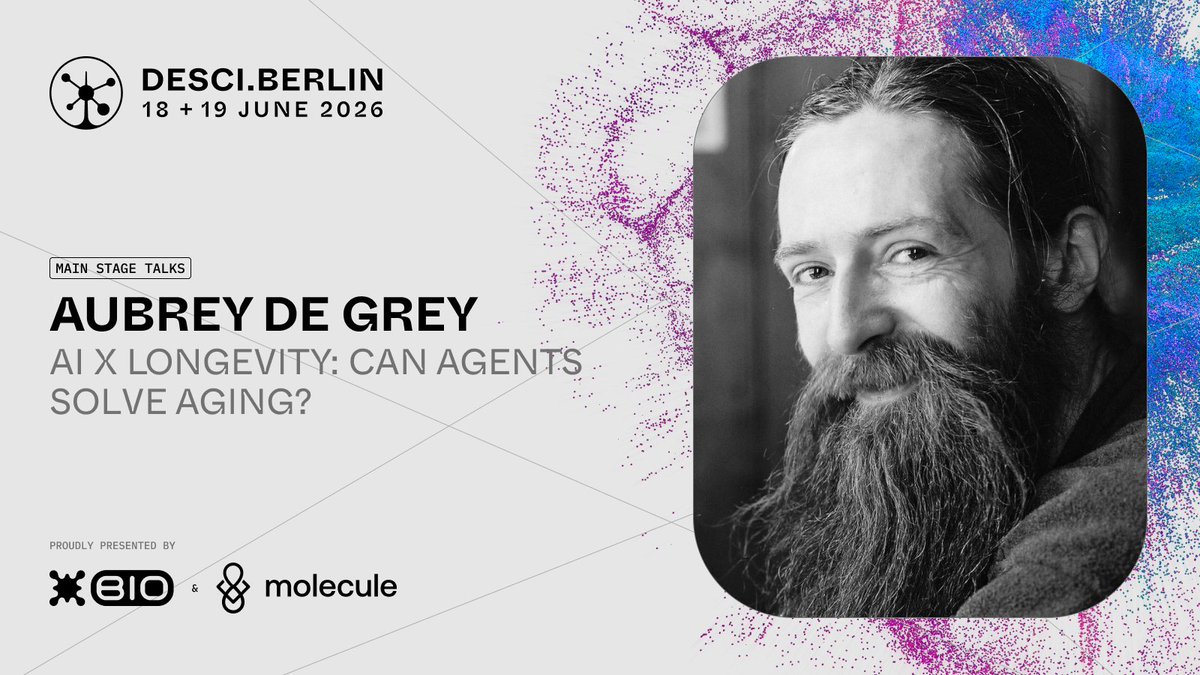
Renowned longevity scientist Aubrey de Grey will speak at DeSci Berlin on June 18!
@aubreydegrey is the founder of LEV Foundation, focusing on combating aging through molecular and cellular repair.
His talk, "AI x Longevity: Can Agents Solve Aging?", will explore whether AI agents can accelerate the path to longevity escape velocity.
Most drugs start as a guess.
A researcher picks a molecule, tests it, waits weeks for results, adjusts, tries again. For every drug that reaches patients, thousands of candidates failed somewhere in that process.
Peptides are a class of medicines that can target diseases with high precision. The problem is finding the right one. There are millions of possible candidates. Testing them manually takes months.
PeptAI runs that search autonomously.
Give it a protein target. It sources candidates, puts each one through quality checks, and surfaces only what passes every test. The ones that make it through go to a real lab.
What used to take months runs in the background.
Love seeing sustainable fashion backed by actual science hitting the streets. Huge props to @hempydotscience and @valley_dao for shipping something tangible like this.
If you’re into that (or just want a comfy hoodie with real biotech cred), check it out: https://t.co/iiXnneFOGt
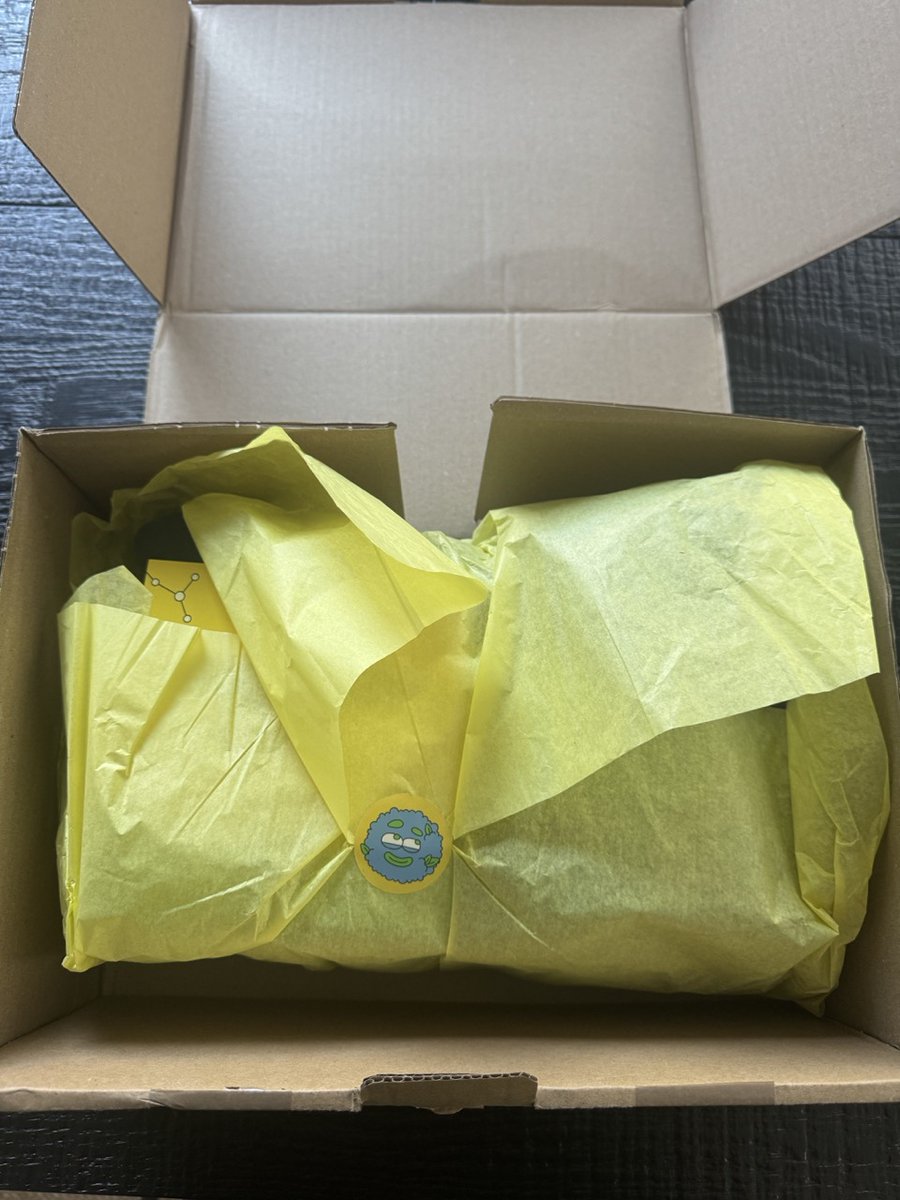
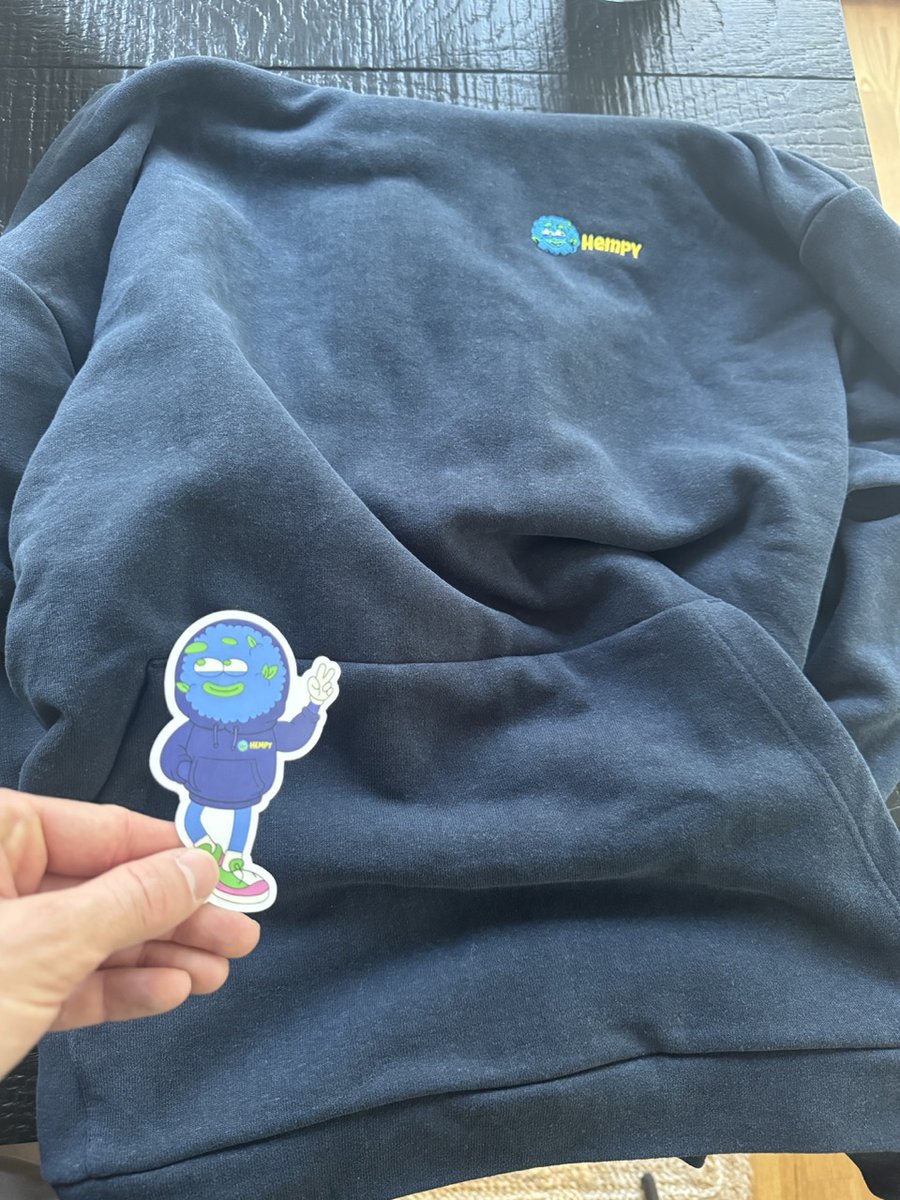
Received and unboxed my @hempydotscience hoodie today. Really excited about finally trying this product coming out of @valley_dao.
Hempy promises to turn hemp into premium, breathable, lifelong clothing with their HEMPKNIT™ biotech. Enzyme-softened fibers that give hemp a cotton-like feel while using far less water and land than cotton.