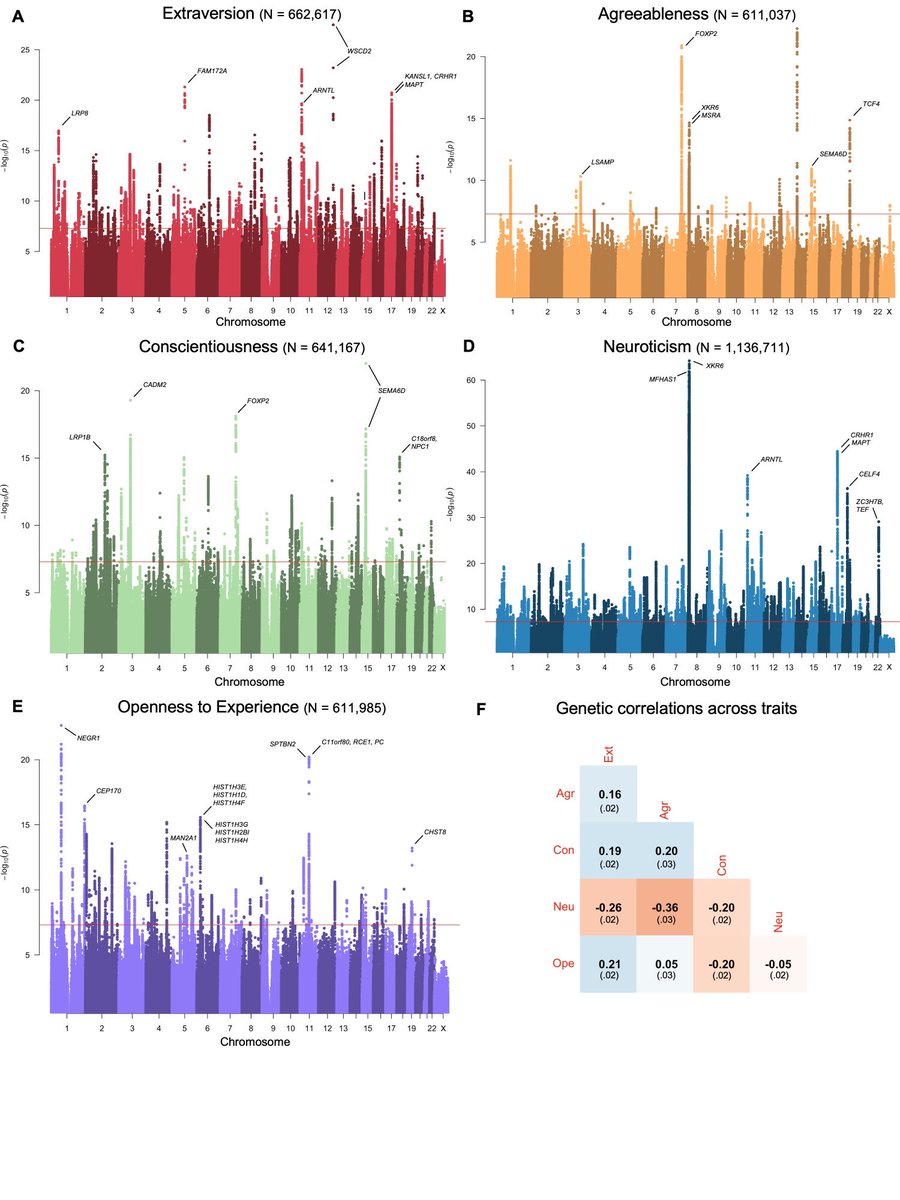
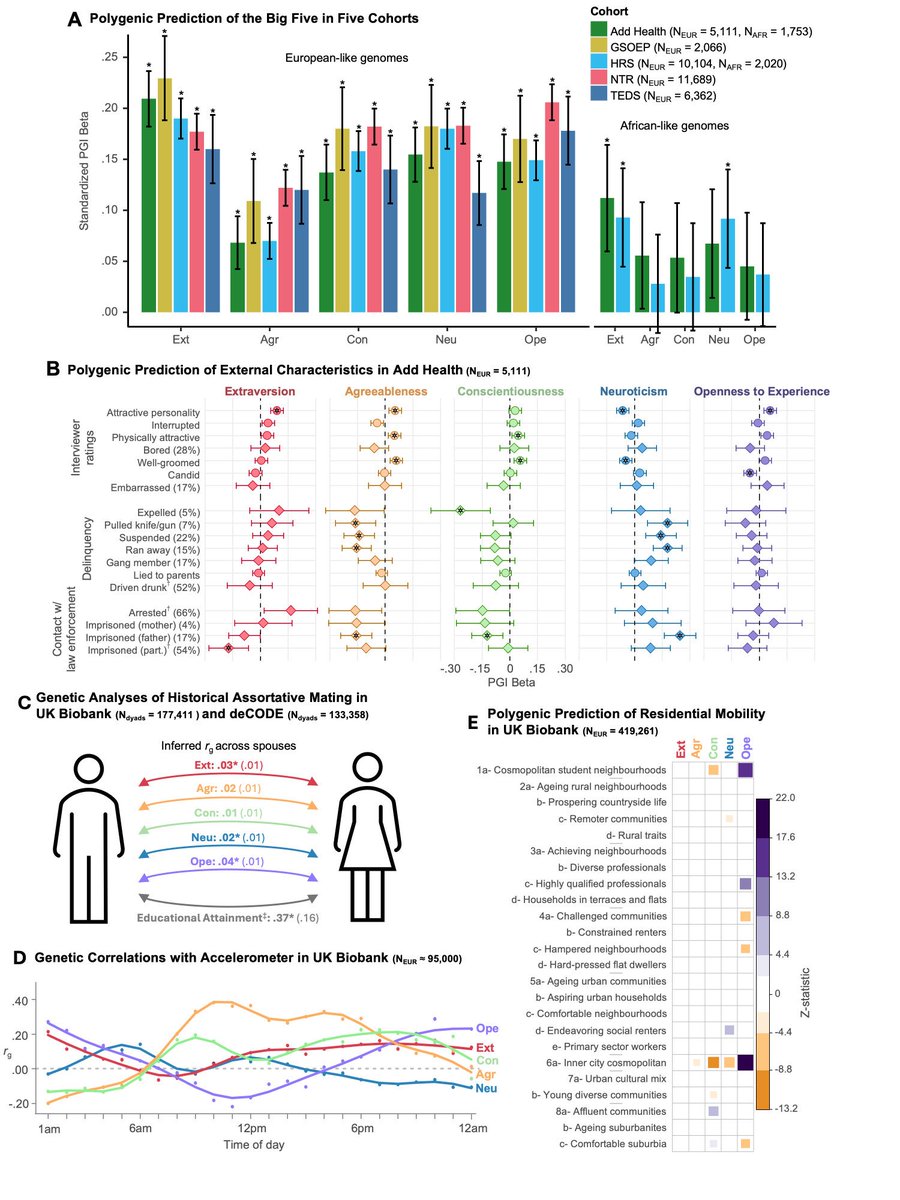
The ReGPC presents comprehensive GWAS of the Big Five personality in N=611K-1.14M and within-family GWAS in N=51K. In contrast to many other social/behav traits, pop GWAS of personality almost entirely reflect direct genetic effects. https://t.co/j5Esm4qHPC
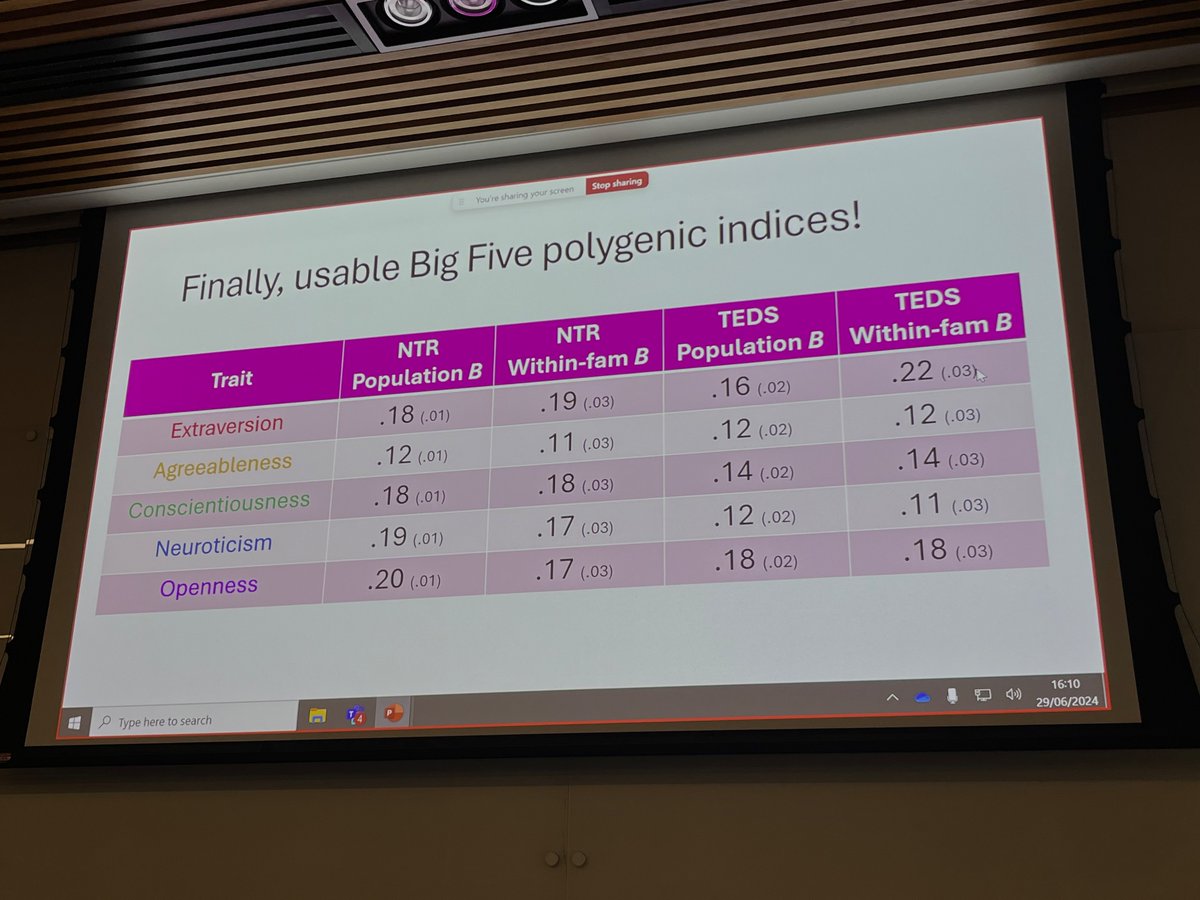
personality at #bga2024! @Tedo_ showed GWAS of personality from up to 1M participants! Polygenic prediction does not reduce when predicting within- family differences, so no bias! We just need to find rare variants to get to the family estimated heritability of .25!
There is an opening for a postdoc in my lab at UT Austin to work in the areas of statistical genetics and mental health and/or cognitive aging. Funding is in place. Our recent work can be found at https://t.co/xCaYTRsJud. Please feel to email me directly. [email protected]
🚨 New paper!
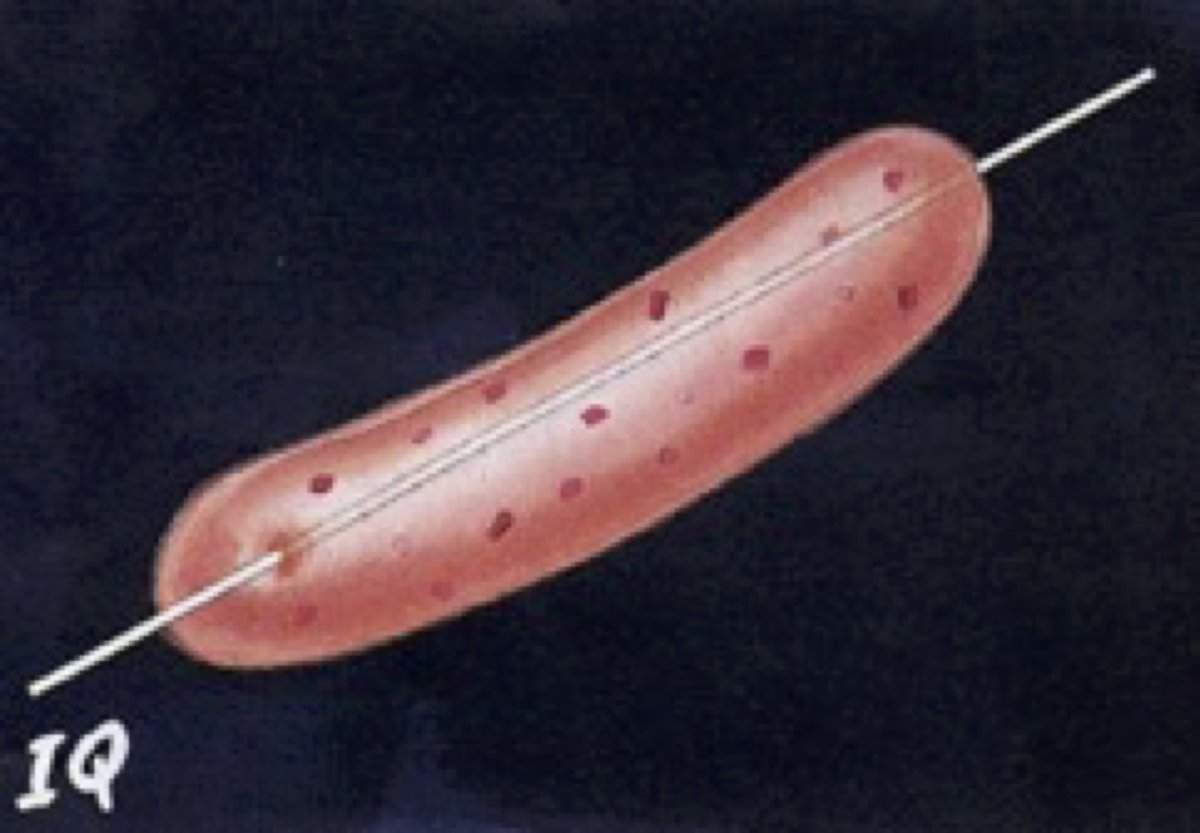
In this review, we explore factor indeterminacy and outline how we can use genetic data to test the validity of latent factors.
https://t.co/PALYML62El
With @Tedo_, @tuckerdrob, @kph3k, Andrew Grotzinger, and @michelnivard
Even when the factor model is correct, we observe some variants with specific effects. Variants in the APOE region are not generally associated with all cognitive tasks. Rather, they are associated with “fluid” tasks which decline with age, but not “crystallized” tasks.
1/ Many are fairly asking why there's a push for retracting old conversion therapy research. So here, I did your homework for you. Take a few minutes and buckle up.
Here's how old behavioral conversion therapy research still impacts people today: