Claude Codeに「テスト追加しました」って言われても、実際に何をしたのかよく分からないままOKしてませんか?
Ctrl+Oを押すと、どのファイルを読んで、どこを書き換えたのかが詳しく見られます。
もう一度Ctrl+Oで元の画面に戻るだけ。
要約を信じるしかなかった人ほど、覚えておくと安心な操作です。
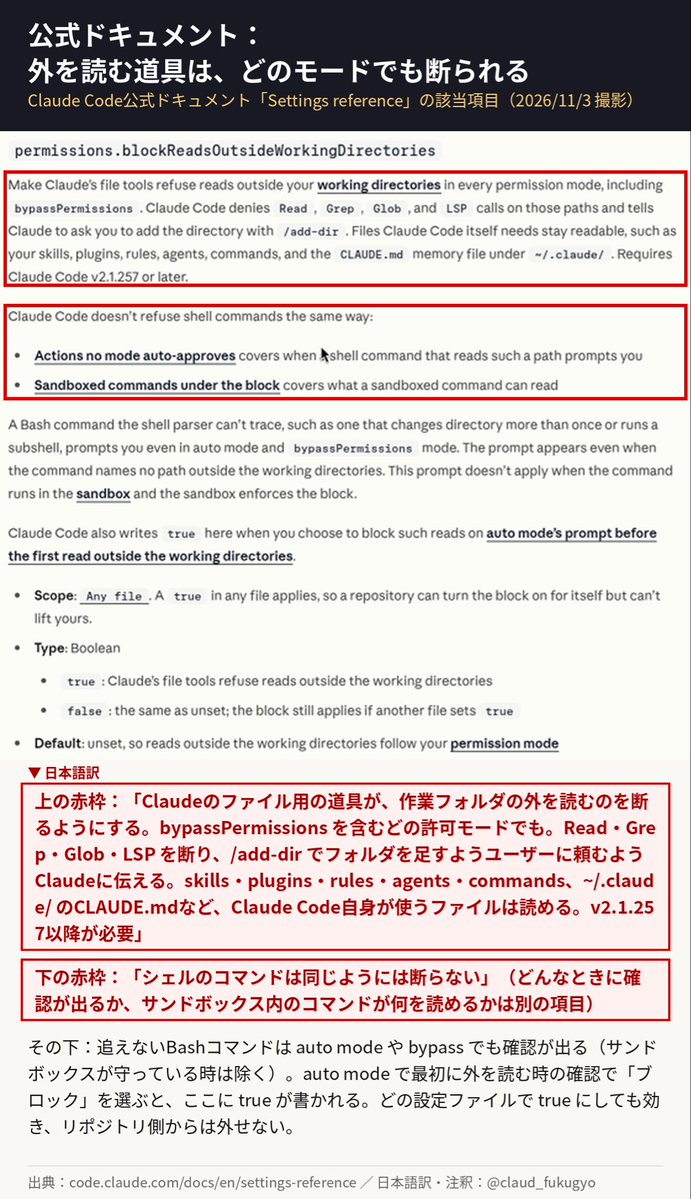
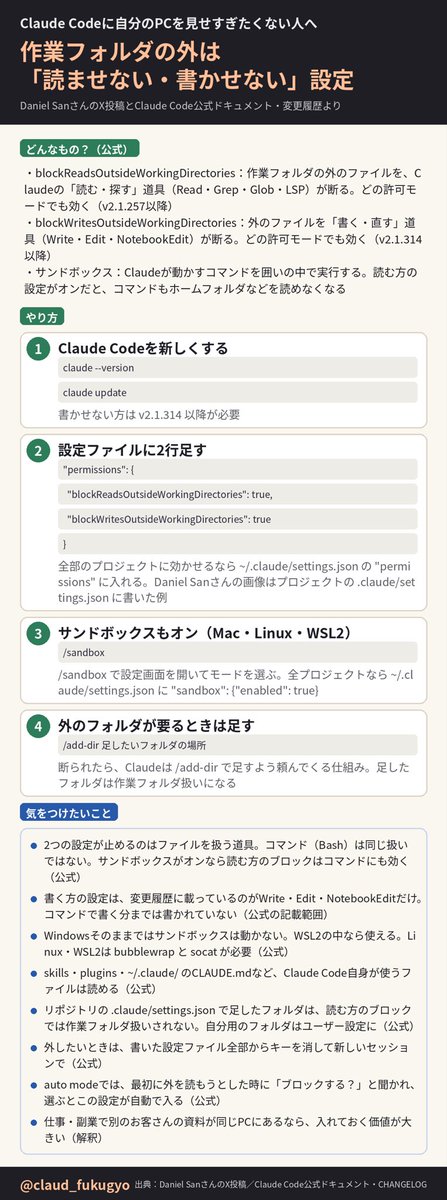
Claude Codeに、作業フォルダの外にある自分のファイルを見られたくない人へ。外は「読ませない・書かせない」の2つをセットでオンにできるよ。
書かせない方は日本でも話題になったけど、Daniel Sanさんのおすすめは「読ませない」方と、サンドボックス(コマンドを囲いの中で動かす仕組み)も足す形。
頼んだ作業のついでに、別の案件の資料やお金まわりのファイルまで読まれる心配を減らせるのがいいところ。
■やり方
① claude update で最新にする
② 設定ファイルに2行足す(中身はまとめ画像に)
③ Mac・Linuxなら /sandbox でサンドボックスもオン
④ 外のフォルダが必要になったら /add-dir で足す
■気をつけたいこと
・2つの設定が止めるのは、ファイルを読み書きする道具だけ。コマンド経由で読むのは止まらない(公式)。だから③とセットで
・Windowsそのままだとサンドボックスは使えない。WSL2なら使える(公式)
最初に「作業はこの机の上だけでね」と線を引いておく感じだね。
One more security setting worth enabling in Claude Code!
blockReadsOutsideWorkingDirectories prevents Claude from reading files outside your working directories
Combine it with blockWritesOutsideWorkingDirectories and Bash sandboxing for better protection
Here's my updated settings.json:
THIS IS PURE F*CKING GOLD, MAN
Anthropic just documented one of the cleanest tricks in Claude Code
The idea: give every task its own git worktree, put each one on the model that fits it, and keep Opus 5.5 on call as advisor
zero branch collisions, and Opus never wastes a turn on routine terminal work
You just start Claude Code like this:
claude --worktree feat-auth --model sonnet --advisor opus
here's how it splits:
→ Sonnet 5.5 builds the feature in .claude/worktrees/feat-auth on its own branch, edits the code and runs the tests
→ Haiku 5.5 scouts in parallel: maps call sites and dependencies, read-only, never touches a file
→ Fable 5.1 takes the long-horizon refactor in a second worktree: claude -w engine-migration --model fable
→ Opus 5.5 stays on call as advisor, reads the full transcript at the big forks and signs off before the PR
→ your main checkout stays clean the whole time, Claude Code blocks any edit that points back into it
Opus only steps in at three moments:
→ before a worktree plan locks
→ when the same test or build error comes back twice
→ before calling it done (reviewing the diff before the PR)
Sonnet builds · Haiku scouts · Fable migrates · Opus reviews
JEV engineering is the same move one layer down: the forks that need no thinker (which worktree, which tool, retry or stop) go to JEV in milliseconds, and the big models only see the ones that split
the full tree
> Opus 5.5 on call as advisor, signs off on the diff before the PR
> Sonnet 5.5 builds in .claude/worktrees/feat-auth on branch worktree-feat-auth
> Haiku 5.5 scouts map call sites, read-only
> Fable 5.1 runs the long refactor in its own worktree
> .worktreeinclude copies .env and local configs into every new worktree
> JEV routes micro-forks in milliseconds
paste the tree and this prompt into Claude Code ↓
"Rebuild my Claude Code setup around this tree:
1. Add .claude/worktrees/ to .gitignore and create a .worktreeinclude that copies .env and .env.local into every new worktree.
2. Run feature work with claude --worktree <name> --model sonnet --advisor opus.
3. Create a read-only Haiku 5.5 subagent called scout in .claude/agents that maps call sites and dependencies.
4. Create a refactorer subagent with isolation: worktree for mechanical changes across many files.
5. Add one rule to CLAUDE.md: consult the advisor before locking a plan, after the same error twice, and before the PR.
6. Route fast deterministic forks through JEV. Show every change as a diff first. No edits until I say go."
↳ https://t.co/ItX53Me7Wa
save it, you'll reach for it every single day
I'm starting to get scared of my own Claude skill.
i keep testing its limits, so today it got one picture of a robot jumping spider.
how the skill built it:
> the picture only sets the look, all 460 parts are code, down to the glass shins with a piston and a spring inside
> the motion is math before anything gets drawn: 8 legs step in 2 sets of 4, it sinks down, then straightens them in 0.12 s to launch
> every panel reads that same math, so the gait chart, the servo bars and the jump gauge never disagree
> the iris in the 2 big eyes stops down every time it jumps
> one click and it blows apart on a turntable, then snaps back together and comes at you again
the spider is just one more example of what it can do.
the skill and every prompt are in the article 👇
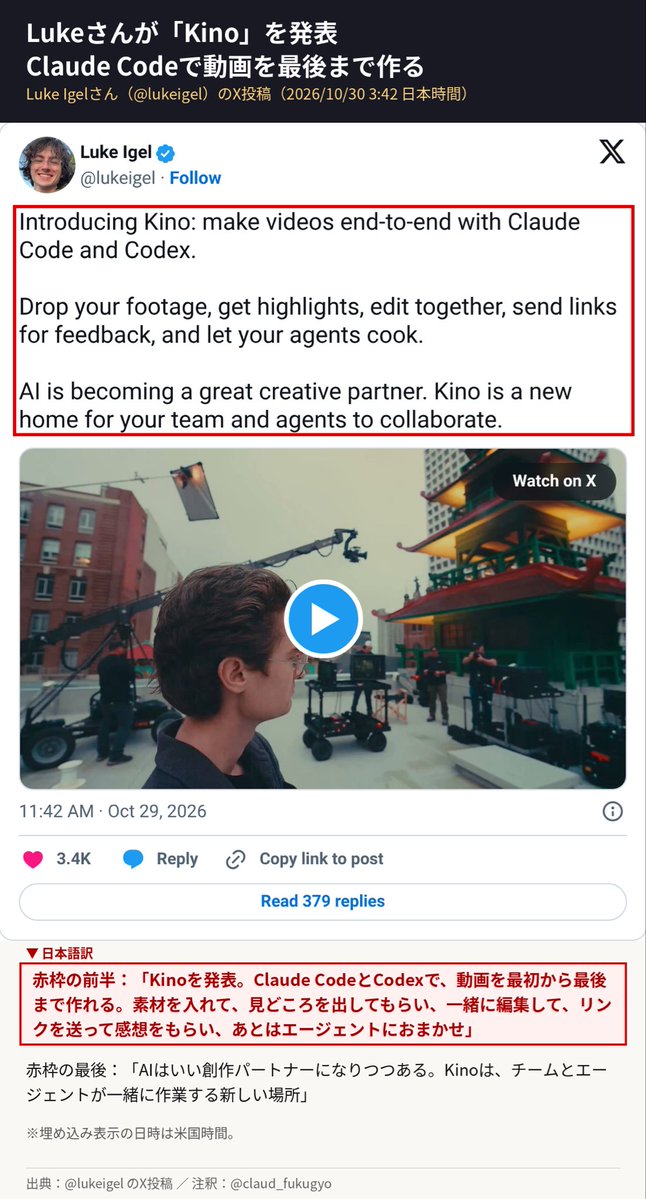
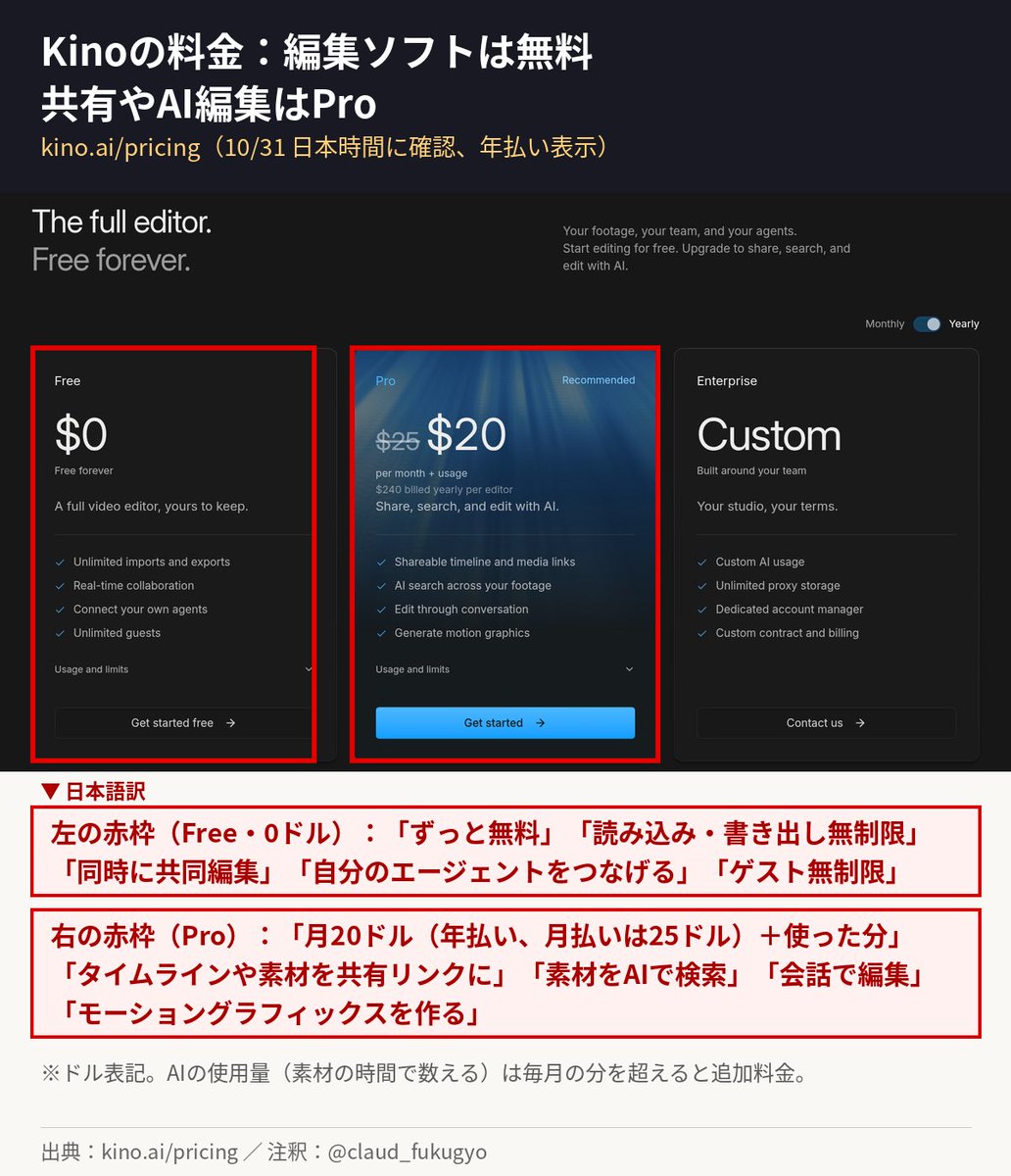
Introducing Kino: make videos end-to-end with Claude Code and Codex.
Drop your footage, get highlights, edit together, send links for feedback, and let your agents cook.
AI is becoming a great creative partner. Kino is a new home for your team and agents to collaborate.