Are you into cutting-edge #HPC/#AI clusters? The Tübingen AI Center, one of Europe's top #ML research institutions, searches for a senior expert to lead its #AI cluster (> 1000 GPUs, > 200 users) team and design an upcoming large-scale upgrade:
https://t.co/tCKfPA5UfD
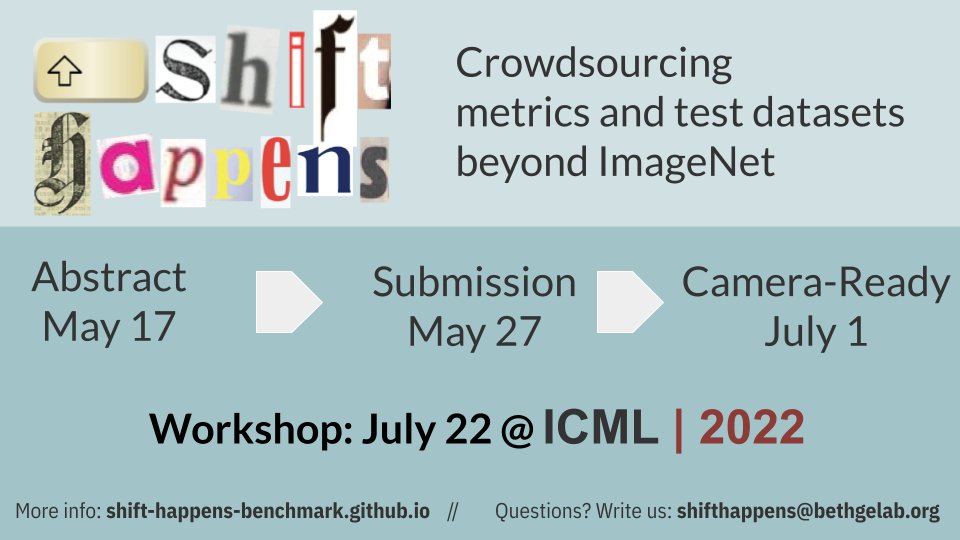
Are you interested in the generalization capabilities of ImageNet classifiers?
Then attend our workshop! Join us at the ShiftHappens Workshop @icmlconf#ICML2022 this Friday (22 July) 9am - 7:15 pm EST in Ballroom 4!🎉
https://t.co/NIC1obZVUo 🧵[1/3]
Just started a group at Max Planck Institute for Intelligent Systems (@MPI_IS) & Tübingen AI Center🎉 Focus: robustness, identifiable representation learning & interpretability. Plus a cool project on #AI, #robotics & #sustainable food production. Interested in a #postdoc? DM me!
Contribute datasets📷, metrics📊 and tasks🦾 to a community-built, open source benchmark for computer vision models: Submission for the workshop extended until May 27! *Register your abstract until May 17.*
🔗Details: https://t.co/xzdhu1ziPS
🚀Submission: https://t.co/yecDzRqMwJ
#CaCTüS offers a paid 3-months research #internship in Tübingen open to students who fled Ukraine 🇺🇦 and are now in Germany 🇩🇪 . The project requires some programming experience and interest in data analysis & the brain. More: https://t.co/BmOoFN4mru
#ScienceForUkraine
📣Part 1 of our quest to better understand the brain was @DeepLabCut.
🔥🦓Now Part 2: Introducing #CEBRA to jointly model neural dynamics & behavior with self-supervised learning. Hypothesis- or data-driven, highly consistent, decodable neural latents
https://t.co/fEiaTSVO2L
🧵👇
We are thrilled to announce the ShiftHappens Workshop at #icml2022@icmlconf in which the community builds a challenging open-source benchmark suite for ImageNet-scale models! All accepted submissions will be part of the open-source benchmark suite. [1/6] https://t.co/NIC1obZVUo
@giffmana@hendrycks@ylecun@imisra_@__kolesnikov__ BiT is such an amazing paper! I'm referring people to the appendix all the time. (And few-shot learning people to the paper in general, to argue we should leave miniImageNet behind.)
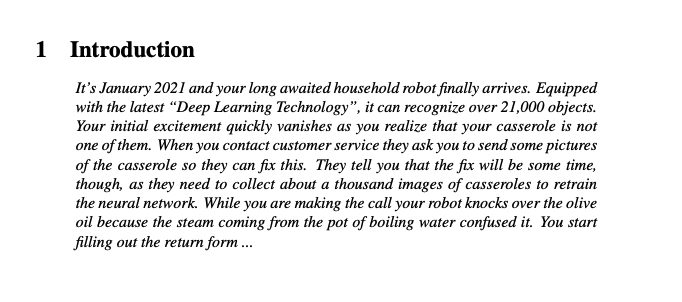
In 2015, ResNets reportedly surpassed human-level performance on #ImageNet. However, a large generalisation gap remained. Which of today’s exciting directions will close the gap: Vision transformers? CLIP? Self-supervised learning? Bigger datasets? Adversarial training? [1/N]
I‘m struck that it still hasn’t sunk in how much #b117 may change the course of this pandemic.
The initial shock about it being more transmissible seems to have worn off. But we are barely beginning to see its real-world impact.
A story: https://t.co/WDX5GmRma4
And a thread
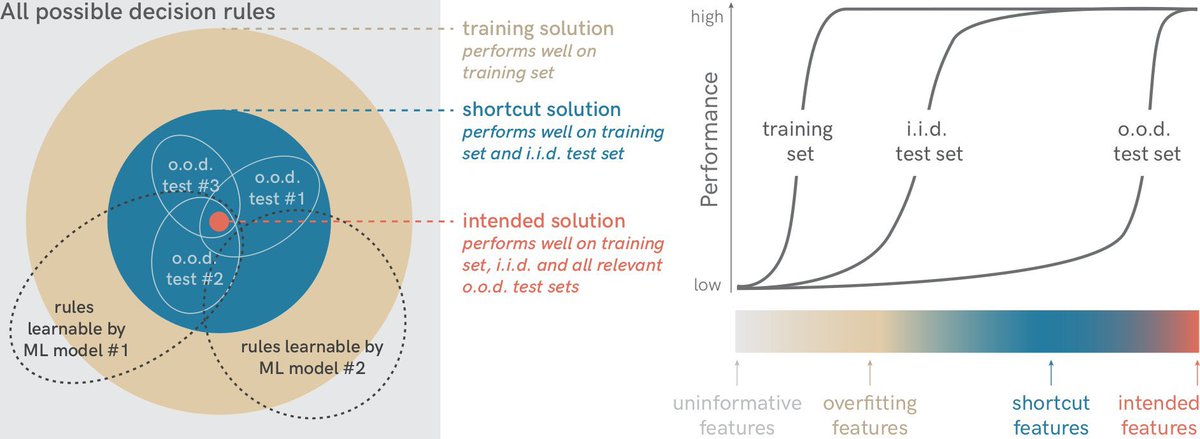
A bit late to the party but the « Shortcut Learning » paper by R. Geirhos @jh_jacobsen@clmich R. Zemel @wielandbr, @MatthiasBethge & F. Wichmann was a really enjoyable read!
A nice overview connecting NNet failures, OOD robustness, fairness, bias
Here: https://t.co/uW10k6q0Sa
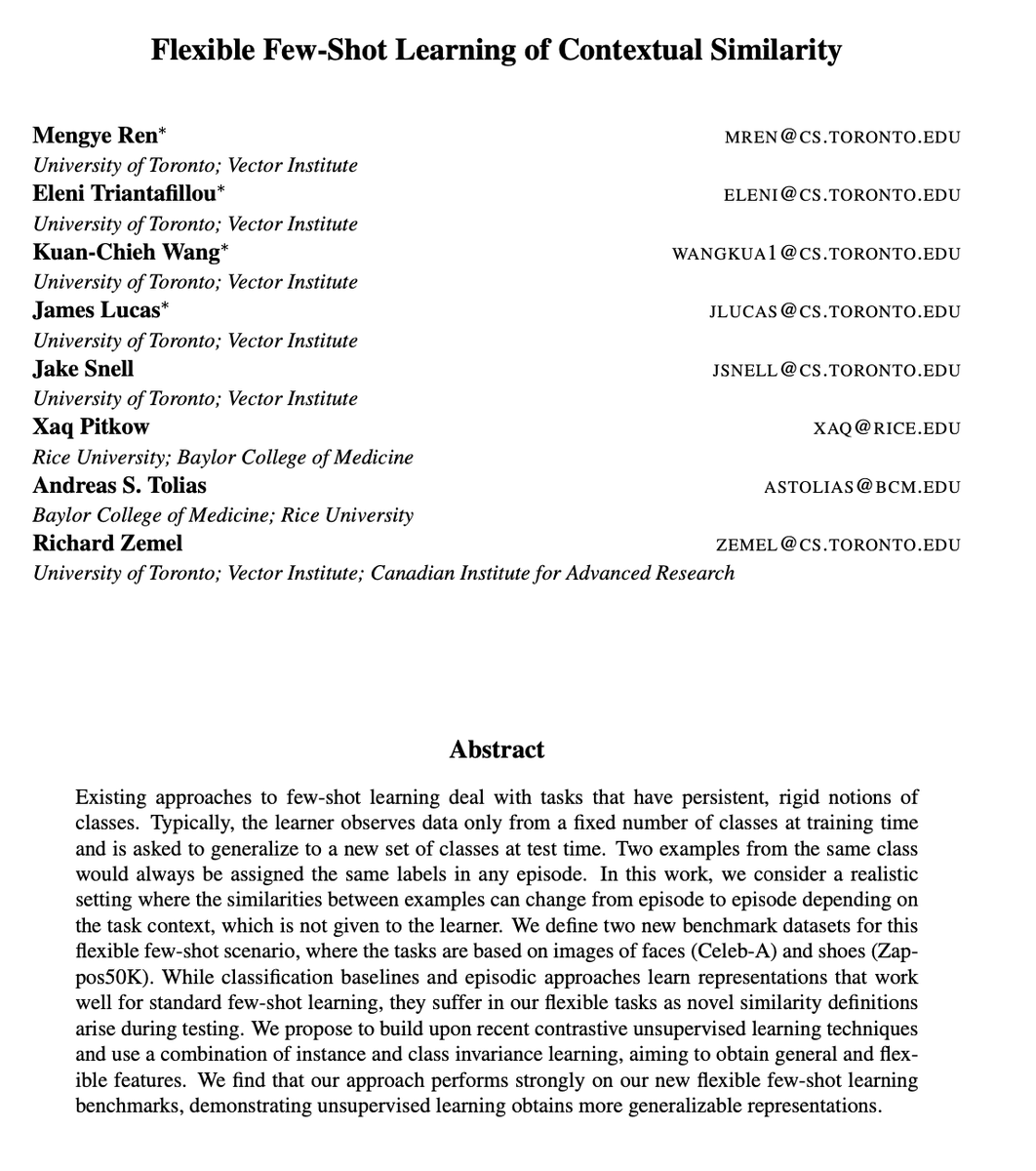
Check out our new paper Flexible Few-Shot Learning -- the same object can belong to different classes depending on context. We found unsupervised representation is better than supervised. A short version at NeurIPS metalearn workshop today at 10 EST. https://t.co/fHMGMfcdRb
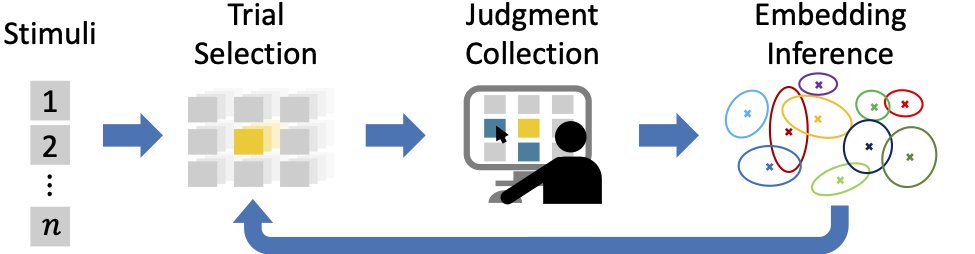
Introducing the embedding space you didn't know you needed: Human similarity judgments for the entire ImageNet (50k images) validation set. Perfect for evaluating representations, including unsupervised models. It's already bearing fruit, w @BDRoads https://t.co/Cl8iTdcHqj (1/3)
A close look at what happens when deep learning fails reveals an effect of ‘shortcut learning’. Recognizing that this may be a common characteristic of learning systems, artificial and biological, may help making deep learning more robust. Read the paper: https://t.co/V9Tir2re9G
Pleased to share that our paper "Shortcut learning in deep neural networks" has been published as a @nature Machine Intelligence Perspective:
https://t.co/FeB3Scrpgt
PDF access without paywall: https://t.co/8lnUCRHCks
We hope that our findings will also benefit other areas of machine learning as they suggest that we can achieve human-like generalization capabilities by focusing on wide datasest with diverse categories.
[7/7]
More classes is all you need for one-shot object detection.
It turns out we can almost close the gap between the detection of known and novel objects simply by increasing the number of categories.
https://t.co/jpCEGb3sOA @clmich@alxecker@MatthiasBethge
[1/7]
Results generally look good even in complex or crowded scenes. While some problems like the high false positive rate (right column) remain, we are confident that our insights will make solving these issues easier as well.
[6/7]



![shifthappens_22's tweet photo. Are you interested in the generalization capabilities of ImageNet classifiers?
Then attend our workshop! Join us at the ShiftHappens Workshop @icmlconf #ICML2022 this Friday (22 July) 9am - 7:15 pm EST in Ballroom 4!🎉
https://t.co/NIC1obZVUo 🧵[1/3] https://t.co/kCFllUuJrT](https://pbs.twimg.com/media/FYB_M59X0AMiGfE.jpg)







![bethgelab's tweet photo. In 2015, ResNets reportedly surpassed human-level performance on #ImageNet. However, a large generalisation gap remained. Which of today’s exciting directions will close the gap: Vision transformers? CLIP? Self-supervised learning? Bigger datasets? Adversarial training? [1/N] https://t.co/VyBiZzEpWA](https://pbs.twimg.com/media/E36DecTWQAA8puf.png)


![clmich's tweet photo. More classes is all you need for one-shot object detection.
It turns out we can almost close the gap between the detection of known and novel objects simply by increasing the number of categories.
https://t.co/jpCEGb3sOA @clmich @alxecker @MatthiasBethge
[1/7] https://t.co/8mlHhSBI5n](https://pbs.twimg.com/media/Emc5JYLXcAILK2g.jpg)
![clmich's tweet photo. Results generally look good even in complex or crowded scenes. While some problems like the high false positive rate (right column) remain, we are confident that our insights will make solving these issues easier as well.
[6/7] https://t.co/y7T7tdLzbQ](https://pbs.twimg.com/media/Emc5b4WXcAA36Q6.jpg)





