The Spencer Museum of Art's new exhibition, "Looking After: Art and Care Across Kansas," explores how art supports learning and can improve environments, especially in classrooms. The exhibit is available all semester, and entry is free for all visitors.
https://t.co/3FSgxeTw6V
University of Kansas Medical Center Ryan Morse, MD, Assistant Professor Presented "Risk Classifier for Treatment of Stage III Non-Small Cell Lung Cancer Using Competing Event Regression: Ancillary Analysis of RTOG 0617" at ASTRO 2026
@RonaldChenMD@KUMedCenter
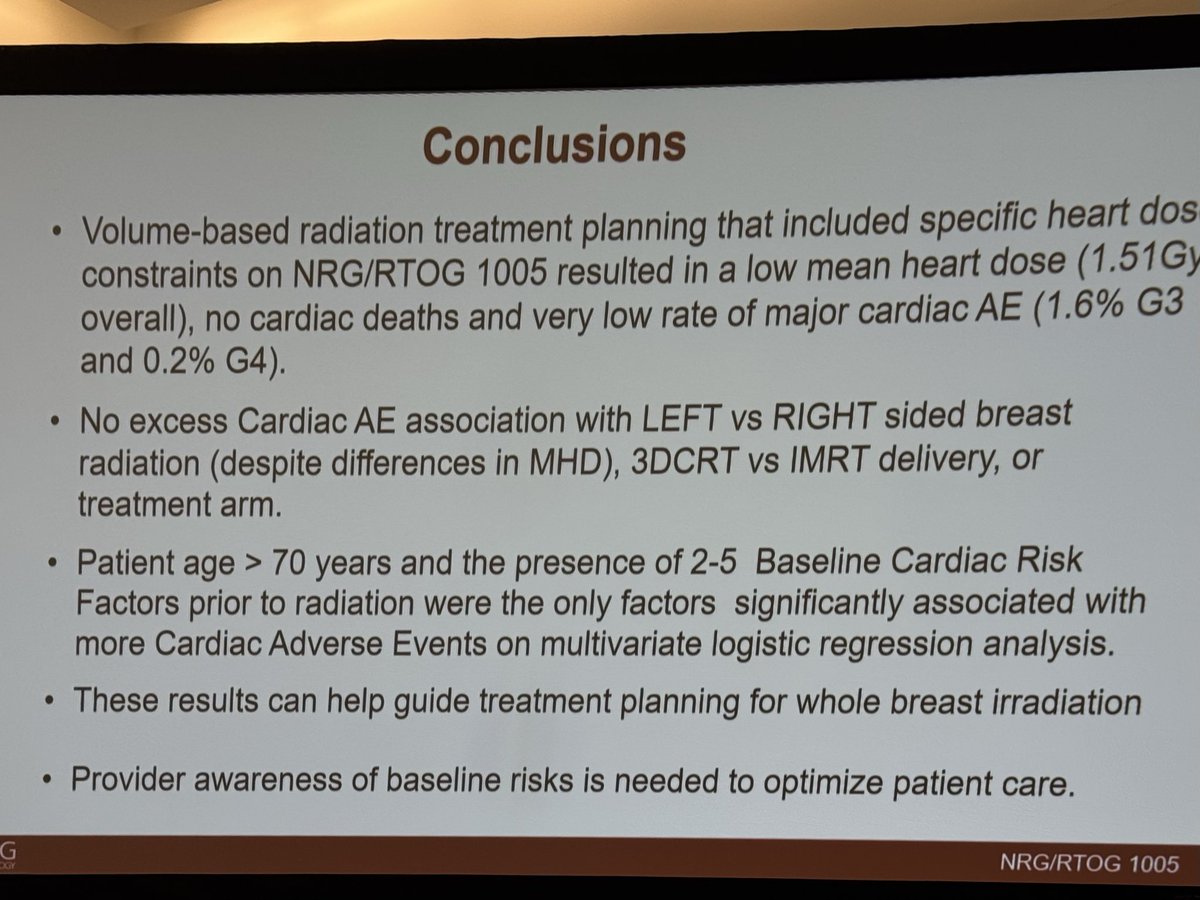
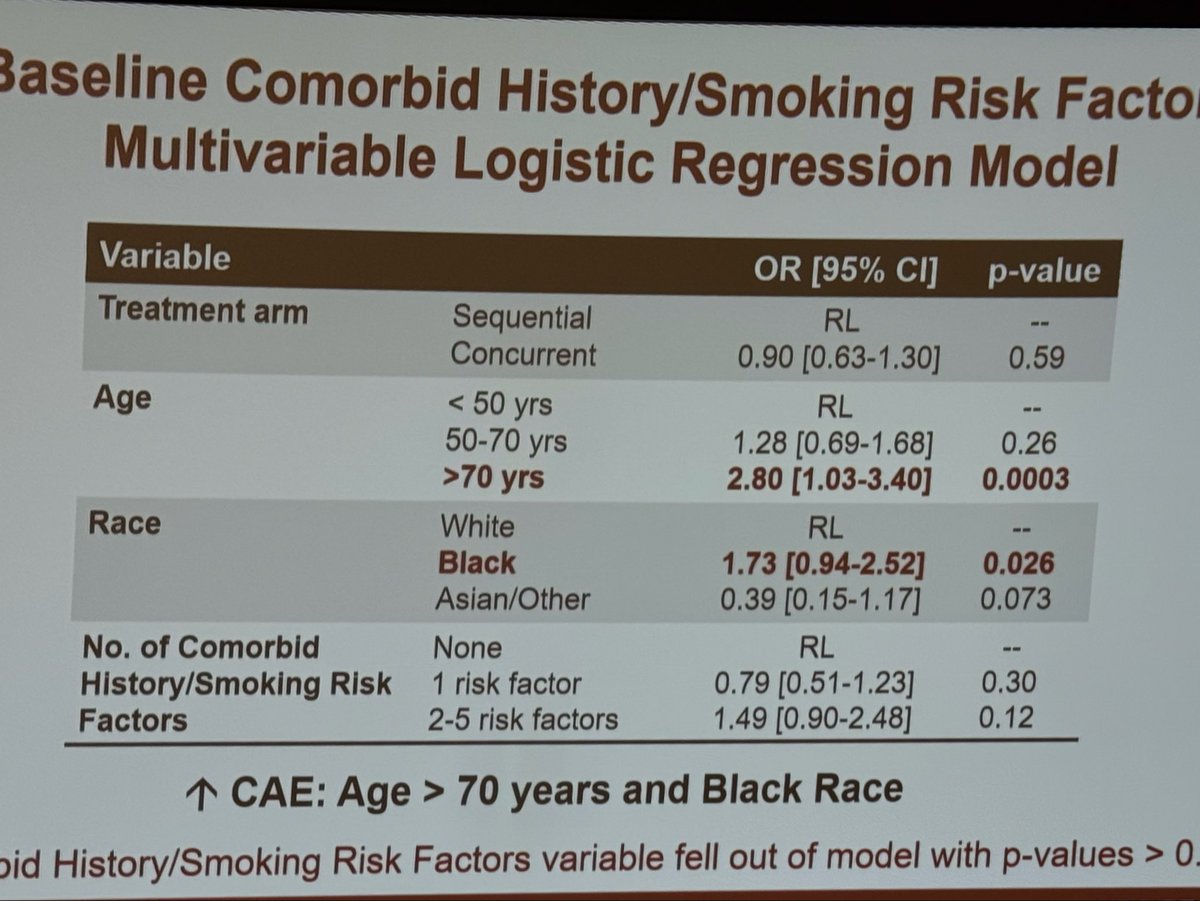
Great news from Dr. White on the @NRGonc NRG/RTOG 1005 SIB trial showing no correlation to cardiac AEs between arms or left vs right sided post lumpectomy treatment for breast cancer. #ASTRO26
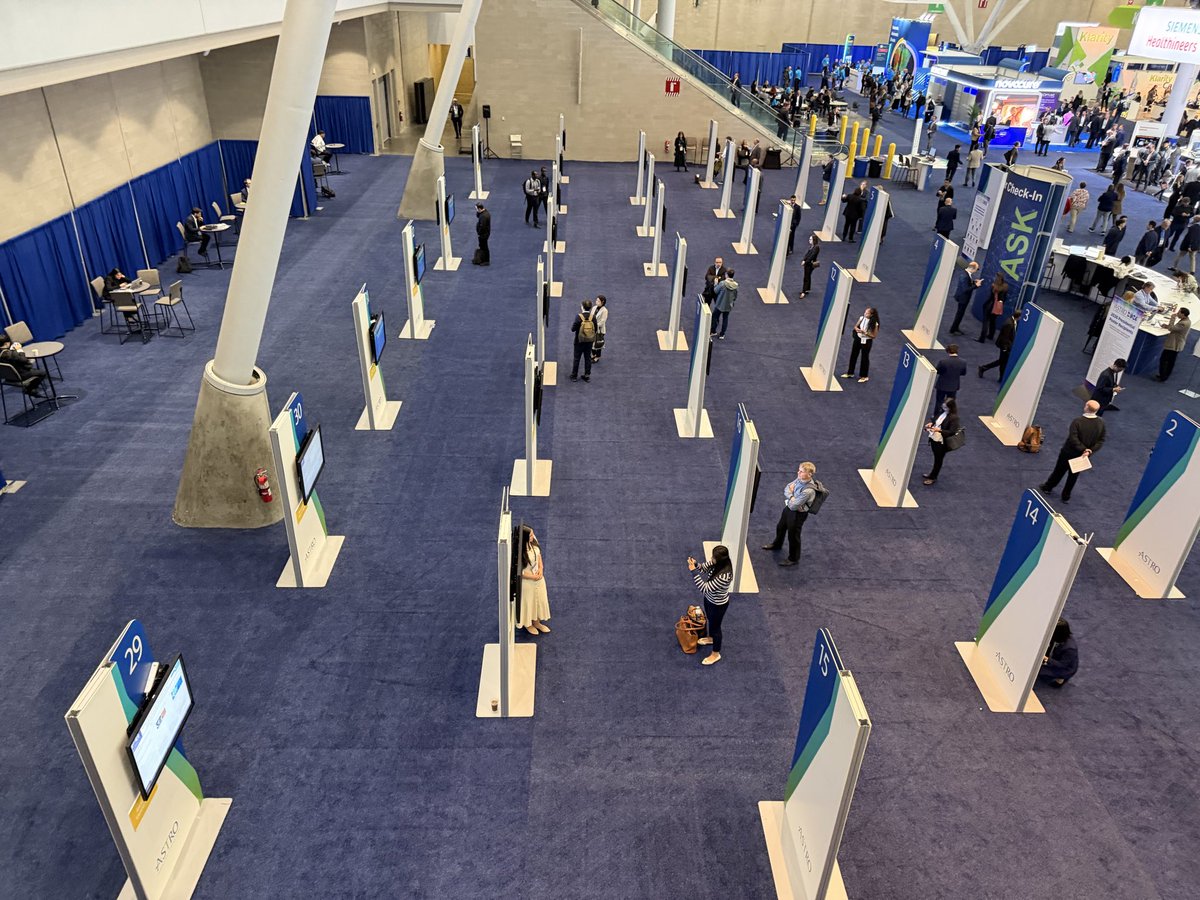
@ASTRO_org Not trying to be controversial or contrarian, but I think the decision to move from an actual, interactive poster session to digital posters has missed the mark. #ASTRO26
Attendance is down.
Exchange of ideas is down.
And most importantly, opportunities for trainees to interact with investigators and others in the field are down.
Poster sessions have always been about far more than displaying data—they create conversations, connections, mentorship, and collaborations, especially for our trainees.
It’s not too late to fix this. Let’s bring back meaningful, in-person poster interaction.
Man City’s first game after being found guilty as the biggest cheats in the history of English football
Against Liverpool, the team they arguably stole the most from
Would love to see a giant banner in the stands at Anfield with all the trophies Man City cheated them of
🚨 EXCLUSIVE: Manchester City found guilty on virtually all charges relating to breaches of Premier League financial regulations. #MCFC expected to appeal against verdict issued by independent commission. Sanctions undecided, process ongoing @TheAthleticFC https://t.co/Muxqp4beK9
The University of Kansas School of Medicine Radiation Oncology Department held its' annual KUMC Student Open House that educates medical students about Radiation Oncology careers, treatment modalities, and radiation patient care process.
@RonaldChenMD@KUcancercenter@KUMedicine
Hope Krebill of @KUcancercenter says we’re choosing who gets to get a #ClinicalTrial by how much access they have. “That’s just not fair & we need to change that approach.”
That’s why we need members of Congress to cosponsor the Clinical Trial Modernization Act. #CancerLobbyDay
39 goals = 💲3️⃣9️⃣,0️⃣0️⃣0️⃣
Together with @CPKCrail, for every goal scored by the KC Current during regular season matches, $1,000 will be donated to the Adelaide C. Ward Women’s Heart Center at @KUHospital as part of Goals for Heart.
@UnitedWayGKC | #KCBABY
Loud statements from Michelle Cooper and Lo LaBonta about Vlatko Andonovski's impact and the level of respect the club has showed him on the way out the door. #KCBaby
Let's keep adding context, but from a different angle:
EviCore was formally created in 2014/2015 through a merger of MedSolutions and CareCore National.
The oldest EviCore radiotherapy guidelines I personally have archived is from 2019. I believe this was close to, if not THE first...but they make this difficult to find (for obvious and shady reasons).
But we can say with certainty that EviCore themselves deemed LDRT for osteoarthritis "medically necessary" at least as far back as 2019.
So what changed?
Well, though LDRT started its journey of rediscovery in America in 2020/2021, it was still relatively unknown to the public and uncommonly performed in American clinics.
Because LDRT, you know, actually works - more and more of us started to offer it, and patients have the ability to like...talk to each other.
In my own practice, for example, I have never once advertised. All of my LDRT patients are word of mouth self-referrals, or referrals from local doctors after they saw me treat their other patients.
Naturally, as this happened across the country, the public took notice.
In 2025, the radiotherapy professional society ASTRO made benign disease/LDRT the theme of their yearly conference.
As you can see from the Google Trends data, Americans searching for "low dose radiation therapy" really took off in early 2025 - and kept going.
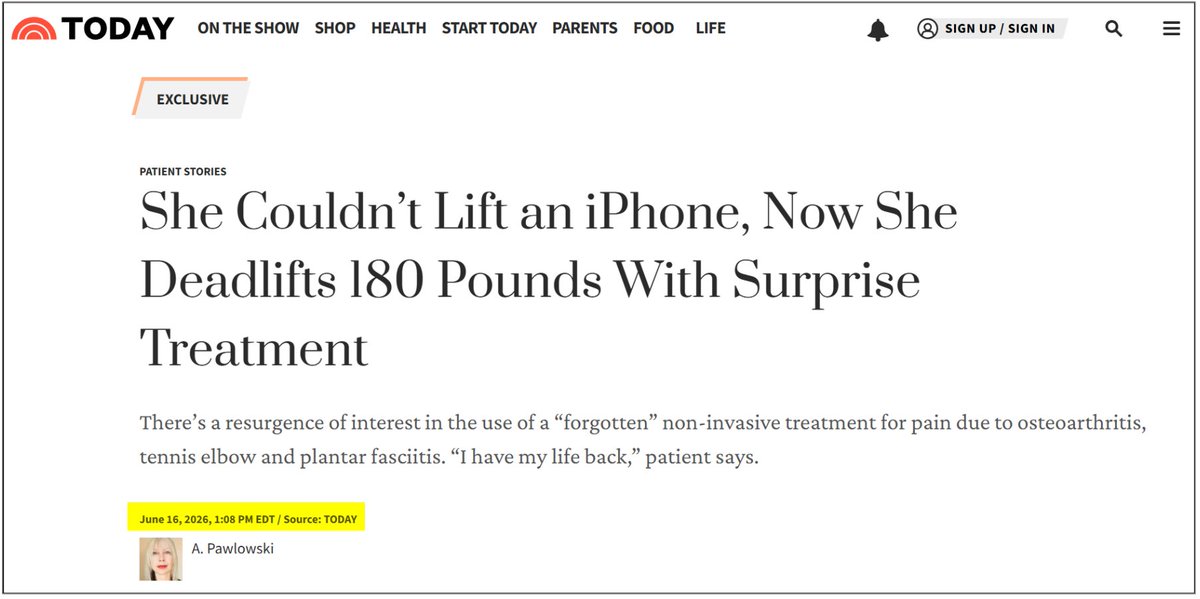
Recently, this culminated in an article appearing on NBC's "Today" website, authored by @LaVarsovienne.
It was a classic, feel-good story of LDRT literally making a person, well...feel good.
This article was published on June 16th, 2026, at 1:08PM.
As seen in the Google Trends data, June 2026 is currently the absolute pinnacle of public interest in LDRT.
Which makes sense. "Today" is a massive, international platform. A lot of people saw it.
Almost certainly the people at EviCore saw it.
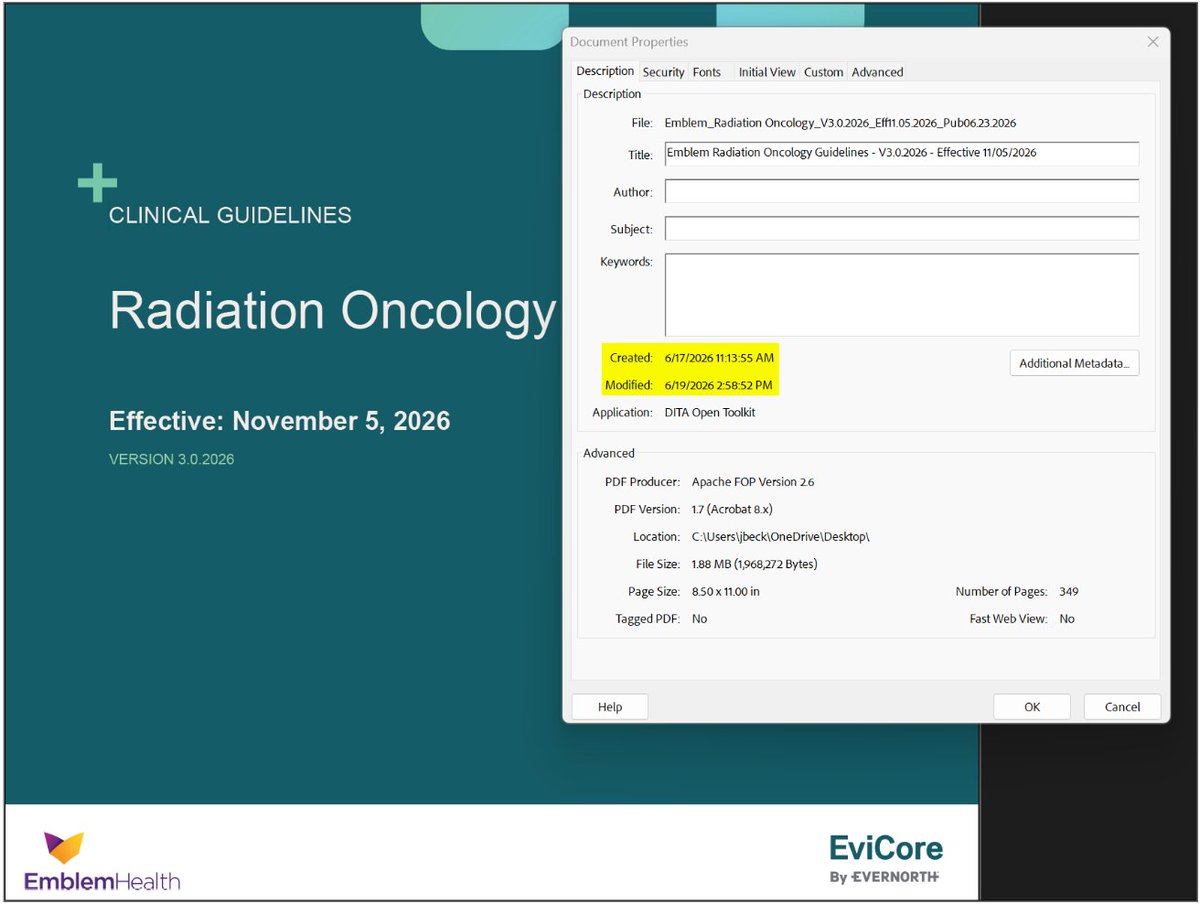
Which is why the PDF metadata of EviCore's latest guidelines - the one where they abruptly reverse course on LDRT - is extremely interesting.
What are the chances that this PDF was created on June 17th, 2026, at 11:13AM?
As in: 22 hours after one of the biggest platforms in the world runs a story on the benefits of LDRT, the largest benefits manager in the country creates the PDF of their newest guidelines, reversing course on covering this exact treatment, after explicitly covering it for nearly a decade?
Based on a fraudulent AI slop meta-analysis paper?
Really?
I mean sure, it COULD be a coincidence.
Or it could be that EviCore had already drafted most (all?) of this new version, saw this "Today" article drop on a Tuesday, internally said "nope, shut it down", and within 24 hours created this nonsensical non-coverage.
That's quite a coincidence for a company known to utilize their own AI platforms to make immediate, slash-and-burn decisions.
Within that context, it could be considered a consistent pattern of behavior.
Has anyone re-read that @statnews investigation into EviCore lately? The one from last year?
It's certainly compelling!
Everywhere I go, I’m told Roger Marshall isn't listening.
People who voted for him before have said “not again.”
People ask how a Senator who lives in Florida when he’s not in Washington can know his people, or speak up for their needs.
I think it’s a good question.
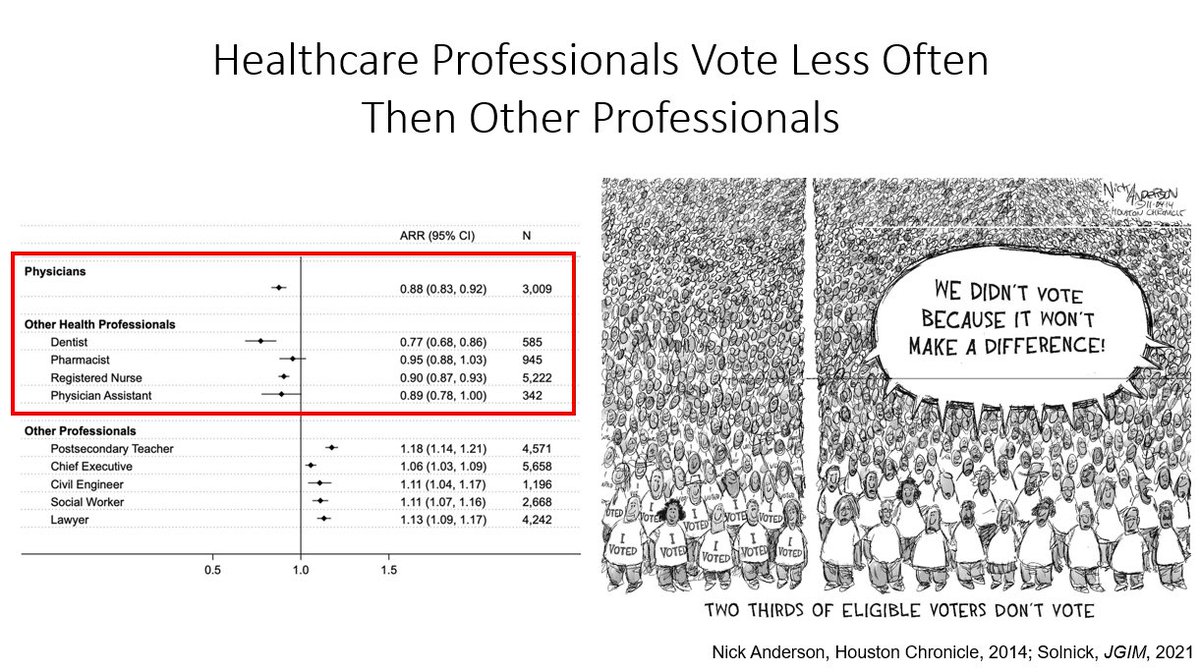
🚨‼️For residents, fellows, & new attendings who recently moved...
Remember to UPDATE your address & REGISTER to vote if you are eligible in your new state.
Healthcare is on the ballot & we fail our patients by not participating. Please share.
🗳️🇺🇸✅ https://t.co/oRCPVlwcgT
For those of you who can't fathom how there could possibly be a downside to buying your own full body MRI….
Rough math, (my own estimates, my arguments, AI tightened the post for me), per 10M unselected scans:
3.5M false alarms
300K invasive procedures
15K major complications
100+ procedural deaths
Lives saved? No randomized trial has ever shown one. Some almost certainly are saved. Nobody can tell you how many, and whatever the number is, it gets diluted across 10M people who were never going to have the disease.
Every one of those harms can happen even with perfect execution by the doctors involved.
The renal biopsy goes exactly right and the patient bleeds, because you put a needle through a vascular organ. The prostate biopsy goes exactly right and the patient dies of septic shock at home, because the needle crossed the rectal wall.
We have spent twenty years driving those rates down with transperineal approaches, targeted prophylaxis, MRI-first pathways. The rates are lower. They have a floor though! Multiply a floor by 300K procedures and you get innocent people dying.
The false alarms are just arithmetic. Screen a population where almost nobody has the disease and most positives will be false regardless. A better scanner finds more incidentalomas.
And the overdiagnosis is just biology. The mass is seen on MRI, the radiology read is right, the surgery is flawless, the pathology confirms cancer, and the man still loses a kidney that was going to sit there quietly until he died at 89 of something else. He calls himself a survivor. He tells his friends. They book scans too
Aim the same MRI magnet at high pre-test probability (people at high risk for cancer) and all three numbers get waaaay better.
More lives saved but with much much less harm.
Bayes doesn't care how good your scanner is.
In this hypothetical, would you accept 100 procedural deaths in healthy people for an unknown number of lives saved?