I’d be willing to bet Amazon makes more money when you use the app.
Grocery stores make more money when you walk the cash wrap.
Airlines make more money when they scare you into buying insurance.
Dark design patterns and consumer usage data make money. They don’t want to give that up for some chat bot deciding what the cheapest red shoes are
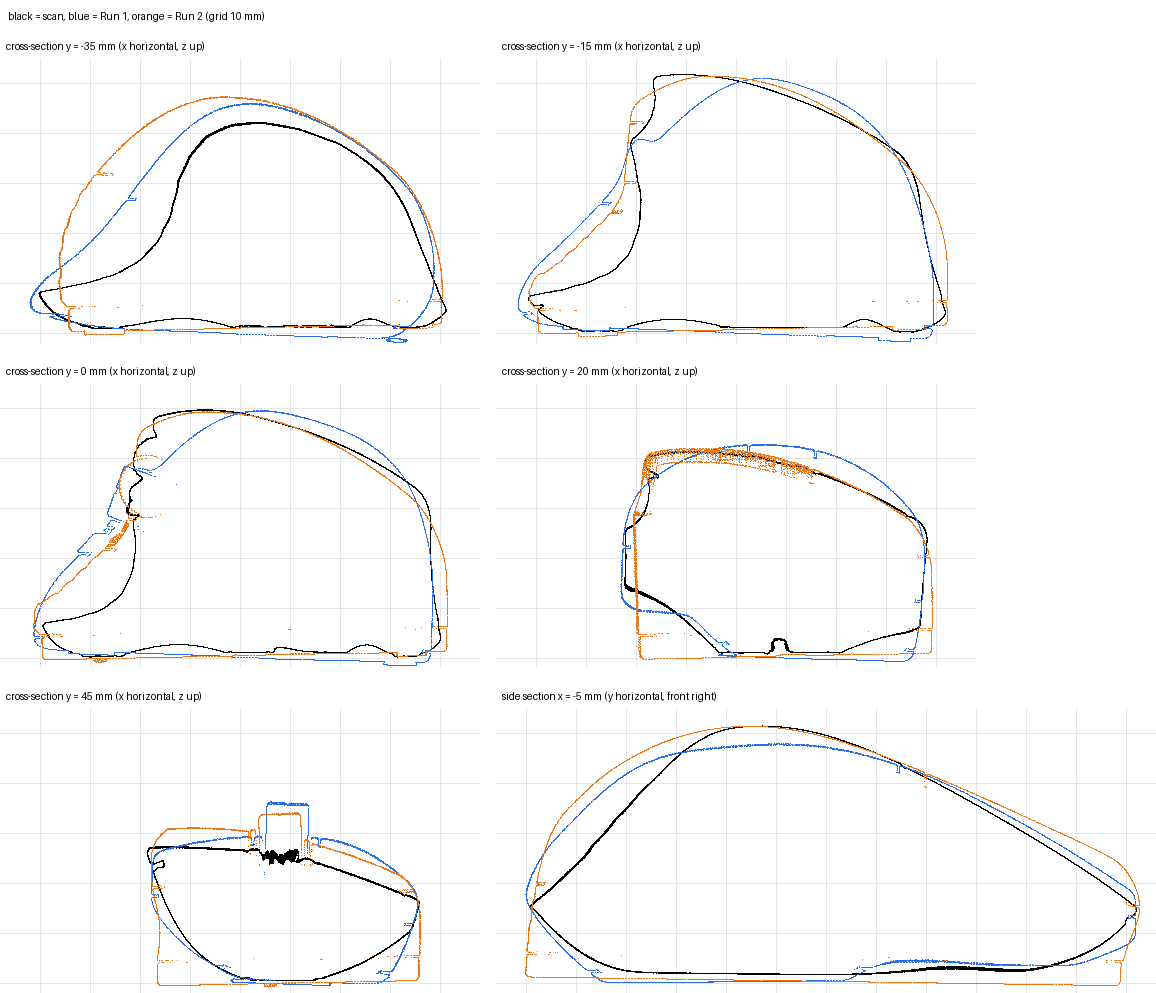
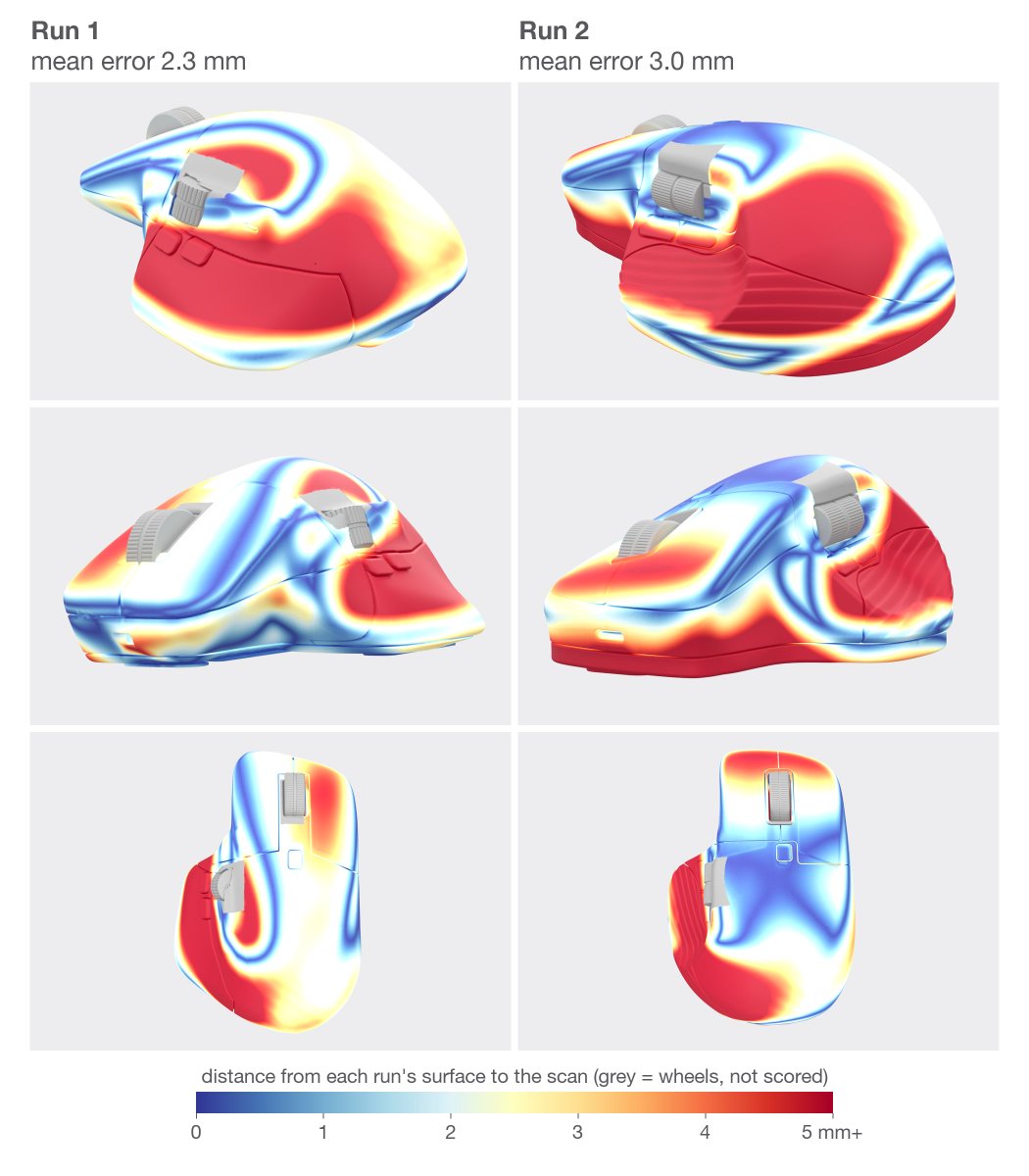
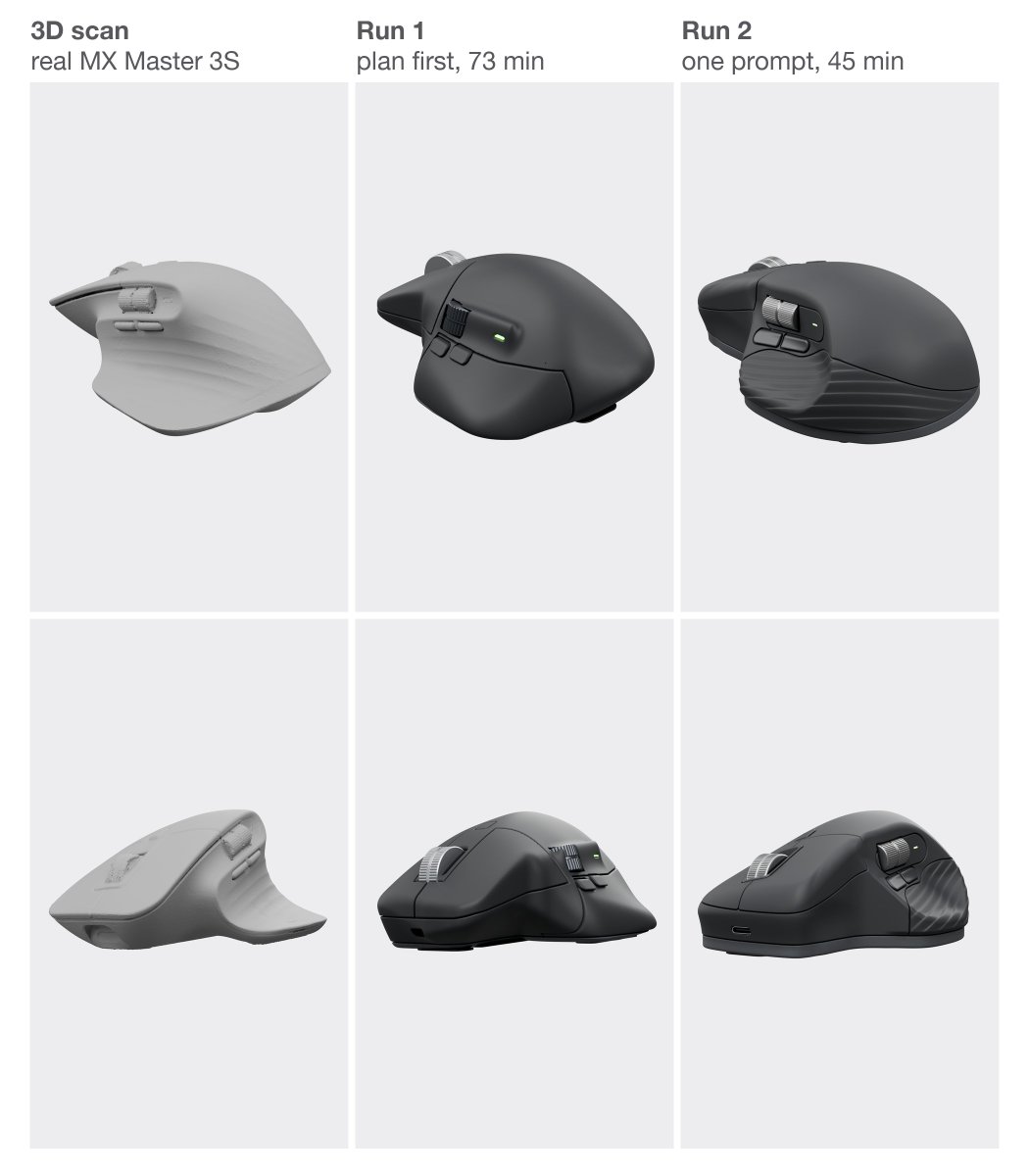
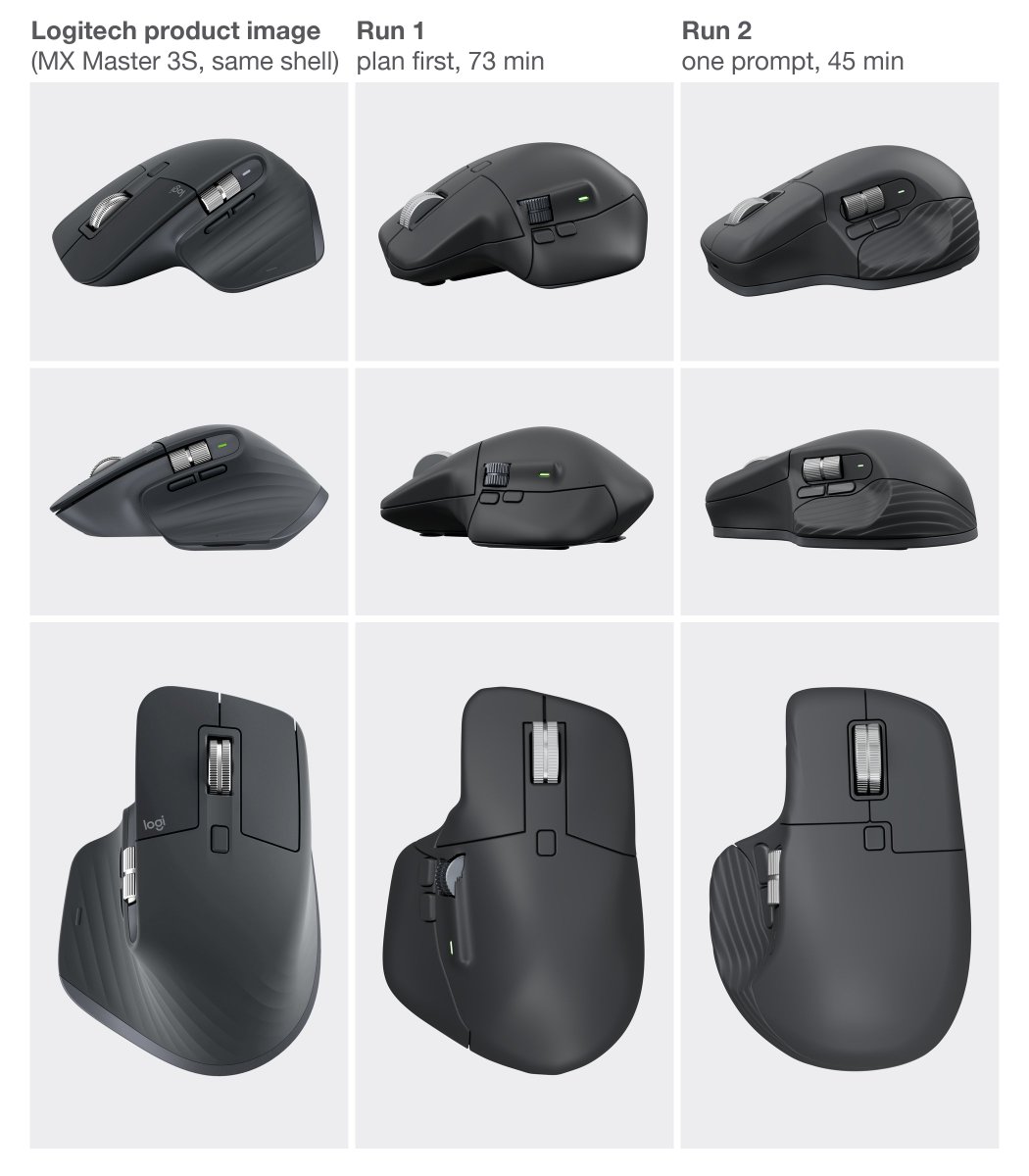
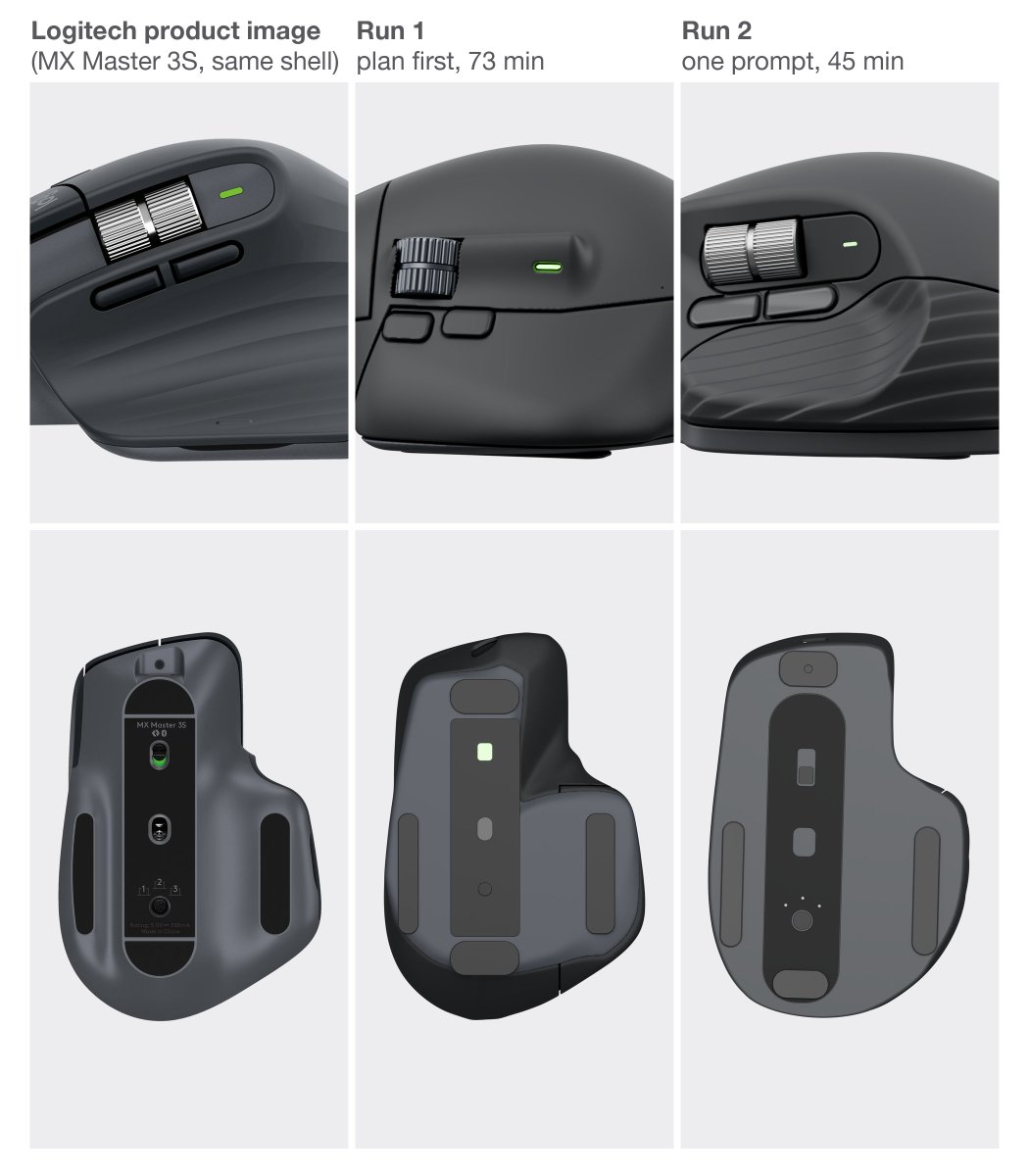
Ran a benchmark on Opus 5.5 xhigh that'll be interesting to rerun on future models to see the approaches taken and their spatial understanding. Fed it a single prompt:
"Generate a 3D model of a Logitech MX Master 3 in Graphite, as realistic as possible."
It had full computer access, but no preinstalled CAD tools other than Blender, no specs & pictures and no interventions until it was done.
It recalled the official dimensions from memory, starting eyeballing Logitech's photos, then wrote the mouse as equations, built its own mesher to turn them into 22 parts, and only used Blender to render. Its target was the official dimensions, which it hit within a millimeter. For a total of 45 minutes of work, 96 tool calls and 180k output tokens.
In another run where I asked it to give a plan first, it took a completely different route by working out where Logitech's camera stood for each product photo and carving the body until its outline matched them, pushing that overlap to 94 to 99% by its own measure. That run took 73 minutes, 166 tool calls and 200k output tokens.
It's a good example of how the non-determinism of those models can lead to pretty different strategies and outcomes on long tasks, even within the same model, thinking effort and prompt.
Both runs share the same weak spots though:
- it missed the mix of materials and key details like the logo, labels and channel numbers underneath
- had a hard time with the thumb rest and the overall shape
- and produced messy thumb wheel + side buttons + LED arrangement
Eager to see if future models can do any better and the approaches they take.
Through the VOICE trial, Terry is using his Neuralink implant to help fine-tune a brain-to-voice interface for himself and others who can’t speak. He trained the algorithm first by miming speech as best he could, then by simply thinking the words and hearing them come out in his own natural voice.
Powered by Grok Voice from @SpaceXAI
Introducing Atlas:
The world's first multimodal world model that generates image and video frames with pixel-perfect camera control and reconstructs them in 3D.
Model the world, move the camera, and simulate space & time.
The dura is the brain's armor: a membrane so tough that a surgeon normally cuts through it with a scalpel. For the first time in our clinical trials, we inserted the electrode threads of our implant straight through the dura and into the cortex, keeping the dura intact.
Here's how we did it 🧵
@bsheldonx@Marko_Jozef Same here, this can only be used through their Agents platform right? Impossible to make it work in streaming with LiveKit, idk if it’s supposed to be HTTP only…
This is real
Claude Code hits usage limits for the week in hours.
I've never once hit their 5hr limit on the 20x plan
I think this is the most egregious usage limit change thus far in the industry