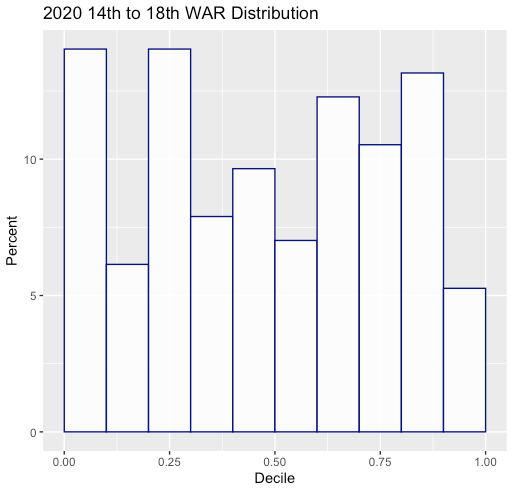
@CapitalCityCody@Chas_R_Roberts This is probably where using the rookie draft attempts to proxy available talent and is a "market" measure. Minimum contracts are mentioned alongside replacement level a bunch from what I've read, so views aren't exclusively roster based. Exhibit A of why it's a bit fluffy!
@CapitalCityCody@Chas_R_Roberts They're structurally different approaches imo, based on roster, as opposed to looking at market available talent (which yes is maybe a little abstract)
@CapitalCityCody@Chas_R_Roberts I'd say the reason for replacement would matter, specifically injured star players, but it would be a bit of an exercise to strip those out. Again, not sure there is a right or wrong way to do it tbh (e.g. some NFL methods use undrafted FAs)
@CapitalCityCody@Chas_R_Roberts Not at all! Given the data available, it may be tricky to discriminate between players who are truly up and down between the AFL and 2nd leagues, and those who are injured (unless I'm missing something), if that's what your replacement definition leaned towards
@CapitalCityCody@Chas_R_Roberts Replacement level is a pretty fluffy concept in general, could probably be tweaked in some respects.
I don’t think there is a consensus view across sports. Given there aren’t street free agents that could be picked up, the Rookie draft felt like a reasonable proxy.
Intrateam player performance distributions:
Teams are grouped by ladder position to create a picture of successful team structure in 2020. Players are grouped in deciles on performance
Top 4 sides:
highest % of 90-100th percentile players
lowest % of 70-100th
lowest % of 0-30th