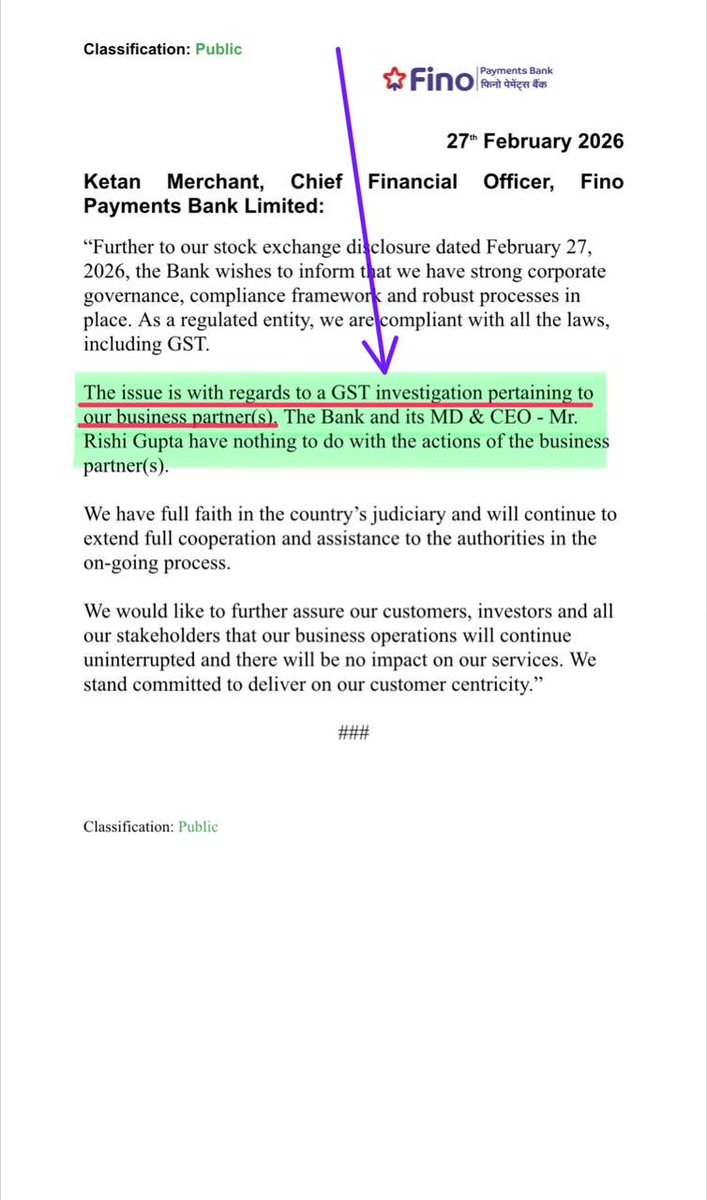
Source: Inc42 Media. @FinMinIndia and FM @nsitharaman should look at the vast powers given to GST authorizes on arrest.What is the necessity to arrest unless prima facie case is made before judicial authorities?This can easily be misused. https://t.co/w1Hh263e0d
Madame @nsitharaman please see this. How can a ceo of a regulated bank be arrested for an issue with a business partner? Is this not overreach. @FinMinIndia has given vast powers for GST. What is the safeguard for citizens against misuse?please intervene
I regret to inform my recruiting clients that this action by @unacademy has guaranteed that new hires are valuing your ESOPs at zero.
Mortal blow in an already low trust society. Please don't come crying when engineers decide it's more rational to be a mercenary than a missionary.
Thanks for nothing Gaurav Munjal.
@mister_whistler@unacademy@gauravmunjal These ESOPs are already earned and @unacademy hired employees by promising them the exercise period would be 10 years! Don't know why the startup & VC ecosystem is not up in arms about this!
Because of actions like this none of the good engineers value startup ESOPS, zero, nada, you fuck the ecosystem and give gyaan to early stage founders on hiring - Give ESPOS while hiring bro, skin in the game bro, pay cut bro.
This is the signal you send out thee - don’t trust startup ESOPS.
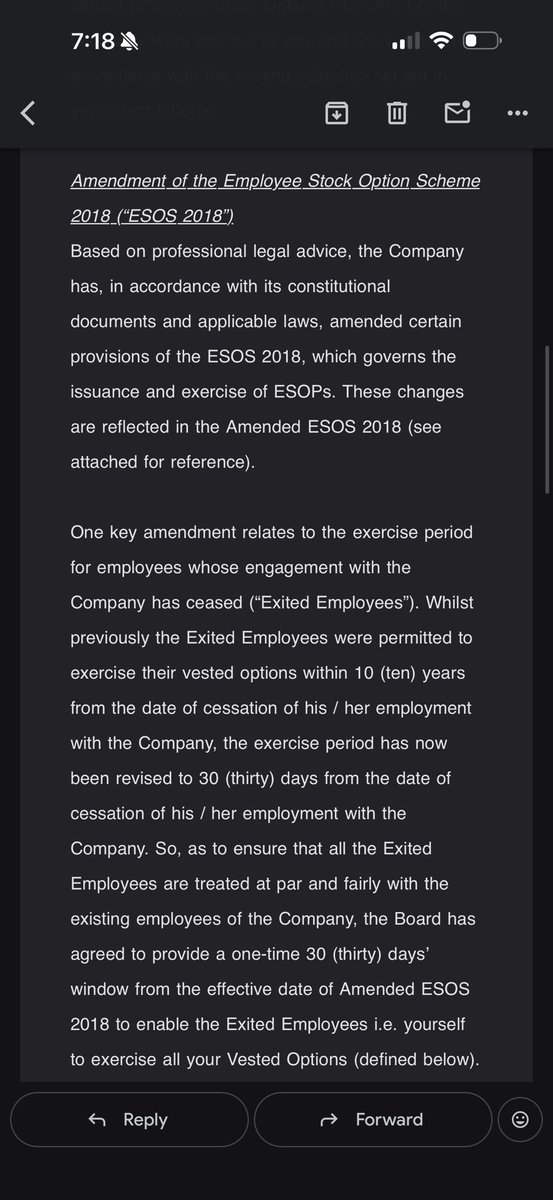
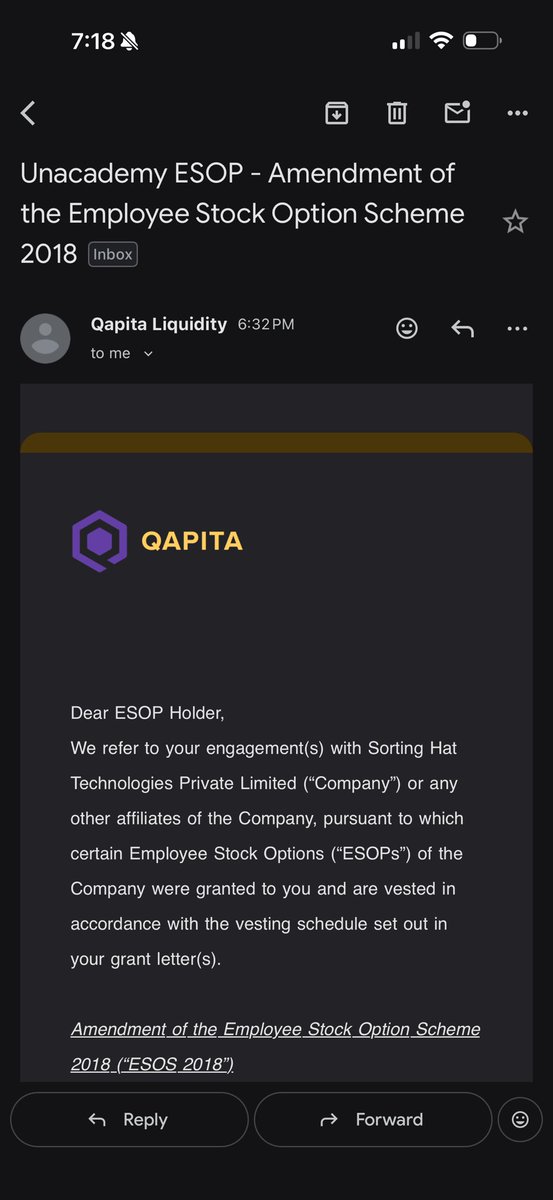
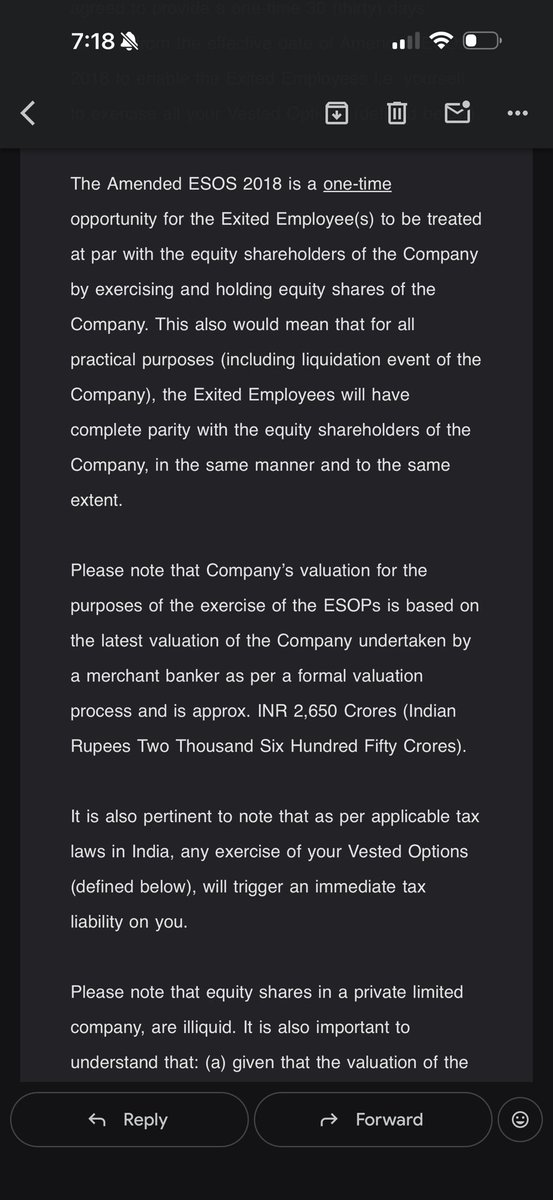
Got an email from my ex employer @unacademy today saying our exercise window has been changed from 10 years to 30 days forcing us to cough up a huge amount to pay taxes or forfeit our vested esops.
@gauravmunjal this is an awful thing to do. Makes the startup industry look bad.
India’s Got Latent Case | FIR has been registered against all members who played roles in all episodes of the show. Authorities had ordered the removal of all videos under investigation and mandated the deactivation of the show’s account until the inquiry concludes. Cyber officials initially took down the first controversial video and later directed comedian Samay Raina to remove all content related to the case. A total of 42 individuals, including artists, producers, and influencers, have been summoned so far. Prima facie accused include Samay Raina, Apoorva Mukhija, and Ranveer Allahbadia. Statements have already been recorded from Devesh Dixit, Raghu Ram, and one other individual: Yashasvi Yadav, Inspector General, Maharashtra Cyber Cell
What a fantastic read: (through WA fwd. Long but totally worth)
Jargon Monoxide: The Corporate Cancer That’s Killing Your Business
There’s a silent killer in your company. It’s not competition, bad hires, or even a broken business model. It’s jargon monoxide—a steady stream of meaningless corporate gibberish that seeps into meetings, emails, and strategy decks, suffocating clear thinking and real action.
You’ve heard it before. The executive who insists “We need to leverage cross-functional synergies to enhance stakeholder engagement.” The consultant who claims “Our approach is to drive transformational outcomes via customer-centric innovations.”
Translation: Nobody knows what the hell they’re talking about.
Jargon monoxide is what happens when people prioritize sounding smart over being smart. It’s corporate carbon monoxide—odorless, invisible, and quietly poisoning your company’s ability to think clearly and execute fast.
How Jargon Monoxide Spreads
It starts with one person trying to sound more competent than they are. Instead of saying “We need to sell more,” they say “We must drive topline revenue expansion by leveraging omnichannel opportunities.”
No one wants to be the idiot who asks, “Wait, what?” so they nod along. Before you know it, every meeting is filled with people saying things like, “We need to optimize synergies to unlock value through scalable innovation.”
It’s a linguistic arms race. The minute one person starts talking like a McKinsey PowerPoint, everyone else has to keep up or risk looking uninformed. The result? A workplace where people talk in loops, meetings take twice as long as they should, and nobody actually does anything.
The Four Flavors of Jargon Monoxide
Jargon monoxide isn’t just one thing—it’s a disease with multiple strains, each more toxic than the last.
First, there’s convoluted crap. This is when a simple idea gets buried under unnecessary complexity. A restaurant owner could say, “We need to serve food faster.” Instead, they say, “We’re optimizing throughput via enhanced queue management solutions.” If your sentence could double as the instruction manual for a nuclear reactor, you’ve lost the plot.
Then, we have meaningless bxxxxxxt—sentences that sound impressive but say absolutely nothing. Think of a tech CEO proudly declaring, “We’re driving a paradigm shift in agile methodologies to disrupt legacy frameworks.” What does that even mean? Nothing. But people still nod as if they just heard the wisdom of Socrates.
Next is in-group lingo—words designed to make outsiders feel stupid. A finance executive might say, “We need to enhance our liquidity position through a more favorable capital structure optimization process.” Translation: “We need more cash.” If a smart person outside your industry wouldn’t understand what you’re saying, you’re not communicating—you’re gatekeeping.
Finally, there’s the jargon blender—when someone just throws together every buzzword they can think of and hopes no one notices. Ever read a company’s mission statement and seen something like, “Our mission is to empower scalable, AI-driven, next-gen solutions to revolutionize the digital ecosystem”? That’s not a strategy. That’s a Mad Libs page from a management consultant’s notebook.
Why Jargon Monoxide is Killing Your Company
This isn’t just annoying. It’s actively making your business worse.
First, it wastes time. If every meeting needs an extra 20 minutes to decode what people are actually saying, your company is moving at half speed.
It also leads to bad decisions. When ideas aren’t clearly explained, nobody can tell the good ones from the bad. If you pitch a project as “a disruptive, game-changing initiative leveraging best-in-class technology,” it sounds amazing. But what are you actually doing? Spending millions on an app nobody needs?
Jargon monoxide also destroys morale. Nobody wants to work at a company where leadership speaks in riddles. People don’t quit companies; they quit bosses who can’t communicate.
And it pushes customers away. If your marketing sounds like a legal contract, customers will go somewhere else. Nobody trusts a company that says, “We offer scalable, AI-powered, cloud-native solutions that revolutionize the digital ecosystem.” They trust the company that says, “We make software that helps you run your business faster.”
How to Kill Jargon Monoxide
The antidote? Call it out.
Next time someone in a meeting says, “We need to align cross-functional synergies,” stop them and ask, “What does that actually mean?” If they can’t explain it in simple terms, they probably don’t understand it themselves.
Set a rule: no buzzwords without definitions. If someone says, “We need to be more customer-centric,” ask them, “Okay, what does that look like in practice?”
Write like a human. If your emails read like a corporate memo from 1987, rewrite them. Cut the fat—if a sentence can be five words instead of fifteen, make it five.
And most importantly, reward clarity. The best leaders don’t tolerate empty words—they push their teams to think clearly, explain things simply, and focus on real outcomes.
Final Thought: Simplicity is a Superpower
Great companies move fast, and fast companies communicate clearly. Jargon monoxide is a sign of a slow, bureaucratic culture—one that’s more interested in looking smart than being effective.
The best CEOs don’t hide behind complexity. They say what they mean, get to the point, and expect their teams to do the same.
So next time you hear someone say, “We need to unlock synergies through innovative, best-in-class solutions,” take a deep breath and reply:
“Or… we could just get to work.”
Hiring is the one thing a Founder never ought to delegate completely. It is the highest ROI activity I can perform.
(until AGI replaces humans at which point I will likely be spending most of my time prompt engineering ... (until I train AGI to prompt engineer effectively ... at which point I will be setting strategic goals and watching the magic unfold ;)))
But for now I still spend 25% of my time interviewing
The classic software startup writes code to solve users' problems. If AI makes writing code more of a commodity, understanding users' problems will become the most important component of starting a startup. But it already is.