@vanaqua Here is their Atlantic cousin on #inaturalist : https://t.co/UYMXcZSbIl. “Powerful’ is surely in reference to their pelvic sucking disc (was measured in a scientific paper), rather than swimming ability.
@vanaqua ‘Very small’ is relative—a spiky ball of 10 cm is quite hefty! See examples on #inaturalist & here: https://t.co/6IcWUqK4wC. Note: the Canadian Arctic species differs from that in Canadian Atlantic. See Mecklenburg 2016 (with a @vanaqua cover shot!): https://t.co/Q91pX7SVxO
Here is their North Atlantic cousin: https://t.co/UYMXcZSbIl. “Powerful’ is surely in reference to the pelvic sucking disc, rather than swimming speed :).
Atlantic spiny lumpsuckers, a species of lumpfish, are weird and wonderful creatures! Like their "very beautiful, very powerful" cousins in the genus Cyclopterus, these fish are best known for their pelvic fins which have evolved into a suction cup!
Thanks, @inaturalist! To paraphrase a famous cough syrup slogan, "It looks awful, but it gets the job done"--to be noticed here, and then onto @GBIF. See other in the project: https://t.co/4h5qD68mqt,
Note, @WRMarineSpecies does offer a RSS feed of new taxa (at least for marine--what do other lists do?): https://t.co/zrblpSGuqT
Now, could BioRSS harvest a bibliography?
Am wondering. So, new taxon ->publication -> appear on lists (@catalogueoflife, @WRMarineSpecies, etc). Want two-way (with app?): send if not on world lists, show if new on lists. Right now, I learn of changes from @inaturalist alerts (!)—then onto WoRMS, & hope for article link.
I guess this was inevitable but I'm discovering that my goal of a simple app (https://t.co/bRXK2SrW15) to display the latest papers on taxonomic discoveries is, *cough*, a bit (OK a lot) harder than I thought🤦♂️
Am keen to explore @MSFTResearch & using open data. Will be valuable to @FishOceansCAN - so much data (e.g., marine species photos) waiting to be hosted and used in learning. https://t.co/utu12MvaVF
Reinforcement learning holds promise for human-oriented AI, industry, gaming, robotics, and more. Learn how research is bridging theory & application in the reinforcement learning track at Microsoft Research Summit now available on demand: https://t.co/sbkg3eXMHR
Learn more now: open data we publish like @OBISNetwork https://t.co/eSu7wJ2Ju9, photos like @WRMarineSpecies https://t.co/WWLTLPgo90, @inaturalist projects like Dr. @CherisseDuPreez: https://t.co/IafhRgBJzM, collab. work like Dr. Ellen Kenchington: https://t.co/bjjjXBivw0
Biodiversity is key to healthy ecosystems and an essential health marker for our 3 connected oceans. #TBT to this September when we met virtually with @IUCN to talk about the importance of preserving critical marine biodiversity and habitats. Learn more: https://t.co/PcgpSdpawE
A new study led by the awesome @PaulRegular looking into the role of starvation mortality on the population dynamics of Northern cod. Insufficient food (eg lack of capelin) contributed to the stock collapse, & has played a role on its limited recovery.
👇
https://t.co/Fkk3hWBZmu
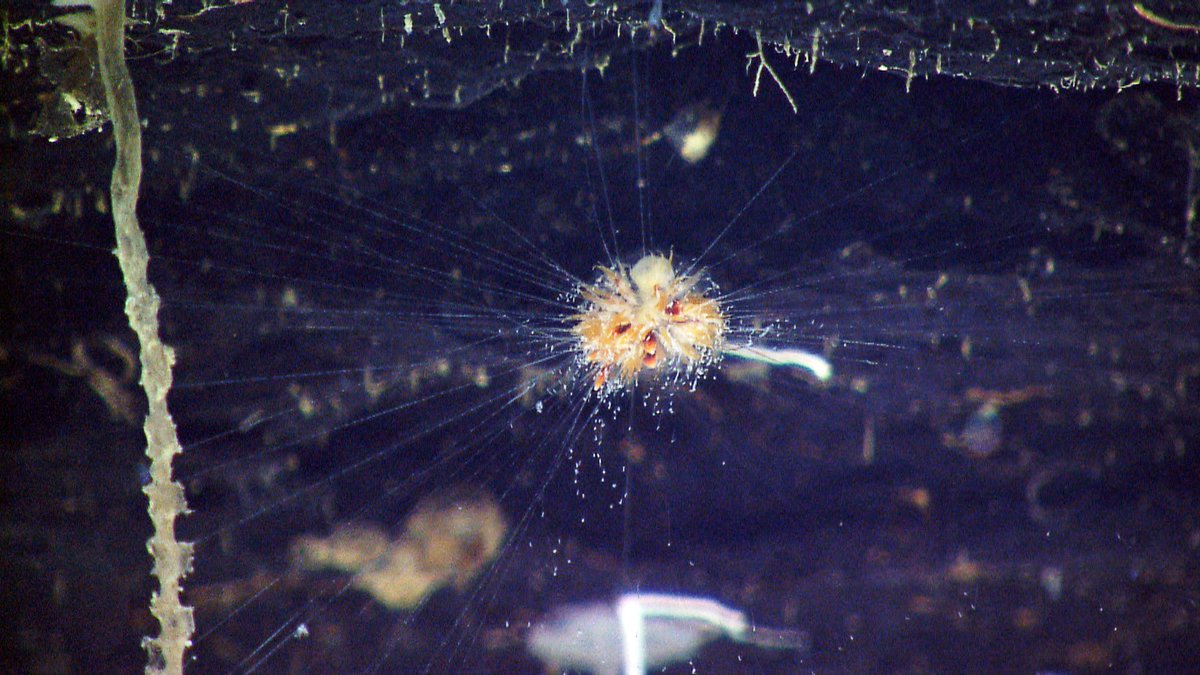
#ImageOfTheDay: November 27, 2021: Dandelion siphonophore seen on Gulf of Mexico's West Florida Escarpment. Dandelion animals are a colonial cnidarians, most closely related to corals, sea anemones, and jellyfish.
Full caption: https://t.co/sdOrntaK37
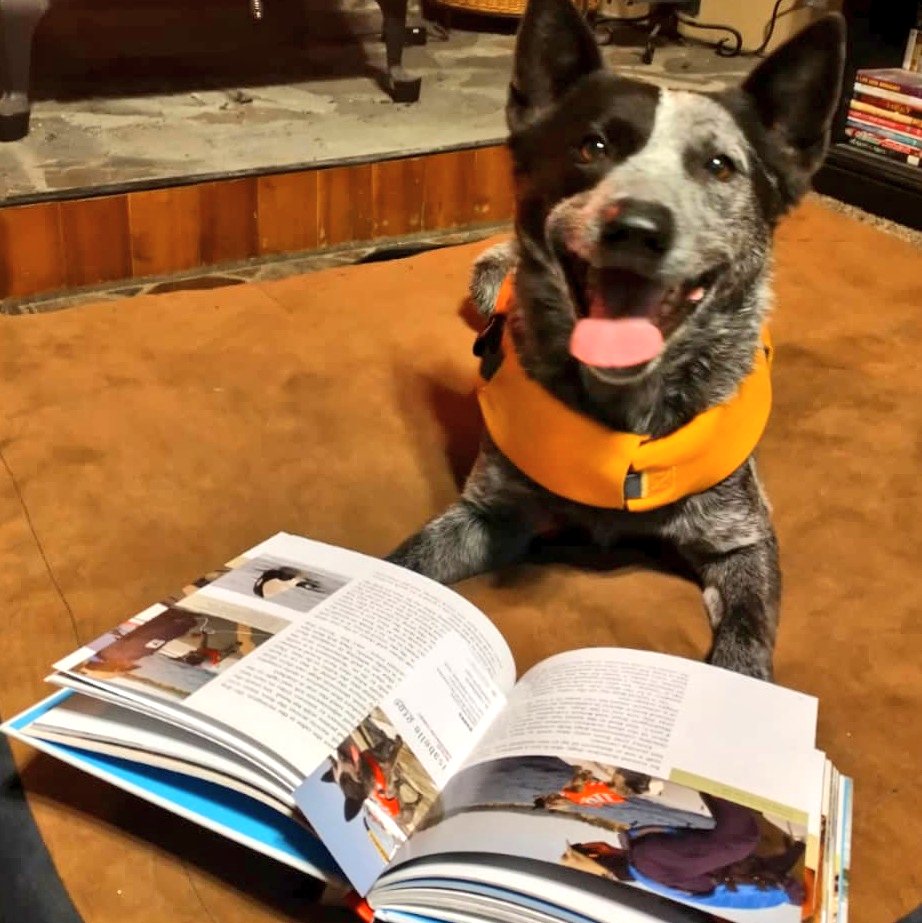
@rainashine@isabellegroc@orcabook We're so excited @isabellegroc's new book, Conservation Canines, made it into @hakaimagazine's coastal kids round up of pawsome books! We couldn't agree more! Here's orca scat detection dog, Dio, giving it four paws-up. 🐾🙏🏾💙🐳
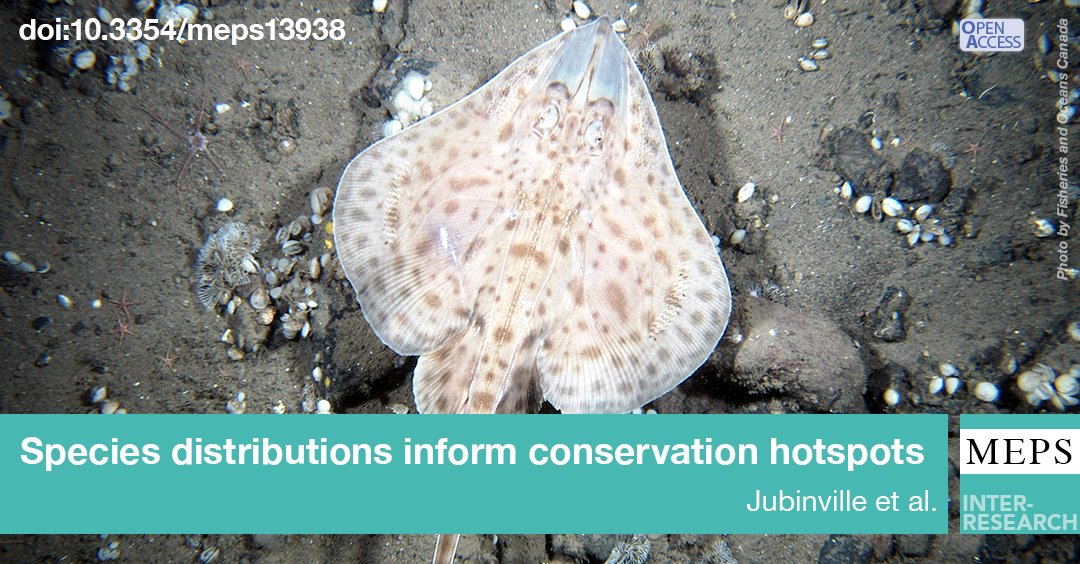
Jubinville et al. show that co-occurrence between vulnerable skates and commercially valuable groundfish, modelled from fishery-independent survey data, can successfully predict the spatiotemporal patterns of bycatch in observed catch.
Read full article: https://t.co/DOBQEQzXKO
Had great workshop by @Euro_Sea on macroalgal monitoring—current visual and new (eDNA, remote sensing, & noting litter). Heard interest for standards like DarwinCore, workshops to do ID, tips for citizen science @inaturalist, & publishing data @OBISNetwork. Thanks to organizers!
See similar on trawl camera surveys--just hunker down, like a dog in a good spot, hoping the camera frame will go away (and not roll right over it on the seabed!).
Here's a super sneaky fish for day 5 of #FishABC! The buffalo sculpin (Enophrys bison) is so confident it its camouflage, you can often get quite close to sneak a photo! #TeamFish