MYTH: Kids don’t care about winning
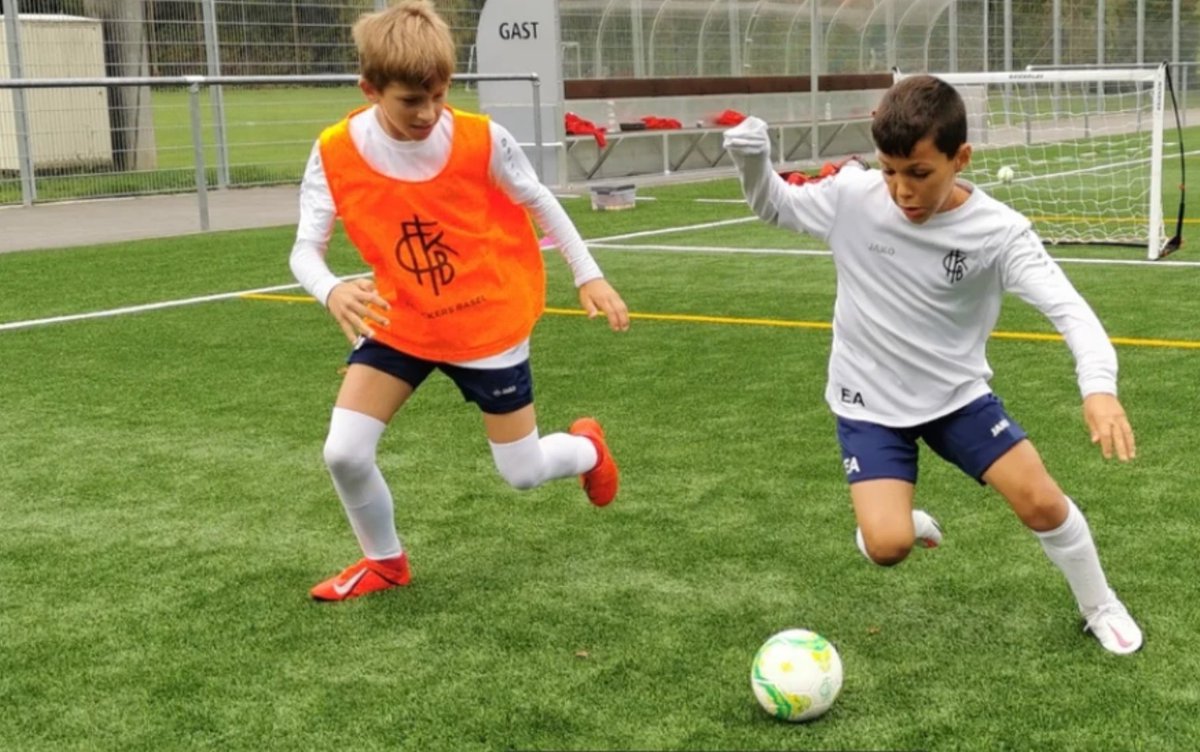
TRUTH: They enjoy competition regardless trophies or standings,they value fun, action & friendships more than results & live i/t moment. After a game win/lose, they quickly move on to other activities unless adults prolong the focus on results!
The ability to execute Technical precision like this is the result of playing with absolutely no fear. The mental mindset is more difficult to master than the actual movement, which has become implicit and effortless. The automated process done unconsciously results in a relaxed state of mind, like you’re playing in the street, which you mentioned.
Brazilian Players, drunken on skill!
“We spend a lot of time focusing on the parents. Are they going to be fans of their son or parents? Are they going to hold them accountable? Have an expectation that when something goes wrong, that it’s not the coach’s fault. Their son has to work harder, do more, earn his role,” Dan Hurley
The role of a parent makes a difference in building a TEAM culture.
🎥@aaronwilbur
U12-U16 Coaches Take Note 👇
Please see the brains, not just the brawn. 🙏
▪️ “While physical and physiological factors are better predictors of progression early in development, psychological, technical and tactical factors are more important later on.
▪️ So at an early age athletes may be deselected based on measures that become less important in higher age groups and at senior levels.”
(The Best by Williams & Wigmore)
#TOVO
Erling Haaland is a generational talent.
He was the product of an outlier youth program in Norway.
Researchers investigate his team cohort, this is what they found:
"We talk about the will to win.
Let's eliminate the will to win and think about the will to prepare to win.
Because the preparation is much more important.
Everyone wants to win, but not everybody wants to prepare to win." - Bob Knight
Coaches like Jose Mourinho, Jürgen Klopp, and Diego Simeone are great leaders.
Players say they would “die” for them on the field.
But how do great leaders do it?
How do they get players to give everything for them?
Here are my top 8 leadership principles: ⬇️
🔵First of all, how do I defnine Leadership?
Leadership is leading people to a goal.
Leadership is influencing people to do something.
Leadership is helping the players to improve to achieve their goals.
🔵Principles of Leadership
1️⃣ Have a clear vision.
Leadership means to lead people somewhere.
So you have to know where you want to take them.
Without a goal, there is nothing to strive for.
The vision should be something that inspires people.
To achieve something, your players must endure the pain of setbacks and hard work.
There are always difficulties on the way to the goal.
And the struggle has to be worth it.
But if your expectations as a coach are higher than what the players want, conflicts will arise.
So, choose your mission wisely.
Communicate the common goal over and over to your team. This is what we are working for. This is why we put up with failure and pain.
The mission can be anything. A title. Health. Fun.
But it has to unite a group of unique people.
Everyone has his own interests and goals.
The vision or mission is what units your group.
Example:
Jose Mourinho's mission with Real Madrid was to break Barcelona's years of dominance.
He typically creates a common mission through "us against the rest of the world".
The player must understand WHY they do something.
And this WHY must be inspiring and powerful.
“To inspire starts with the clarity of ‘why.’” (Simon Sinek)
2️⃣ “It’s the people.”
Bill Campell, who influenced entrepreneurs like Steve Jobs or Jeff Bezos, wrote about how to build something successful:
"People are the foundation of any company's success. The primary job of each manager is to help people be more effective in their job and to grow and develop. We have great people who want to do well, are capable of doing great things, and come to work fired up to do them. Great people flourish in an environment that liberates and amplifies that energy. Managers create this environment through support, respect, and trust."
His Motto:
It's the people.
People are the foundation for success.
Jose Mourinho agrees:
"I had a university professor who always told me: "A coach who knows only football knows nothing about football.'"
"Football players aren't just football players. These are men who play football, and that's one of the big lessons I learned from the beginning. Another lesson I learned from my experience as a coach is that you have to deal with human beings. In sport, there is a human side above all; and, of course, in business and other areas of social life. I think that's the most important thing that defines leadership."
"You have to know the players, know them well. They are all different, and all need a different way of communicating, a different way of receiving feedback, of motivating themselves."
Source: Forbes, 2022
3️⃣ Think from the players’ perspective.
If I want something from another person,
I must put myself in their shoes.
What do the players want?
Instead of talking about what I want:
"What does the player want?”
“How can I use his intention to do what I want him to do?”
a) Find out what they want.
b) How can I use that to get them to do what I want them to do?
4️⃣ Role Models are more important than criticism
Pep Lijnders, assistant coach of Jürgen Klopp, talked about it in his book 'Intensity':
“Talents need models, not criticism.”
He continues:
“I gave Thiago a compliment in front of everyone about how he focuses in the warm-up. ‘That’s the mentality and that’s what makes the difference between a talent and a professional.’ I did it jus to set the tone for everyone this week.
During training I used Sadio as a the example of someone who wants to steal the ball from the centre-halves making the last step after he stole the ball from Joel’s blind-side. […] Sadio grew, of course. Mission accomplished. A compliment is so powerful, not only for the receiver but also to make clear to all the others what’s good and what’s not.”
You can criticize everyone who is not doing what you want, or you can pick the one who is doing what you want and praise him.
Now, he is the role model and direction for everyone else. Praise for someone is an implied critique of everyone else.
Be honest with yourself: Do you really like criticism? Most people don't. Instead of criticism, praise the behavior you want to see.
Another effective method is asking questions and guiding the player's thinking process. They come up with a solution on their own, but you lead them there.
“Criticism is futile because it puts a person on the defensive and usually makes them strive to justify themselves. Criticism is dangerous, because it wounds a person's precious pride, hurts their sense of importance, and arouses resentment.” (Dale Carnegie)
5️⃣ Insist on the Highest Standards
Whatever you expect of yourself becomes the standard for everyone. The effort you put in becomes the norm.
If you're okay with bad positioning, with a sloppy first touch, your players won't do it differently. If you don't insist on executing your principles, the players won't do them.
Insist on excellence. Allow only 100%.
100% Intensity in every Action.
100% Focus.
100% your Game Model.
Raise the bar and keep it high. This is only possible if you challenge your game model, training, and coaching. Keep improving. You have to put in the effort first, then you can expect it from the players. To communicate your expectations clearly to the players, you need to know exactly what you want. And clear communication comes from clear thinking.
“Leaders have relentlessly high standards— many people may think these standards are unreasonably high. Leaders are continually raising the bar and drive their teams to deliver high quality products, services and processes. Leaders ensure that defects do not get sent down the line and that problems are fixed so they stay fixed.”
(Amazon Leadership Principle)
6️⃣ Build trust.
“To be a good manager, the most important thing is that people must follow you. And to follow you, they must believe in you.” (Jose Mourinho)
If you want people to follow you, they have to trust you.
How do you build trust?
Say what you do, and do what you say.
It is about consistency.
Give promises. Keep promises.
Don’t give promises you can’t keep.
If you say one thing and act differently, you lose them.
7️⃣ Ownership.
Accept 100% responsibility for what happens.
Don't blame others.
Not your players. Not the referee. Not the opponent.
You are responsible for everything as a coach.
As long as you blame others, you give them the power over what happens.
But if you accept the responsibility, you can focus on what you can control: Your actions. Improve your Coaching. Improve what you say. Improve how you say something. Improve your Game Model.
Jürgen Klopp said:
"I want to be very clear about what I'm giving the guys as an instruction, as a help. If I see they don't do it, I always think first: 'Then my message wasn't clear enough,' and not: 'They're too stupid to understand me.'"
"If you want them to follow you, you have to be responsible for the consequences."
Important: Just because you take ownership, never expect respect from others. Some people will always blame you. No matter what you do. But that's okay. You can't control it, so ignore it. Focus on what you can control. Some people will honor that, and some people won't. You can't change it.
8️⃣ Make them feel important.
If the players feel important, they will be way more motivated. Therefore, they must feel they can contribute to the team's success.
"The deepest principle in human nature is the craving to be appreciated." (William James)
▪️Recognize their effort. Be specific. Not just "well done". Be clear about what exactly you appreciate.
▪️Show them that you care about them by asking questions about their life. Remember small details.
▪️Say their names." A person's name is to that person, the sweetest, most important sound in any language." (Dale Carnegie)
▪️Talk a lot one-on-one. That shows the player is important to you.
For example, Kieran Trippier talks about what Diego Simeone did for the players who didn't play. He puts all his effort and passion into what other coaches might consider a chore.
"The most important thing for me was the way he [Diego Simeone] approached the training for the lads that weren't playing after games. He was incredible. And that's why he has so much respect of everybody. The way he keeps everybody happy."
⚫ Summary
1️⃣ Have a clear vision.
2️⃣ “It’s the people.”
3️⃣ Think from the players’ perspective.
4️⃣ Role Models are more important than criticism.
5️⃣ Insist on the Highest Standards.
6️⃣ Build trust.
7️⃣ Ownership.
8️⃣ Make them feel important.
You can read this and other articles here:
https://t.co/E6cXjuxRnT
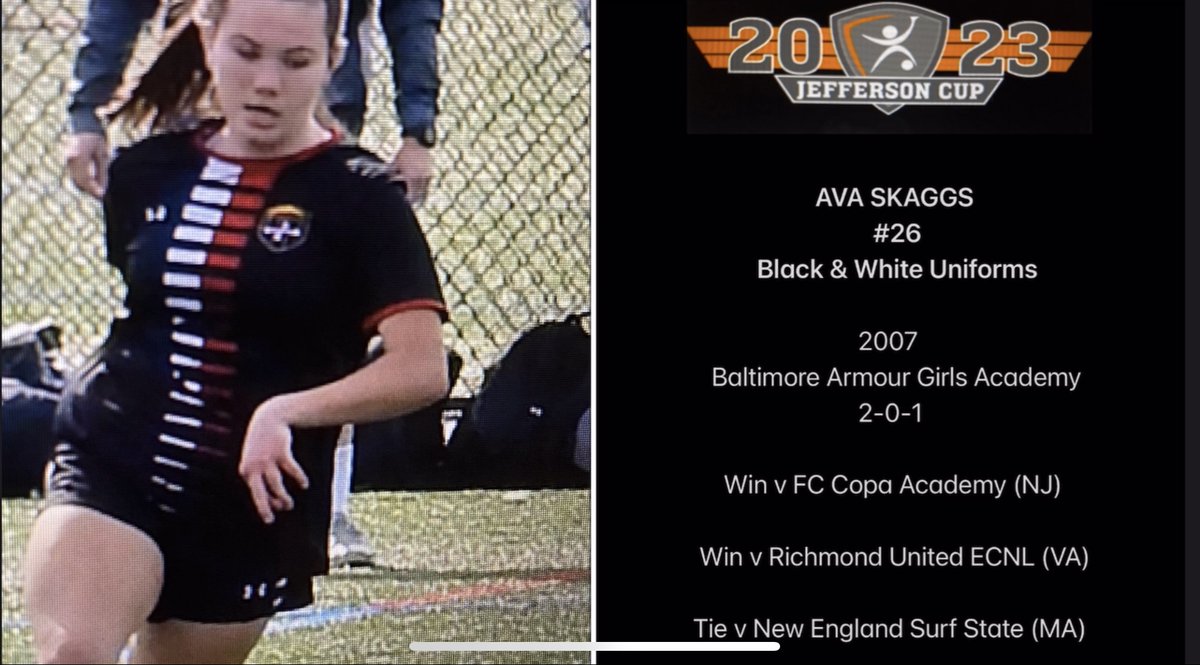
It was great to have the opportunity to visit University of Richmond & VCU during Jeff Cup weekend. @adam_denton @VCUWSOC_CoachLM @MartyKBaker@MeghanGill27