I got the blue check this week, which is a good excuse to start writing about the work I actually do.
I'm Rob, a high school AP Computer Science teacher in West Covina. This is year 31 in the classroom.
I'll share how we run a coding class: GitHub, Codespaces, student teams, and what's working (and what isn't) when teenagers learn to write real programs.
If you teach CS, or you just want a window into a public high school classroom, say hello.
Short week before Thanksgiving, which in a coding class means nobody is starting a big new project on Tuesday.
So we clean up. Teams go back through their repos, fix the commit messages that just say "stuff," delete the file named test2_final_REAL.java, and write a README a stranger could actually follow.
It isn't glamorous, but it's some of the most professional work they'll do all month. Happy Thanksgiving to every teacher counting down to Wednesday.
Something fun is happening in my AP CSA class this month. Because we run the class through GitHub Education, my students can sign up for Copilot Pro, and they're starting to do it.
Nobody has it fully set up yet. That's fine. Right now the lesson is less about what Copilot can write and more about how a team uses it: asking it to explain an error, comparing its suggestion with what a teammate would say, and deciding together whether to use it.
Thank you @GitHubEducation and @github for making real tools free for high school kids. I'll share how it goes, including what goes wrong.
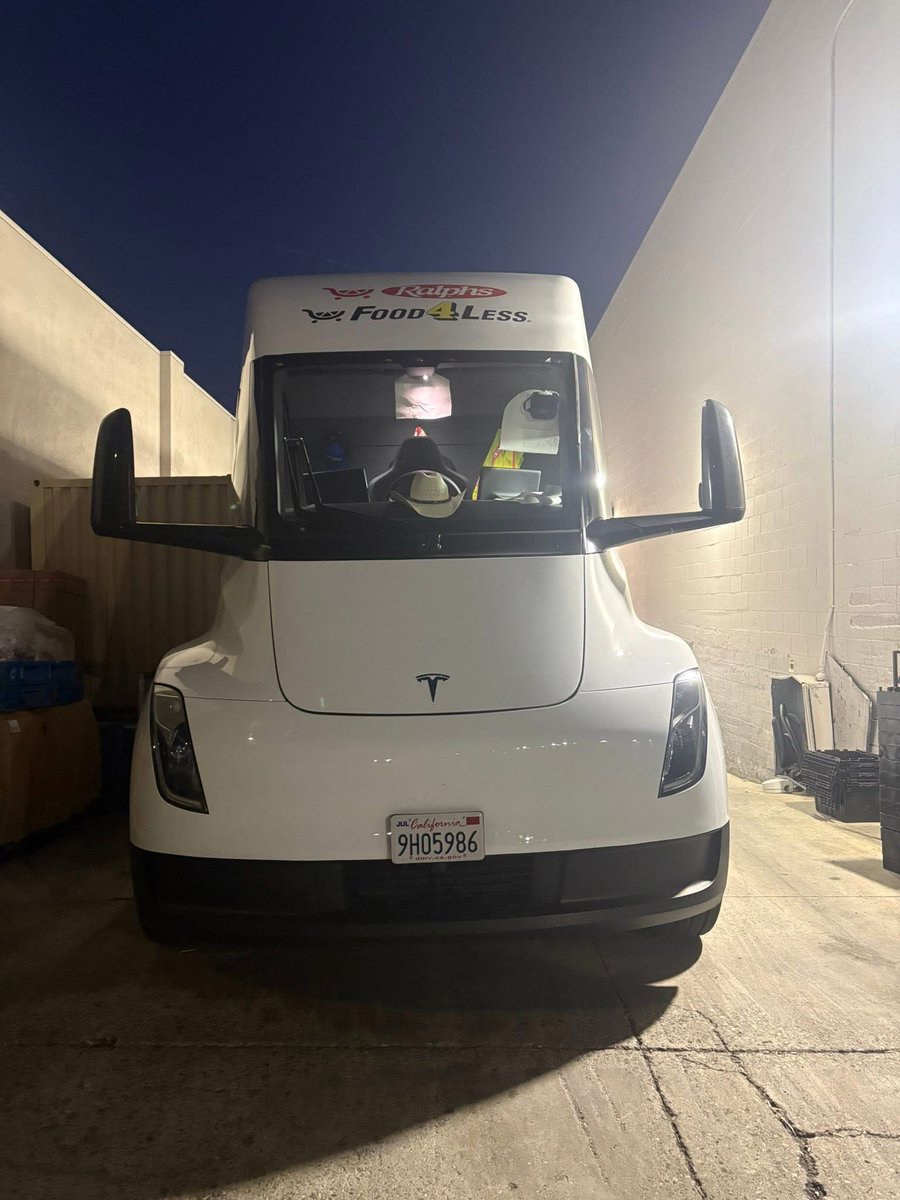
Saw two Tesla Cybercabs today in Los Angeles County, one on the 5 and one on the 105. Gold, two doors, covered wheels, and somebody sitting in the driver's seat.
So what is going on? Testing in LA? Getting ready for something?
@RandyWKirk1@FutureAZA@nextbigfuture@CernBasher, you guys would know.
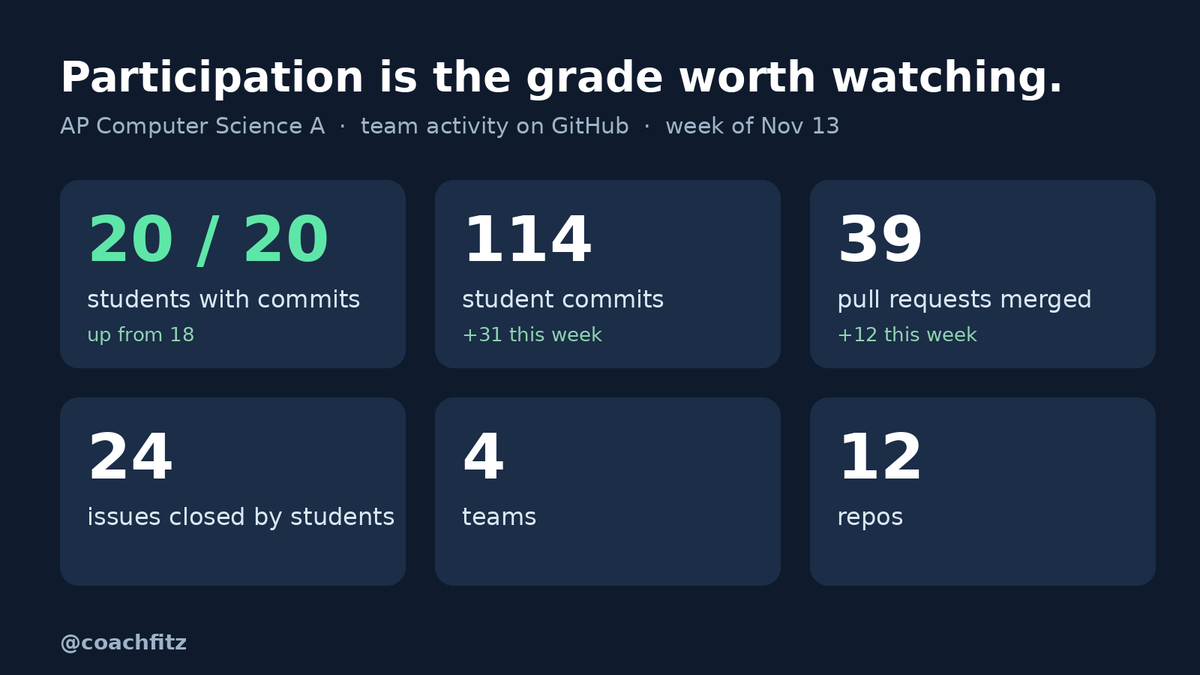
Participation is the grade worth watching.
My AP CSA students self-grade in Canvas, so I wanted a record of teamwork that isn't just my impression or their own report. GitHub gives us one: commits, pull requests, and who owns and closes issues.
Where the class stands this week:
- 20 of 20 students have commits (up from 18)
- 114 student commits, 31 of them this week
- 39 pull requests merged into main, 12 this week
- 24 issues closed by students
- 4 teams working across 12 repos
The number I watch most is the first one. When every kid on every team shows up in the commit history, the team is actually a team.
After 31 years, the thing I trust most is this: kids learn to code by writing code, then getting stuck, then getting unstuck.
Lectures, slides, and even a perfect demo only go so far. The learning happens when a student has a program that doesn't work and has to figure out why.
My job is to set up the room so getting stuck is safe, and getting help is normal.
My GitHub Education faculty application just came through, so Copilot Pro and a GitHub Team upgrade for our class organization are becoming available.
I'm not looking to have it write the kids' programs for them. I want it as a teaching tool: explaining an error, suggesting a next step, or helping a stuck student ask a better question.
The hard part, as always, will be teaching them when to use it and when to close it and think.
In my AP Computer Science A class, students work in named teams and they code on GitHub, in Codespaces, so nobody is fighting with a broken Java install on a school laptop.
Each team has its own repo. When I open a new lab, I open it for that team, and they can see the assignment, their work, and each other's commits in one place.
The point isn't to turn them into professional developers overnight. It's to make the work look like real collaboration, and to make it normal for teammates to help each other when someone is stuck.