@letsblinkit@airtelindia@airtelindia Getting 504 gateway timeout on kyc page. Tested on both iOS and web application. Bought sim from blinkit. Also, I found many bugs on web application.
@airtelindia@Airtel_Presence API issue on https://t.co/xYZ7U8tGTf. Getting 504 HTTP error after selecting the plan. Can't fetch numbers to proceed. Also, both iOS App and web application has lots of bugs. Please check. Bought sim from blinkit.
@airtelindia Why your team is harrasing me by booking multiple pickup schedules for Airtel set top box. I already told them that one of your guy stole it from me and didn't updated the system. What am I suppose to do. Buy a new one and give it to you?
@airtelindia someone from Airtel picked up my DTH set top box, Wifi router after I surrendered and service not available in new area respectively. Still getting calls that they are going to schedule pickup after 4 days. Idk how bloated your system is, but they are not in sync.
@Ubiquiti We're launching a new SaaS solution for hosting UniFi Controller with features like: 👇
(Monitor and Manage your Unifi Network devices from anywhere)
- Automatic Backup & Upgrade (no downtime)
- Auto-recovery if the server fails
- Powered by Kubernetes
- Custom Domain mapping
- Support for up to 1000 devices
- Plans starting at just $99/month
- Interested in a 7-day trial? Let's chat!
We're still in development, but early interest could mean great discounts on annual pricing post-launch.
Interested? Please fill this form
https://t.co/4Ss90UNRdB
#networking #switches #HOSTING #CloudComputing
@terryleewhite
We're launching a new SaaS solution for hosting UniFi Controller with features like:
Automatic Backup & Upgrade (no downtime)
Auto-recovery if the application fails
Powered by Kubernetes
Custom Domain mapping
Support for up to 1000 devices
Plans starting at just $99/month
Interested in a 7-day trial? Let's chat!
We're still in development, but early interest could mean great discounts on annual pricing post-launch.
Best,
Tirumal Rao
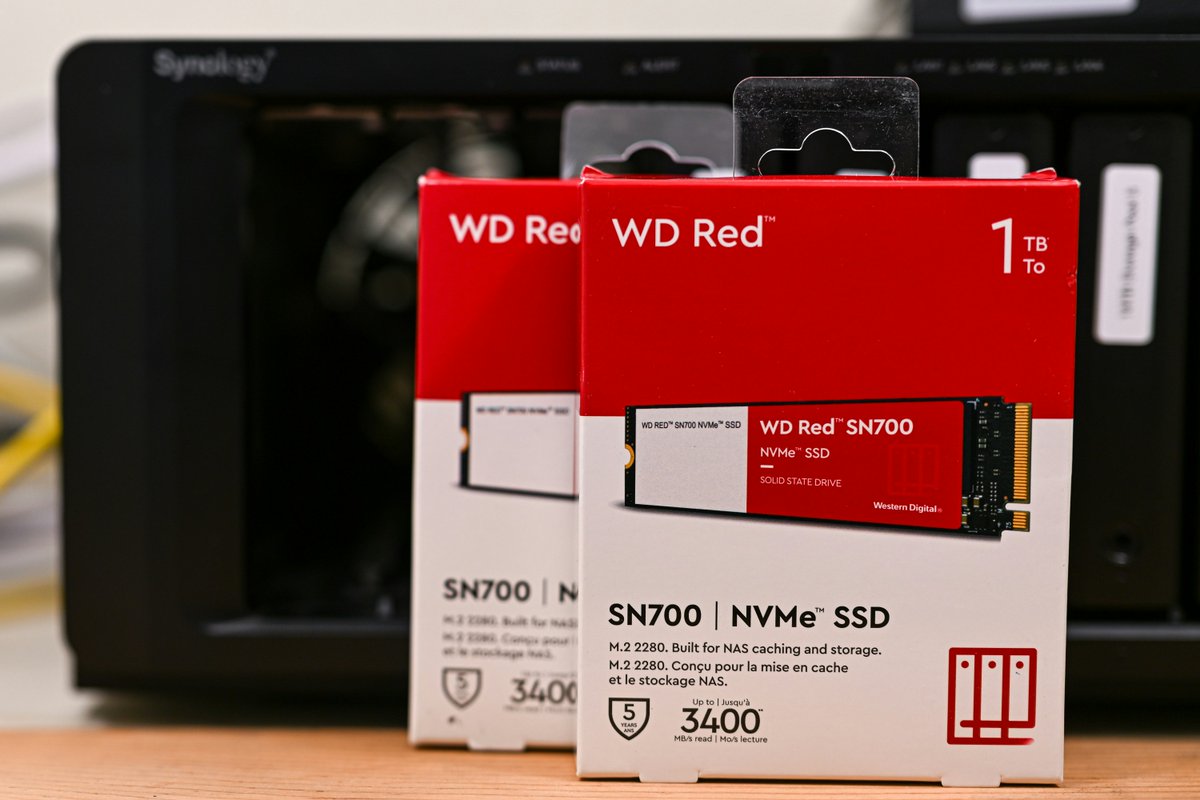
While both NVMe and SATA SSDs significantly outperform traditional hard disk drives (HDDs), they serve different user needs and come at different price points. NVMe drives, due to their superior speed and performance, are generally more expensive and are best suited for users who need maximum performance, such as gamers and professionals working with large datasets or multimedia files. On the other hand, SATA SSDs are more affordable and still provide a substantial performance boost over HDDs, making them a cost-effective option for everyday computing tasks, office applications, and as upgrades for older systems. In terms of form factors, NVMe drives commonly come in M.2 and U.2 forms, while SATA SSDs are often found in 2.5-inch, M.2, and mSATA formats. Overall, the choice between NVMe and SATA SSDs depends on the specific performance needs and budget considerations of the user.
Ever wondered about the difference between NVMe and SSD? 🚀 NVMe offers blazing fast speeds with lower latency, thanks to its direct connection to the CPU. While traditional SATA SSDs are still fast, NVMe takes performance to the next level! #TechTalk#StorageSolutions#NVMe#SSD
NVMe (Non-Volatile Memory Express) and SSD (Solid State Drive) are both modern storage solutions that enhance computer performance, yet they differ significantly in their underlying technology and performance capabilities. NVMe drives use the PCIe (Peripheral Component Interconnect Express) interface and a protocol specifically designed for flash storage, enabling much higher data transfer speeds and lower latency compared to traditional SATA-based SSDs. NVMe drives can achieve read/write speeds up to 3500 MB/s or higher, making them ideal for high-performance computing, gaming, and professional applications such as video editing. In contrast, traditional SSDs using the SATA interface and AHCI (Advanced Host Controller Interface) protocol are typically limited to read/write speeds of around 550 MB/s. This difference is primarily due to the design of the SATA interface, which was originally developed for hard disk drives and is not optimized for the capabilities of modern flash memory.