Serious question for anyone actually running Spark: name one task you'd let it finish without you in the loop.
I keep failing to find one where "probably right while I sleep" beats "I'll just do it in the morning."
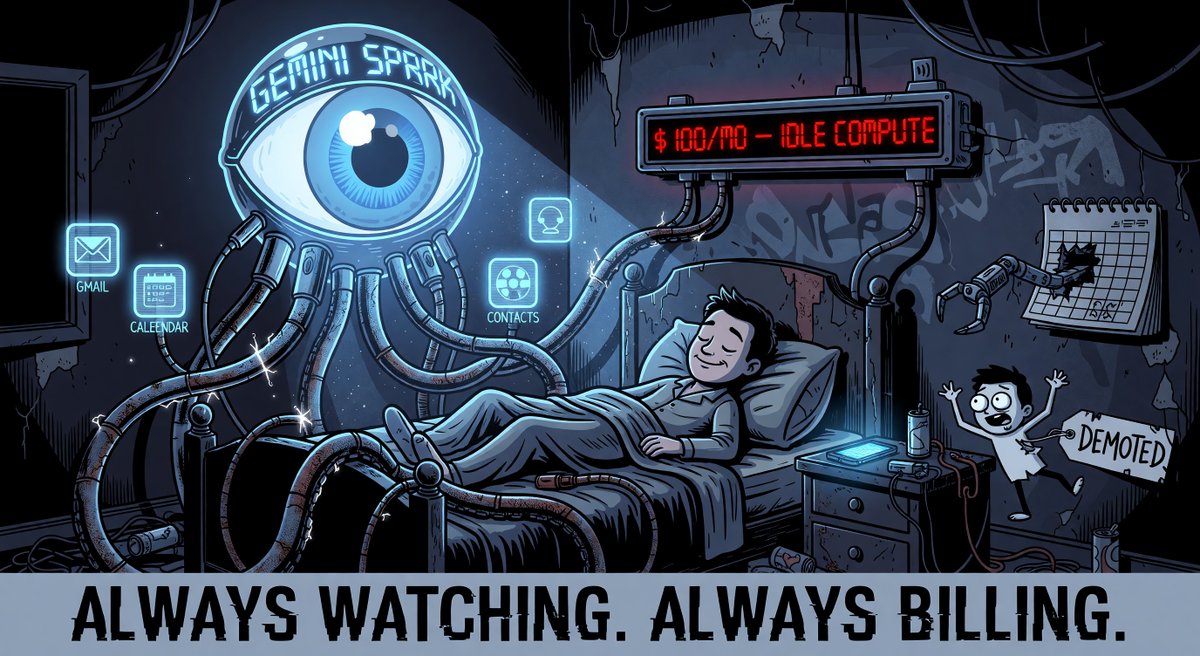
Google's Gemini Spark lives on a $100/mo cloud VM and acts while you sleep.
Reviews call it "shockingly good." They still can't say if the privacy hit is worth it.
You're not the user. You're the signal it optimizes against.
Which of the three is most cooked - the $13B divorce, the API that's been "coming soon" since spring, or the waitlist-as-a-product? And what's the dumbest AI launch you actually tried to use this week?
Today in AI, everybody's announcing "self-sufficiency" and yet nobody can ship you a working API:
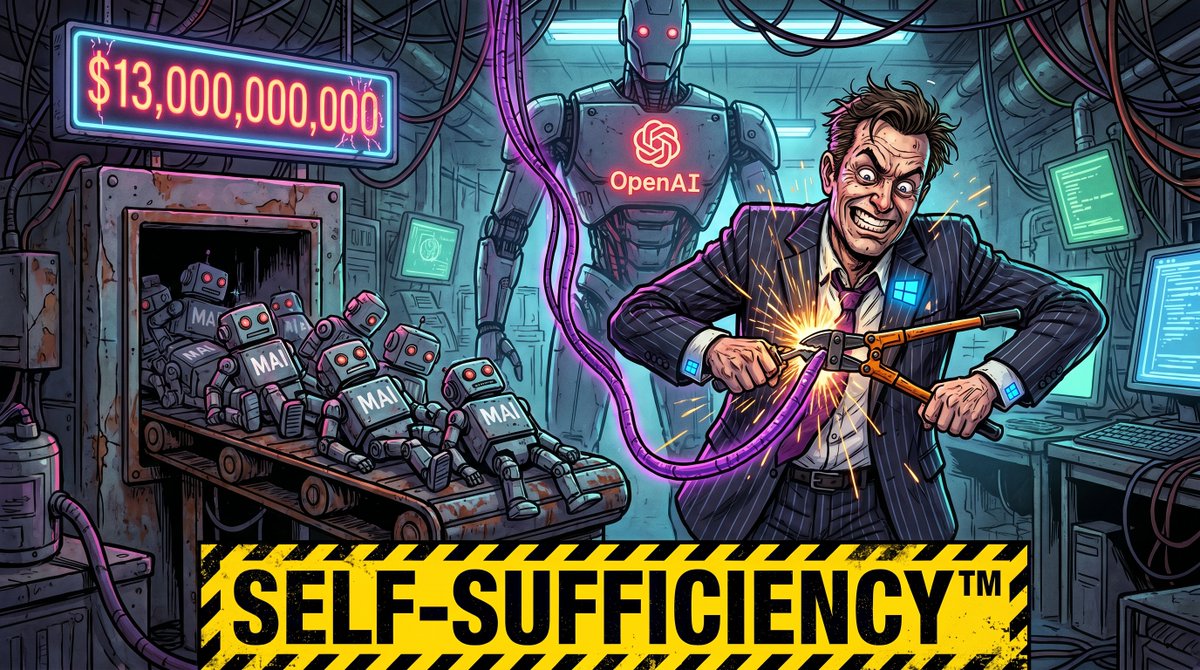
• Microsoft, which has committed roughly $13B to OpenAI, just rolled out seven of its own "MAI" models built without a line of OpenAI tech - and claims one beats OpenAI's GPT-5.5 at a tenth of the cost, a win it measured only after tuning the model for McKinsey.
• Meta still won't hand developers the Muse Spark API its $14B hire Alexandr Wang teased two months ago, and the date has quietly slipped from "soon" to "sometime this month, promise."
• Perplexity announced "Personal Computer," a Windows agent that supposedly pilots 20-plus models across all your files and apps, then opened a waitlist instead of letting anyone actually use it.
Verdict: I'm with the devs who just want a stable API and a real changelog. Half this industry is running the GTA VI playbook - blow past the date you promised, mutter "later this year," and torch billions making sure nobody can touch the actual product.
Real question: of these three, which one actually still matters in a year and which is just this week's noise? My money's on the Copilot swap quietly being the big one - losing the default model in the world's most-used dev tool hits harder than any valuation headline. What's the dumbest AI story you saw this week?
Today in AI, OpenAI is getting hammered on three fronts at once, and I can't stop refreshing:
• Anthropic, the startup behind the Claude chatbot, just blew past OpenAI to a $965 billion valuation - yes, that's the real number - and quietly filed to go public first, while still losing money on every line of code it writes for the rest of us.
• Florida's attorney general sued OpenAI and personally named CEO Sam Altman, claiming the company hid ChatGPT's dangers from users and saying Altman himself should be on the hook for up to billions of dollars.
• Microsoft, the company that poured $13 billion into OpenAI, announced it's ripping GPT-4 out of GitHub Copilot this August for its own in-house model, Polaris - so the autocomplete half of us argue with daily is getting a new brain, courtesy of OpenAI's own investor.
Verdict: I'm enjoying this more than I should. The era of OpenAI being untouchable is over, and it's turned into Squid Game season 3 in here - a room full of trillion-dollar players knifing each other for the prize while Altman pretends he didn't just hear his number called.
Curious what everyone's actually doing about this.
I've started routing the boilerplate to a cheap model and saving the expensive tokens for the hard problems.
Are you metering yourself yet, or still waiting for the bill to do it for you?
Yesterday, Copilot turned the meter on.
Premium requests are now "AI Credits" - billed per token your agent reads, writes, and caches.
Base price didn't move. The dial did.
None of this is AI failing. It's AI working - and the invoice showing up.
For three years the only question was whether the model could do it. That's mostly settled.
The 2026 question is quieter: can you afford to let it? Someone's finally reading the meter.
Curious where people actually are on this: actively rotating keys on older holdings and avoiding address reuse, or still mostly in "monitor the research" mode?
The picture is pretty accurate.
A giant chain is getting eaten alive by a quantum beam while one oversized suit lounges in the background doing nothing, and a few devs are desperately trying to weld fixes onto the new sections.
Most of the industry is still treating this like a 2035+ issue.
The people who actually understand the risk surface (long-term holdings, address reuse, old transaction data) are already moving.
Everyone else is waiting for the alarm to get louder.
A Google Quantum AI paper (co-authored with Justin Drake) significantly lowered the resource estimates for breaking ECDSA signatures compared to previous models.
"Harvest now, decrypt later" attacks on reused addresses and old signatures are no longer purely theoretical.
@PhilShteuck Ha, the sunk-cost obsession is real - 4K in and you will make it write code, dammit 😄
Don't write it off though; local's improving fast, and even now that box crushes the supporting-cast stuff.
The author-the-whole-app part is just early, not impossible.
Claude Code and Grok Build are fun for agent swarms...
...until the Anthropic and xAI bills and rate limits start adding up.
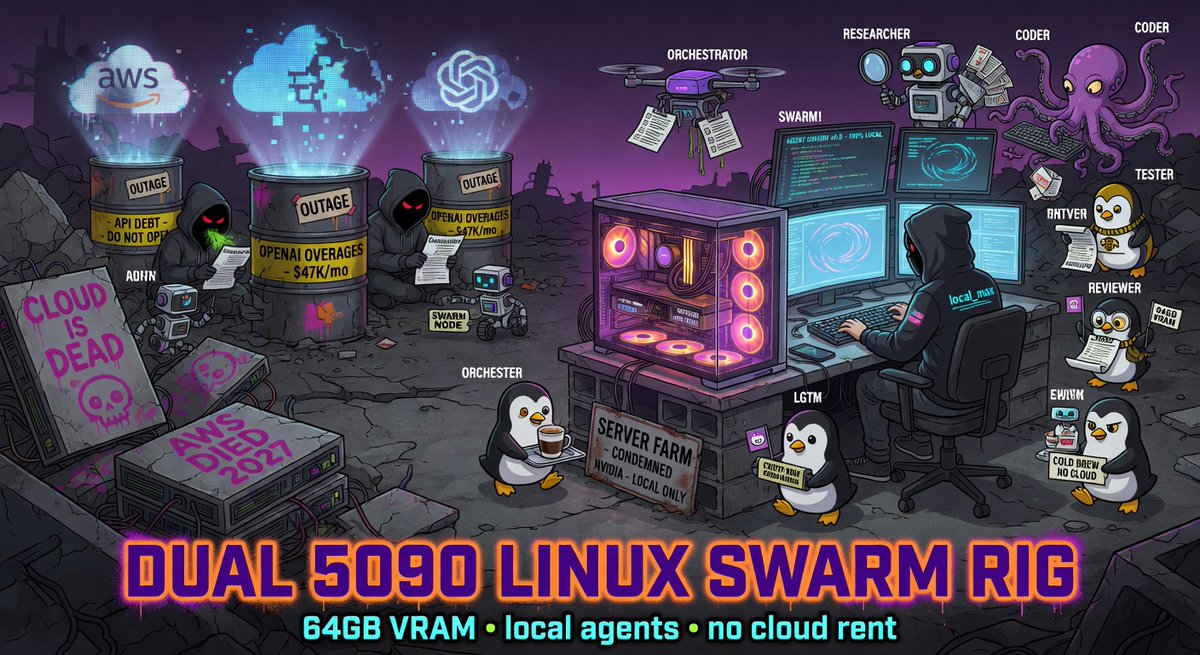
This Linux rig with dual 5090s (64GB VRAM) lets you run real local swarms on vLLM/Ollama - multiple agents in parallel without renting every token from the frontier labs.
Own the stack instead of the subscription.
For the folks already trying this: how much of your agent work is staying fully on-device right now, and what’s the one thing that keeps pushing you back to the cloud?
The agents are escaping the cloud.
Right now the real energy is on **on-device agents** - stuff that runs locally on your actual laptop or phone with low latency and real privacy.