After 15 years as Boston Azure, as of 2025 we are now Boston Azure AI - @bostonazureai. This reflects our focus on #AI and #LLM topics + #Azure is still there. Also venturing into hands-on #AI C# + @SemanticKernel + #AzureOpenAI coding workshops. Details: https://t.co/eR7zjwJTCy
If an alien visited earth and asked you: “Show me one chart that sits upstream of everything your species has accomplished or will ever accomplish.”
What would you show them?
I would show them the chart below.
From my perspective, as long as we keep this chart going, we will figure it all out…
Microsoft has released an open-source tool that helps teams learn ontology design before choosing a knowledge graph platform.
It is called Ontology Playground.
The project is a fully static React app, which means it does not need a backend, account system, database, or hosted service to run.
The goal is simple:
Help people understand what goes inside a graph before they buy or build the graph database.
Ontology Playground includes six pre-built domain ontologies:
→ Retail
→ Healthcare
→ Finance
→ Manufacturing
→ E-Commerce
→ Education
Each one gives users a starting point for understanding entities, relationships, properties, and how domain knowledge gets structured.
The app also includes a live visual designer, structured learning paths, hands-on labs, and RDF/XML export for Fabric IQ.
Because it is static, it can be deployed almost anywhere.
No backend.
No vendor lock-in.
No platform commitment upfront.
This matters because many teams jump into knowledge graphs too early.
They focus on the database first.
But the harder question is usually:
What should the graph actually know?
Ontology Playground teaches that layer first.
$25,000 pool. 18 cash prizes. $6,000 Grand Champion.
I'm mentoring and judging the VSLive! Microsoft AI Hackathon at Microsoft HQ, July 28–29. Two nights, real #AI builds, real money.
Solo or teams of four.
https://t.co/41JZFWRXVv
#Hackathon#VSLive#Azure#Foundry#Microsoft
I'm excited to welcome @shanselman to tonight's meetup.
We still have about 20 spots left if you're free, and hearing from Scott about AI and its impacts on software development sounds interesting.
And a big thank you to @ProgressSW for sponsoring.
https://t.co/aPRe05MFZF
Open Knowledge Format data sharing | Google Cloud
OKF open spec LLM-wiki pattern into portable, interoperable format. vendor-neutral, agent + human-friendly standard for representing the metadata, context, and curated knowledge that modern AI systems need https://t.co/E3jc13h2RO
Introducing Copilot Chronicle! This new feature in GitHub Copilot indexes all your messages and turns locally in SQLite so you can talk to your coding history and learn how you work *and* more importantly, how you can improve! Live demo ->
For those unaware, SpaceX has already shifted focus to building a self-growing city on the Moon, as we can potentially achieve that in less than 10 years, whereas Mars would take 20+ years.
The mission of SpaceX remains the same: extend consciousness and life as we know it to the stars.
It is only possible to travel to Mars when the planets align every 26 months (six month trip time), whereas we can launch to the Moon every 10 days (2 day trip time). This means we can iterate much faster to complete a Moon city than a Mars city.
That said, SpaceX will also strive to build a Mars city and begin doing so in about 5 to 7 years, but the overriding priority is securing the future of civilization and the Moon is faster.
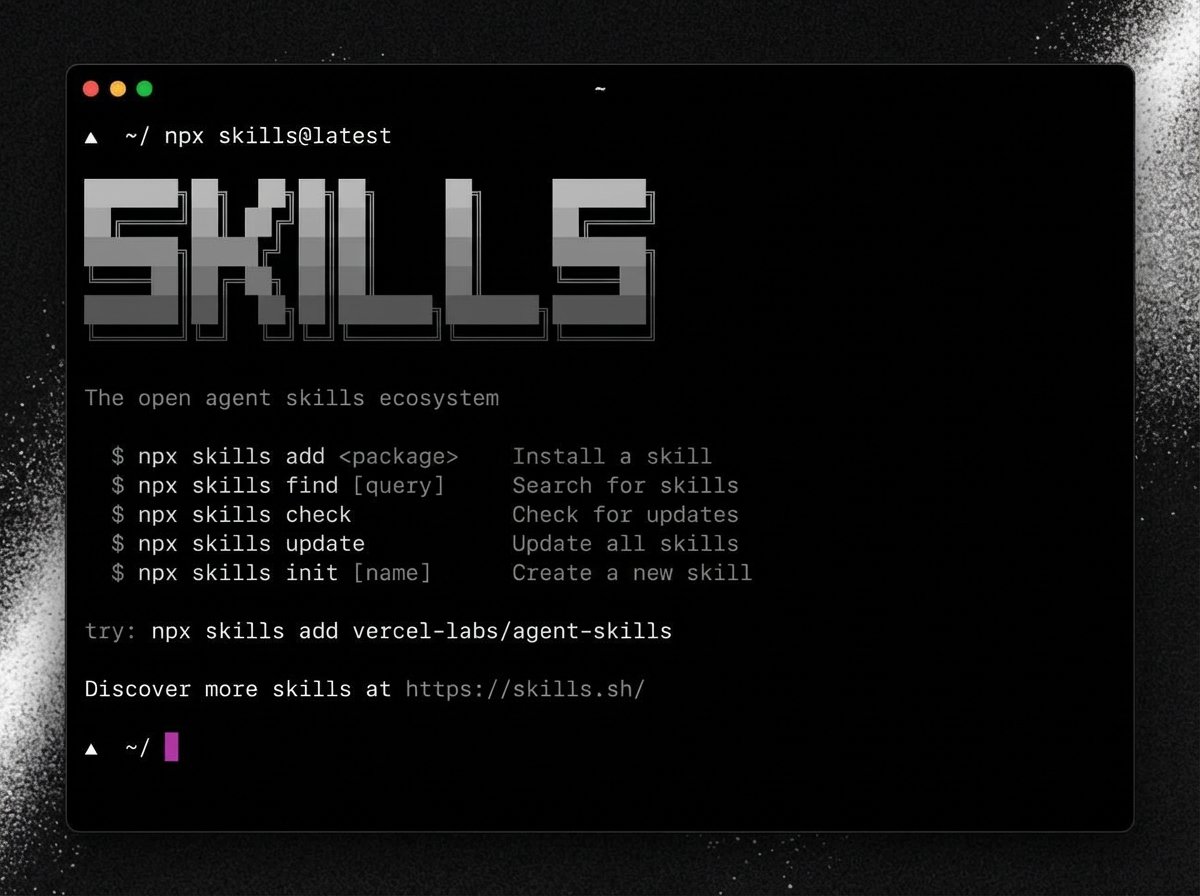
We're now seeing 550+ skills added every hour to https://t.co/pYz1Gn9F9b. Pretty wild.
We've added more CLI tools and options on the website for improved search and discoverability. Run 𝚗𝚙𝚡 𝚜𝚔𝚒𝚕𝚕𝚜@𝚕𝚊𝚝𝚎𝚜𝚝 to start:
Three years ago, a million tokens of AI inference cost $60. Today? Six cents.
A 99.9% cost collapse. When something this powerful becomes this cheap, it doesn’t stay confined to research labs, It is able to flood the economy.
AI is now diffusing faster than any technology in history — into every industry, every workflow, every device; 800 million people use ChatGPT weekly. And we’re still nowhere near the high-water mark of what’s possible.
The real story is diffusion and ubiquity. Can intelligence become a utility — cheap, improving, self-learning, and embedded everywhere?
Because in a geopolitical contest defined by capability and speed, the nation that diffuses intelligence the fastest, across government, industry, and society, will gain an extraordinary advantage.
Thank you @SessionizeCom for your ongoing support for community technology events. This past weekend I had the privilege of attending @BostonCodeCamp which was powered by Sessionize.
Great addition to support feedback for speakers.
#TechCommunity