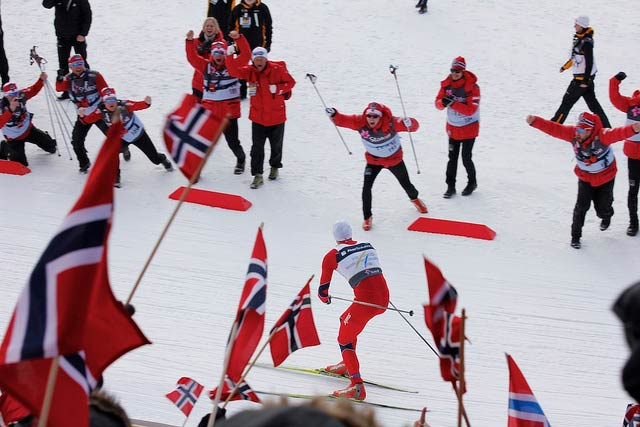
Johannes Klaebo viralizou essa semana ao ganhar medalha de ouro nas Olimpíadas de Inverno. Principalmente pela subida que ele fez no Esqui Cross Country.
Mais que isso, estudiosos falam do incrível vo2max dele, além dos 90.
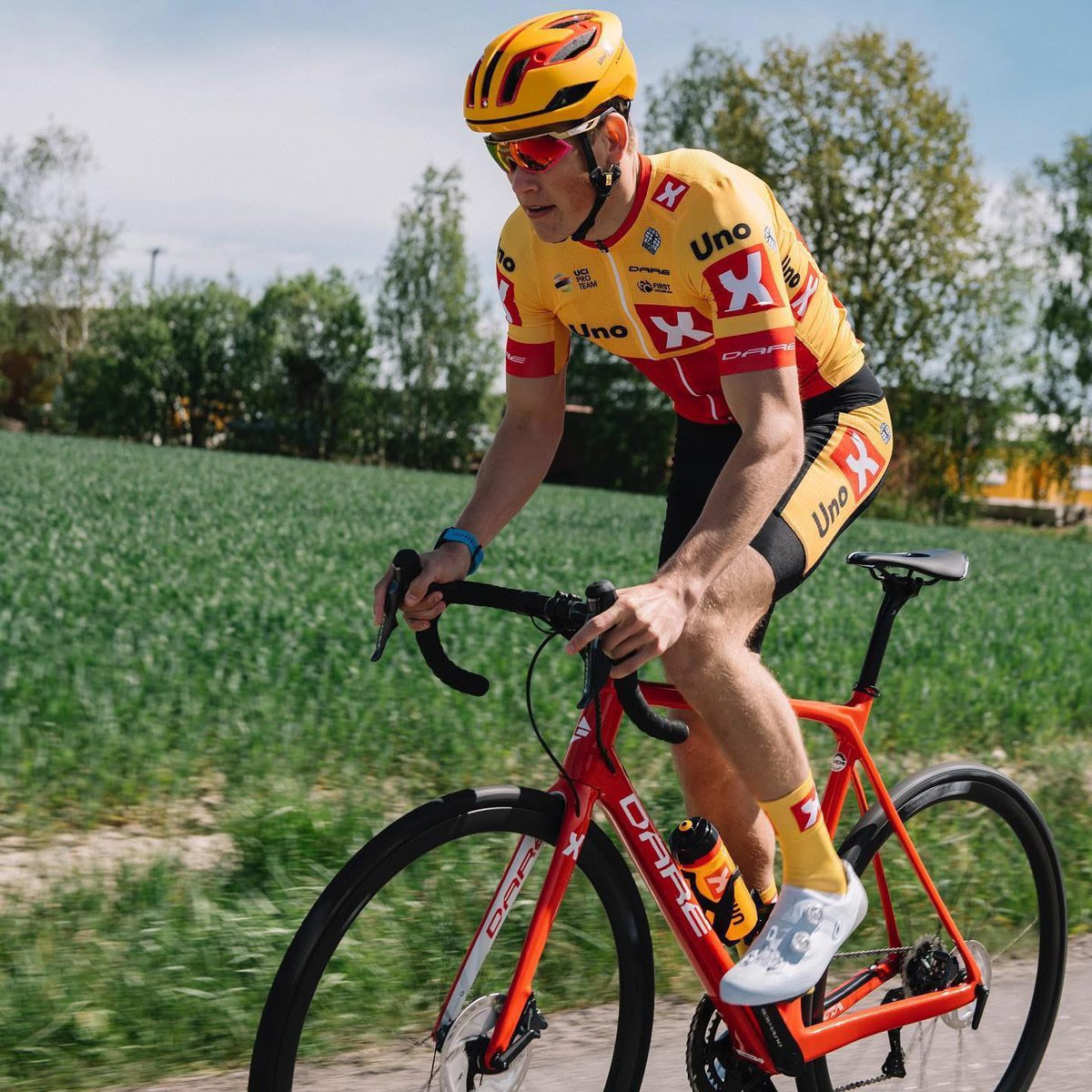
E adivinhem… em 2020 ele era ciclista da @UnoXteam.
Great points. I feel this same way about cycling for youth sports. It’s a lifelong skill, our whole family does it, the cyclocross race culture is amazing. It’s similar to the Track and Field and Cross Country running cultures.
Many of these points are the reason why we conciously chose cross country skiing as our kids sport. Granted, we had a season of Tae Kwon Do. It was only twice a week, it was cheap, and it taught self control.
But skiing was always the thing. Full disclosure: there was a season when one of our kids turned 16 when travel became an argument in our family, as he started racing on the national stage. But he's grown up now, and manages his own travel for his national races so we don't argue about it anymore.
BUT the reason we picked it as our family's sport might be helpful when considering the standards and goals we have for ALL sports we put our kids in.
1) XC skiing is a lifelong sport. My husband has skiied in the Birkie race in Wisconsin for 15+ years. It's basically a XC ski marathon race with thousands of skiers--the biggest yearly race in America. He's done this for ages, and not only does it keep him active and healthy, it gets him outside in the winter, which is vital for mental health. Not to mention, old people beat him on this race every year. You'll see people at this race who are old, and in shape, and it's due to skiing for decades.
So many sports in America that are presented to kids are "for a season" sports. You don't see 80 year old football players. You don't say "he's so in shape because he kept with wrestling for decades." So many sports that we choose are blast and burnout. Go hard, then do nothing. We wanted a sport our kids could do their whole lives and would be a lifelong healthy habit to instill. In America we talk about sports as something for the youth, not something for the human.
2) XC skiing is a family sport. We can go skiing as a family, in our range of ages. Our kids grew up on the trail, not because we wanted them to be awesome skiers, but because that's what we were doing, and they came along. We saw so many families split up, and never sitting home and eating together because this kid was in this sport, with this schedule, and this kid is in this sport with that schedule. We wanted to be together, and give our kids that stability.
3) XC skiing is one of the most amazing community sports. Everyone is rooting for everyone. Everyone is trying to beat their personal best. The competition is almost always against yourself, and if you just want to go slow and enjoy the woods, that's encouraged too. You'll see skiers from different teams follow each other, root for each other. You'll see coaches just coach the kid closest to them. A move forward for one athlete is a move forward for the whole sport. Our kids have tried out other sports and the parents there were intense, and I just couldn't handle it. They were consumed with these 4 precious years their son or daughter would be doing this, and they had to make the most of every second, and ramp up everything to 150%. Not so in skiing. You don't age out, and we're all on this journey.
4) We have let our kids stop racing if they want, but skiing is still something our family does. Our oldest wanted to dedicate more time to music and theater, so she dropped off of ski team halfway through high school. If you decide not to compete, you're still hitting the trails with us when our family does. You don't ever have to go cold turkey, or make agonizing decisions that effect how to spend all your waking moments. It's never all or nothing.
The Norwegians are good at this, because it's woven into their culture. Our culture is to push hard and burn out our kids. Most XC skiers peak about age 30 on the racing scene. It's a long game. It's a lifelong thing to be active.
So the question we might want to ask with kids in sports (since not everyone lives by snow) is, "how will this help them be a healthier adult," and "how will this help develop a culture supportive of healthy family activity, for kids, middle aged parents, and the elderly?"
Norway consistently wins the most medals at the Winter Olympic Games, with a population of just 5.6 million people.
A big part of their success is how they treat youth sports—and it’s the opposite of what we do in the US. Here’s what we can learn from Norway:
1. Scorekeeping:
In the US: Youth sports tend to be hyper competitive even at early ages. Leagues almost always keep score.
In Norway: Scorekeeping isn’t even allowed until age 13.
Removing winners and losers keeps the focus on the process not outcomes. It keeps kids engaged longer because it minimizes pressure (and tears) and maximizes fun, learning, and growth. The goal isn’t to win a third grade championship. It’s to love sport and keep playing.
2. Trophies:
In the US: If you give everyone a trophy, you’re creating snowflakes who will never gain a competitive edge.
In Norway: Whenever trophies are awarded, they are handed out to everyone.
If getting a trophy makes young kids feel good, we should give them trophies. Maybe they’ll come back and play again next year!!
As for the creation of snowflakes with no competitive edge—Norway’s athletes are tough as nails and all they do is win.
3. Prioritizing Fun:
In the US: Far too often, the goal is to win.
In Norway: The national philosophy is “joy of sport.”
Youth sports in the US are driven by adults, ego, and money. Youth sports in Norway are driven by fun.
Only half of kids in the US participate in sports. The number one reason they drop out: because they aren’t having fun anymore. In Norway, 93% of kids participate in youth sports. Fun is the foremost goal.
4. Playing Multiple Sports:
In the US: There’s pressure to specialize early and play your best sport year round.
In Norway: Try as many sports as you can before specializing as late as college.
Norway encourages kids to try all types of sport. This reduces injury and burnout and increases all-around athleticism. It also helps promotes match quality, or finding the sport you are best suited for as your body develops, which is impossible if you commit to a single sport too early.
5. Affordability
In the US: There is increasingly a pay-to-play model with high fees for leagues, equipment, and travel. This excludes many kids from playing.
In Norway: It’s a national priority to keep youth sports affordable and therefore accessible for all.
Kids aren’t priced out, which creates opportunities for everyone to participate (and develop into athletes), regardless of their parents’ income level.
We could learn a lot from Norway:
In the US, 70% of kids drop out of youth sports by age 13. This not only diminishes an elite-athlete pipeline, but it also destroys an opportunity for healthy habits and all the character lessons kids can learn from sport.
In Norway, lifelong participation in sport is the norm. The goal isn’t to have the best 9U team. It’s to develop the best athletes. Those are two very different things. And Norway has the gold medals to prove it.
If you’re an able-bodied male with a halfway decent attitude you can be 99th percentile successful by:
-going hard in the gym
-putting 25% more effort in at work and getting promoted
Zero talent required. Jacked, healthy, wealthy, baddie wife, amazing life. ALL you need to do is have BASELINE level follow-through and not be a whiny little bitch.
You live in a world where:
-gyms, aux chords, and Christopher Nolan movies exist
-hot girls outnumber even moderately put-together dudes 2000 to 1
-every food item in the world has been hunted and gathered for you (grocery stores)
-you could be working 16 hour days in a coal mine in a 3rd world country breaking your lower back for less than $1
Motherfuckers are sitting on winning lottery tickets pissing them away on junk food and OnlyFans subscriptions (pixels on a screen) instead of sacking up asking out the baddie at their coffee shop. Or saying to their boss “hey sir I wanna make sure I understand this right could you explain it one more time” then knocking it out of the park like a chill/straightshooting gentleman. Like the cool Sophomore the Seniors loved because he hit hard and didn’t complain and was generous with his weed pen at parties.
The level of ingratitude in the world is INSANE.
There’s kids who live in wheelchairs. There’s kids who were born with disabilities. No Prom, no Shoulder Presses, no sleepovers with their best friends staying up til 2AM watching Superbad.
And you’re not SMASHING the gym like a grateful savage!? Eating healthy 90% of the time, calling your friends for no reason, CRUSHING it in your career, building yourself into a HERO for your wife!?
How are you not joyful AF borderline moved to tears everyday!? You’re spinning on a sphere in an infinite universe and the fact you’re alive is a 1 in 500 trillion - you’re so lucky it’s absurd and you have nothing to lose!
Go MAXIMIZE your potential and while you’re doing it have a BLAST!
Most people are good.
Good people are quiet.
Extremists are loud.
A small number can make a BIG mess.
Right now the extremists on both sides are being wound up and played like a fiddle.
They’ll create an illusion of Civil War.
In reality, it’s but a tiny subset of a subset of a subset of the population…
But when orchestrated just right…it’ll appear much more significant than it actually is.
Remember…most people are good.
Good people are quiet.
Disappointed in @FlyFrontier this morning. Picked seats for my whole family, paid extra to be near the front of the plane, bumped out of my seats by Frontier staff. Now 2 of my kids are sitting completely separate from the rest of us. Absolutely terrible.
What a privilege to be tired from work you once begged the universe for. what a privilege to feel overwhelmed by growth you used to dream about. what a privilege to be challenged by a life you created on purpose. What a privilege to outgrow things you used to settle for.
You don’t see neighborhoods like this anymore because most young parents don’t own homes. Less than 5% of mortgage holders are under 30 in major metros, and the average homeowner is over 50.
That’s why most neighborhoods or suburbs feel empty, they’re owned by older people whose kids are grown, while younger families are renting apartments & priced out of the communities.