We want Bachs to feel tangible from the first click
If you're evaluating using Bachs, don't start with the docs. Go click around, break things, and see how it all worksss
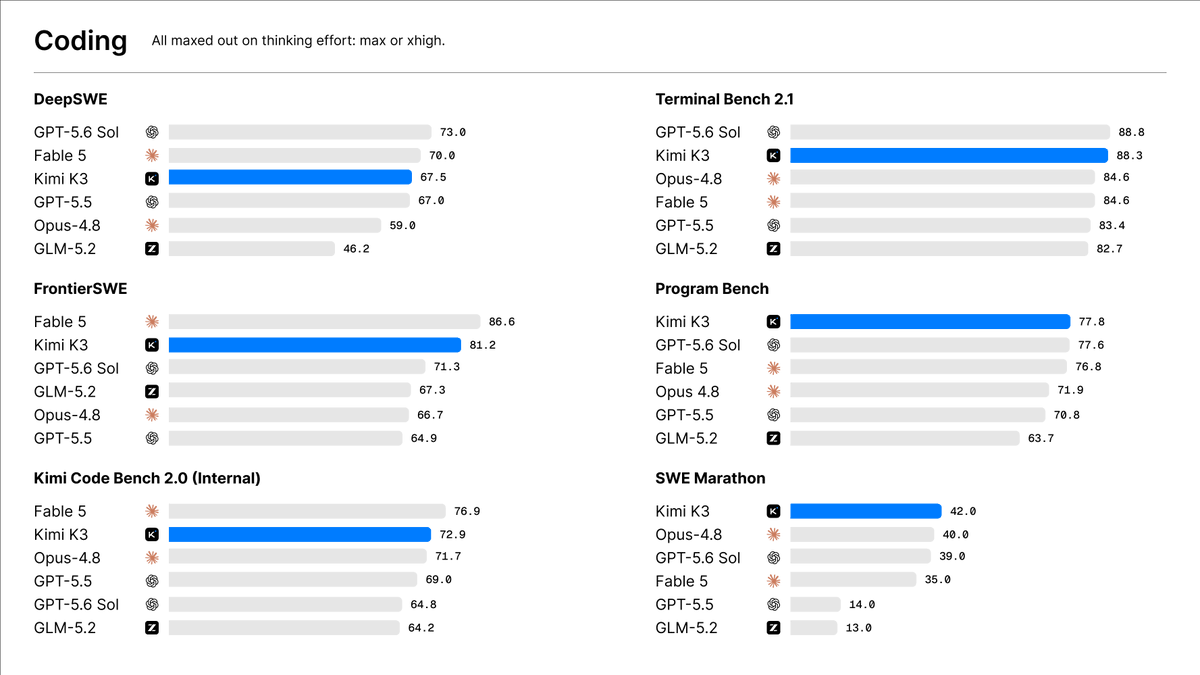
Introducing Kimi K3: Open Frontier Intelligence
🔹 2.8 Trillion Parameters, 1 Million Context, Native Multimodal
🔹 Kimi Delta Attention enables up to 6.3x faster decoding in million-token contexts
🔹 Attention Residuals deliver ~25% higher training efficiency at <2% additional cost
🔹 Built for long-horizon agentic coding and self-evolving workflows
Kimi K3 is now live on on https://t.co/zrk6zZxZUo, Kimi Work, Kimi Code, and the Kimi API.
Open Weights by July 27, 2026.
🔗 API: https://t.co/XCrgjXAqMw
🔗 Tech blog: https://t.co/YTfiMSNM1f
So by the side we spent the last few days re-writing our docs from scratch.
If we’re asking developers to trust our API with their money, the docs aren’t an afterthought anymore, they’re part of the product
And so we are treating them that way
We’ve documented every endpoint, every object, every error, every field. Every example is something you can actually run. Every webhook has a real payload with each field explained. We’ve even added a changelog so silent API changes won’t get you frustrated
Hopefully the docs feel like they’re written by people who actually built and use the API
Would love any feedback
https://t.co/h0Q6xXDf39
Meta made a “minor” release to Muse Spark, there’s nothing minor about it. Lots to parse here:
- This model is so fucking cheap I almost don’t believe it. In practice we see it’s 1/10 the cost of both Fable and GPT 5.5. If you thought OS models would compete away margins, just wait till you see this. It’s somehow cheaper to use MS 1.1 than host your own OS model…
- Coding improvements are significant. This was a real shortcoming in 1.0. But 1.1 sees a ~50% improvement in VibeCodeBench and ~10% improvement in SWE Bench. Not quite SOTA, but at this cost/latency it is still incredibly compelling.
- Speaking of latency, wow this model is fast. Across our benchmarks, we find it to be 1/4 the latency of Opus 4.8 and 1/2 the latency of GPT 5.5. I would expect Meta to have incredible web infra, but really don’t know what witchcraft they’re pulling to host the model for such fast inference at high rate limits.
- There is a public API. This is the first time Meta has released a model through a hosted API. I’m expecting lots of AI natives to hot-swap and rapidly test this model as a replacement. We’ll soon see if it's performant enough for those production uses.
- Speaking of AI natives, it’s been a wild week for Harvey’s legal benchmark. Grok 4.5 held the SOTA position for ~24 hours at 12% before MS 1.1 unseated it with a big jump up to ~20%. I suspect many internal evals will see surprising results like this. Glad to collab with @harvey@gabepereyra@nikogrupen@ItsJulioPereyra on this eval.
- Intelligence is more jagged than ever, even within individual domains like legal and coding. Every application and user benefits from staying dynamic. There an edge in picking the right model/system for each task.