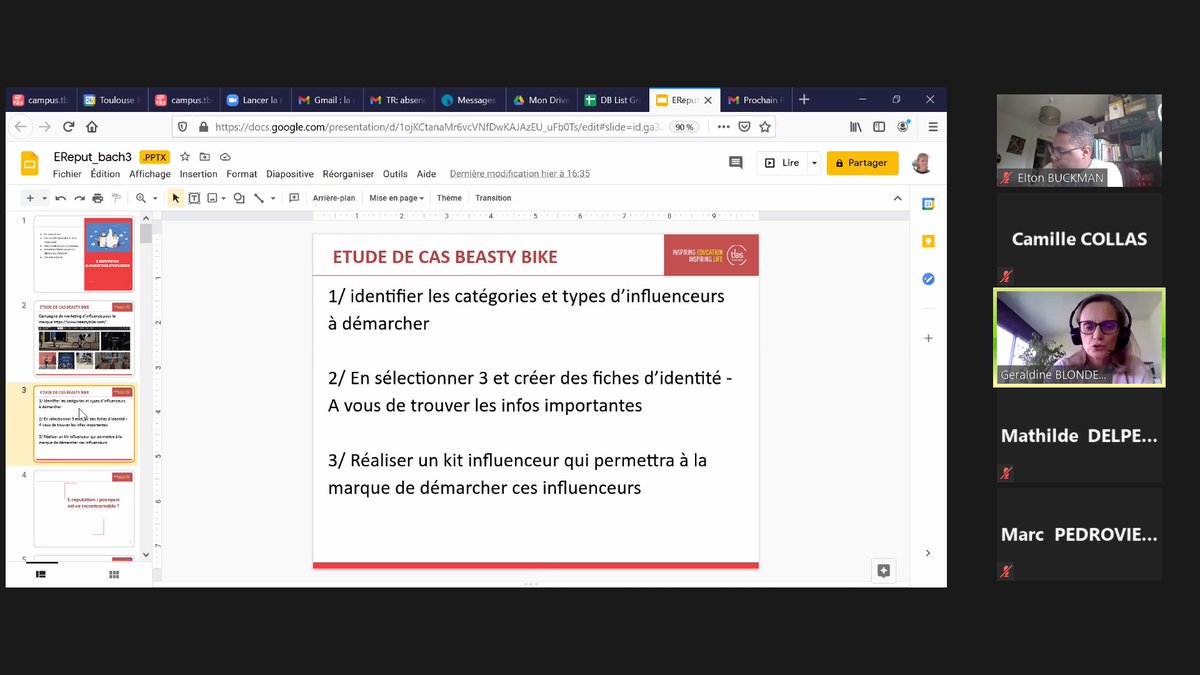
Aujourd'hui, application du dernier cours de e-Réputation
en Community Management, en faisant un TD en groupe. La professeure Madame Géraldine est passée dans les groupes de travail zoom pour donner des conseils personnalisés, ce qui était très appréciable. #dbbach
I agree, the researchers finding that the salience of a stimulus may increase based on the emotional state of the individual. This emphasizes the importance of evaluating the emotional response of an individual when treating reactions.
@lets_NEUROmkt#NMKTRCH#MKTINGNEURO
I agree with this, but the principle of rarity also has its downsides, such as saying that a product is a limited edition when it is not. Just to boost sales of this one. @lets_NEUROmkt#MKTINGNEURO#NMKTRCH
I agree, born of a controversial marriage between neuroscience and advanced marketing, neuromarketing aims to better understand how consumers make decisions through the process of creating emotions. @lets_NEUROmkt#MKTINGNEURO#NMKTRCH
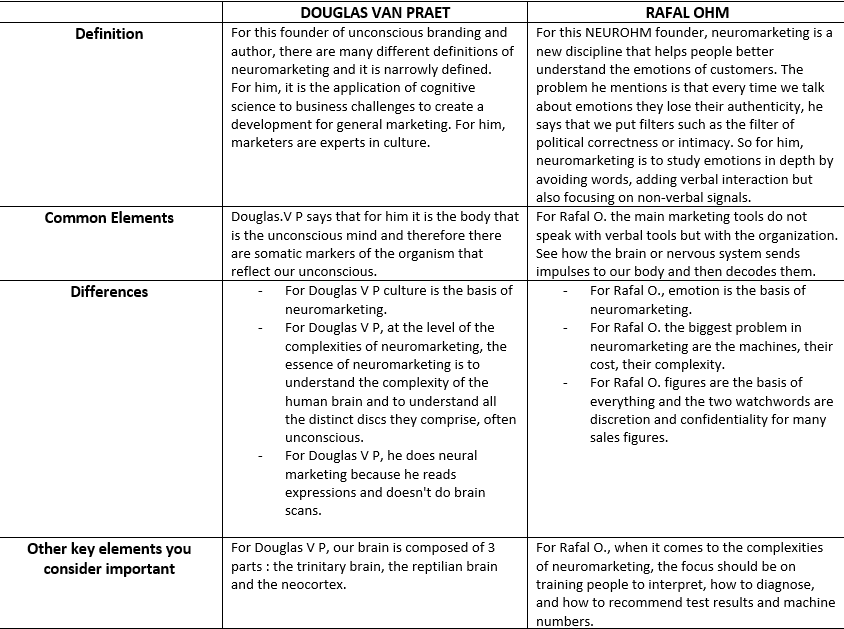
That's right. In fact, according to Douglas Van Praet, the complexity of neuromarketing is to be able to understand these different distinct records. @lets_NEUROmkt#MKTINGNEURO#NMKTRCH
That's true, but we could ask ourselves the question: wouldn't that be an intrusion into the consumer's life? privacy? @lets_NEUROmkt#MKTINGNEURO#NMKTRCH
It is essential to stimulate our 5 senses to create a universe specific to the brand and thus promote the customer's experience and positive emotion.
@lets_NEUROmkt#MKTINGNEURO#NMKTRCH
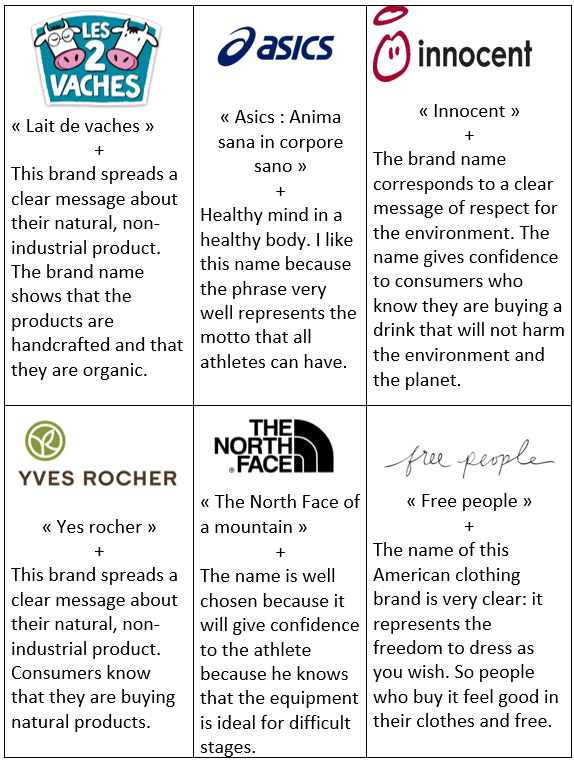
Naming has a real impact on consumers. Let me give you an example the re-branding of “cake” as a “muffin.” None of us would order carrot cake for breakfast, but what about a nice carrot muffin? It sounds like health food.
@lets_NEUROmkt#MKTINGNEURO#NMKTRCH
In the digital age, excess sensory stimulus is a reality. Our ability to process information is limited, forcing our brains to choose which information to process.
@lets_NEUROmkt#MKTINGNEURO#NMKTRCH
Today, thanks to the development of new non-invasive brain imaging technologies and biometric responses, we can understand consumers without them saying or writing a single word.
@lets_NEUROmkt#MKTINGNEURO#NMKTRCH
I was interested in comparing two neuromarketing leaders in order to understand how they work and their different visions: Douglas Van Praet (https://t.co/sWh7C2UGGQ)
and Rafal Ohm (https://t.co/Tjx4zDuBLj). #NMKTRCH#MKTINGNEURO@lets_NEUROmkt@ezbrv_neuromkt
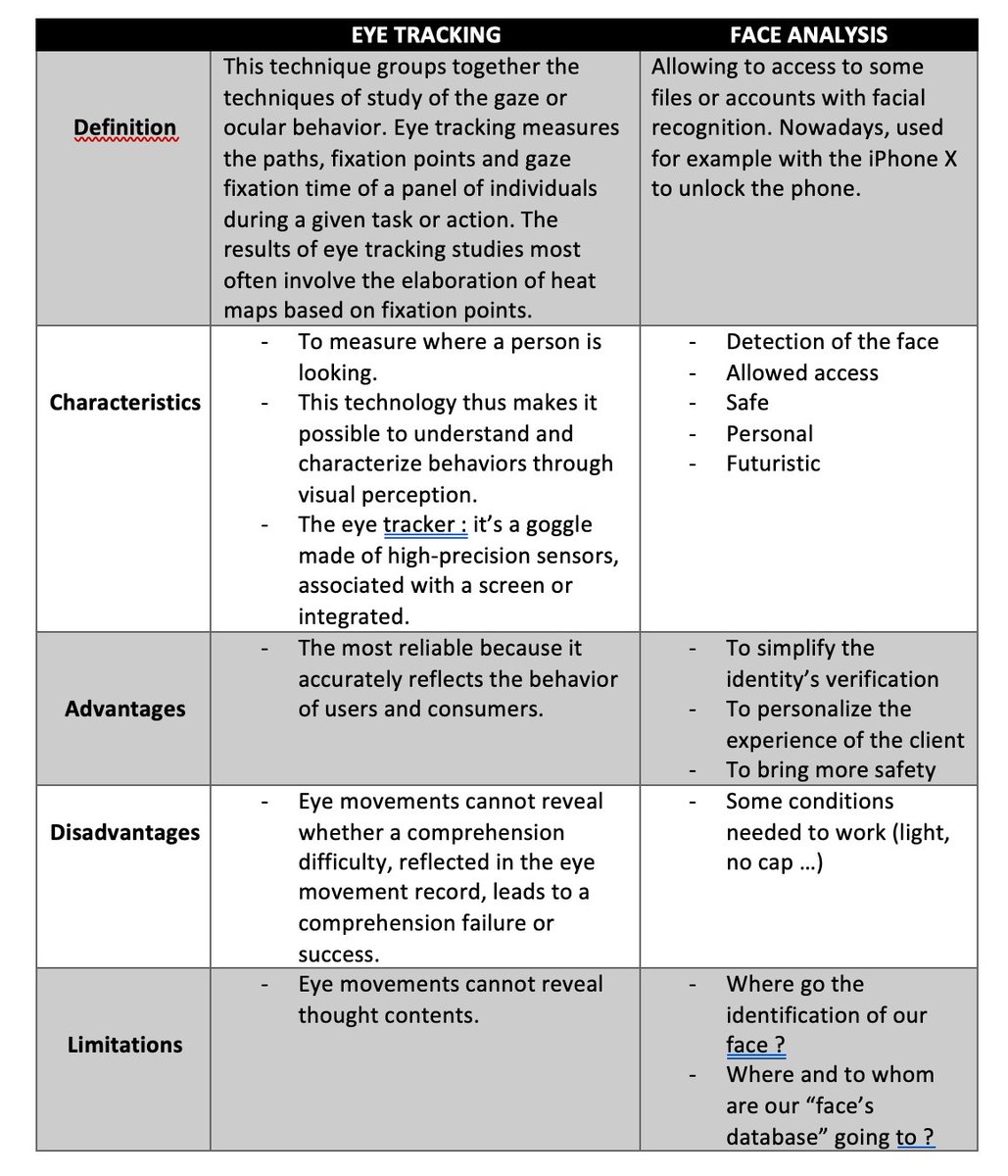
"Eye-tracking" and "Facial analysis" are both neuro-technologies. There are their definition, characteristics, advantages, disadvantages and limitations. @collas_camille@lets_NEUROmkt#NMKTRCH#MKTINGNEURO
Neurotechnology refers to any technology that has a fundamental influence on how the brain and its higher functions, the different aspects of consciousness and thought are understood. Many brands use it to understand how consumers function. #NMKTRCH#MKTINGNEURO ~@lets_NEUROmkt
Thanks to the fMRI, we can now measure brain activity by detecting changes associated with blood flow.
For example our brain will prefer a product packaging with a curve than an angle. It create treat for people, a feeling of insecurity.
#NMKTRCH#MKTINGNEURO@lets_NEUROmkt
Conceptual Consumption show a social status, a way of life, is the opposite of commoditization : you don't recognize the brand. @lets_NEUROmkt#NMKTRCH#MKTINGNEURO
Yes, it's true. New technologies, from smartphones to artificial intelligence, have considerably changed the relationship between brands and consumers. #MKTINGNEURO#NMKTRCH@lets_NEUROmkt
Several concepts are directly linked to the brand. In fact, the majority of brands today are more interested in the psychographic aspects of the consumer than in demographic aspects, such as personality, through, or even lifestyle. @lets_NEUROmkt @manonjobtbs @SaouliSelma