It was a real honor to deliver the Opening Keynote at the Royal Society’s AI & Law Conference last week in London ! Thanks to all of the organizers and fellow speakers for this important dialogue regarding the future of our field. Link to Event Here:
https://t.co/JcfqrS866P
When my first AI book was published in 2024, the best AI could do 4 minutes of human work with a 50% chance of success
When I turned in the draft of Co-Existence earlier this year, it was 17 hours
When it was published two days ago, AI could do 17 weeks https://t.co/ON0qKpJ6LD
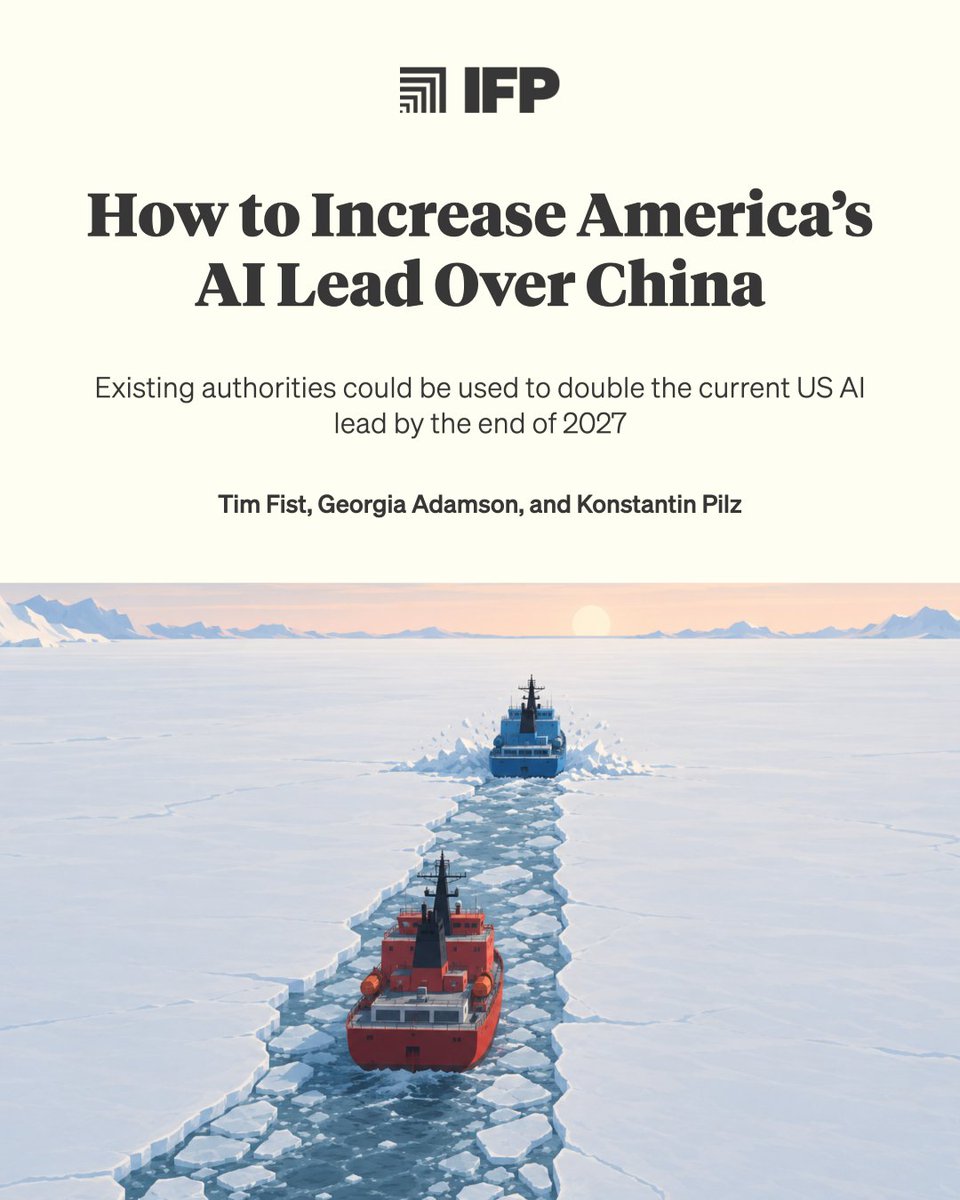
Big new IFP report from @GeorgiaCAdamson, @KonstantinPilz, and me on the US-China AI competition.
We spent the last 6 months digging into how Chinese AI companies’ access to compute and distillation of American models translate into the current US-China capabilities gap.
The result is a 23k-word research report, including an interactive analytical model that visualizes changes in the US AI lead under different policy interventions.
Our findings:
1. The US AI lead over China is currently only around 6 months.
2. The US could roughly double this lead, to over a year, using authorities already available to the federal government.
3. On chips: China’s access to AI chips will roughly double over the next year, with chips housed in data centers overseas accounting for roughly half of China’s 2027 compute.
4. On distillation: the current ~16x US training compute advantage would normally yield a 13-month lead. But we estimate adversarial distillation halves this to around 6.5 months.
5. Increasing the lead would have some obvious benefits:
- Give the US broadly a greater cyberdefensive advantage against Chinese threat actors.
- Give US AI companies breathing room to spend more R&D resources on making their systems safer and more secure, without fear of being overtaken by less safety-conscious Chinese competitors.
6. Provide the US government more leverage in negotiations with China about the future of AI.
7. The two most important interventions are:
- For BIS: Create a new end-use control to restrict China’s remote access to training clusters abroad — China’s largest and fastest-growing source of frontier-scale compute.
- For DOJ/FTC: Create a narrow safe harbor to allow US companies to coordinate on countering Chinese adversarial distillation.
8. Both interventions (and all the others we discuss in the report) are things the federal government could do today.
9. To estimate the effects of each policy intervention, we model the US lead as a function of its compute advantage over China and China’s ability to adversarially distill the capabilities of the US frontier.
10. The model makes many simplifying assumptions, but provides a useful way to assess and rank the impact of different policy interventions at a high level.
Read the full report here: https://t.co/7pC9ZKtikx
Repeat after me: using AI for writing is not cheating. Stop this nonsense. Is it badly written? Say so. The argument is wrong? Say so. The process that produced it is irrelevant.
New: Accenture has told employees it will only fund $29 per month of Claude use. Meaning that employees who often spend as much as $1,000 a month are now scrambling to find ways to keep access to the tool. A sign of the continuing crack down of AI https://t.co/Z2xswuSW5x
interpretability might be the most important scientific problem in the world right now, as I don't think we can solve alignment if we don't know what we're building. I think I have good news about it. I co-authored early work in mechanistic interpretability at OpenAI and came away pessimistic, because neural networks appeared to fold into arbitrary tangled knots. years later, I started openai's first large-scale automated interpretability project, finding about 2% of neurons legible with the primitive tools we had
with modern agentic tools and a much closer look, the picture looks totally different. the vast majority in models up to trillions of parameters are legible, and their circuits beautiful. many famous examples of tangled neurons turned out to be misunderstood. The roadblocks I expected mostly aren't there. I now think ambitious interpretability will be solved by the time we need it most, and possibly quite soon, as automated scientists keep improving. it may be a bitter lesson for interpretability: the simple thing, at absurd scale, works
https://t.co/zHij5zwKGT
It’s getting hard to build good legal evals. So many legal tasks involve judgment and discretion.
I built LegalForecastBench to test frontier models on a high-level legal task with objective ground truth: predicting how judges will decide real motions. https://t.co/5uY9L9oBGx
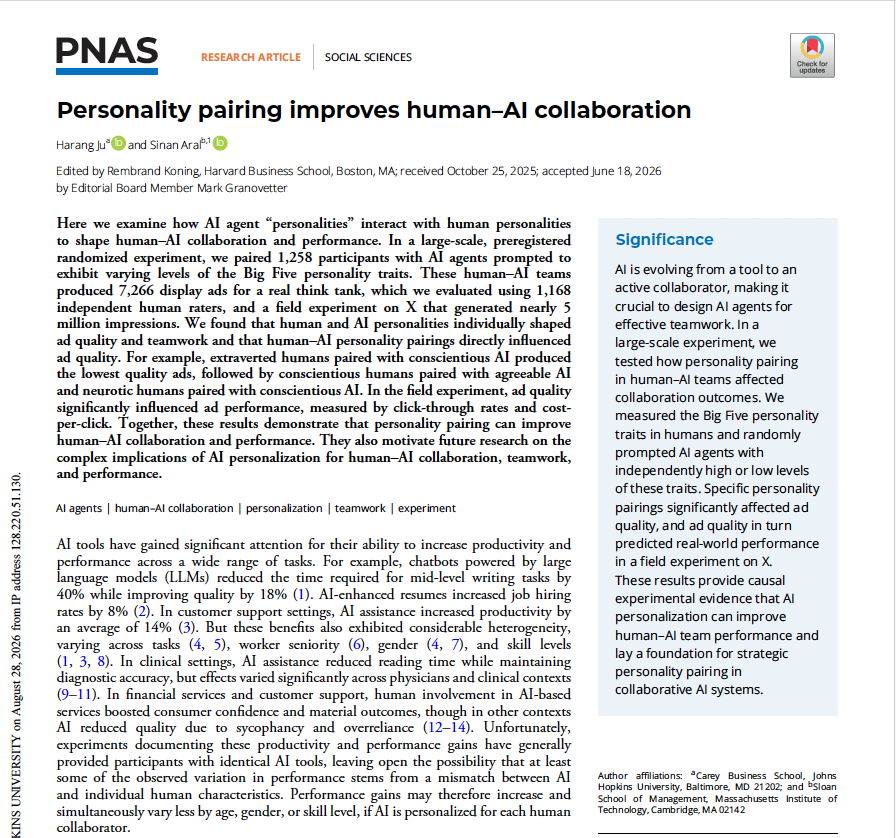
🚨Out now in PNAS! The first ever (we believe) large scale RCT + field experiment on the performance effects of AI Personalization!
🚩 In a preregistered randomized experiment,
🚩 We paired 1,258 participants with AI agents prompted to exhibit varying levels of the Big Five personality traits.
🚩 These human–AI teams produced 7,266 display ads, evaluated by 1,168 human raters, and a field experiment on X with ~5M impressions.
I know an associate in Biglaw who is a top 5 power user of AI at his firm. He’s not just making AI slop, he checks everything that the AI produces and verifies the all citations with actual sources, even though AI gets it correct most of the time these days.
Recently he’s been told by his partner that, he’s “over confident”, that he’s working too fast and that he needs to check his work more, even though the partner could not pick out substantive issues in his drafts.
I told him it’s likely code for: you’re running up a bunch of tokens and costing the firm while affecting my top line since I could normally bill the client twice for this work.
As such, he is now forced to take longer on his work with little substantive impact on the work product while the client gets his bills multiplied.
That’s probably part of the reason why despite the billions that have been invested in legal AI for Biglaw, there is barely any productivity increase and clients don’t see their bills go down by one cent.
I made an animation showing the Top 10 most-cited Supreme Court cases every year since 1792.
It's remarkable how citations (by federal and state courts) have exploded in frequency in the last half century.
We will soon see what will be, in effect, a perfectly legal distributed denial of service attack on customer service departments authorized by millions of consumers when it becomes widely known that Muse/Dot/etc can make unlimited requests for old refunds, negotiate deals, etc.
Had early access to Gemini 4 Argon - so I asked for slides on the AI power bottleneck.
It synthesized 8 years of 10-K filings, FERC queue data across all 6 US grid operators, 17 gigawatt cluster buildouts, and a decade of GPU thermal specs.
And I got this interactive deck 🤯
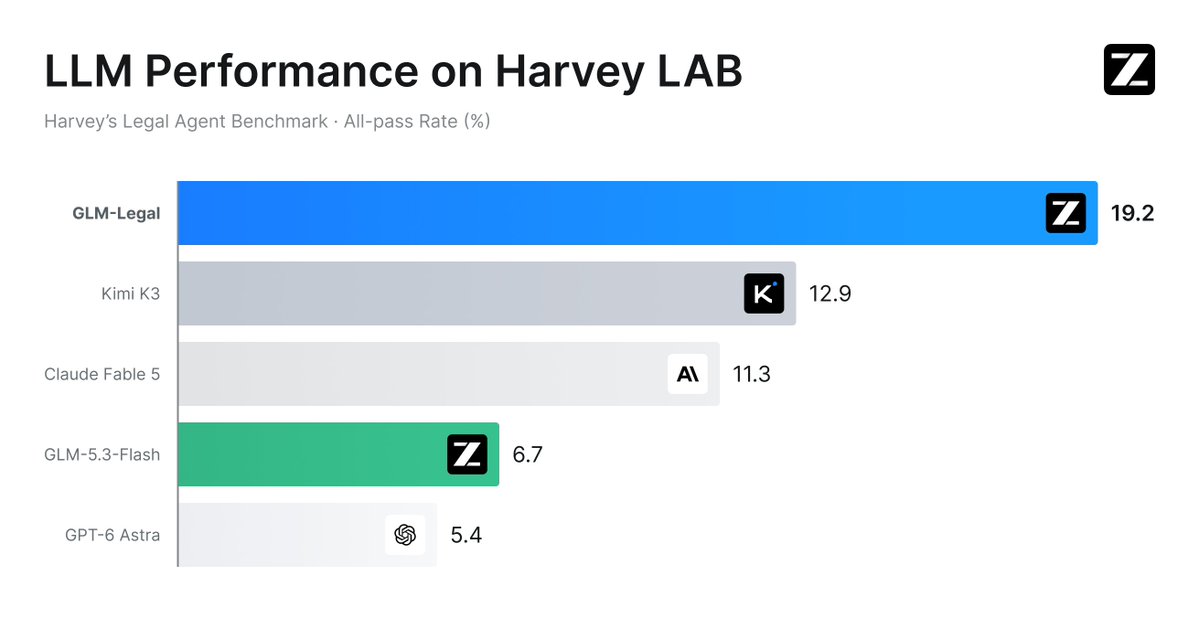
Introducing GLM-Legal
Built on GLM-5.3-Flash, GLM-Legal matches frontier models on mainstream legal benchmarks.
Designed for real legal workflows: contract review, evidence analysis, compliance, and more.
Tech Blog: https://t.co/xOzFqKNyqD
Apply for API Access: https://t.co/dKuoDRIKKz
Try AutoClaw: https://t.co/aGEG5HqTTb
Job Opportunity: Lawyers, come join @AnthropicAI for a 4-month fellowship!!
Law is a field where it’s notoriously hard to define quality, and there’s so much interesting and important work to be done here.
Link here: https://t.co/l7LfbBgURL
The Bitter Lesson for harness design and formal math!
Instead of hand-designing how an AI should prove (decompose, plan, assign agents), what if we just give a frontier model good Lean feedback and let it keep working?
We built h1.
TL;DR:
→ SOTA on formal theorem proving benchmarks
→ can solve open conjectures
→ matches/beats hand-designed workflows
→ one long attempt can beat many retries
[1/7]
NFL legend Mike Ditka, who revolutionized the tight end position before becoming the head coach of the world champion 1985 Bears and a towering figure in the city of Chicago, has passed away, his family announced. He was 86.
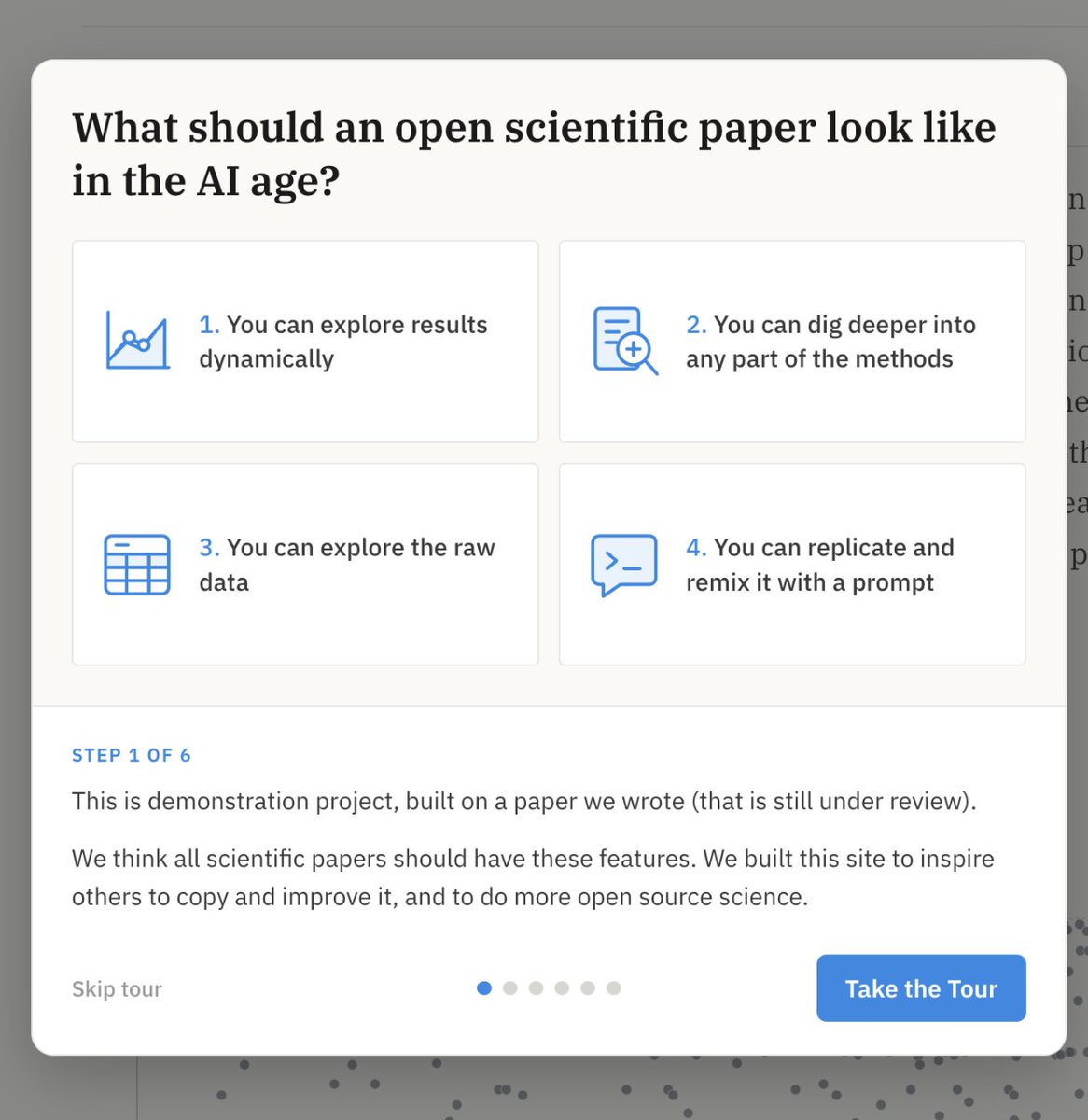
What should an open scientific paper look like in the AI age?
We made a demonstration project out of our paper on the childhood socioeconomic circumstances of the Nobel Laureates.
Please check it out and share. Details in 🧵 1/
*Mathematicians did not ask for this work to be done"
WTF?!! Since when was math something that was only done at the request of professional mathematicians?!!
Mathematicians don't own mathematics! This is crazy!!
This got me curious so I went and found the press release which I highly recommend checking out if you have a few minutes. Never seen one quite like it lol
https://t.co/fH4a9vPMUO










![SkanderMoalla's tweet photo. The Bitter Lesson for harness design and formal math!
Instead of hand-designing how an AI should prove (decompose, plan, assign agents), what if we just give a frontier model good Lean feedback and let it keep working?
We built h1.
TL;DR:
→ SOTA on formal theorem proving benchmarks
→ can solve open conjectures
→ matches/beats hand-designed workflows
→ one long attempt can beat many retries
[1/7]](https://pbs.twimg.com/media/HUcIll4W0AAu6CW.png)