@RoxxysStarrk@WelBeast Many African countries are affected. The U.S. did not give a country-by-country explanation and generally cited concerns about the risk of immigrants becoming a public charge.
Mfumo wa malipo ya uegeshaji si mzuri tofauti na malipo mengine ya serikali.
1. Mtu hajui ni wakati gani ameandikiwa na ni kiasi gani. Hakuna uwazi
2. Mtu hapewi taarifa anadaiwa kiasi gani. Km idara ya maji inatoa taarifa kila mwanzo wa mwezi na kuacha siku kadhaa mtu alipe
Project was stalling for the last three weeks unnecessarily. Constant conflicts, attitudes, and drama around. We let the girls take all the work trips that came. We are submitting the task tomorrow morning. AS SCHEDULED. Can’t do shit with hormones flying around like bullets.
"You're asking me how a watch works... for now, let's just keep an eye on the time."
It's a great line because it's not really about watches.
On the surface, she's asking for a detailed explanation of something really complex. His response is essentially:
"The explanation is complicated, and understanding every mechanism isn't necessary right now. Focus on the outcome, not the internals."
The watch metaphor works because everyone understands the difference between:
- Knowing what time it is.
- Knowing how a watch actually works.
Most people can use a watch perfectly well without understanding gears, escapements, balance wheels, or quartz crystals.
For young people, apprentices, junior engineers, new managers, or anyone entering a new field, there's a deeper lesson:
- Expertise comes in layers
When you're new, you often want the entire mental model immediately.
You ask:
- Why are we doing it this way?
- What does every part do?
- What are all the dependencies?
- What happens under every possible condition?
Those are good questions. But sometimes the answer would require six months of background knowledge to make sense. It's great to be curious, as long as sometimes you're willing to accept that the answer is "I can't explain it all to you right now."
An experienced person may effectively be saying:
"You're asking a valid question, but you're asking it several chapters before the book has introduced the necessary concepts."
That can be hard when you're young and driven!
Nakubaliana na namna ulivyopanua angle ya kujadili the problem as a whole, ila tunaposema “civilization” kuwa tatizo we need to agree kwamba tatizo ni wanaposwa kuhakikisha civilization inakuwa in place.
We can’t obtain civilization ikiwa uchumi wa mtu mmoja mmoja ni duni. Masikini hana ustaarabu hilo lisiwe gumu kueleweka.
Mfano:-
-Kuna watu wanategemea kuokota scraps (makopo na vyuma chakavu) ili waishi, maana yake kutupa taka inaonwa kuwa uwezeshaji wa ndg zetu wanategemea hilo.
-Kuna wanaotegemea kufua nguo zao kwenye maji yanayopita kwenye open drainage system pembezoni mwa barabara, kwa hivyo wahandisi wa hilo eneo na mamlaka wanaona ni vizuri kuacha open drainage ili kuwapa watu unafuu wa kupata maji japo ya kufulia au kumwagilia bustani.
-Na mwisho kuna wanaotegemea kupiga debe na kuendesha daladala, bajaji, na boda, maana yake policy makers wanaona hizo ni fursa za kijamii watu kupata kipato hasa kwa nchi zetu (tunajiita masikini) maana tukivoresha miundombinu ya umma hilo kundi 2-3M watadolola.
The list goes on and on, ukiangalia kwa hamasa utadhani tatizo ni KUSTAARABUKA per se, lakini ukiangalia kwa udadishi ndipo unagundua vizuri kuwa tatizo ni Complacency na unufaika wa kibinafsi wa kikundi kidogo cha wanaopswa kuhamasisha/kuchochea ustaarabu through “economic empowerment” kwa jamii wote.
Kundi la waendesha bajaji, boda na daladala walipaswa wawe workforce viwandani, tech hub, mashambani na sekta zingine zenye kuchochea generational talent and skills.
Kiini cha tatizo (IMO) ni “Complacency” ya tabaka la uongozi toka ngazi zote za jamii yetu.
I'm not sure whether ride-hailing becoming a primary source of income is good news or alarming. I have three reasons to think it's the latter.
Kwanza: A gig economy can't be a primary income for this many people. These riders didn't choose ride-hailing over manufacturing or a salaried job. They chose it over nothing.
In Swahili we call it Kujishikiza.
It's also why you'll rarely meet a happy Bolt driver. Work done by choice doesn't produce this much grievance. This much grievance comes from people with no other door.
Pili: Ride-hailing compounds nothing. Productive work leaves something behind such as a skill, a customer base, a firm, an asset.
You cannot scale a driver's seat.
And as the LATRA official noted, most drivers don't even own the vehicle. So by forty, a rider owns no more than he did at twenty, while younger, hungrier riders flood the same roads and pull his fares down.
Tatu: This income is structurally male. Even as a survival economy, it reaches half the young and turns the other half away at the door.
Africa's demographic dividend was never supposed to be cashed this way. The promise of a young population was meant to pay out in things that compound: factories, value addition, logistics that move real goods, output a country can sell beyond its borders.
A young population is only a dividend if the economy can productively deploy it. Right now we're letting it run in neutral and calling the idling progress.
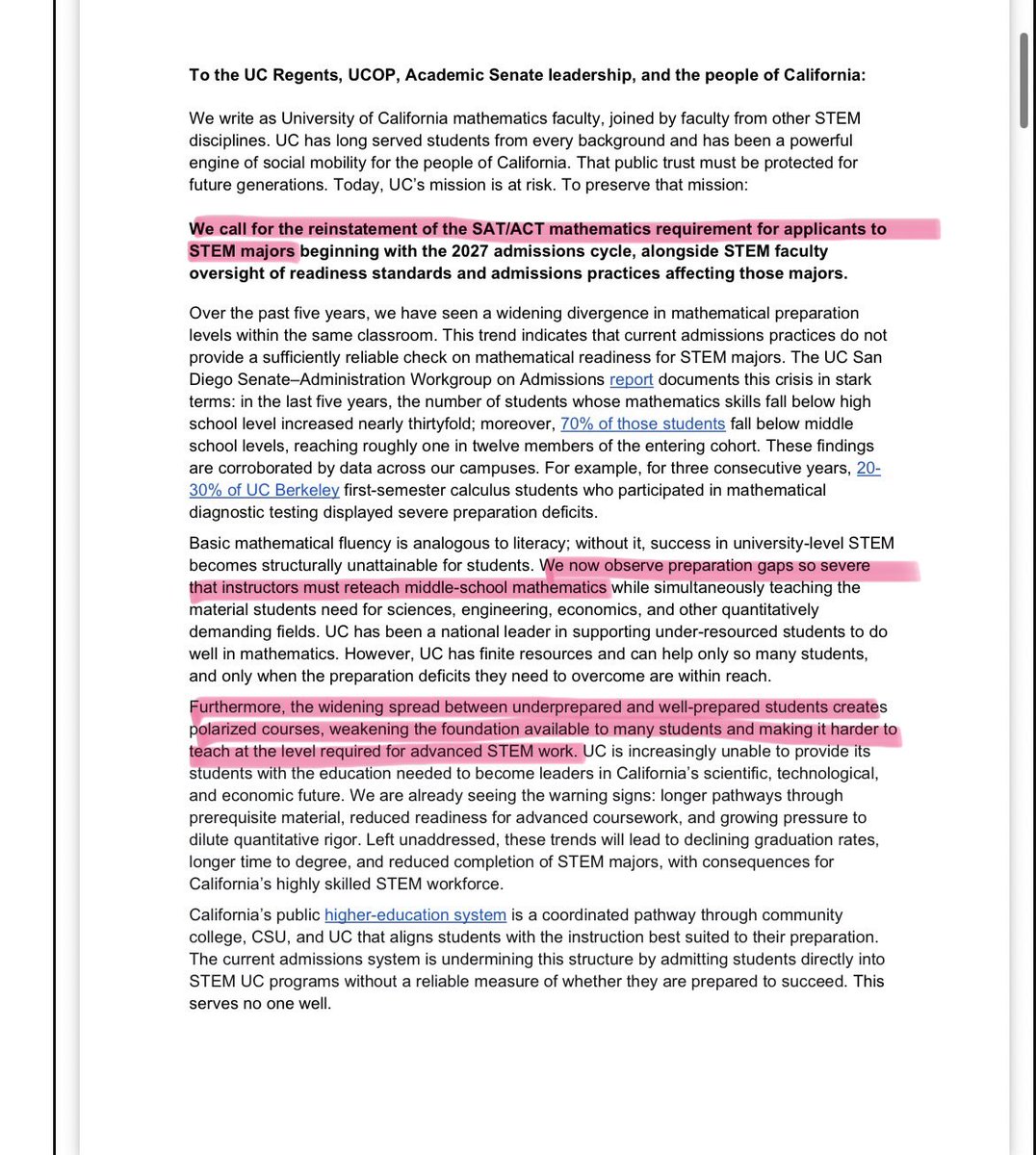
University of California STEM professors want standardized tests back due to severe math deficiencies among students:
“We now observe preparation gaps so severe that instructors must reteach middle school mathematics”
“The current admissions metric, based primarily on GPA & essays, can no longer reliably distinguish readiness for university-level STEM majors in an era of severe grade inflation & AI assisted application essays”
I’m excited to announce that NALA has secured a $50M facility from LIQUIDITY and MUFG-backed Mars Growth Capital 🚀
Over the past year, demand for faster, compliant global stablecoin payments infrastructure has accelerated significantly across the US, Europe, Africa, and Asia.
As we’ve scaled, we’ve continued investing deeply in regulation, infrastructure, and gross profit margins:
- 17 regulatory approvals and licenses globally, making NALA one of the most licensed fintechs at our stage. (we just got a new license yesterday!)
- Nearly 50% of capital from our last fundraise still in the bank
- Consumer business reached 64% gross profit margins last month
- Rafiki, our B2B infrastructure business, reached 80% gross profit margins
- Signed some of the largest banks and global remittance companies, including MoneyGram who are live customers. (some major new ones will be announced soon!)
This facility gives us the ability to continue scaling our global payments infrastructure with long-term alignment and flexibility as demand continues to grow.
The next era of payments will be real-time, programmable, and borderless.
I’ve never been more excited about where NALA will be in the next 24 months.
we've got some big plans and we’re just getting started.
Building Payments for #TheNextBillion ⚡️
The sheer audacity to call our own people “corn-fed idiots”. You come to our country, when we’re still living in pain from the atrocities of October 29th to call us names? Gerrarahia with that investigative nonsense 👎🏾
Lmao!
Gratuity is a stupid American culture. It shouldn't be mandatory or expected, rather courteous. It is an outcome of rewarding exceptionality. Your job is to pay for the services rendered. The service provider needs to pay their employees accordingly and not rely on tips.
Hebu tuvuke zama za kugeneralise kwa makundi. Itatuepusha na vitu vingi. Kuhukumu kikundi kizima kwa sifa moja (iwe nzuri au mbaya) kunatupofusha tusiwaone watu kama walivyo, na wakati mwingine kunatengeneza matarajio yasiyo ya kweli au ubaguzi usio na lazima.