In these #COVID__19 times, many people are worried about #bats, leading to persecutions. There has been amazing online #scicomm to battle misinformation but what about local communities? Meet Rohit Chakravarty, @paintedbat, a bat researcher from #India: https://t.co/igzPp2lVwu
We added 13 publications to our Human-Wildlife Conflict and Coexistence Library in December, covering the effectiveness of community-based livestock protection strategies, to prioritisation of public outreach and management during carnivore recolonisation.
https://t.co/2oT4xqA4qa
🔴New webinar series
Join the @FAO and @hwctf for a webinar on key aspects of community engagement processes and ethics of engagement via a discussion of three case studies from Guyana, India, and Tanzania. 🇬🇾 🇮🇳🇹🇿
📅14 December 14.00 CET
Register here ⬇️ https://t.co/YbfzNkWQHC
New paper in @FrontConservSci highlighting how ecological effectiveness and social acceptability contribute to the social effectiveness of a given livestock protection tool and determine adoption with livestock producers. https://t.co/fcvI7LsJu1
Slight rant on World Lion Day! As field conservationists, we have to recognise many complex realities. We also understand how crucial & central local communities are for #lion#conservation. I sometimes forget just how disconnected many people are from those realities (1/7)
An Animal Rights (AR) and Animal Welfare (AW) thread.
Discussions on Twitter between conservationists and people who call themselves Animal Rights Activists (ARAs) can sometimes be confusing when both AR and AW are involved.
1/
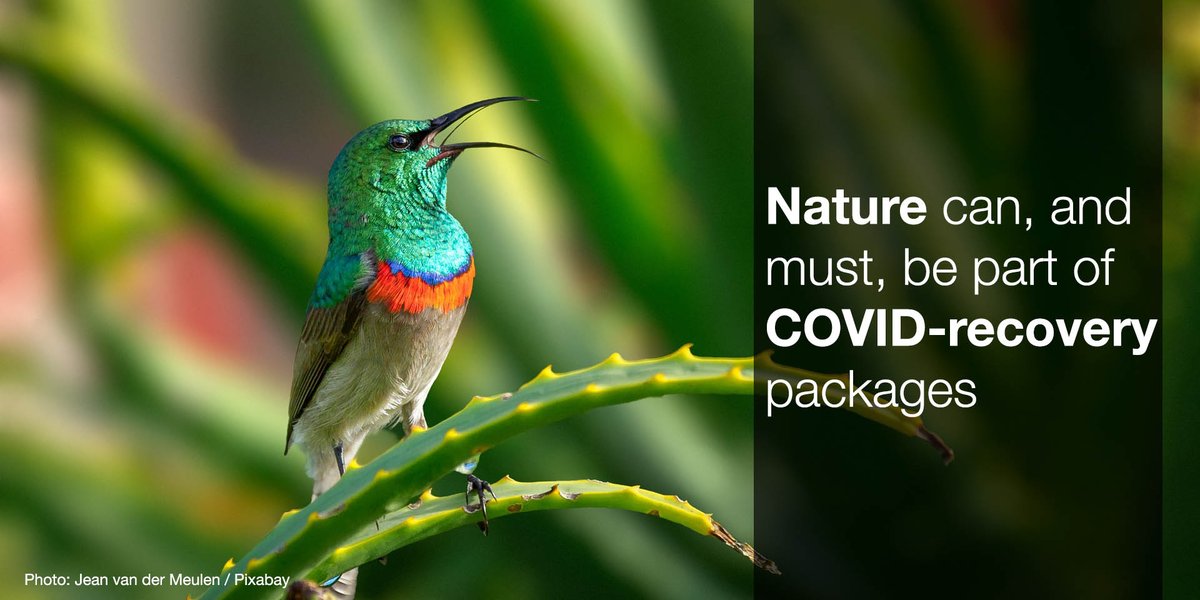
"Over half (55%) of global GDP depends on healthy ecosystems but unsustainable economic activity is driving #nature loss faster than ever before." #NatureBasedSolutions#COVID19
Done properly, investing in #NatureBasedSolutions can create jobs, fight climate change and aid economic recovery from the #pandemic.
Our Issues Brief on Nature-based Recovery explains https://t.co/hW064TN2Bl
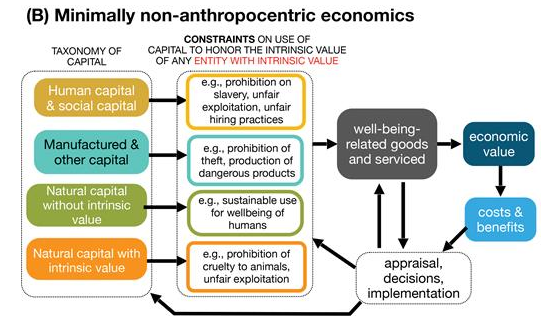
New paper with Vucetich et al. considers how the intrinsic value of nature could be incorporated into a less anthropocentric economic framework with benefits to biodiversity conservation https://t.co/KL6E0KPYG7
We need to take #conservation to scale in order to #restorenature, but how to do it? Learning lessons from largescale #development interventions might help. New paper led by @henry_travers & funded by @oxford_GCRF shows how (free link: https://t.co/kRvuker3uT)
A wonderful application of behavioral insights to #conservation! The authors show that providing mammalian predators with sensory misinformation (avian odor cues) can reduce their impact on vulnerable #bird populations as effectively as lethal control. https://t.co/gP4yRiBuOm
"Officials said nearly 90% of hunters used dogs to chase down the animals, & that fresh snow helped them track the wolves. Since the hunt occurred during breeding season, pregnant females were almost certainly among the dead. Forty-six percent of the animals killed were female"
🐺😢This is not sustainable management. This is not a legitimate recreational activity. This is unfettered ecosystem destabilisation. Sad to say some of the individual #wolves I studied and experienced in the wild were probably among the victims
https://t.co/ob9CJOmjgF
@AWIOnline
A popular article that provides some of the context surrounding the #humanelephant conflict in Namibia, which the government tried to solve by offering 170 #elephants on auction at the end of last year. https://t.co/hLh1HE799s #ConservationNamibia
NEW paper. Many of us love #cats. There is just this one aspect of their behavior, or actually the consequences of this behavior, that we should not be facilitating. It turns out that not only birds but also #bats fall victim. A review of the evidence.
Who knows, who cares? New #OpenAccess study out today from @KasiaMiko and colleagues explores the link between knowledge of birds and nature connection among Amazonian farmers
https://t.co/C2VXzfbKK8
https://t.co/caO78qkCdS