On Saturday, after nearly a century, the long-wave transmitter at Droitwich fell silent, and the two old masts at Westerglen and Burghead with it. Most people won't have noticed. But something left the country on Saturday worth marking before it slips out of memory as well as off the air: the Shipping Forecast, in the form millions have grown up with, one of the primi among British institutions, read out on long wave to the fishing fleets and the insomniacs and anyone else still awake at the rim of the day.
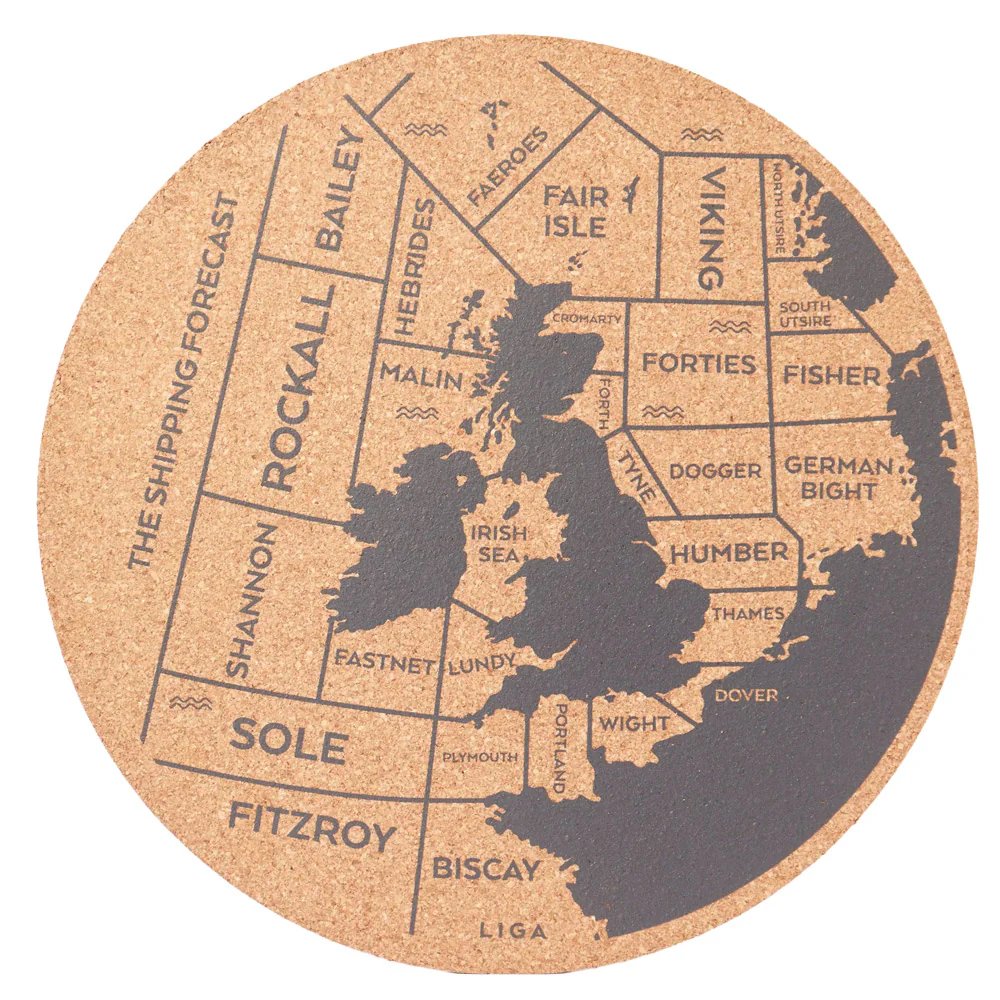
If you've ever heard it, you know the odd power of the thing. "Viking, North Utsire, South Utsire, Forties, Cromarty" - a litany of sea areas most listeners will never lay eyes on, in a cadence that hasn't altered in generations, read with the calm of a voice that assumes you are out there somewhere in the dark and means to see you home. It carried far more than the weather. It was among the last things the whole of Britain still heard at the same hour: the same words, the same rhythm, meaning the same thing to a trawlerman off Rockall and a sleepless accountant in Surrey. A aesthetic paradigm of our culture; supreme utility and sublime superfluity. A country that now shares almost nothing in common still shared that.
And there's a stranger fact again, one that lifts the whole business clear of nostalgia. By long-standing account, the Royal Navy's nuclear-missile submarines, hidden somewhere beneath the Atlantic with the nation's last deterrent aboard, used Radio 4 on long wave as one of their signs of life from home. If the broadcasts kept coming, Britain was still there. If they ever stopped, and stayed stopped, the commander was to open the sealed letter the Prime Minister had written out by hand, and learn what his country wished of him in a world that no longer contained it. The same mild signal that told a fisherman the wind in Dogger was, by that account, a pulse the end of the world would have been measured against.
It is fitting, and bleak, that a broadcaster which has spent years forgetting who it was ever for should choose this, of all things, to switch off. The BBC never seems short of money for the things it wants to do. It decided the cost of the old signal was no longer worth bearing, and silenced the one transmission that asked nothing of anybody and reassured everybody. The fishermen, the old, the sleepless, the men under the sea - none of them were an audience it cared to keep.
The forecast itself survives in other forms, on other frequencies; this is not the end of it. But the signal that carried it for a hundred years, and the idea it quietly stood for - that a nation is a thing held together by small shared rituals, faithfully kept, that ask nothing and bind everyone - that has fallen silent, and it fell without a fight. We let these things go one at a time, each too small to defend on its own, until we glance up and find there is nothing left that we all still do together.
How many more will we let go?
How many more will you let go?
You know, it’s funny when people hear that Pope Leo XIV has a math degree, taught physics, and wrote a thesis on monastic leadership, they act like it's some wild plot twist. The Catholic Church has always been low-key obsessed with education. I mean, did you know nearly every pope since the Renaissance has had a PhD? Benedict XVI had five. Cardinals today basically need doctorate-level expertise to even get a seat at the table. Leo XIV isn't an outlier; he's following a 2,000-year-old playbook where faith and reason are BFFs. This is the same institution that gave us the Big Bang theory (thanks to a Jesuit priest, Georges Lemaître) and the guy who invented genetics (shoutout to Gregor Mendel, the pea-plant-obsessed Augustinian friar). Yet somehow, we still think of the Church as just incense and hymns.
The Church's duality; defending doctrinal tradition while pioneering intellectual frontiers, is its defining paradox. Consider the Vatican's astronomical observatory, which has operated since 1582, or the Pontifical Academy of Sciences, which has included members like Hawking and Einstein.
Let's break it down. Those monks and nuns you picture copying manuscripts in candlelit monasteries? They weren't just praying, they were preserving ancient Greek philosophy, advancing math, and basically saving Western civilisation during the Dark Ages. Fast-forward to today, and the Vatican still runs its own space telescope (yes, really, Jesuit brothers track asteroids). The Chúrch condemned Galileo, sure, but now it funds ethical stem-cell research and partners with IBM on AI ethics. It's like the ultimate comeback story: "Oops, we messed up on heliocentrism; here's a think tank on quantum physics."
And let's talk about those religious orders. Jesuits? They basically invented the modern university system. The Jesuits founded in 1540, by a chap called Ignatius Loyala, (half monk, half soldier) ran over 800 universities globally. Franciscans gave us Occam's Razor; you know, that "simplest explanation is best" rule you learned in science class? That came from a 14th-century friar who loved logic more than the Pope loved his fancy hat. The Dominicans had Thomas Aquinas, who merged Aristotle's philosophy with theology. Augustinians, Leo XIV's crew, were all about community and critical thinking, traits he took to Peru, where he spent 20 years teaching in slums while quietly holding dual citizenship. The guy's got more layers than a medieval manuscript.
But here's the upper-cut: the Church thrives on this weird paradox. It's conservative enough to make your grandma nod approvingly ("No women priests? Classic.") but progressive enough to have a Pope who trash-talks eco deniers and slams border politics. Leo XIV fits right in; he's a Republican primary voter who also called Trump's family separations "illicit," a social media critic who warns bishops not to be divisive online. It's like the Church says, "We'll debate evolution with Darwinians by day and chant Latin psalms by night and we'll look good doing both."
So next time someone acts shocked that a pope knows quantum physics or tweets about refugees, just smile. The Catholic Church has been playing 4D chess with knowledge for centuries. It's not a relic; it's a living library, where friars argue about black holes over breakfast and nuns run coding bootcamps. Leo XIV? He's just the latest chapter in a story where faith doesn't fear science…It fuels it.
G.K. Chesterton in 1936 noticed and explained this subject that has been raging on Twitter for years: "It is far more impossible for us to build a Gothic abbey than a Roman aqueduct. The engineering work of the pagan empire does in many ways resemble the works of more modern times. It resembles them largely because the method is scientific. It resembles them still more because the labour is servile. You could build a Roman aqueduct and improve on a Roman aqueduct with scientific appliances. But you cannot build a Gothic cathedral with servile labour. People who want to work in that way must put up with the Pyramids and the Eiffel Tower."
William Clouston on the relationship between mass immigration and the housing crisis, how diversity destroys public trust, and how assimilation is a fantasy.
Watch a preview here: https://t.co/ClaaLrL3lP
And watch the full thing a https://t.co/K0klsh6diR!
“Accident of birth” doesn’t guarantee the right to make laws, but cronyism and political donations do? Huh.
What an awful direction this country is going in.
Catholics right now could learn a few things from Venerable Fulton Sheen. Fulton Sheen was right when he talked about society, including Catholics, increasingly embracing false compassion(showing more pity for the murderer instead the child who was murdered).
The amateurs blame the Versailles peace.
The wise blame the French Revolution.
The enlightened blame the American rebellion.
The insightful blame the Thirty Years War.
The honest blame the 'Reformation'.
A great tragedy of the Reformation was the decline of monastic life.
In England, for example, Henry VIII shut down hundreds of monasteries, displacing ~7,000 monks and nuns.
Western monasticism still hasn't recovered...🧵 (thread)
CORRECTION
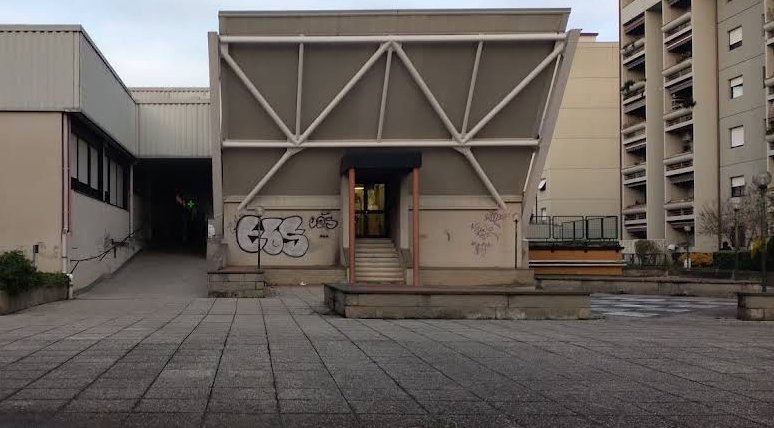
Face value: Looks like news. Beautiful skyline of Florence. Inflammatory commentary.
Reality: in 2017 a dingy modernist office block, in a suburb far from Florence city, was sold and repurposed.
Not recent or representative or significant.
https://t.co/ZU5NppVDOd
No excuse
This is AWFUL planning by senior commanders and MOD. They knew about this for years but chose not to do anything about it.
Where is the accountability?
Hereditary peers are the most hardworking of the Lords, as their electorate is their ancestors & the nation. They owe no politician anything & cannot be bought off like the modern peers of "Tony's Cronies" vintage. The King should exercise the veto unused since 1708.
“That noble northern spirit, a supreme contribution to Europe, which I have ever loved, and tried to present in its true light. Nowhere, incidentally, was it nobler than in England, nor more early sanctified and Christianized.”
J.R.R. Tolkien