I went to church and prayed for healing from Jesus Christ. I don’t know if I’m crazy but I felt the hair on my head being touched in a circle. Like someone made a circle on my head I could actually feel the hair on my head move and it sent chills on my whole body,but not chills though it was warm. I hope I’m not crazy I’m feeling pretty good after that. Thanks for your prayers if I got a blessing from Jesus or the Holy Spirit it because you are all praying for me. Thank you so much 🙏🏻🙏🏻🙏🏻✝️❤️
GERMANY 🇩🇪
The Vatican is officially investigating alleged apparitions of the Blessed Virgin Mary and the Child Jesus in Germany
The apparitions started in the early 2000s in Sievernich and in the past decade have allegedly predicted events such as the Notre Dame Fire and the Russian invasion of Ukraine as well as the issues in the Catholic Church in Germany
The sudden death of Lindsey Graham can be the black mark sent to Trump. I doubt it were Iranians. Most realistic it was Mossad job in order to push Trump to renew full scale war with Iran. It clearly means “you are the next”. Lindsey Graham was the shadow of Trump, his black self
I’m in a German beer garden in Texas and I can safely say I have never ever seen this many beers on tap, anywhere, ever.
Obviously went for a Texan local beer
Haaland bought a rare manuscript that tells the story of Norway and their eventual conversion to Catholicism.
He bought the Heimskringla saga for 1.3 million Norwegian kroner (around £100,000 / $134,000) and donated it to his hometown library.
Written by the medieval Icelandic scholar Snorri Sturluson, the manuscript is a foundational text detailing the history and legends of Norway’s early Norse kings.
It includes the reign of King Olav Haraldsson (St. Olav), the monarch who historically solidified Norway’s conversion to Christianity
FUN FACT: Apparently Erling Haaland lives off of a diet of sourdough bread, raw milk, coffee, maple syrup, eggs, honey, steaks, potatoes, asparagus, and bearnaise sauce. Delicious.
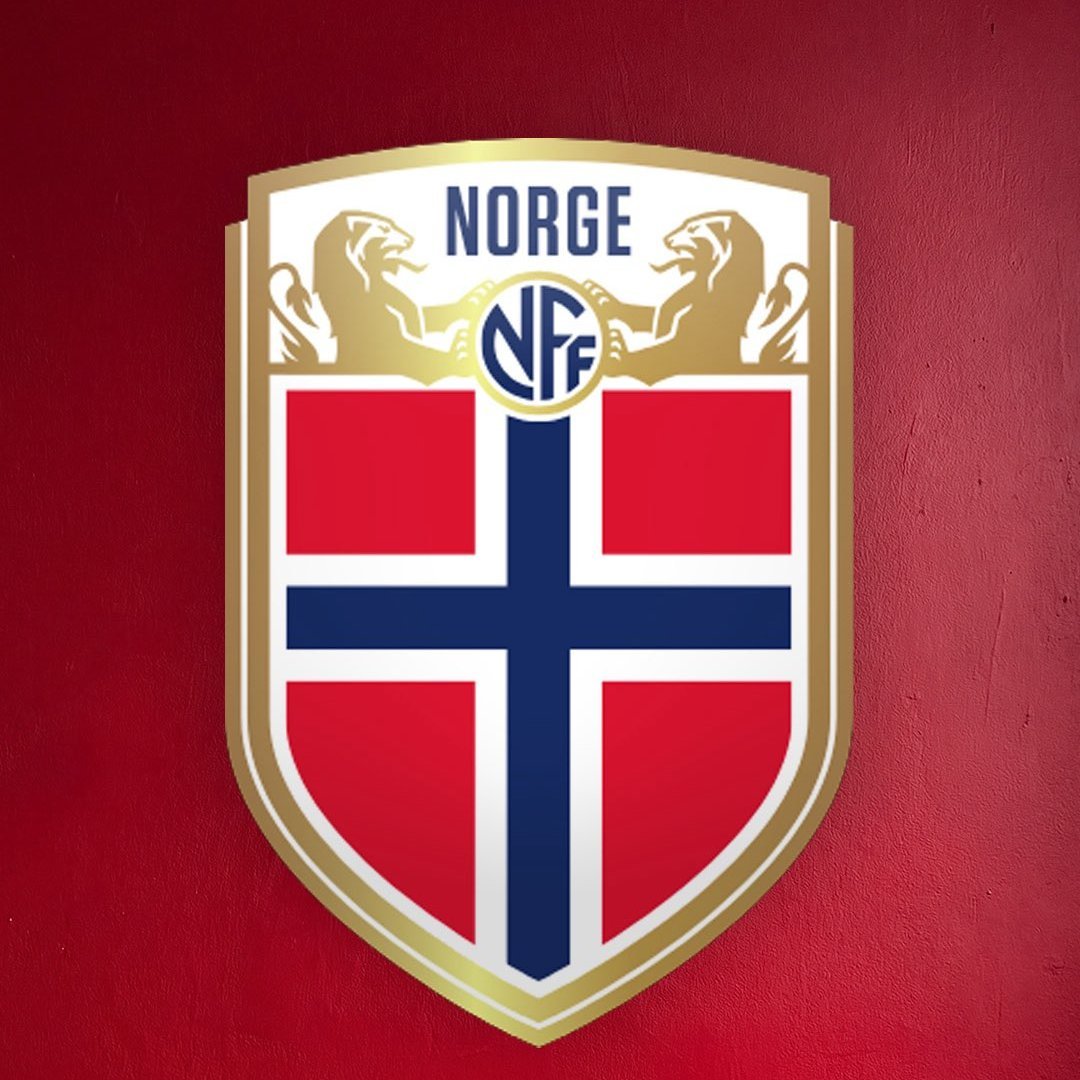
Norway's world Cup Kit carries a Christian Cross and inside of the blue cross a pattern taken from the wood carvings of the Urnes Stave Church built in 1130.
W Norway 🇳🇴 ✝️
For those who don’t know: General absolution is a rare sacramental practice, primarily in the Catholic Church, in which a priest forgives a group's sins simultaneously without requiring individuals to confess their sins privately. It is reserved for extreme emergencies, such as an imminent danger of death or a critical lack of confessors.
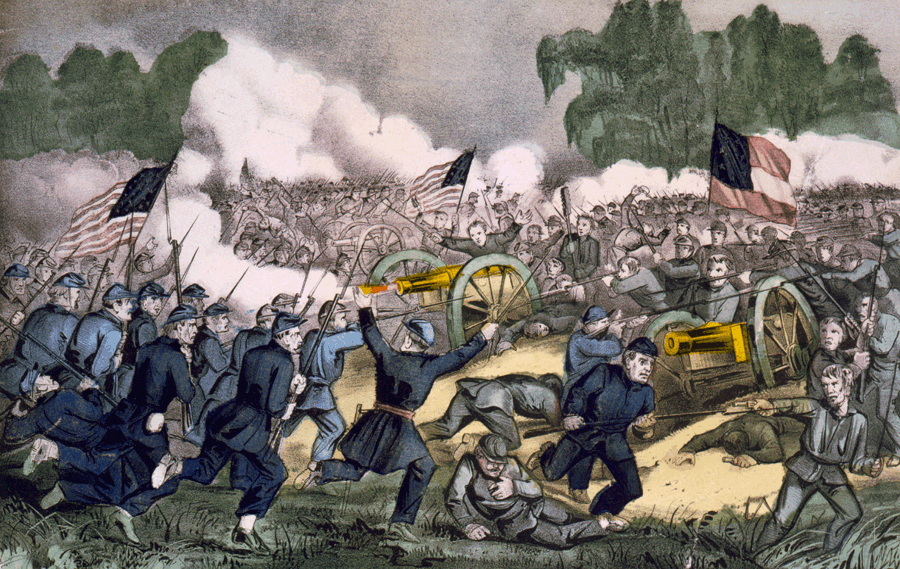
On this day in 1863, the second day at Gettysburg turned a handful of quiet Pennsylvania farm fields into names that still make people flinch, and for a few hours it looked like the whole Union army might come apart at once.
Start with the mood that morning. Day one had gone the Confederacy's way, and Lee smelled a chance to win the war outright. His most trusted general, James Longstreet, disagreed hard. Longstreet wanted to slide around the Union army and pick better ground, and he said so bluntly. Lee overruled him. So Longstreet spent the morning and half the afternoon dragging his men on a long, hot, roundabout march to get into position, sulking the whole way, and the attack that could have come at dawn didn't land until the day was half gone. That delay would matter.
When it finally hit, it didn't hit in one place. Lee's idea was to smash both ends of the Union line at the same time and pray something snapped. So the fighting exploded all along that fishhook of hills at once, and every stretch of ground got its own private horror.
There was the Wheatfield, a little patch of a farmer's crop that changed hands so many times through the afternoon that nobody could keep count. Union troops would clear it, Confederates would take it back, over and over, until the wounded lay in rows getting trampled by the next charge and the wheat itself was mashed flat into a red paste. The men who survived it called it a whirlpool, because it just sucked in fresh regiments and swallowed them.
There was the Peach Orchard, and that one was a self inflicted wound. A Union general named Dan Sickles, a political appointee with more nerve than sense, decided on his own hook that he didn't like the ground he'd been assigned. So without telling anyone in charge, he marched his entire corps way out forward into the orchard, sticking out from the rest of the army like a broken finger. It created a weak, exposed angle where there had been a solid line. When Longstreet's assault crashed into it, Sickles' corps got shattered, and Sickles himself had a leg torn off by a cannonball. He kept the bone. Later donated it to a museum and used to go visit it.
There was Devil's Den, a wild jumble of boulders as big as houses, where the fighting broke down into something ancient and personal, men firing at each other from behind rocks a few feet apart, hunting one another through the crevices. And up above it loomed Little Round Top, the bare hill at the very end of the Union line, where a professor turned colonel and his Maine regiment held the flank with empty rifles and a downhill bayonet charge that has been retold a thousand times since.
But the moment that should have decided everything came in the center, late, when it was nearly won for the South. Sickles' collapse had torn a gaping hole in the Union line, and Confederate troops were streaming toward it with almost nothing in their way. A Union general named Hancock galloped up, saw the disaster forming, and had seconds to act. The only troops in reach were a single small regiment from Minnesota, a couple hundred men. He pointed at the oncoming enemy flag and ordered them to charge it. He was, in plain terms, spending their lives to buy himself five minutes to plug the gap with other troops.
They didn't flinch. They ran straight into a force many times their size, and they stalled it long enough. Something like four out of every five of them were killed or wounded in those few minutes, one of the worst losses any American regiment has ever taken in a single stand. But the hole got filled. The line held.
And that became the whole story of the day. On the Union right, Confederate troops even clawed their way onto Cemetery Hill and into the works on Culp's Hill in the evening gloom, so close to the prize, before being shoved back out in the dark. Everywhere Lee pushed, the Union line bent, screamed, bled, and refused to break.
By nightfall both armies were wrecked and the ground between them was carpeted with the dead. Lee had thrown everything at the two ends and the middle and gotten nothing to stay broken. Which left him with exactly one day and exactly one idea he hadn't tried yet, a charge straight up the middle. That idea has its own name now. Tomorrow's story.