A sudden marine heat wave off the coast of Florida has surprised scientists and sent water temperatures soaring to unprecedented highs, threatening one of the most severe coral bleaching events the state has ever seen.
Lab Spotlight! 🌟
Meet Julia Cafiero!
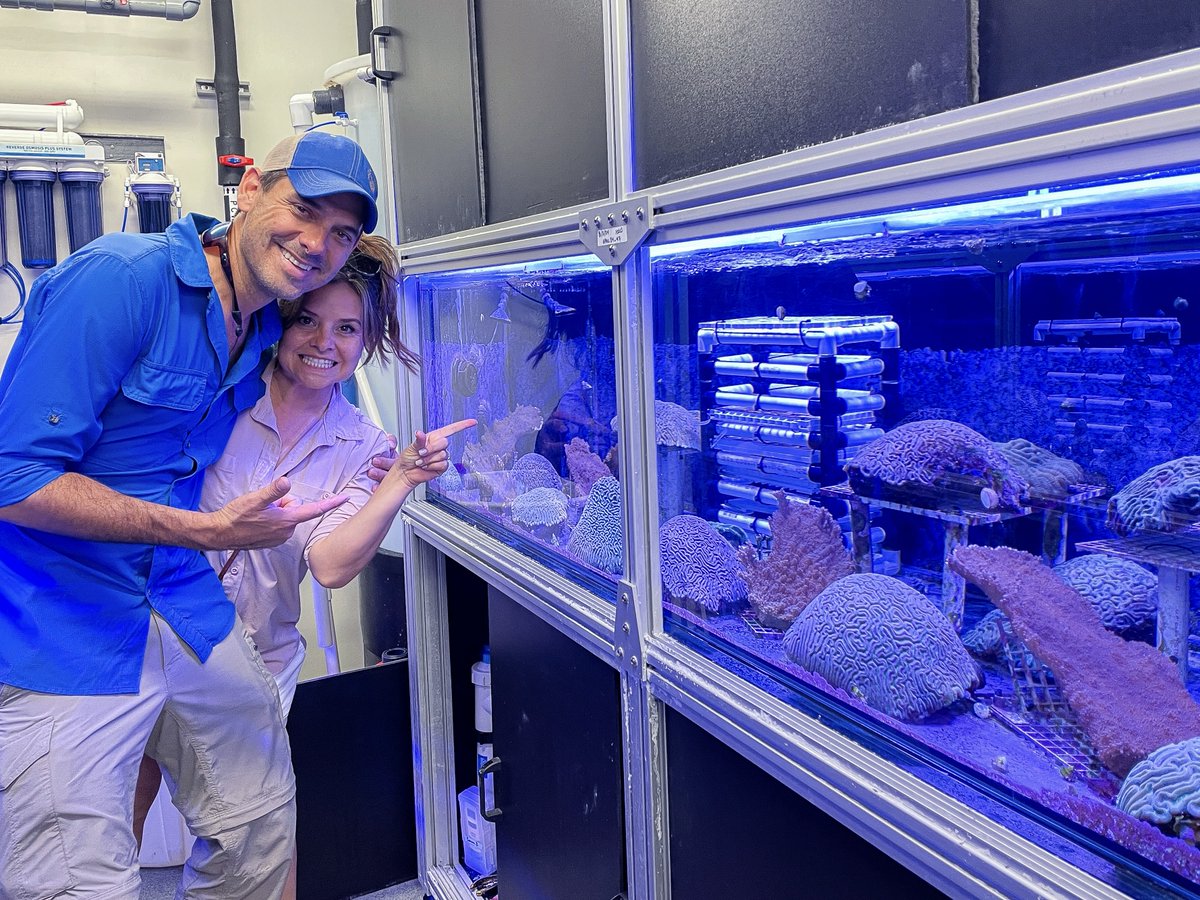
Julia (@CafieroJulia) is part of our dedicated land-based coral nursery team and began as an intern two years ago. She has risen to become an essential part of the team that cares for our coral; from monitoring their health daily to training and managing new team members on the inner workings of the expansive land-based coral nursery, spawning lab, and Indo-Pacific tank.
We couldn’t do it without you, Julia!
Thank you for all that you do 🪸🩵
Part 3: @BiscayneNPS & @AECOM to form a network that shares new knowledge, resources, and best practices to maximize the ability of newly restored corals to survive climate change impacts. Read more: https://t.co/UpnNy1KHZ6
3 part 🧵: We are pleased to announce the
@CoralReefFuture lab and partners have received a $16 million, 4-year grant from @NOAAHabitat to lead an ambitious program to implement and scale-up new approaches to increase the climate resilience of Florida’s restored coral reefs. 🪸
Last week lab members, alumni, and collaborators attended the 2024 Reef Florida Symposium at @FrostScience. 👏🪸
ReeFLorida unites researchers, conservationists, educators and managers to share innovative strategies and research in coral restoration. We can’t wait to see what the next year of research, innovation, and collaboration brings for Florida’s Coral Reef. See 🙌 there next year!
Pictured: lab members Yuen Azu, Julia Cafiero, Cam McMath, Diego Ferreira, Kate Etter, lab alumni Sanauz Alaei, Lirman Lab @rescueareef members Erin Weisman, Bauti Tobias, and collaborator Hannah Ditzler of SECORE International.
Photo 1: 📷@frostscience
Photo 2: 📷Lucia Gil
#coralrestoration #reeflorida2024 #frostmuseum
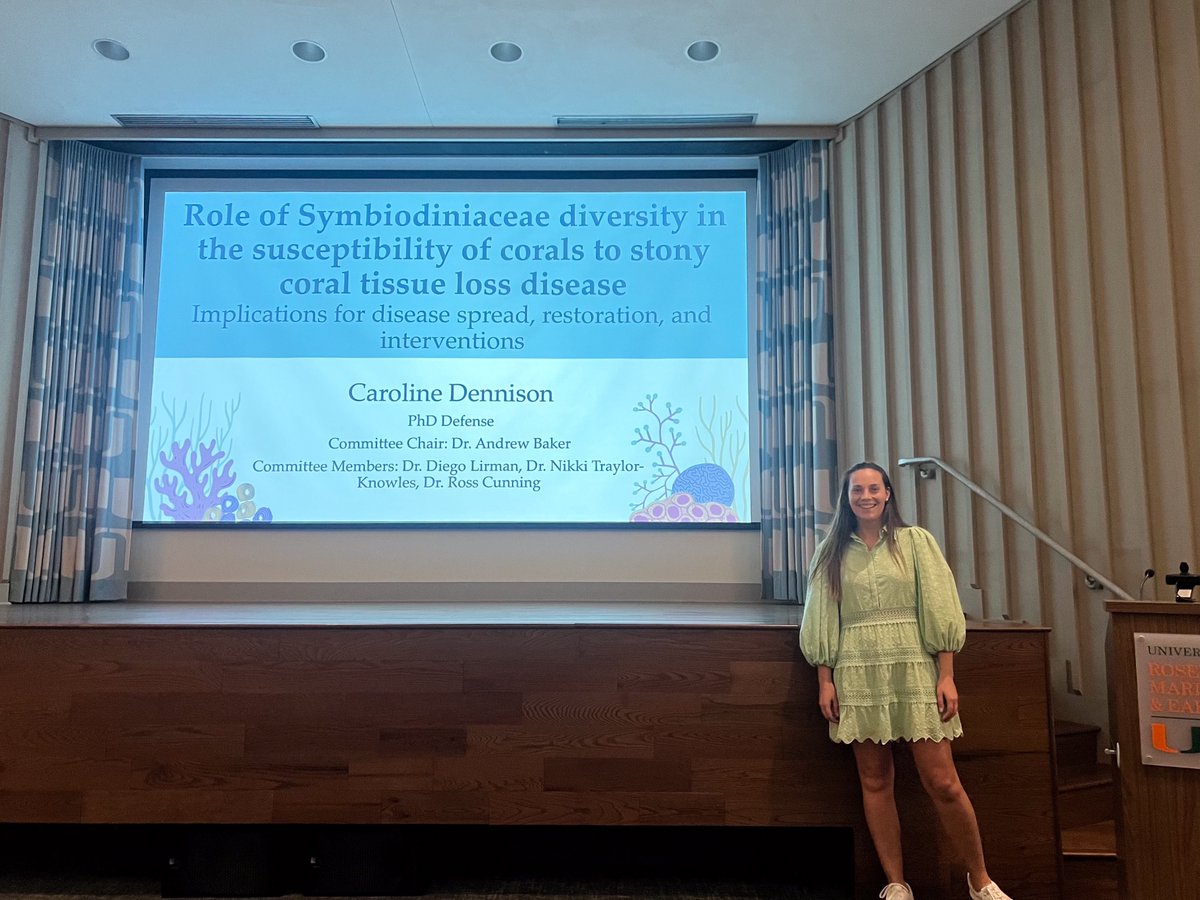
She started with the lab as an undergrad, around the time of first SCTLD outbreak in 2015. Since her PhD began in 2019, she has spent 5+ years researching genotypic responses of coral and its symbionts to SCTLD, evaluating susceptibility of coral species and Symbiodiniaceae genus, and experimenting interventions to increase disease resistance, among other topics. 👩🔬🧬
A huge congratulations to Carly on a fascinating presentation and for the research developments you’ve made towards understanding coral disease dynamics and harnessing them towards resilience interventions!
👏
We look forward to all your future research on the horizon!
#coral #coraldisease #coralrestoration #coralresearch #marinebiology #marineconservation #dna #algae #symbiont #stonycoraltissuelossdisease #sctld #phd #gradschool #coralresilience
Longtime lab member, Carly Dennison, gave an amazing PhD dissertation defense on Friday! 🥳
Her research focuses on stony coral tissue loss disease (SCTLD), and how disease dynamics are mediated by the coral’s symbiotic algae, ultimately influencing the coral host’s disease susceptibility. 🦠🪸
We had some very exciting visitors last week! Antal Borcsok and Alejandra Thompson, co-founders of research aquarium @tela_marine, flew in from
Honduras to tour our facilities at @miamirosenstiel.
Tela Marine Research Center hosted us on our recent research trip to Tela, Honduras this summer, where they took our team to Tela Bay’s thriving reefs to sample DNA and collect fragments of elkhorn coral in hopes of crossbreeding with Florida’s elkhorn species to restore populations.
Here are Antal and Alejandra with the coral colonies collected from Tela Bay, in the @coralreeffutures spawning lab. They were very happy to see the coral are
doing well and learn about how their environment is maintained to keep them healthy and encourage spawning.
We are thrilled to host these special guests and continue this important collaboration. Thank you to Antal and Alejandra for spending the day with us!
#coral #coralresearch #researchaquarium #honduras #telahonduras #elkhorncoral
Lab Spotlight! 🌟
Coral reproduction specialist, Yuen Azu, takes us around the Coral Reef Futures Lab as we join her in the diverse tasks and activities that are part of her role.
It takes great dedication to facilitate coral spawning and see that the coral survive through each life-stage in their early life as larvae. Thank you for showing us life through your eyes, and for all the work you do for these coral babies, Yuen! 🪸🥰
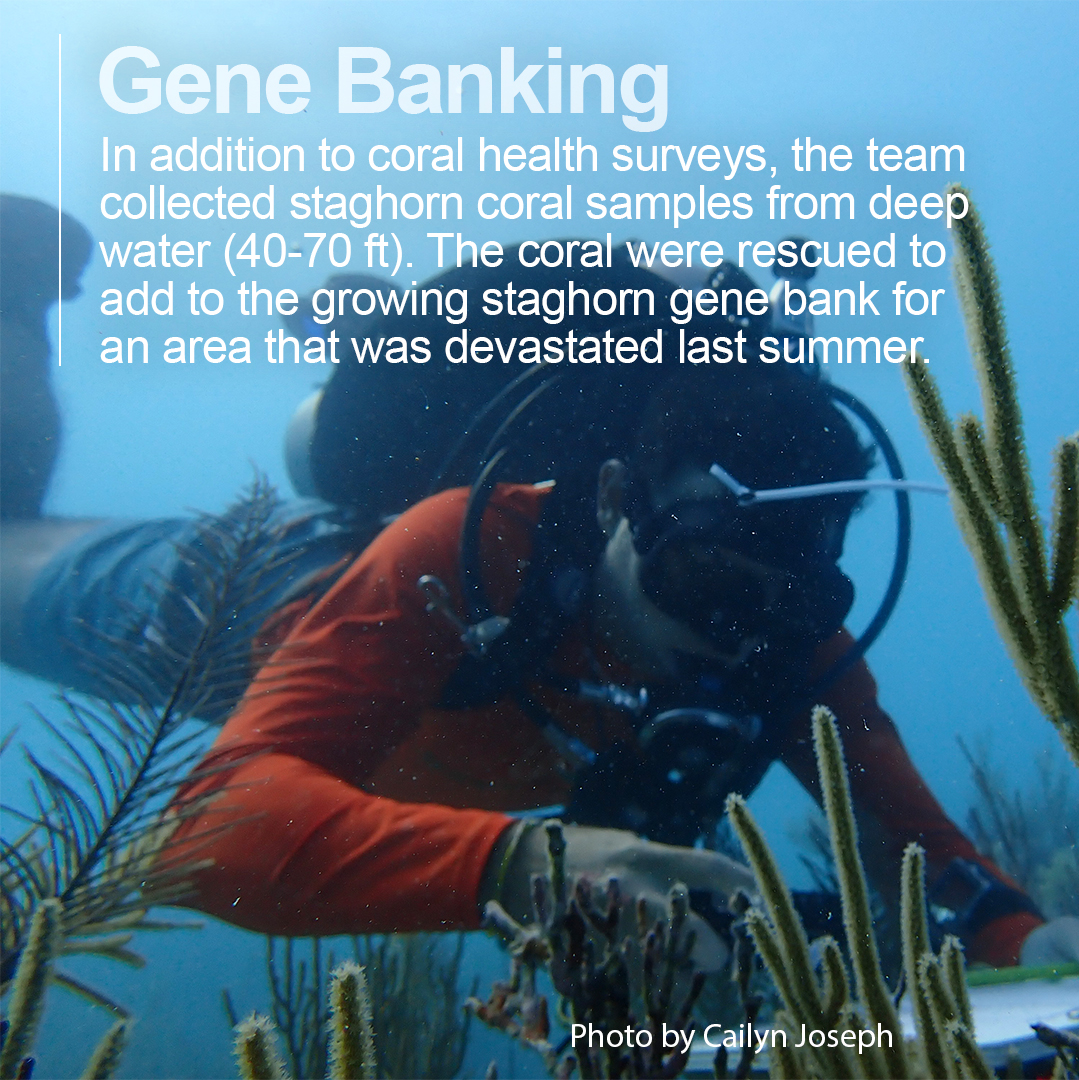
Team members successfully collected samples of #staghorn coral at an unlikely depth of around 40 ft. These samples were collected to build a genetic repository of corals. 🧬🪸
Small tissue samples were taken to compare algal symbiont communities across multiple disturbances in particular stony coral tissue loss disease (SCTLD) and coral bleaching events. The samples taken this summer will be compared to samples taken in 2019 before SCTLD was reported in the Dry Tortugas.
Thank you to our team and collaborators for your hard work throughout this cruise!
#coralresearch #coralecology #coralsampling #coral #coralrestoration #drytortugas #SCTLD #algalsymbionts #floridakeys
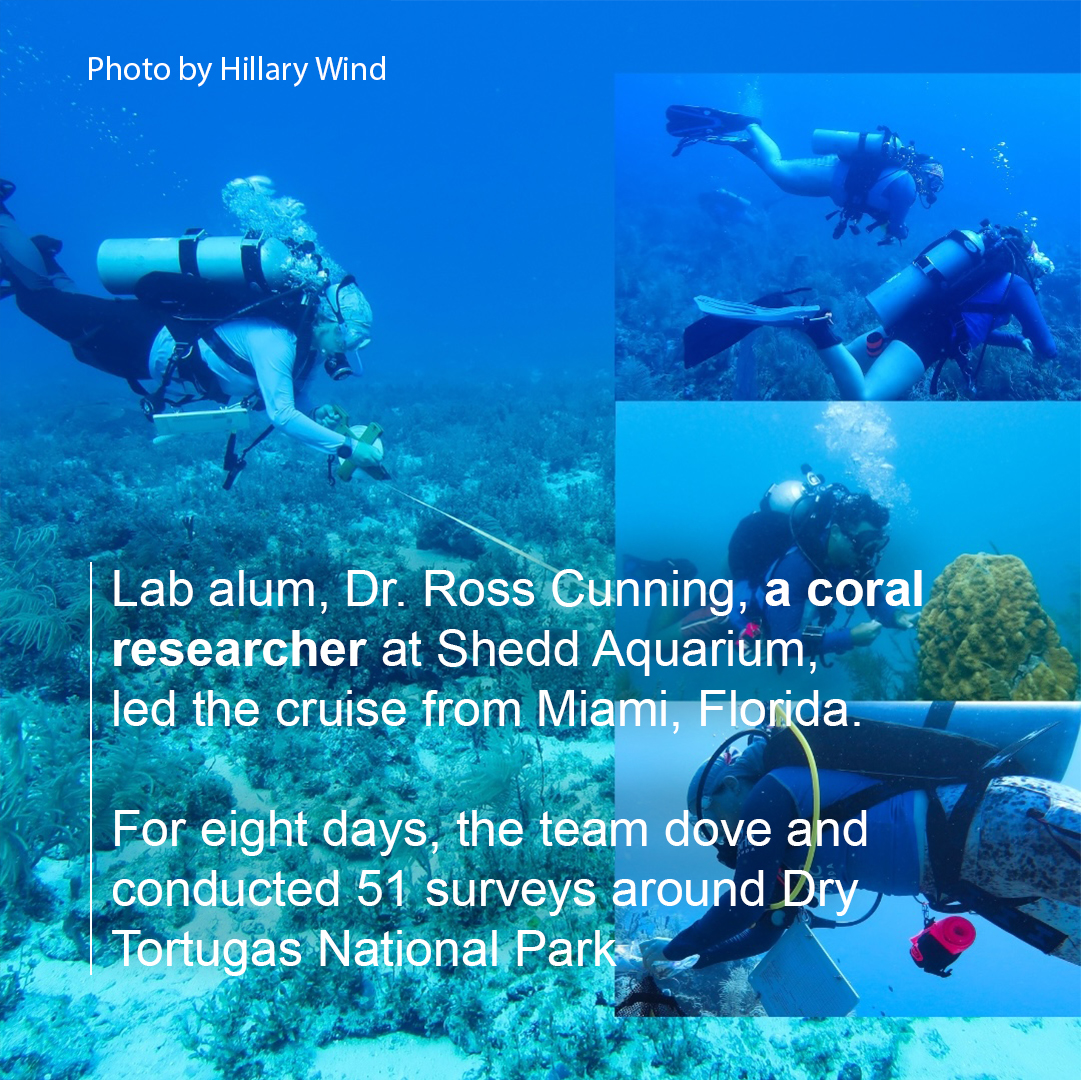
Late this summer, coral researchers from @CoralReefFuture Lab, @shedd_aquarium, @MyFWC, and @USouthFlorida (USF) embarked on a research expedition to the most remote island of the Florida Keys, the Dry Tortugas @DryTortugasNPS. ⛴️⚓️
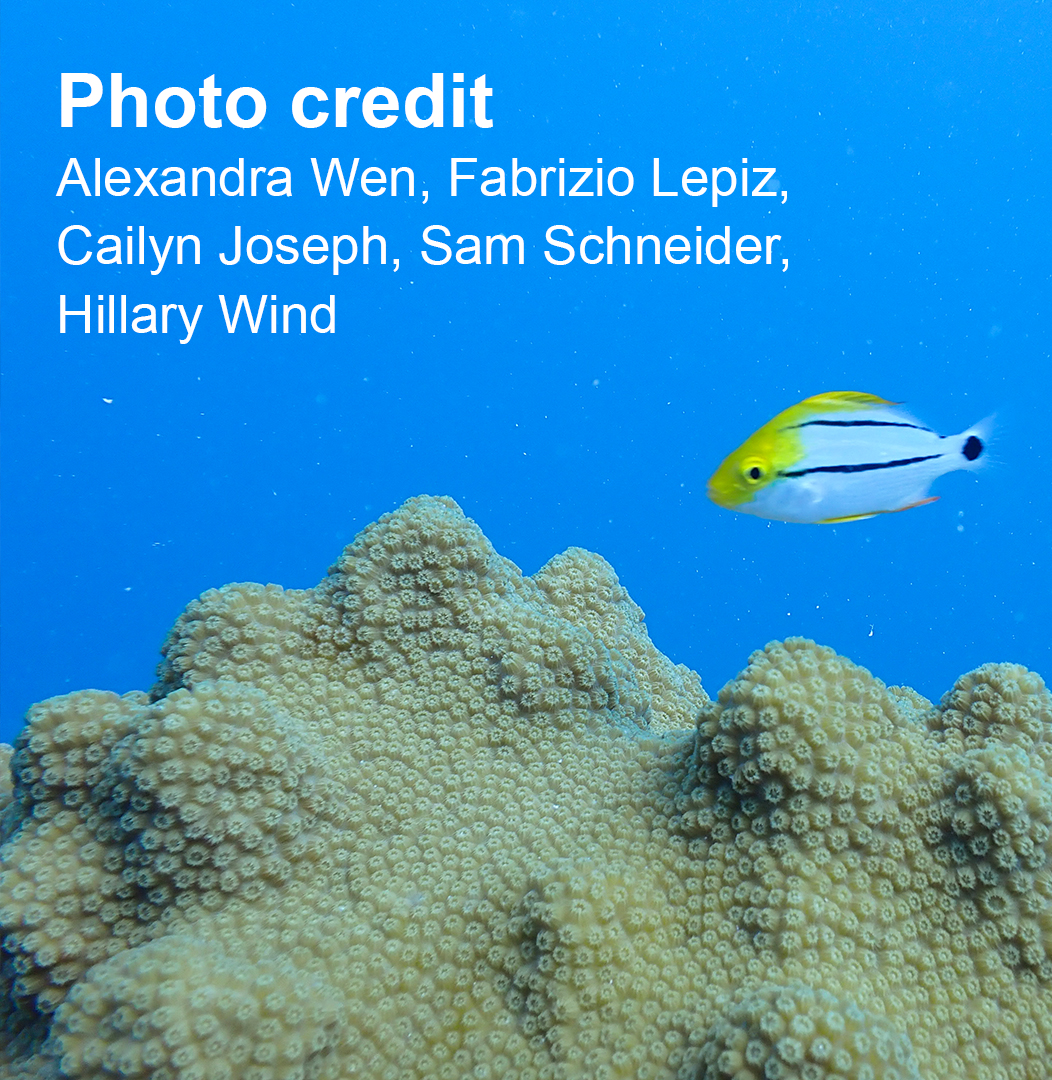
While aboard the research vessel Coral Reef II, Shedd researchers Ross Cunning @jrcunning, Hillary Wind, and Trinity Conn brought along Coral Reef Futures lab members Cailyn Joseph, Fabrizio Lepiz @aqua_tico, Alexandra Wen @adew24, and lab alumni @sanauzalaei and Sam Schneider to collect data and conduct health surveys, along with FWC's Sharla Sugierski and USF's @MatthewHGamache.
Reunion time!👏
Andrew Baker (@coralprof) regroups with former students Ross Cunning (PhD 2013) (@jrcunning), Rachel Silverstein (PhD 2012) @MiamiWaterkpr and Xaymara Serrano (PhD 2013) on @shedd_aquarium's research vessel for coral surveys and sampling in anticipation of planned future dredging activities at Port Everglades!
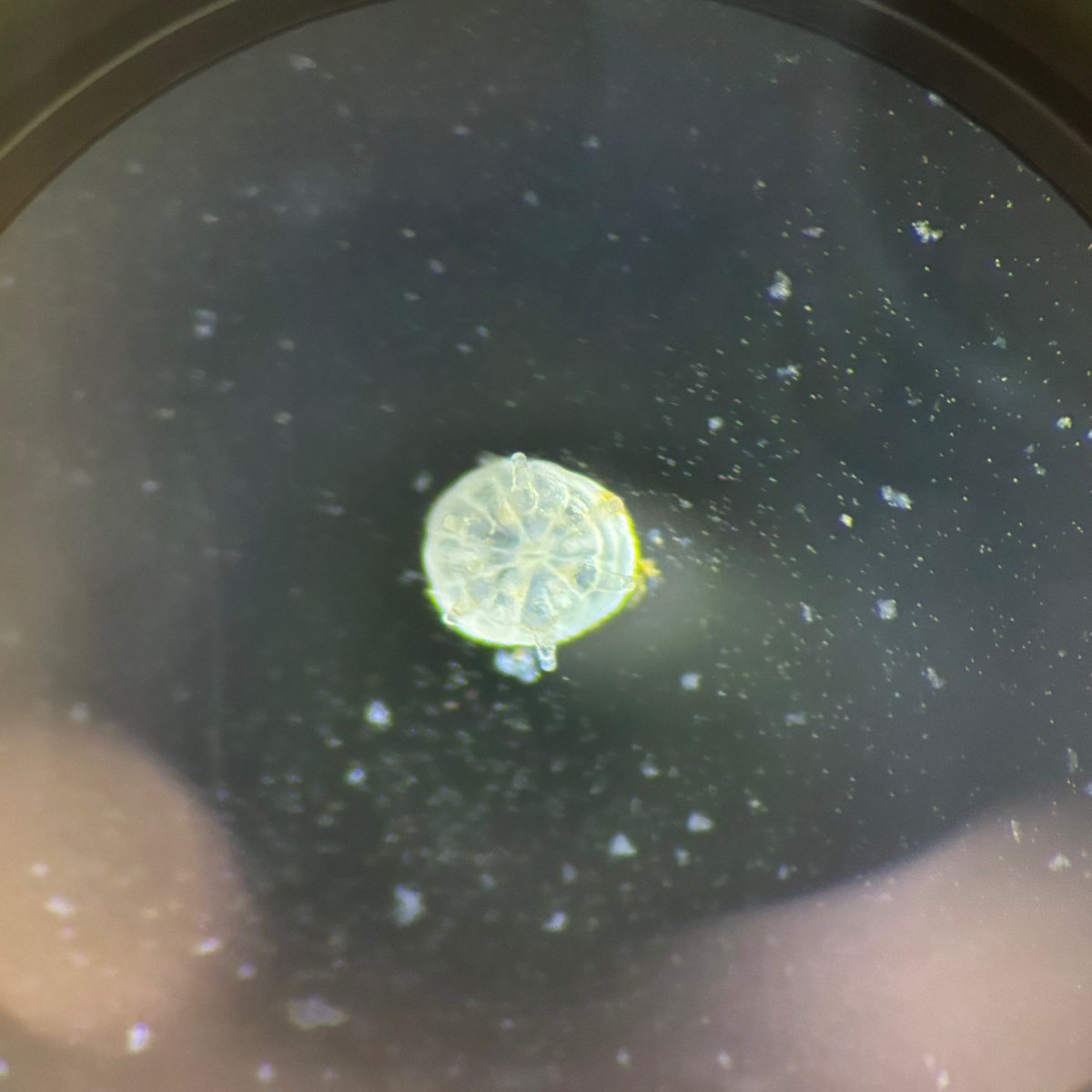
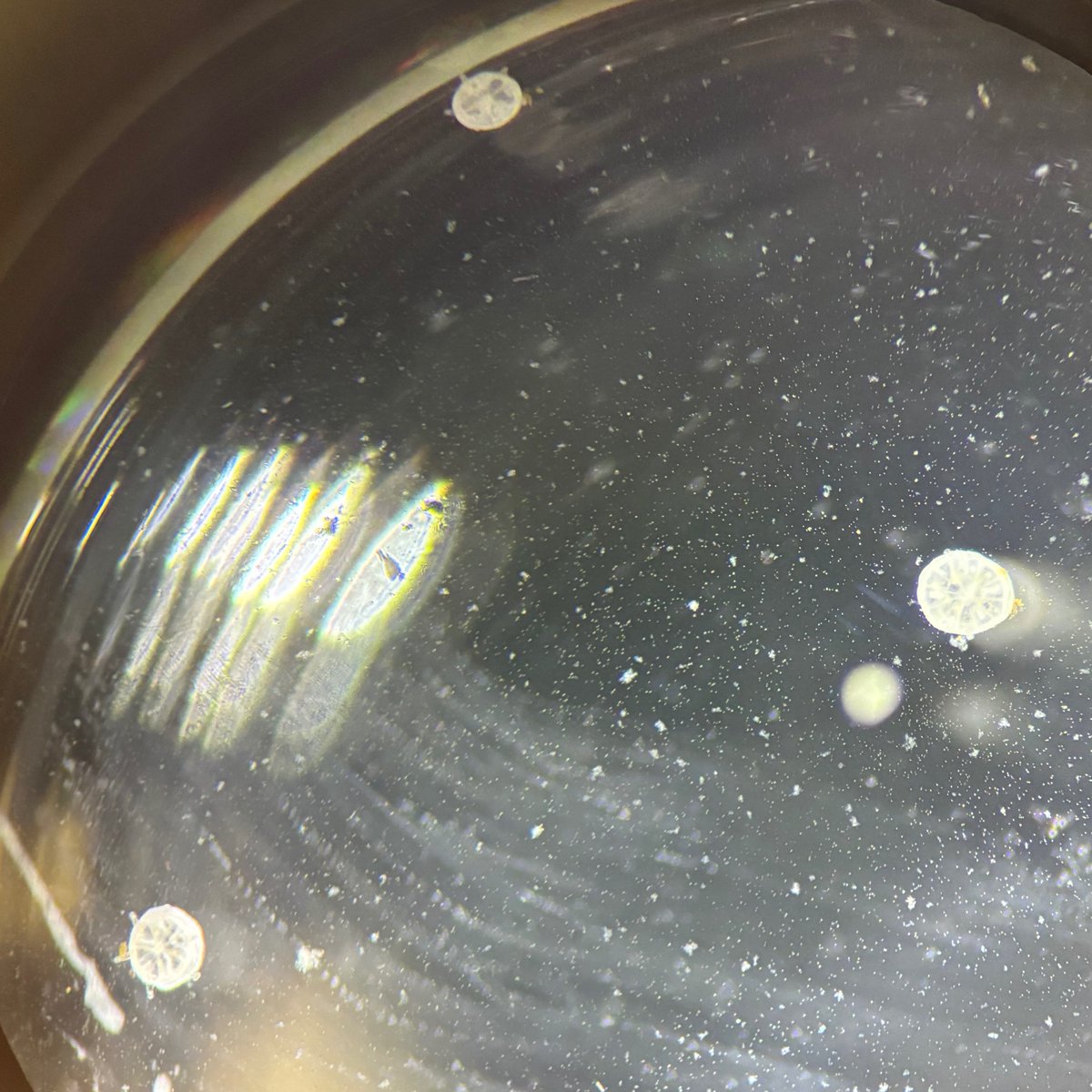
Wow! Check out these coral babies in various stages of development🪸. You can see the progression from free swimming larvae, to newly settled early-stage coral!
The pictures and timelapse are Colpophyllia natans (Boulder Brain Coral) larvae and settlers being used in a hydrogel experiment by PhD student @katherinehardyy 👩🔬. The ones shown in the pictures are from the control group, and they are living in filtered seawater while being dosed with algal symbiont cultures and a settlement inducing proteobacterial compound.
The timelapse is of Colpophyllia natans larvae that are at different stages of metamorphosis. They are swimming around a well that is filled with filtered seawater, hydrogel, algal symbiont cultures and a settlement inducing proteobacterial compound.
The video is especially cool because it shows metamorphosis in action!
Credit: Written and shot by @katherinehardyy.
@MiamiRosenstiel
Thank you Katherine Hardy, Maren Stickley and Hannah Ditzier for giving us a view into your world as coral reproduction and spawning specialists.
Thank you to field team members Joe Unsworth, Cat Lachnit, Lily Moore, Alec Danko, and Lucy Ehrenclou; and lab team members Yuen Azu and Julia Cafiero. Finally, a big thank you to our collaborators at Secore International and The Lirman Lab @rescueareef!
Acropora #coral species Staghorn Coral, Acropora Elkhorn Coral, and Acropora Hybrid usually spawn around the full moon in July or August, near 10 pm at night.🌕🪸
Spawning is an annual reproductive event where coral of the same species release gametes that genetically cross with each other in the water column and form new individuals. Join our field and #lab teams as they explain what a spawning event looks like from their perspective!
@MiamiRosenstiel
#CoralSpawning #Spawning #CoralEcology #CoralScience #MarineBiology
Did someone say “giddyup”? 🤠
This sea urchin cowgirl chooses both functionality and fashion!
Sea urchins are herbivores of the coral reef ecosystem. They feed on algae and keep it from overgrowing and out-competing coral for space on the reef. 🪸🐠
Sea urchins use tube feet to move around and pick up objects like rocks and shells to protect themselves from predation and UV radiation. In our Land-Based Coral Nursery they get a little rowdy and sometimes use pink cowboy hats instead!
📷: Kate Etter