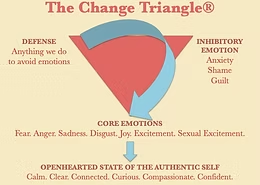
@dererererek4 good question! if youre interested practically i think id find a good therapist but if youre interested theoretically i just asked claude to get all the top aedp/isdtp books and manuals then i downloaded them then told claude to get all relevant sections of [my questions]
> time to do work
> productivity.exe
> opens up mac, not even logged in yet
> feel overwhelmed, almost panicking
> ok fuck need to take deep breaths
> breaths not working
> steps away from mac, lies down on carpet
> deep breaths working now
> ok hm what do i feel
> feel huge rage, like i need to let out the hugest primal scream
> uhhh
> tries to imagine a fantasy scene where i would feel safe
> feels impossible
> imagines the hugest castle on top of the most peaceful cloud (thousands of miles away from any human) and five 50-foot powerful frogs protecting me while im sitting beside my ideal fictional attachment figure
> still dont feel safe
> fuck
> feels the urge to beat something up in the imaginary scene
> doesnt work
> tries to destroy planets
> doesnt work
> tries to destroy.. galaxies?
> doesnt work
> fuck
> how can i destroy everything so that i will never ever ever be hurt ever again
> tried to inflict cosmic amounts of destruction and even that wouldnt keep me safe
> fuck im so mad
> “what would you need to feel if you couldnt feel anger”
> “if i couldnt inflict cosmic amounts of destruction to keep me safe, i’d need to grieve cosmic amounts of pain”
> fuck
ok so it turns out if you want to resolve your procrastination long-term and not just use willpower bandaids, you may have to grieve cosmic amounts of pain
just a heads up
different introspection schools make different implicit/explicit claims about introspection
- IFS: sometimes it’s very useful to use a relational-imaginal wrapper
- Focusing: you’re probably using System 2 intellectualization too much or disconnected from System 1 intuitions
- EK: we often round to the nearest acceptable guess, don’t forget that you might actually *want* something taboo / don’t forget you have eros
- Core Transformation: you’re confused about what you want, and sometimes it’s useful to uncover that recursively deep (and sometimes you realize you already had the carrot all along)
- Competing Commitments: you’re confused about what you want, and sometimes it’s useful to uncover it breadth-wise
- Coherence Therapy: your self sabotage is not just arbitrary, it’s actually useful/teleological and you’re doing it for a reason that is nonobvious to you
- Memory Reconsolidation: you’re a sparse MoE neural net that needs to activate the specific schema first for the backprop to properly work
- Vajrayana Shi-ne: your beliefs and emotions are not as concrete as you thought they were, they’re way more nebulous and fluid
- GTD: there are multiple fractal levels at which to introspect and act on it (just like in writing there’s Brainstorm, Thesis, Outline, Paragraphs, Sentences, Word Choice - same in life)
none of these have complete comprehensive span, they’re different low-dimensional projections of the umbrella process of introspection
if this is a developmental thing that’s been there as long as someone can remember, often you need to borrow someone else’s capacity to feel emotions, which then slowly becomes internalized. basically, talking to another person on a consistent basis about your life is the rec here. ideally this would be someone like a therapist, a pastor, or other trained counselor, but a kind friend or partner is also great (but this can be difficult because if someone is having trouble feeling their emotions, they will also probably have trouble feeling either the goodwill or malevolence of others towards them, which means they often don’t have very supportive company around them and don’t even realize it).
having another emoting, empathetic nervous system around to co-regulate with is ideal, but in the absence of that, other ways of establishing an emotional “conversation” with non-human others can be effective. here i’m thinking of journaling, hanging out with animals or cultivating a relationship with nature, imaginal dialogue with internal figures, or deeply engaging with emotional works of art.
basically, establishing a relationship with a benevolent and understanding other is the name of the game. at first they hold the emotions you don’t have the capacity to consciously experience yet, and eventually the mind learns how to do that itself
@jhana_bro for getting to the second to second my advice would be not to try too hard, keep up practice for sure but you don't have to look for some mystical thing, just look clearly at normal day to day contractions. goal is to see a normal thing more clearly, not to find a magic thing
@jachiam0 Do things that matter and let the universe decide their scale. I watched the greatest minds of my generation destroyed by thinking about scale.
@Morphenius@RomeoStevens76 wow! i really like this post, whoa - exactly relatable to how i’m feeling with GTD in the past week
(and the graphic is so good too)
@nickcammarata@QiaochuYuan@meditationstuff@aphercotropist (i believe) also had a metaphor i loved that was like there's 10 alarm clocks going on at once and each one you turn off doesn't make that big of a difference until it makes a huge difference like from the last one to silence even each is only "10%"
not sure if im just hallucinating it but it feels like there is so much joy waiting to come out after unclogging this tantrum inside my body that needs to get unclogged
like i can almost feel the joy peeking through, from underneath