Grow with us. We improve the health of the people, environment and economy of New York state and beyond, through innovative food and agricultural science.
How can scent molecules identify stressed plants and offer clues about human and animal health?
In this episode of Research Matters, entomologist Christophe Duplais explains how scent molecules can identify stressed plants, help farmers detect crop problems early and even offer clues about human and animal health.
Decoding these airborne messages reveals a hidden communication network that connects ecosystems, agriculture and medicine.
Check out https://t.co/klarnte5DF for the full episode.
@CornellCALS@CornellAgriTech@CornellRsrch
Thank you @RepRileyNY for introducing the NSF Plant Biology Act to support critical food systems research. At CALS, NSF funding drives fundamental plant and microbial biology science that benefits food and agriculture producers.
https://t.co/zWbyEvrNzK
New research led by Prof. Kerik Cox shows how apple growers can manage disease by stacking smarter tools, from resistant varieties to biological options, reducing reliance on synthetic fungicides. Better for orchards, better for the environment. https://t.co/nwy2YpxIhR
Just chill: A low-cost, do-it-yourself method developed by the @Cornell Maple Program allows syrup producers to cool and hold sap before boiling, giving greater flexibility and eliminating the need for all-nighters. https://t.co/7y8UXHJfD1
Monarch butterflies are disappearing, but new @Cornell research offers hope. Scientists studied 28 native wildflower species and found ways to boost seed germination, helping restore critical habitat for monarchs and other pollinators. 🦋🌼
🔗 https://t.co/vNnhlChqTP
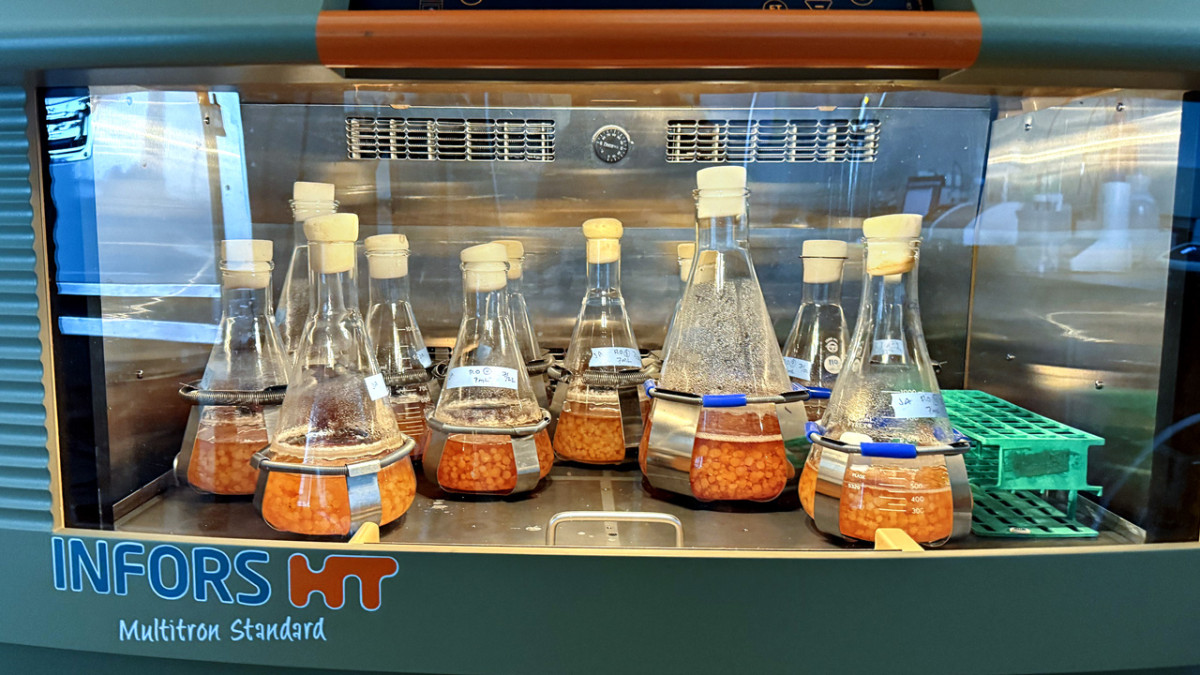
As the global population climbs toward 10 billion and climate change strains farmland, scientists are searching for new ways to feed the world. A group of Cornell food science researchers say one answer may lie not in fields of soy or herds of cattle, but in networks of fungi quietly transforming agricultural waste into food.
In a sweeping new review published on Feb. 11 in Trends in Food Science & Technology, a team led by Ke Wang, corresponding author and assistant research professor of food science at @CornellAgriTech in @CornellCALS, outlines an “emerging circular fungal biorefinery” – a system in which low-value agricultural byproducts are converted through fungal fermentation into high-protein, nutrient-rich foods.
“The main driver of this type of research is identifying new and sustainable food sources,” Wang said. “We looked at all the possible perspectives and tried to understand the technologies and the research gaps.”
Read more: https://t.co/QwnPtA57LJ.
Turning leftovers into lifelines: Mycelium, the vegetative, root-like network of fungi, has the power to transform food waste into new, life-sustaining food, according to new @CornellCALS research. @CornellAgriTech@Sciencedirect@lreiley https://t.co/XR57hdpF8N
Something delicious is simmering w/ support from
@CornellCALS.
Finger Foods Farm is selling locally sourced soups in regional stores like Wegmans. The Center of Excellence, Food Venture Center & Grow-NY helped them in their journey to success.
https://t.co/gVXI5QcftI
Tick-borne diseases now make up 75% of U.S. vector-borne cases, with Lyme costing $700M–$1.3B annually. Closing the gap in prevention starts with understanding why people skip steps like repellents and tick checks.
Are we asking the right questions? Analysis of prior surveys finds that very few people have been asked why they chose not to take action to prevent tick-borne illness. @SpringerNature@CornellCALS@CornellEnto@cornellvet@lreiley https://t.co/CgRkYz9f7o
Innovation is taking root in Portland, NY! At Cornell’s Lake Erie Research & Extension Lab, we’re using digital tools & smarter practices to help NY growers thrive.
Cornell is planting the seeds for tomorrow’s farms across NYS.
https://t.co/viqwFdvlwe
What if food waste could fuel a sustainable future?
Assistant professor Ke Wang's research is turning food scraps and ag by-products into biodegradable plastics, innovative foods and biomaterials through microbial ‘cell factories.’
"Better-for-you" snacks are all the rage. New tech from @CornellAgriTech food scientists may give beets their time to shine.
Learn more at https://t.co/Bm9Dsq8LLO.
Nothing beats beets: “Better-for-you” snacks are all the rage. New tech from @Cornell food scientists may give beets their time to shine with their crunchy, healthy new chip. @Sciencedirect@USDA_NIFA@CornellAgriTech https://t.co/25gRPXz061
Looking for the ultimate @CornellCALS ag & food science internship?
Join the Cornell AgriTech Summer Research Scholars Program in Summer 2026! We are now accepting applications through Feb. 2: https://t.co/DMKRynCilf
👏 Big congratulations to @moniquejrivera! She’s been named one of Fruit Growers News’ "40 Under 40" leaders for her work helping apple growers manage pests sustainably and sharing insights through her Scaffolds podcast. https://t.co/JBvqD1tIhO
Happy 40 years of innovation, sustainability and impact to @CornellIPM! 🎉
This critical @CornellCALS program has helped NY agriculture save $1.4B while reducing pesticide use and protecting health and the environment. Here’s to the next 40 years of smarter pest management!
Driven by reduced pesticide use, improved yields and decreased environmental and health risks, @CornellIPM has delivered approximately $1.4 billion in economic benefits to NY's agriculture industry since 1985.
Learn about our early efforts, current focus and future goals as we celebrate 40 years of safe, sustainable and successful management of pests. https://t.co/xgu4ghzc9k
What if your walls could fight climate change?
Cornell’s Hemp House Project is advancing hemp-based construction in NY.
Why hemp?
🌿 Carbon-negative
🏚️ Energy-efficient
🫶 Supports local farmers
https://t.co/w6v9ZE0UZc
Deck the halls w/ @Cornell-supported Christmas trees… fa la la la la! 🎄
Thanks to @ccecornell & Cornell IPM, NY growers are cutting pesticide use, planting pollinator gardens & keeping trees healthy—all while protecting the environment. 🌱
https://t.co/cbiUA2zt2E
From vision to victory! Seen Nutrition started w/ a bold mission: improve bone health through nutrition. W/ support from Cornell AgriTech/@CornellCALS
programs, they turned an idea into reality—and won $500K in Grow-NY to scale their impact! 💪
https://t.co/FzbLrP0Ea0