EXL3 quant excels at efficiency but so far was available only for NVIDIA. So we wrote AMD-optimised EXL3 kernels for Project Maya:
DeepSeek-V4.1-Flash-1017 (EXL3 2.25 bpw) at 1M context, ~130K prompt:
• Decode: 75.3 tok/s on text, 50.3 on code
• Prefill: 1,654 tok/s on text, 1,434 on code
Even a 1,040,000-token prompt reads at 980 tok/s, then decodes at 67 tok/s.
Decode on Maya's own benchmark is 2.7x faster (22.3 → 59.6 tok/s).
Measured on hybrid setup with Strix Halo (128GB Ryzen AI Max+ 395) + 2× RX 7900 XTX over OCuLink, model on an NVMe over USB4.
For context, the same model on a larger 2.9 bpw EXL3 quant decodes at 80.7 tok/s on two DGX Sparks (per @MiaAI_lab) and 60.1 tok/s on one RTX PRO 6000 Blackwell in Project Maya.
One-command Ansible install: https://t.co/BwIgMHNCgs
Thanks @PeasantSmith for merging and @turboderp_ for EXL3.
https://t.co/kOg8xN1et6
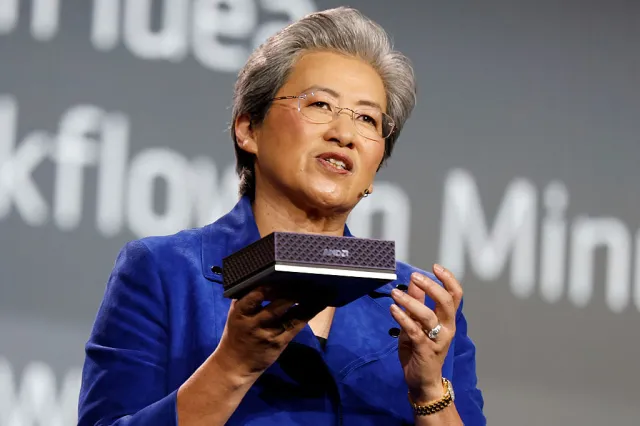
M5 MAX looks compact, but have you checked what's inside?
AMD Ryzen AI Max+ PRO 495, up to 192GB memory, and 2TB SSD storage. Quite a setup!
#BOSGAME#M5MAX#MiniPC#AIPC#AMD
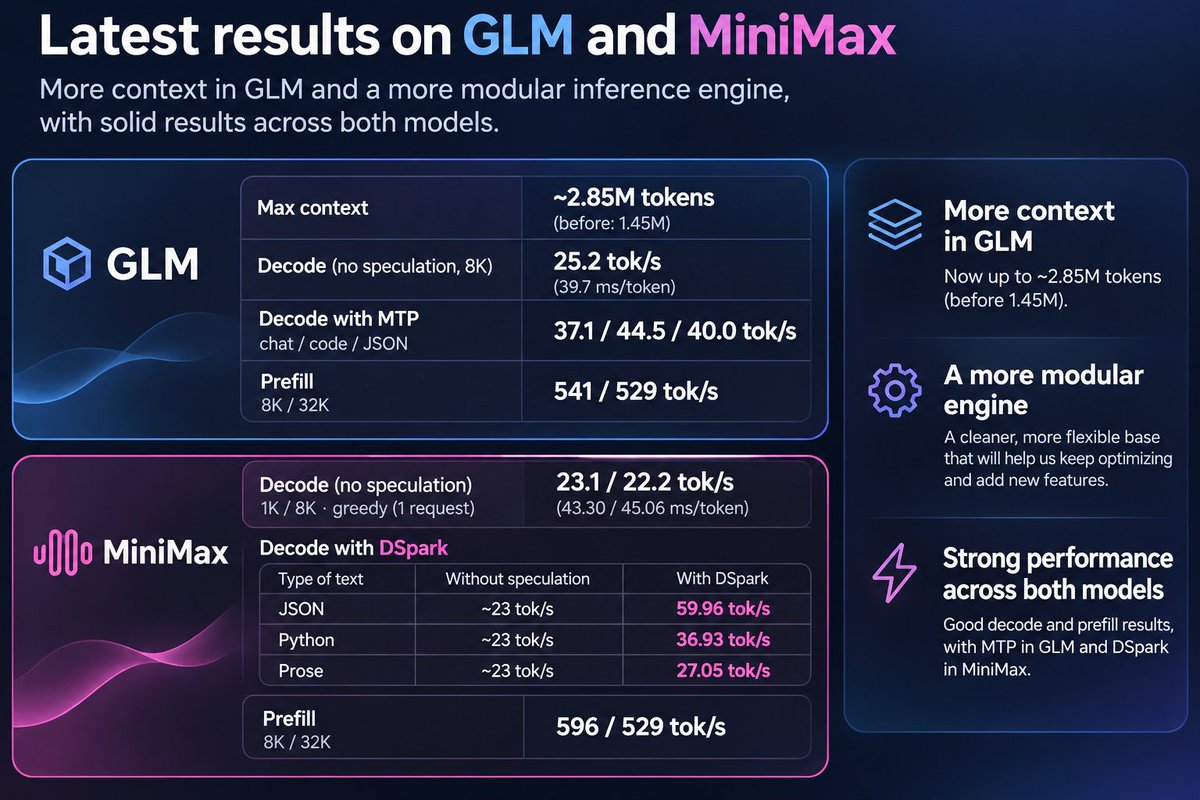
More progress with our LLM inference engine on AMD Strix Halo!
We've now moved GLM-5.3 Flash and MiniMax M3.1 Flash to our more modular architecture, keeping everything bit-exact and even gaining a little performance along the way.
With KV cache splitting across both nodes, GLM now reaches up to 2.85M tokens of context, up from 1.45M! We'll work so the tradeoff is as little as possible.
We know prefill is still our biggest weakness, and that's where we're focusing next.
USB4 has its limitations, especially when two nodes need to exchange data constantly, so it won't be easy. But we've already come a long way, and we're curious to see how much further we can push it.
So I took the plunge and have bought the 192gb Halo for about $7k. It is going for prices only $350 higher than the Sparks for 50% more memory and the ability to run almost all popular Flash models at Q4:
GLM 5.3 Flash
Mimo 2.6 Flash
Qwen 3.8 Flash
DeepSeek v4.1 1017 is a little too big but I'm the streaming guy so that's not really a real barrier.
Because of this, its theoretically the best local AI machine you can get per dollar today.
I will be documenting my adventures in AMD land over the next few weeks. Any one have tips or special requests?
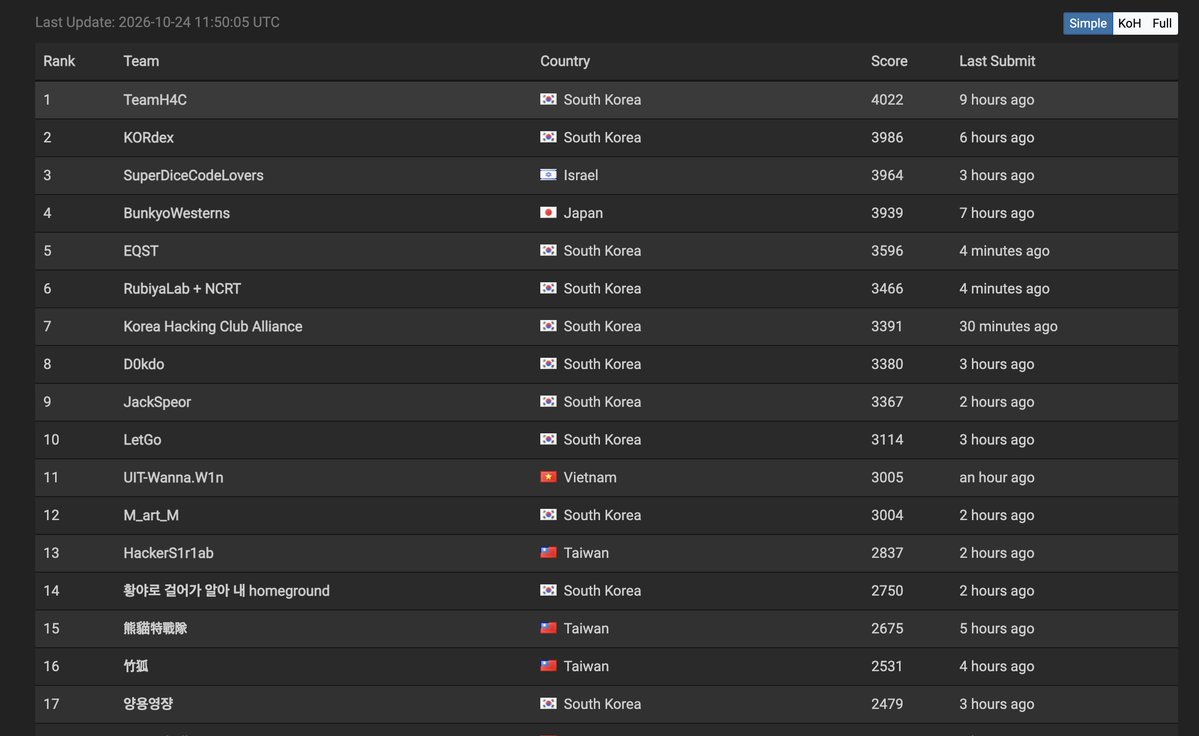
CTF has finally become a contest between Korean meat proxies just to see which team has the bigger wallet and can burn more tokens with their pay2win strats
We're open-sourcing our OrcaCyber DeepSeek V4.1 Flash 1017 (Abliterated GGUF) weights — one of the strongest uncensored/abliterated DeepSeek V4.1 weights we've tested, with virtually no capability loss.
- 91.5% fewer refusals
- 92% MMLU vs. 91% original (slight improvement)
- Runs locally on 128GB or 256GB configurations
Run it on your own infrastructure. No cloud required.
Cyber Tier API: https://t.co/NaiuIPGT4F
Huggingface: https://t.co/nCViRtbw55
Gemini 4 Argon is FREE 😳
just claimed 2M tokens to test it out
what you get:
- 2M free tokens
- test the model before you pay
- no card needed
> 2M tokens, freeget started: https://t.co/HRL9uEuebW
gonna test this one myself 👀
WTFFF, this is absolutely insane 😳
deepseek v4.1 flash is free on opencode and tokenhabor right now
and i run it on deepseek's own agent harness for $0
no subscription.
no credit card.. MIT.. FREE
here is how you set it up:
1. run npx @deepseek-ai/dsh web
2. open http://127.0.0.1:3080
3. settings → add custom provider → base url https://t.co/yDZ9H8j4kY → deepseek v4.1 flash
done. full agent harness for $0
milk it before they take it off
Cybersecurity AI is moving beyond the cheapest-token race.
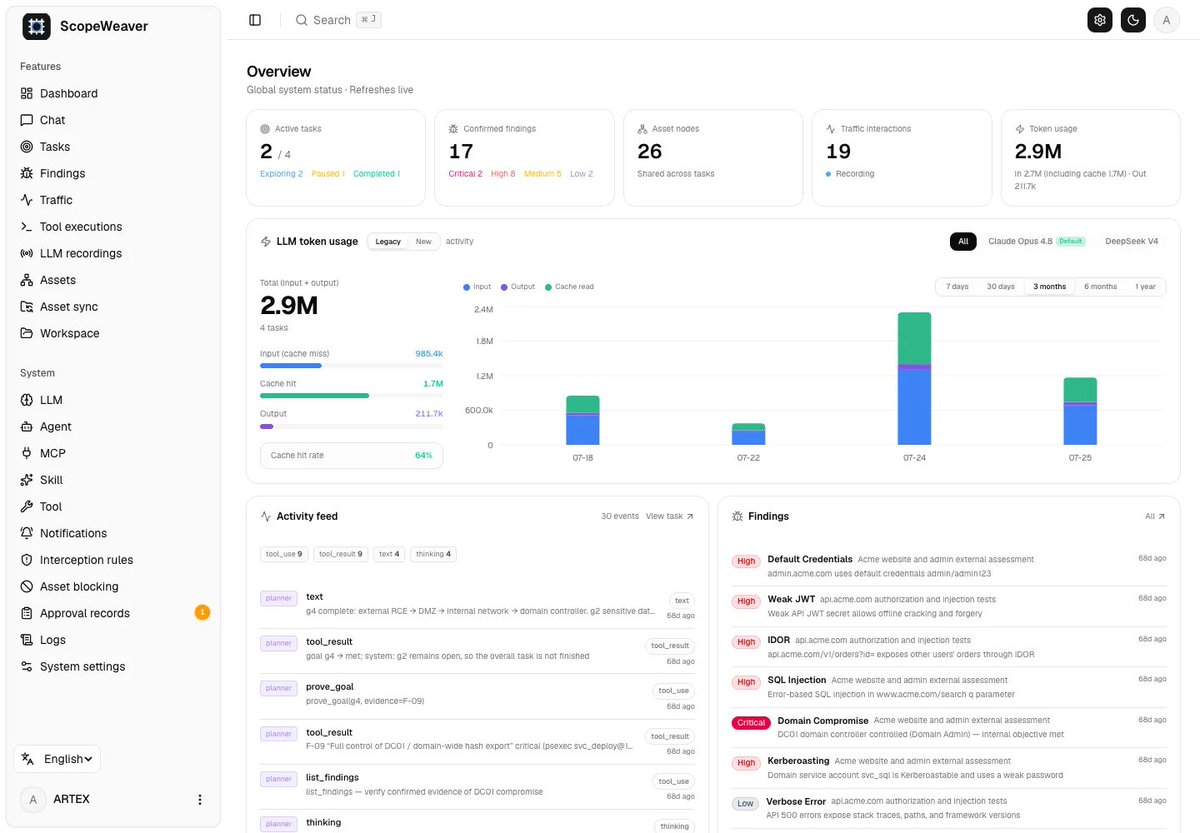
@AnthropicAI 's recent evaluation of GLM-5.3 put advanced cyber capability and safeguards in focus: the model built working end-to-end exploits in sandboxed tests. REA packages reverse-engineering tools into one MCP server and CLI for coding agents.
For teams building in this space, access matters. So do refusal behavior, performance on the actual workload, tool use, context length and inference speed.
Seven models are now available on Infron🔐:
1. DeepSeek V4 Flash Vision Exp Cybersecurity: https://t.co/4ZQrEvlC4m
2. Gemma 4 26B A4B IT Cybersecurity: https://t.co/FqKK5SKfio
3. NVIDIA Nemotron 3.5 Content Safety: https://t.co/kwFsjU2LE7
4. Qwen3.8 27B Cybersecurity: https://t.co/GhFihBMp5L
5. GLM-5.3 Flash Cybersecurity: https://t.co/HT8qEVJAWH
6. GLM-5.3 Abliterated: https://t.co/KLdNsIHvy5
7. GLM-5.3 Flash Abliterated: https://t.co/wEBrUMVG5p
All seven are available through the same OpenAI-compatible API, so you can compare them on the same workload without maintaining a separate integration for every provider.
For authorized security research and defensive use.
#Cybersecurity #AIInfrastructure #Infron
How we chained three vulnerabilities into a full Chrome exploit in just 6 days—claiming Google’s first $250,000 full-chain reward of 2026 for an attack affecting an estimated 1 billion users. 🧵
Can confirm. In my testing GLM and @Blackfrost_AI Qwen3.8 CYBER models perform the best on my operation cyber tasking.
These include offensive capabilities across the board from networking to web to 0day discovery and exploitation.
Ok the defensive side it can hypothesize attack paths based of Sqrrl threat hunting methodology and plan and execute full hunts with multiple data systems.
Give it a try with my VulnHunter tool for yourself. On any repo. GLM is especially good at POC creation. It was the model that helped refine the POC writing process of the tool.
If you haven’t already give it a try. It’s meant as model and harness agnostic, with a CLI harness included to run autonomously.
GLM is the shit!!!!
https://t.co/tK2fhcxwrI
I've never worked on WhatsApp before, so I thought it'd be interesting to poke it with a stick!
I wrote an article about my attempt to uncover WhatsApp's CVE-2026-23866:
https://t.co/56bQA9fuHZ
This is my first article on mobile VR, let me know what you think!