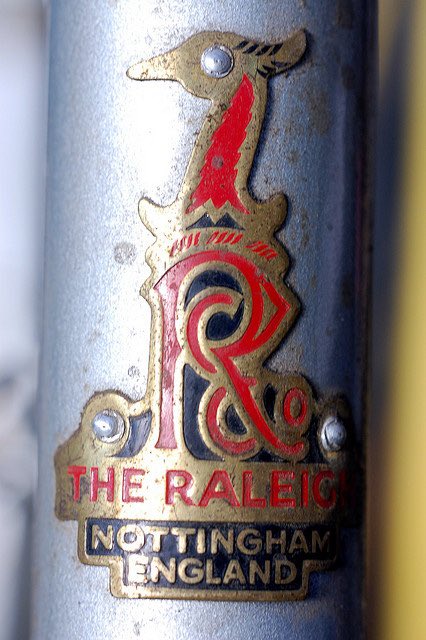
For those of us of a certain age, the sight of this logo on the front of a bike meant so much. Whether you had a Chopper or Grifter, it meant freedom, adventure and hours with friends.
The news about Raleigh results in the loss of another brand tied to childhood.
#Raleigh#1970s
@HibernianFC The positive is we won. Lots of negatives against a team that should be have been put away comfortably. Scottish football is going backwards.
#SSRGConference2025
"Professor Robert Black KC:
"Ladies and gentlemen, thank you very much. I never expected to be here, either physically or intellectually. I've been involved in the law of Scotland in various capacities: student, practising advocate, law reformer, law teacher, encyclopaedia editor, part-time judge, for more than 60 years. For 59 of those years I have believed implicitly, and in my career I have encouraged others, to believe that as a result of the Treaty of Union, the Acts of Union, the Scottish and English parliaments ceased to exist. That effectively, as states and international law, Scotland and England ceased to exist and were superseded by a new entity, the United Kingdom of Great Britain.
Now that I may say, was not the view of the early 18th century scholars, politicians, as to what had happened in 1707. That became the standard orthodox view really only in the 19th century and, its to a considerable extent due to, an English legal scholar called Arthur Venn Dicey.
When I was a student, our professor of constitutional law at the University of Edinburgh used to embody in his weekly lectures usually a statement at some point, ‘but Dicey wrong’. One thing, however he never claimed that Dicey was wrong about was what happened in 1707, the abolition of the two countries of Scotland and the superseding of a single country, the United Kingdom.
Now, following Dicey, other leading lawyers in both England and Scotland followed that view. A leading English international lawyer, Lord McNair, wrote in 1938, England and Scotland ceased to exist as international persons and became the unitary state of Great Britain. Now that was a view that was also accepted by Scottish lawyers.
Now, Professor T.B. Smith of Edinburgh University, he was the professor, or one of the professors of law when I first became a student. You cannot think of a more convinced legal nationalist than Professor T.B. Smith. But he concurred in the view that that was what had happened. He wrote in 1957, the separate kingdoms of Scotland and England merged in the new state of Great Britain and ceased to exist as persons for the purposes of international law. Now, T.B.
Smith's counterpart in Glasgow was Professor David Walker. Now Walker in Glasgow took exactly the same view of what had happened in 1707. One of the few things I may say that Smith and Walker ever agreed about.
I, however, having been ‘induced’ to look, to look as a lawyer with fresh eyes at, what actually happened in 1707 and thereabouts, I am now convinced that this explanation, of what actually happened in 1707, is false. The events of 1707 certainly resulted in Scotland's parliament and executive government ceasing to exist. But was there any parallel in England? Were the governmental institutions of both nations replaced by institutions of a new state? The answer, of course, is no. And what I want to do is to look at the institutions of government.
Now, the first branch of government I want to look at is the legislative branch. Now, after 1707, both houses of the English parliament Remained in being exactly the same as before, save for the addition to the house of Commons of 45 Scots selected by the outgoing Scottish Parliament, and 12 peers selected by the peers of Scotland. The incumbent officers and members of the parliament of England remained exactly as before. And they, of course, were the overwhelming majority in that new body. Not even a general election was held to mark this supposedly new institution. So what happened?
Well, for Scotland, everything changed. We lost our legislature. But for England, nothing changed. Now, they didn't even elect a new speaker. The speaker before the Scots joined, remained the speaker after the Scots joined. Now, the speaker in question was one John Smith, MP for Andover. Now, those of you who remember him or know of him at all, probably remember him one thing, and that one thing is that he said, ‘We have catched Scotland and will bind her fast’. Also, not just the speaker was the same, all of the standing orders of the English parliament remained in being, and the legislation that was passed by that parliament continued in an unbroken series.
Acts of parliament, as you may know, in those days, were normally in England described by the regnal year of the monarch plus a chapter number. Now, the act of the English parliament which ratified the Treaty of Union, was numbered 6 Anne, chapter 11.
The last act passed by the English parliament before the new dispensation took over was 6 Anne, chapter 34. And you may find it interesting that 6 and chapter 34 was an act for continuing the laws relating to the poor and to the buying and selling of cattle in Smithfield, and for suppressing of piracy. An interesting group of subjects to form the topic of one act of parliament. But that's merely by the way. That was 6 and chapter 34.
The first act passed after the Scottish members joined the Parliament was numbered 6 Anne, Chapter 35, and it was a land tax act. I may say that the second act, which received the royal assent on the same day as the first act, was an act to repeal certain Scotch acts, namely, the Scottish Parliament's act for the security of the kingdom and its act anent peace and war. That was 6 Anne, chapter 36. So for the English parliament, nothing changed. For England, nothing changed.
What about the Executive branch of government? Well, in 1707, the executive branch of the government in Scotland, the Privy Council and various other persons, was superseded by the existing executive structure, pertaining in England, including the English Privy Council, with, however, the addition of a Secretary of State for Scotland. But that didn't last long. The office of secretary of State for Scotland was abolished in 1746. And thereafter, Scotland was managed, and that's the word, ‘managed’. Scotland was managed by the Lord Advocate until 1827, and thereafter it was ‘managed’ by the home office. Now, that happened until 1885, when a Secretary of Scotland was introduced. And, upgraded in 1926 to a Secretary of State for Scotland. But in 1707, the whole of the executive governmental structure of Scotland changed. It was abolished.
What happened in England? In England, the executive government, the institutions of executive government changed not at all. For England, nothing changed. Now, one of the functions of the executive branch of government is the conclusion of treaties and agreements with foreign countries. Prior to 1707, both Scotland and England did this. Scotland had treaties, including treaties with France, with the Pope and with various Scandinavian states. After 1707, legal scholars regarded none of those treaties continuing in subsistence. They all lapsed when Scotland, as a state in international law, ceased to exist.
By contrast, England's pre-1707 treaties were regarded by the new regime, and by legal scholars, as continuing in full force and effect. Notwithstanding the supposed creation of a new kingdom. That includes the oldest English treaties still in existence. England's treaties of alliance with Portugal in 1373 and 1386. The view of the English government, the view of legal scholars, was that these treaties continued in full force and effect. But it's more than that. England's diplomatic representation in the countries of Europe, in the kingdoms of Europe, continued uninterrupted.
No fresh credentials were submitted by the existing English ambassadors in consequence of the supposed new regime. Now, an ambassador supposedly, represents a territory under the monarch. The monarch was claiming now to represent Scotland as well as England. It was all one country. It was a new country.
Therefore, there was, if you like, a suggestion that perhaps it might have been an idea that the ambassadors of this new unified state should present fresh letters of credence to the governments to which they were assigned. None of that happened. And, instructively, none of the foreign states to whom these ambassadors were accredited regarded it as necessary that new credentials on behalf of this supposed new state should be presented. So Scotland lost, if you like, its international persona. But for England, nothing changed.
What about the judicial branch of government, the third of the branches. Well, it's clear that as far as the judicial branch of government is concerned, for England, nothing changed. At first sight, if you look simply at the legislation at the Treaty and Acts of Union, it would appear from the text that for Scotland, too, nothing changed. Article 19 is the relevant article of the supposed treaty. That the Court of Session, or College of Justice, do after the union, and notwithstanding thereof, remain in all time coming within Scotland as it is now constituted by the laws of that kingdom and with the same authority and privileges as before the union, subject nevertheless to such regulations for the better administration of justice, as shall be made by the parliament of Great Britain.
Similar provision relating to the Criminal Court, the Court of Session, the College of Justice, was the Scottish Civil Court. The Criminal Court, the Court of Justiciary, similar provision in Article 19, which then ends that no causes in Scotland be cognizable by the courts of chancery, queen's bench, common pleas, or any other court in Westminster Hall, and that the said courts or any other of the like nature after the union, shall have no power to cognize, review or alter, the acts or sentences of the judicatures within Scotland.
So there you are. These were the standard English courts. They met in Westminster Hall. These courts were not to have first instance authority over cases from Scotland, nor were they to have any appellate authority from the courts of Scotland.
However, under the English system, appeal in certain circumstances could be taken from these English courts to the House of Lords. Now, it's a different house of lords. It's not the house of lords sitting as a house of parliament, as a house of the legislature. It's the house of lords sitting with another hat on, sitting as the highest court, the highest court in the English court structure.
Now, there was something vaguely equivalent in Scotland. Protestation for remed of law, enabled dissatisfied litigants in the court of session to take their case under defined circumstances to the Scottish Parliament. That was a protestation for remed of law. And because that possibility existed under the Claim of Right, actually, existed in Scotland soon after 1707, it was asserted that an appeal should now lie in place of protestation for remed of right to the Scottish parliament, an appeal should lie to the House of Lords, the ultimate court of appeal in England. And the House of Lords, in its judicial capacity, swallowed this hook, line and sinker. Well, of course it did, because it's an extra piece of control, and control is important.
So it was that from 1707, the ultimate court of appeal in civil matters in Scotland became the House of Lords. And I may say, the Scots made great use of this right of appeal that had been recognised. I have to say that their confidence in the unbiased justice that might be delivered to them in that times College of Justice was not high. So in any event, whatever the reason, appeals from Scotland to the House of Lords were recognised.
And so after 1707, the ultimate court of appeal in civil matters in Scotland became the House of Lords. Now, it’s a House of Lords sitting as a court, was normally staffed by the Lord Chancellor, the head of the English judiciary, the Lord Chancellor. Any other peer who had held high judicial office was also entitled to sit. Now, very often, the Lord Chancellor sat alone.
Between 1707 and 1867, the final court of appeal from Scottish civil courts contained not one single judge trained or qualified in the law of Scotland. Lord Chancellor Erskine, 1806, early 19th century, good Scottish name, but a lawyer trained and qualified only in England, said in the chamber, ‘I know something of the law, but of Scotch law, I am as ignorant as a native of Mexico’. These were the people who formed the ultimate court of appeal from Scotland.
Here's another example, 1858, Scottish appeal to the House of Lords. Now, the judge sitting was one Lord Cranworth, a former Lord Chancellor. And he had decided that if this case had come to him from England, through the English court structure, he knew what the answer was. The English law was clear. And so he went on to say, but if such be the law of England, on what ground can it be argued not to be the law of Scotland? The law, as established in England, is founded on principles of universal application.
So since 1867, at least one judge from the Scottish system, now it's normally two, have been appointed to sit in the final court of appeal, originally the House of Lords, now the Supreme Court. But I think you can perhaps imagine, how much damage was done to the law of Scotland between 1707 and 1867. And Scots law and English law were entirely different. They were entirely different systems, based on entirely different sources. Scotland was a part of the European legal tradition of received Roman law. England was not. England was, as in so many things, absolutely unique.
It had a system of law based on what the judges who happened to be presiding over the case thought they should do. And then once one judge had done it, everyone, every other judge was required to follow that, the doctrine of precedent. So that’s different systems, different methods of operation.
So, even though today, you have two judges sitting in the ultimate court of appeal from Scotland, a bench is normally one of five. So even today, if both Scots sit in a Scottish appeal, they are inevitably outnumbered by judges trained and qualified in a different system. No way to run a sweetie shop, one would have said.
So on the face of the Articles of Union, it appeared as if the independence of the Scottish judicial system had been preserved intact. But in reality, and in actual practise, it was subordinated to the highest English appeal court, and it remains so today. But in England, nothing changed.
Now, Sarah mentioned in her talk the opinion given by two international lawyers in the context of what was then a forthcoming referendum on independence in Scotland. The United Kingdom government in 2012, in anticipation of the referendum taking place, commissioned an opinion, from two distinguished, very distinguished international lawyers. Cambridge Professor James Crawford, who was a senior counsel from Australia, but was a member of English Barristers Chambers, and Professor Alan Boyle, who was one of my colleagues, was professor of International Law at the University of Edinburgh, but also an English barrister and a member of Barristers Chambers in England.
Now, the purpose of this opinion was to advise, in the event of Scotland becoming an independent state in international law, whether there would be a state successor to the United Kingdom, succeeding seamlessly to the United Kingdom's rights and obligations under international law, including, of course, membership of the Security Council of the United Nations, just to mention one case at random.
So would there be a successor state if the United Kingdom split up? And if so, what would the successor state be? Would it be Rump UK, in other words, England? Or would it be ‘Rump UK ‘plus Scotland? Would there be two successor, equal successor states? That was the problem. Well, Crawford and Boyle, in their opinion came to the conclusion in 184 paragraphs, spread over 45 pages, that there would indeed be a successor state if Scotland became independent, and that state would be England alone.
Now, I have to say this was not a surprising conclusion. And, as a matter of strict international law regarding state succession, it was not necessarily an incorrect opinion. Sorry, but it was not necessarily wrong. However, that was the conclusion they reached, surprise, surprise. Now, en route to reaching this conclusion, the professors considered the legal nature of what happened in 1707.
Now, in paragraphs 34 and 35 of their opinion, they. ‘One view is that the Union created a new state, Great Britain, into which the international identities of Scotland and England merged and which was distinct from both. An alternative view is that as a matter of international law, England continued, albeit under a new name and regardless of the position in domestic law, and was simply enlarged to incorporate Scotland.’
Now, it is perfectly clear from this opinion, and from the examples that they give of the continuation unchanged of English institutions, that Crawford and Boyle favoured the ‘England enlarged’ view of what happened in 1707. Now they did not find it necessary, actually, to decide that question in order to reach the conclusion that whatever the position, as a result of 1707 had been, the position, if there was a breakup as a result of the referendum, was that England would be the successor state and not Scotland. But it's interesting, you see, that these two very distinguished international lawyers, recognised what the alternatives were. And although they did not get down completely off the fence, it is perfectly plain which alternative they thought, was actually the correct one.
Given that there are these two alternatives, how does one decide between them? Well, I've looked at the institutions and how institutions either differed or stayed the same after the events of 1707 took place. But if you're looking not at the international sphere, is there any other sphere which is useful, by analogy? This is what lawyers do. If you are confronted with a problem for which there is no immediate binding authority that governs what the decision must be, you tend to look for an analogy that may be helpful to you in resolving this legal problem.
Now, it occurred to me that the closest possible analogy to what happened to Scotland and England in 1707, was the law of takeovers and mergers, in company law. Mergers, typically a mutual agreement, two companies, normally of relatively similar size and strength, decide to combine into a new single entity.
A takeover, involves one company, the acquirer, taking control of another company, and the target. In a takeover, the target company becomes a subsidiary of the acquirer or is completely absorbed into the acquirer's operations. The acquirer has the controlling power and makes the key decisions.
Now, takeovers can be friendly or they can be hostile. But in company law there are well recognised tests for determining whether what has happened is a merger or a takeover. I have no doubt that any corporate lawyer looking at the events of 1706 and 1707 and later, would classify what occurred as a takeover, not a merger. Whether the takeover was friendly or hostile, I don't propose to go into.
Well, what's my conclusion? My conclusion is that no honest and conscientious lawyer can look at what happened in the first decade of the 18th century, to the institutions of government north and south of the Tweed, and reach the conclusion that the pre-existing states of Scotland and England both ceased to exist and that a new state emerged phoenix like out of the ashes. The evidence, the facts on the ground, support no judgement other than that Scotland ceased to exist as a state in international law and was absorbed into a still extant England, cosmetically renamed ‘Great Britain’.
Scotland's legal status today, more than three centuries later, is therefore not that of a partner in a union, unequal perhaps, but a union nevertheless. But is that of a territory absorbed into a larger country, a territory with only limited self government and with its resources exploitable and exploited by the larger country for its own benefit and purposes.
What consequences can and should flow from the recognition and acceptance of Scotland's true legal status as a non self governing territory, is for others to say. Thank you." @TheScotCongress @ScotSalvo@SSRG2021@SSalyers2@rblackqc@CraigMurrayOrg@PhilBoswellSNP
So the @BBCWorld is mortified that a Russian drone can chase someone through the streets of Kiev, hunt them down and kill them while Zelensky shouts it's a war crime. It may well be, and it is a horrific way to die, and it should be investigated, but sorry if I don't share your shock and moral outrage - you see I've watched this shit which is happening on the hour every bloody hour in #GazaGenocide and during a freakin' ceasefire. Stop treating Ukranian lives as being much more precious than those of brown skinned Palestinians. When is this blatant racism going to stop at the BBC? https://t.co/Hl1j7H2eUz
I need to stop you right there.
Because the rational America you're mourning, the one that "faced Vietnam" and eventually made calculated decisions, burned two civilian cities to ash to make a point to the Soviets.
Not to end the war. Japan was already negotiating surrender. Hiroshima and Nagasaki were not military targets selected because they would break Japanese resistance.
They were civilian populations selected because they would send a message.
To Moscow.
That is the rational America.
The rational America killed somewhere between 3 and 4 million Koreans between 1950 and 1953. It bombed the North so comprehensively that there were functionally no targets left standing by 1952.
General Curtis LeMay, the same man who designed the firebombing of Tokyo, said they "killed off twenty percent of the Korean population."
That is the rational America.
The rational America then went to Vietnam and deployed chemical weapons across millions of acres of farmland and human bodies.
Napalm on villages.
Agent Orange on children whose grandchildren are still being born with the damage written into their cells.
That is the rational America.
The rational America, in November 1963, in broad daylight in an American city, shot its own President in the head, and the Warren Commission's conclusion has been doubted by the majority of the American public in every poll taken since.
That is the rational America.
So when you say the rational America is gone and psychopaths have replaced it, I understand the feeling.
I understand why the current moment feels like a qualitative break, like something has crossed a line that wasn't crossed before.
But the line was crossed at Hiroshima.
The line was crossed at the Yalu River.
The line was crossed in the Mekong Delta.
What you're describing as a new psychopathy is the same psychopathy with worse approval ratings and a more fractured decision-making structure.
That is genuinely more dangerous in some ways. Incoherence is harder to deter than consistent irrationality.
But it is not a different animal.
It is the same animal.
It was never domesticated.
We were just told it was.
@premnsikka When the BOE raise interest rates to "bring down inflation", this is the result. Bankers cash in on a financial crisis, taking money out our pockets and putting it in theirs - whilst offshoring 1000's of good jobs to India.
@RichardBurgon May I suggest increasing the Apprenticeship Levy to 50% for every offshore or outsourced resource that they engage. Banks that make profits in the UK should be creating jobs here. Also a ban on Visas for IT roles, plenty people here that can do the jobs they offshore.
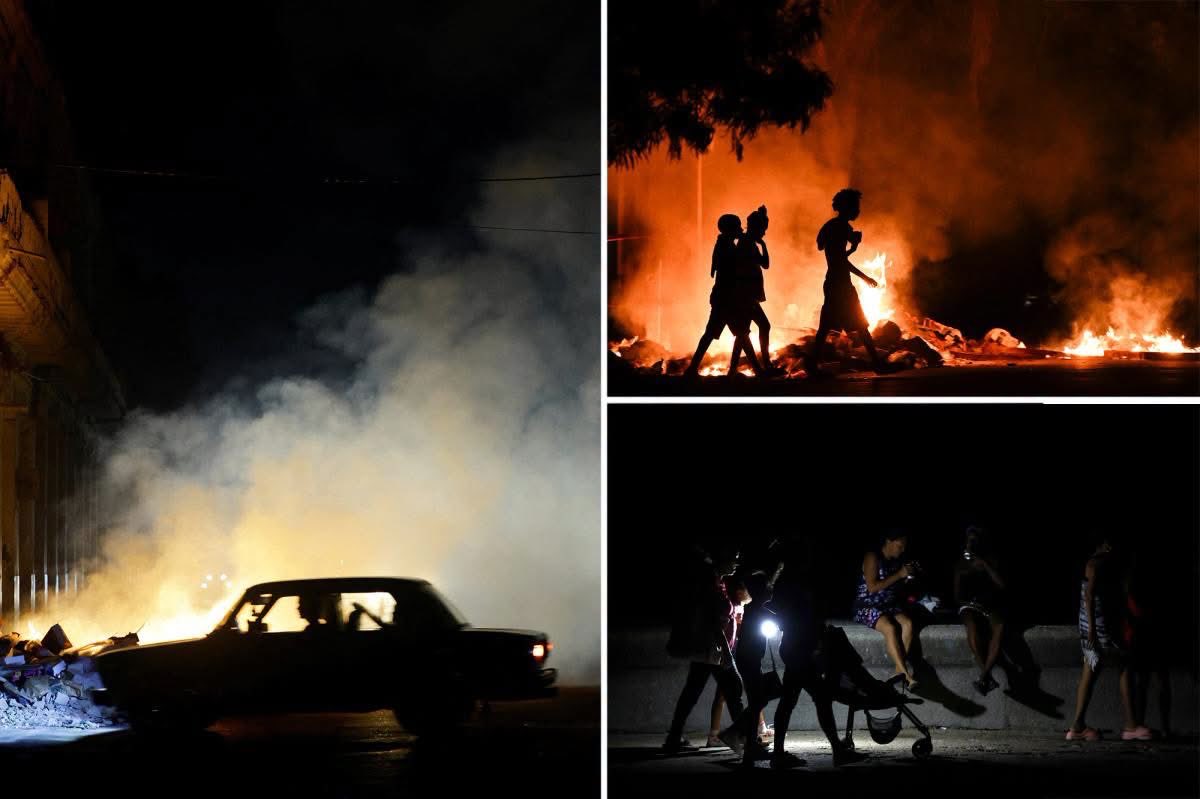
The US embargo cruelly cut off all fuel and humanitarian aid, power is out, leaving hospitals without electricity. Dialysis patients, babies in NICU, and others will die. Food is rotting. Water pumps stopped working. Systems are breaking down, strangled by the US embargo.
This is what the US embargo is intended to be. It is a form of collective punishment, a criminal act, and a blatant violation of international law.
We should be speaking out loudly in the international community: The US military action against Cuba is illegal and unacceptable.
Put an end to US impunity before it takes another sovereign country into chaos.
Needed now more than ever with 30% of nitrogen fertiliser production offline!
Food security is national security.
“Hungria's work has helped position Brazil as a global agricultural powerhouse, turning it into a leading soybean producer with high productivity and lower ecological footprint. Her low-cost, eco-friendly approach offers a scalable model for enhancing food security worldwide.”
Muammar Gaddafi gave up his nuclear program in 2003.
He negotiated. He complied. He handed over the centrifuges and the documentation and accepted international inspectors and did everything the West said a responsible leader should do.
He believed the deal.
He believed that compliance would produce security.
In 2011, NATO bombed his country for seven months.
Hillary Clinton, upon hearing of his death, after he had been captured, sodomized with a bayonet, and killed by a mob, appeared on camera and laughed:
"We came, we saw, he died."
Kim Jong-un watched this.
The Iranian leadership watched this.
Every government on Earth that was considering what compliance with Western demands actually produces watched this.
Gaddafi is the lesson.
Not the lesson the West wants to teach.
The lesson history actually teaches.
The empire does not reward disarmament.
It schedules it.
So many ordinary people have lost their livelihoods for merely speaking out against this.
Our media ignores these atrocities at best. But they mostly justify it. And of course, Americans, despite their increasingly dire financial situation, are forced to fund it.
But remember, don’t dare criticize Israel as your gas prices continue to skyrocket due to yet another war they wanted. That would be evil and “antisemitic.”
1. Scotland will never be free via Westminster agreement and that has been made crystal clear.
2. The constitutional arrangement between the nations of England and Scotland is a matter of international and not domestic law. That so many figures in the Scottish political establishment do not understand this by now is shocking.
3. Following the correct procedure for a question of international law is not a shortcut.
4. While it is frustrating to have our repeatedly provided, carefully reasoned responses to this blinkered argument completely ignored (as it is repeated ad nauseam in tones of convincing authority), it is both foolish and disrespectful to ignore figures of the calibre of Robert Black KC, Alfred de Zayas https://t.co/M3ZZb98Z8i… and
George Katrougalis https://t.co/J5IUwPPd8u….
5, This is fundamentally a question of international not domestic law. Once settled at international level, it *then* becomes a matter for political campaigning and persuasion of the Scottish people. Then and only then. It should always have been a domestic and political question but the English state has ensured that, while it convinces our gaslit population that Scottish independence is entirely a domestic affair, it had also ensured that its abuse of international law (misrepresenting the real character of the UK) would prevent Scotland liberating itself without its permission. Which means it will hold onto Scotland permanently unless we clear the legal impediment in international law.
6. If our campaign and arguments were ‘nonsense’ - as the parochial ‘experts’ within the British bubble would have you believe - we would have been so advised by at least one of the legal experts we have consulted. These include an advocate who has represented states on the question of external self-determination.
7. Liberation Scotland is making considerable progress towards clearing the roadblock under international law. Until then anyone peddling the myths of ‘persuasion’ as a weapon against the absolutism of English domestic law (which can make or unmake *any law whatever*) is fooling themselves and, far worse, fooling others.
8. Ignoring what the international community has to say about the international issue is not only ignorant it is the kind of blind stupidity which results from finding yourself perched on an ideological rock while the tide comes in. I suspect the inability to do as @rblackqc has done and say publicly ‘I was wrong’ has far more to do with this ‘argument’ than commitment to Scotland’s freedom.
We intend to invite Alfred and other international figures to address our next conference where I’m certain he will be ready to explain all of this as slowly and carefully as you might wish. Perhaps by then you will be willing to listen and we can all, finally get onto the same page?
ANTI-ZIONISM PROTECTED BY UK LAW
We have set a binding legal precedent!
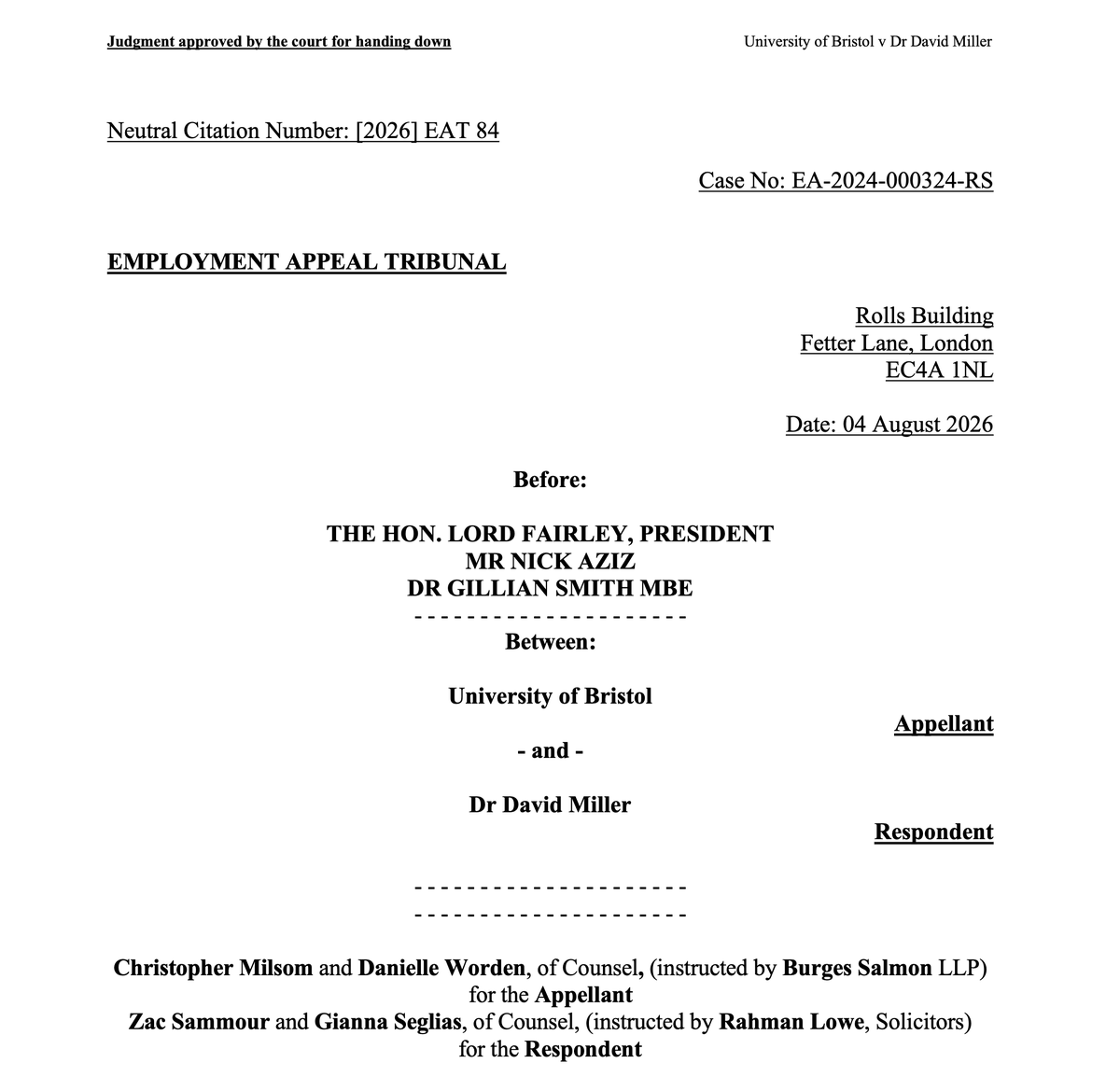
Anti-Zionism is now a protected philosophical belief under the Equality Act 2010. Full stop.
The Employment Appeal Tribunal finally handed down its judgment this morning. The University of Bristol’s attempt to overturn my 2024 Employment Tribunal victory has been comprehensively dismissed. We won on every single count.
This is a public humiliation for the genocidal Zionist regime, whose assets in Britain bullied the University into sacking me and then dragged them into this futile appeal. Their legal strategy has collapsed. Their pressure campaign has spectacularly backfired.
Thanks to everyone who believed in me and supported me. This is a victory for the whole anti-Zionist movement.
A full statement will follow shortly.
From the River to the Sea
Palestine will be free! 🇵🇸
#DismantleZionism
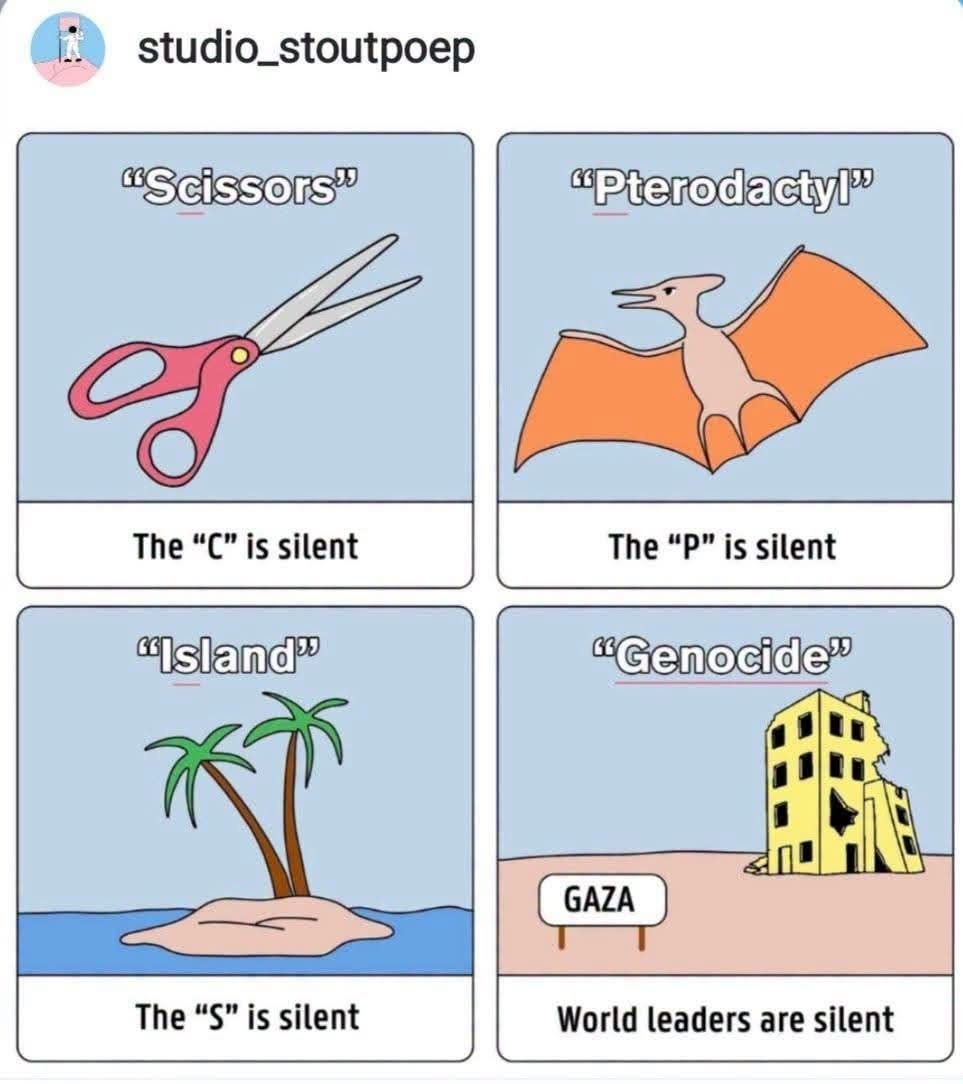
The Gaza Genocide HAS been proven
There is more evidence for it than any other genocide in history
It is proven no less than the Holocaust is proven
Those that deny either of these - the Holocaust or the Gaza Genocide - are the most despicable, vile, cruel people imaginable
The impact of the Independence:
These days, social media is full of videos:
A bridge bombed by the US… reopened to traffic in 3 days.
A petrochemical complex “destroyed”… back online in 3 months after replacing 75,000 tons of parts.
Power plants. Desalination plants. And the list goes on.
The reason is one word: "Independence".
Everything was built by these people. So they can rebuild it again. No foreign contractor. No delays. No excuses.
We are proud of this independence and of the young innovators who stand behind it.