We are rolling out 2fa-confirmation or email-re-login to many sensitive actions, such as reading environment variables, in the Vercel dashboard.
Consider enrolling a passkey today to make that a quick fingerprint sensor thing.
@dusangran vercel env pull will get fine-grained tokens instead. And we can rollout unstealable tokens (DPoP) to everyone which is not yet possible in browsers (but we are also shipping DBSC to supported browsers)
I've been cooking on this post for a bit, but with the cyber security events of this week I had to ship it:
Long-live static credentials must die. We never want to rotate API keys again.
Turns out only 8% of cloud and SaaS vendors support secure alternative. This is our call to action to change this AND our commitment to do our part:
- We are requiring vendors on our marketplace to support OIDC
- We shipped @shadcn components to make it easier to ship OIDC configuration
- We are expanding OIDC support on our own platform
The last generation got the web from HTTP to HTTPS. It is on us to move past API keys.
https://t.co/g3r5jk79U8
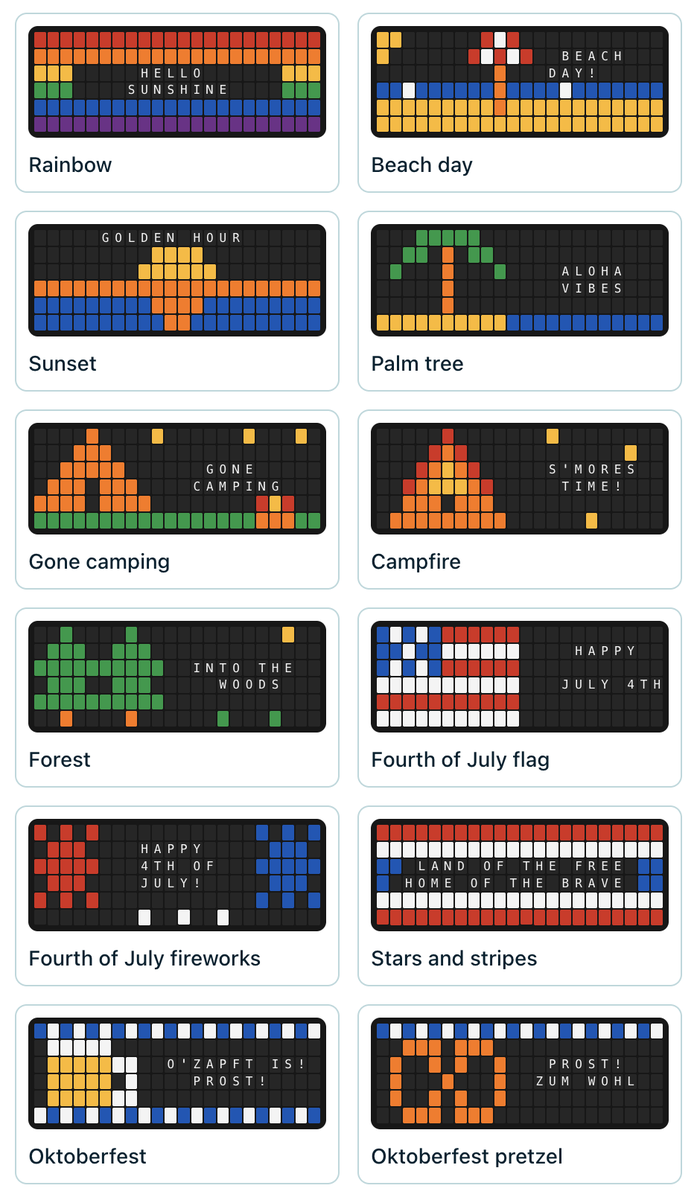
@dannysullivan@vestaboard I've only been using it through my own app since before vibe coding.
My favorite feature is a countdown to some event (like last day of school or the next vacation)
It's an amazing device.
The recent node.js RCE related to brotli compression is broader than just node.js and applies to essentially all software using brotli[1]
Vercel’s firewall protection against the attack is effective independent of the backend technology.
Python is vulnerable. However, unlike Node.js it requires using the pypi/brotli package explicitly[2].
It is likely that other software is impacted. Attacks can happen both through decoding incoming HTTP requests (which the Vercel Firewall protects against) as well as downloading attacker-controller payloads via HTTP.
[1] https://t.co/t0gPj5IqNf
[2] https://t.co/CMsgUoqAgG
Node.js Security Advisory: a high-severity RCE flaw in Node's Brotli decoder affects Node.js 22, 24, and 26.
Vercel WAF rules are live for every project and block known exploit patterns.
https://t.co/JtfEshHnOC
I think this is threat model: If I have root I can get more root.
Again, we are working on identity federation for deployments. It is not a released feature. It will work like the attached tweet.
Note, how
- The generated token is short-lived
- Can only deploy (not make more keys)
This is the same identity federation model as AWS, GCP, Azure. Feedback welcome
https://t.co/o1FmQ9X35n
@yordisprieto@vercel_dev Not sure I follow your assumption.
This is, how, it works:
- You allow-list your CI OIDC creds on the Vercel side to perform deployments
- You invoke the CLI to exchange your OIDC token against a very short-lived Vercel token that can deploy only
- You call `vercel deploy`