@LHEnergyInst I just finished up 3 days in DC talking to everyone I could about permitting reform. Senate seems very close to finalizing language. It's a comprehensive bill that ensures the US can meet the needs of a 21st-century energy system while protecting air, water, lands & wildlife.
3/3
Data centers have been turning to Chinese 100 MVA+ transformers to cut lead times and the U.S. shortage was already ~15% on power transformers.
We have significant HV capacity coming on line at Resolute Grid.
We are signing capacity reservations now.
https://t.co/sNjaCS9OHq
Today, we're announcing a long-term partnership with @centrus_energy to supply HALEU for our Kaleidos fleet, adding another domestic source of fuel to support our commercial and military deployments.
Scaling advanced nuclear takes fuel, manufacturing capacity, and a supplier ecosystem that can move with you. We have all three.
Learn more: https://t.co/2bJkM3fxNj
Regret the tone of my post on data centers yesterday.
What I should have said:
There were reasonable concerns about data centers 18ish months ago: water, taxes, jobs, electricity prices, the environment and what they would do to small towns. Well-structured data center projects have largely addressed these concerns today and we should be celebrating this.
On balance, data centers are awesome for America in every way.
On water: U.S. data centers use a fraction of what golf courses use. A lot of the numbers from 18 months ago were off by over 1000x. Newer data centers use closed-loop systems or recycled water. Should be required by every town approving a data center project.
On taxes: looking only at sales-tax exemptions, as Ronan Farrow did, is the wrong way to evaluate this. Data centers pay significant property taxes. Loudoun County, which is the wealthiest county in America, now collects on the order of $1 billion a year from data centers. In Quincy, WA, data centers are more than half the property-tax roll. Over time, property taxes can go to zero while government spending increases in these towns.
On jobs: this has been unambiguously awesome for blue collar Americans. Demand for electricians, plumbers, welders, HVAC techs, and contractors has gone vertical, and it is not a one-time construction job. These buildings get upgraded and expanded over time. That is why the building trades are fighting for them, and why some unions are now treating opposition to data centers as a reason not to endorse politicians.
On power: the original fear was that households would pay for the incremental electricity demand in the form of higher prices. That is why the ratepayer-protection deals and the new large-load tariffs exist. The right structure is: the data center brings or pays for new generation and signs a contract long enough that existing customers are protected. Where that is happening, utilities are cutting or freezing residential rates and saying so on the record. Where it is not, people are right to object. Electricity prices are going down *today* in a number of large states because of data centers.
On the environment: data centers overwhelming use natural gas today, which is the cleanest power source outside of nuclear, solar and wind. And the companies that are building the data centers are committed to carbon neutrality such that an equivalent amount of solar will likely be built. Maybe more importantly, the data centers need batteries to function effectively and these batteries can also sell energy back into the grid (which recently prevented blackouts in Texas). Over time, data centers will run on solar plus batteries.
On the towns: Poverty in Quincy, WA fell from 29% to 6%. Data center taxes paid for a new high school, a hospital, a library, police and fire stations. This is happening in many left for dead former mill and farm towns that had no other bidder for the land.
Data centers are actually reindustrializing parts of America and creating the kind of working-class jobs both parties have spent decades claiming to support. That should not be a partisan issue. Data centers can and should be awesome for America and they increasingly, overwhelmingly are. Supporting the outsourcing of data centers to China will likely age just as well as support for the outsourcing of high quality, blue collar manufacturing jobs to China has aged.
When the facts change, I change my mind. I hope that reasonable people who had good faith reasons to oppose data centers at least consider updating their beliefs given the change in the facts over the last 18 months. This really matters for America.
I will say I also think the idea of making data centers beautiful is a good one that has yet to be implemented. Data centers should be just as beautiful as Grand Central Station. We can learn a lot from the railroad buildout. Neoclassical revival ftw.
Might write up open-weight AI tomorrow as this is equally essential to America.
The @USArmy has awarded Radiant $750 million to deliver 15 Kaleidos microreactors through the Janus program, one of the largest contracts @DIU_x has issued to date.
The Army launched the Janus Program to strengthen the energy resilience of military installations and mission-critical infrastructure. Radiant was chosen after extensive evaluation of reactor design, technical maturity, manufacturing readiness, deployment strategy, and commercial viability. Radiant’s 15 microreactors will enable the Army to deploy nuclear power across multiple locations. In tandem, the operational data acquired through the Program will accelerate commercial deployments across a global footprint of commercial customers.
Learn more: https://t.co/NFxRI0Rv12
ONE MTU COMMITTED. EIGHT MTU POSSIBLE. NINE YEARS TO SCALE INTO IT.
FUEL SUPPLY AGREEMENT
· Standard Nuclear has executed a binding fuel supply agreement to deliver a minimum of one MTU and up to eight MTUs of TRISO fuel to Antares Nuclear through 2035.
· The fuel will power Antares microreactors for defense and space applications, aimed at mission critical roles for the Department of War and for commercial customers.
· Antares was founded in 2023, has raised over $600 million, brought its Mark-0 microreactor to initial criticality this year under the DOE Reactor Pilot Program, and expects first production deployments to U.S. military installations in 2028.
Standard Nuclear's own prospectus is direct about the model: customers procure the enriched uranium, Standard Nuclear converts it, pricing runs on a kgU basis, and the company takes no direct exposure to uranium price volatility. Antares handled its side of that months ago through its Urenco enrichment agreement and its DOE HALEU allocation, so this is the fabrication layer landing on feedstock already secured. The ceiling looks reachable rather than aspirational, since eight MTU spread through 2035 averages under one MTU a year against a combined initial run rate of 3.5 MTU across SN-0, SN-TN, SN-ID and the Framatome joint venture line.
With feedstock secured and fabrication contracted through 2035, what is actually left on the critical path?
$STDN
-Bill Hewlett, born in Michigan
-David Packard, born in Colorado
-Robert Noyce, born in Iowa
-Thomas Watson Jr., born in Ohio
Not only was Silicon Valley built by Americans, but it was built by “flyover country” Americans.
Top hard tech founders are quickly becoming capital stack nerds lol. Venture for risk. Debt for scale. Customer prepayments for working capital. Government dollars for infrastructure. Project finance for deployment. Once technical risk is dead & customers are buying, 20% dilution starts looking insanely expensive. Game is shifting from fundraising to capital formation. Sexiest round will eventually be the one where founders sell zero equity.
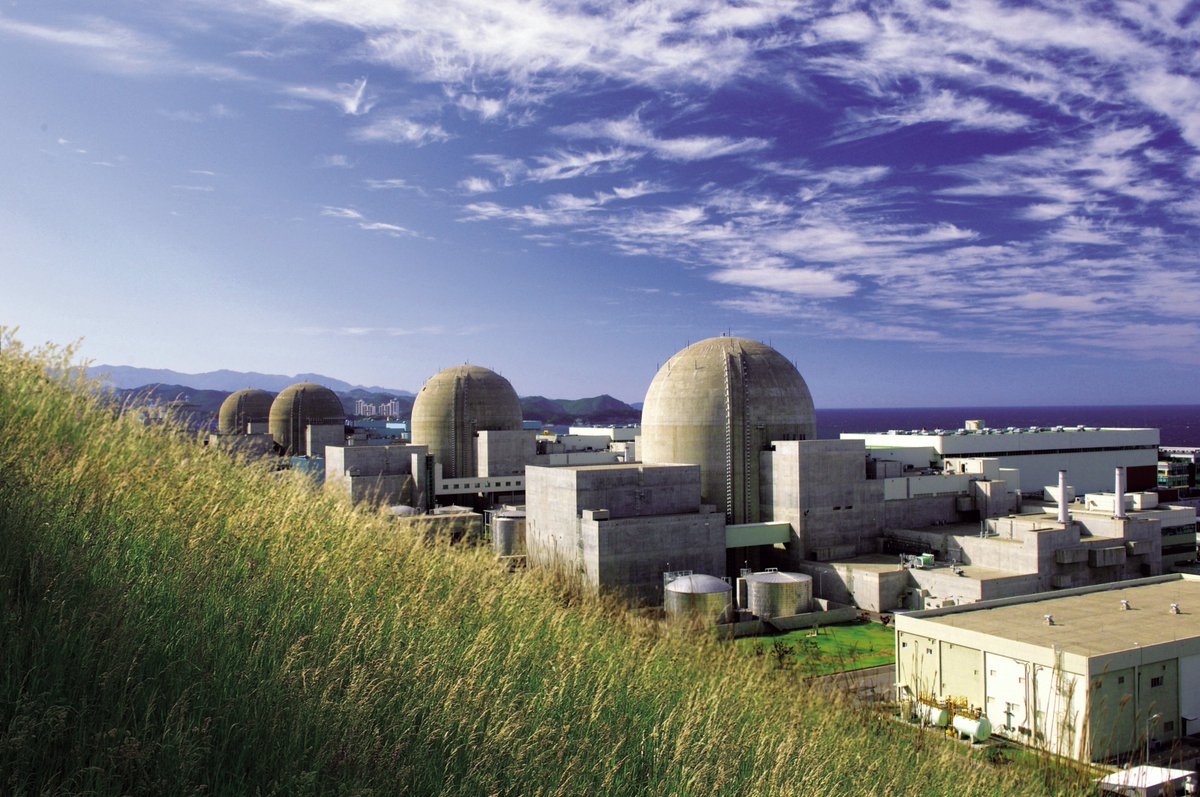
For an industrial nation to rise, enormous amounts of electricity have to come from somewhere. South Korea chose to split atoms.
On its eastern coast sits Hanul, the largest operating nuclear power site on Earth, eight reactors, 8.7 GW of capacity, and 63.9 TWh generated in the year 2025.
That is an average 7.3 GW flowing from one site every hour of the year, enough electricity to power roughly 9+ million average Western homes, and equivalent to about 10.7% of South Korea’s entire annual electricity generation.
Now to look at what makes that possible.
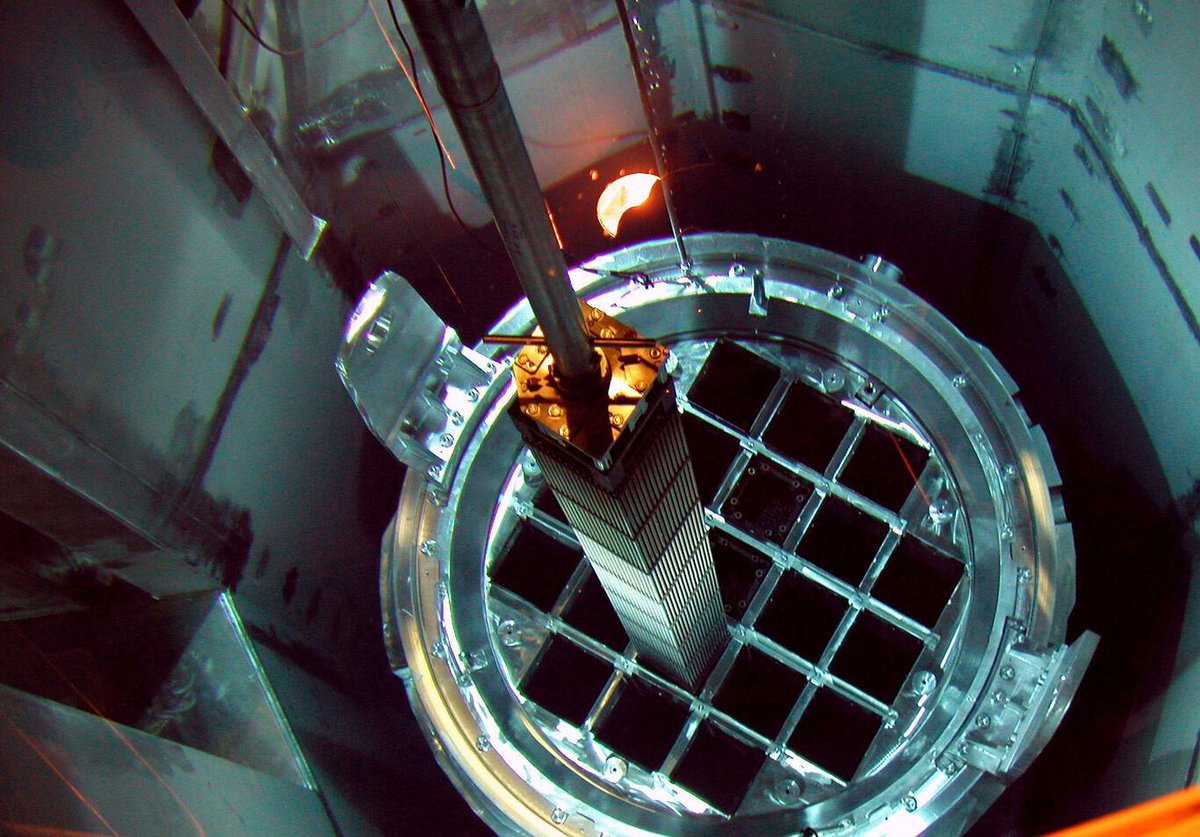
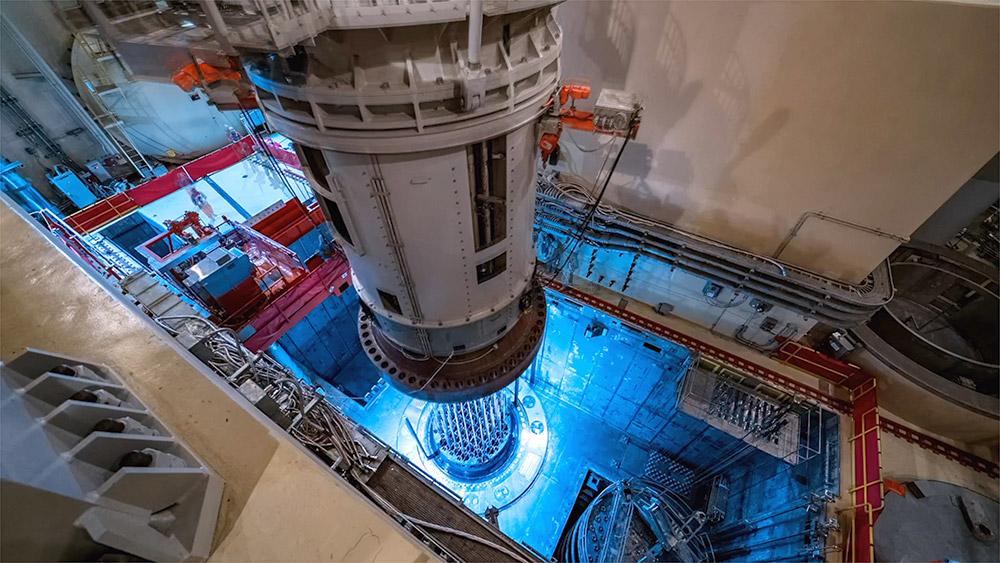
Hanul requires only around 133 tonnes of enriched uranium fuel annually, while roughly 8 tonnes of heavy nuclei actually undergo fission to release the energy behind those 63.9 TWh. Its reactors can produce nearly 25 GW of thermal power, with roughly 35% ultimately converted into electricity.
The difference becomes even more striking when you compare it with other ways of generating electricity.
Germany has roughly 40 GW of ground mounted solar spread across about 128,500 acres, generating around 40 Twh of annual electricity generation. Hanul complex produced almost 60% more electricity from barely 1,200 acres.
Germany’s ground mounted solar therefore occupies more than 100 times the land, yet generates substantially less electricity.
Britain’s entire wind fleet generated only 87.1 Twh in 2025 after decades of build out and more than $100+ billions of cumulative investments.
Hanul generated 63.9 TWh, roughly 73% as much from one complex representing around $20 billion of successive historical project investment.
In other words, roughly one fifth the capital produced electricity equivalent to nearly 73% of Britain’s entire wind fleet that year. That is how energy dense this nuclear power plant is.
And Hanul is not finished.
Two more 1,400 MW APR1400 reactors are under construction. If the existing fleet remains operational, the site could reach ten reactors and roughly 11.5 GW by 2033.
That is nuclear’s true scale advantage compounded, extraordinary energy density in the fuel, enormous generation concentrated onto very little land, and decades of electricity from long lived infrastructure.
When you stack those advantages together, a few square kilometres of power plant complex can begin producing electricity on the scale of entire national renewable energy fleets.
This photo essay showing what it takes to build a transformer is wild.
Transformers are the foundation of our electric grid, the clean energy transition, and the AI boom. But they are currently backlogged as long as 5 years.
These photos help you understand why. The largest transformers are massive. And they’re basically hand-crafted by skilled workers that train for years.
https://t.co/ORsrWrUjCL
Reigniting nuclear unlocks the greatest potential for the U.S. since, tbh, the early 70s when we shut it down with misguided policy and regulatory capture. 💥thank you @WhiteHouse@ENERGY
WHITE HOUSE JUST NAMED NUCLEAR ENERGY A NATIONAL SECURITY TECHNOLOGY. NOT CLEAN ENERGY. ITS OWN CATEGORY.
WHAT THE STRATEGY ACTUALLY SAYS
· The new National Security Science and Technology Strategy names nuclear energy as one of twelve key enabling technologies for U.S. battlefield dominance and power projection, listed alongside AI and autonomy, hypersonics, directed energy, and semiconductors.
· Appendix A updates the OSTP critical and emerging technologies list and gives nuclear energy a standalone entry with four subfields: advanced fission reactors, fusion energy, space nuclear power and propulsion systems, and high-temperature and radiation-resistant materials. The 2024 CET list carried no standalone nuclear category.
· Microgrids powered by advanced nuclear reactors are named as an energy resilience opportunity under the strategy's national resilience architecture, which prioritizes modernizing infrastructure critical to national security.
· Agencies are directed to prioritize Appendix A areas, nuclear among them, for early- and mid-stage public-private partnerships, and nuclear energy appears as a cooperation area under bilateral technology prosperity deals with allies.
OE READ: Moving nuclear out of a clean energy bucket and into its own security category changes who has to care about it. These lists feed downstream technology-specific strategies, R&D budget lines, and the scope of export controls and investment screening, so the taxonomy does more work than the four subfields under it. The argument here is power for the mission, made to a different set of appropriators than the decarbonization case ever reached.
Does a national security label move advanced nuclear faster than a climate label ever did?
$BWXT $OKLO $XE $STDN $CCJ