Grid upgrades take years. Industrial timelines can’t wait. At @critical_loop, we’re building a tightly integrated hardware and software platform to deliver reliable power in days or weeks. Latitude's coverage: https://t.co/jRWFJnWaLx
@critical_loop has raised a $26M Series A, bringing total funding to $49M.
Across the U.S., industrial growth is being slowed by time to power. We're building the platform to help customers get online in days or weeks.
Most energy systems are slowed down by fragmented controls and custom integrations.
We built the Critical Loop Controller to simplify that.
One compact device that manages batteries, generators, and distributed energy resources across off-grid and grid-tied systems, replacing multiple components and cutting deployment time.
Designed and delivered in under 3 months. Now moving into production.
Watch here: https://t.co/cs3PAiJZpF
⚡ We’ll be at @DISTRIBUTECH next week showing how Critical Loop is outpacing competitors in delivering fast, flexible, reliable power for utilities & commercial sites. From microgrids to DERs, we’re sparking the next wave of grid resiliency. #EnergyInnovation #DER #GridResiliency
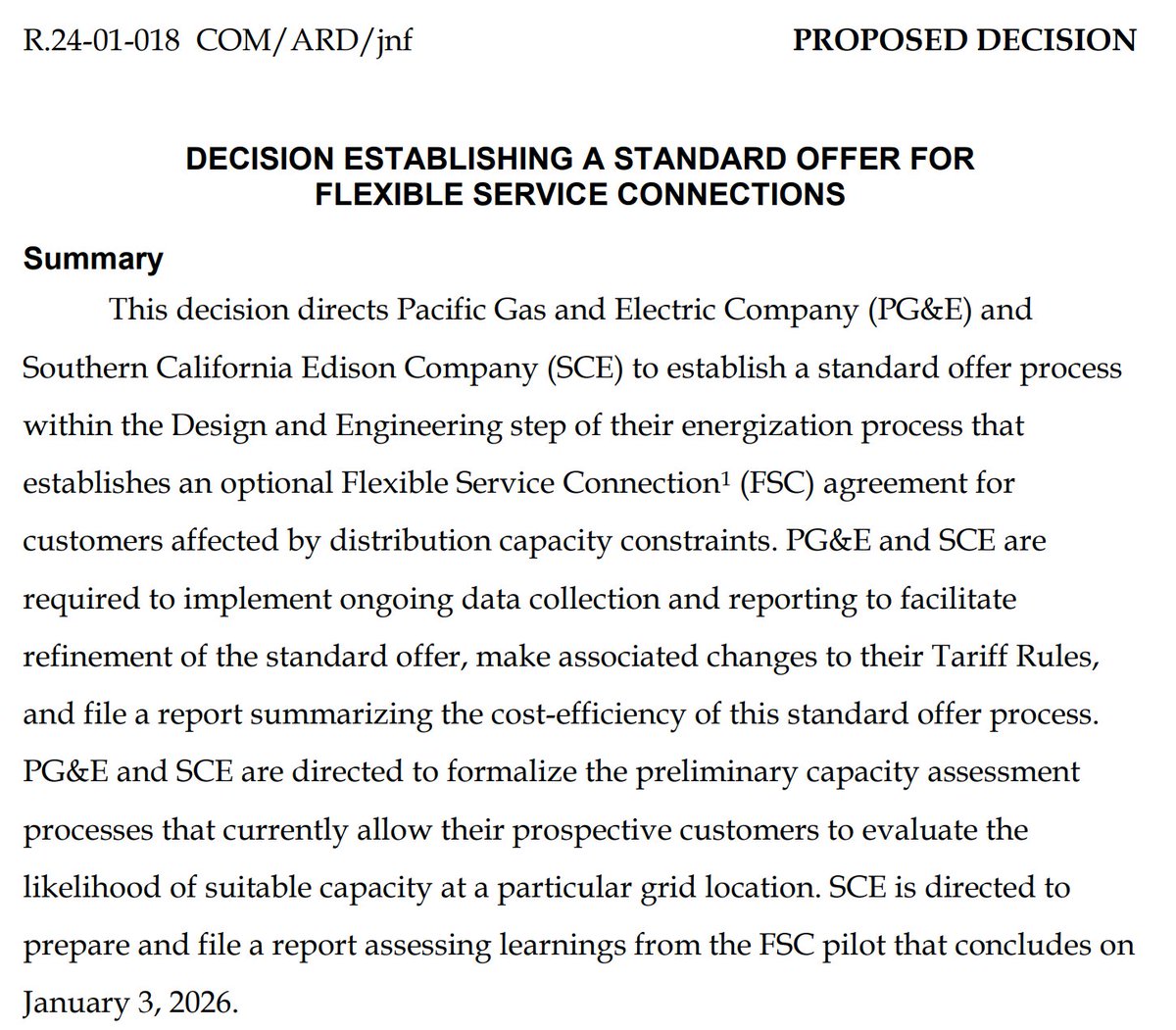
California is moving toward a landmark standardization of Flexible Service Connections (FSCs) for electrical loads.
A new proposed decision by @CaliforniaPUC's president, issued Dec. 24, directs PG&E and SCE to replace ad-hoc pilots with a formalized standard offer, enabling customers to bypass long grid upgrade delays by connecting via a temporary "bridge" that matches power usage to existing grid capacity using a Limited Load Profile (LLP).
Notably, all responding parties supported this step, including PG&E and SCE.
As the proposed decision explains, "The concept of Flexible Connection is allowing the customer to match their site’s power levels to the amount of power that the grid can safely handle. The customer does this by adhering to a profile of values generated by IOU engineers... it is likely that circumstances exist where electric capacity can safely be shared between more than one customer located upon shared infrastructure and that increased utilization of existing infrastructure that results from sharing capacity may be cost-efficient."
Also notable is how the evidentiary record concluded that no standardized process of this kind exists anywhere in the US (!): "Ultimately, parties are not aware of any standardized, scalable processes in the United States that California can look to for learnings."
The Commission is expected to vote on this proposal at its 2/5/26 meeting. If approved, PG&E and SCE will have 30 days to launch the program.
Proposed decision: https://t.co/wLvvJfPTwO
Docket: https://t.co/B6Mak6RUlD::::::
Today Critical Loop is announcing our work running the @SanDiegoAirport microgrid!
Our platform unifies solar + battery storage to cut peak demand, lower costs, and ease grid congestion
https://t.co/TVvcYWopDS
@ShanuMathew93 With no vacancy and under-powered co-lo where will low latency AI inference live? Co-lo provisions ~ 6KW per rack
@nvidia DGX high performance compute w.liquid cooling needs from 60-250KW per…@colovore
@JessePeltan For sure - huge unlock and think of the leverage from a C&I BESS system. Each site is basically a neighborhood (1100KW+ vs 11.5KW for Powerwall 3)
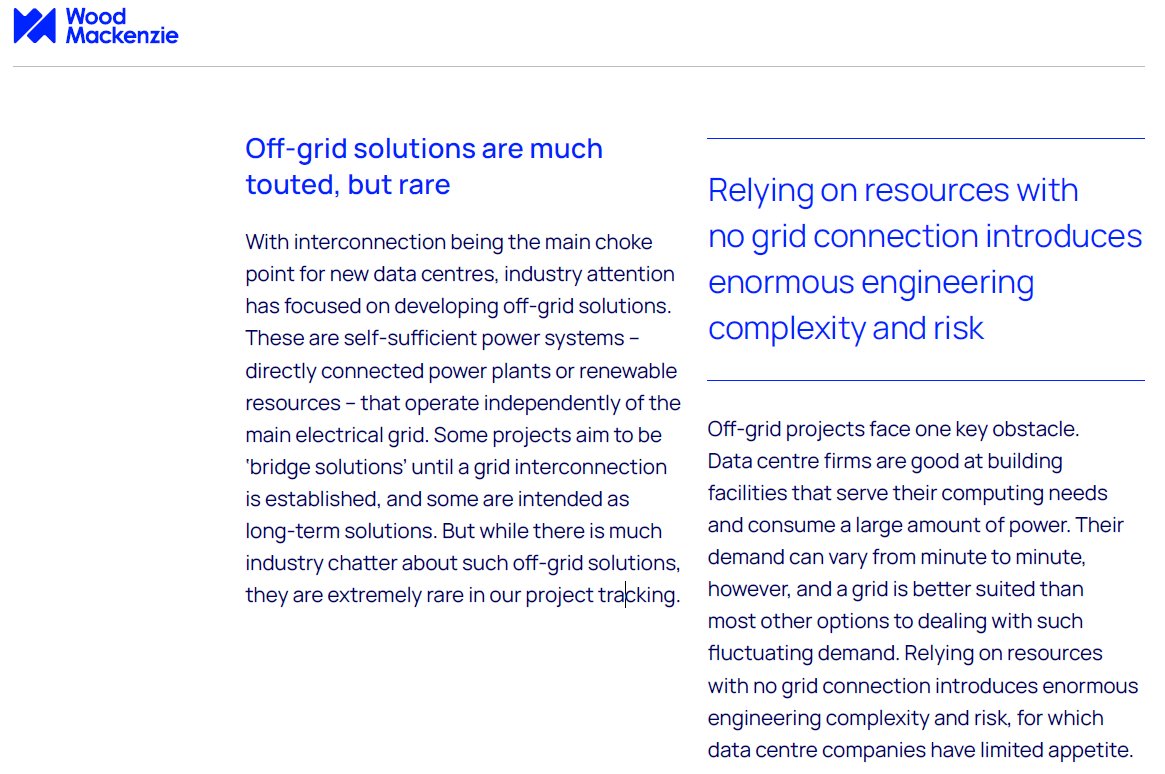
Interesting: Wood Mackenzie says lot of talk about off-grid solutions for data centers but in practice they are "extremely rare".
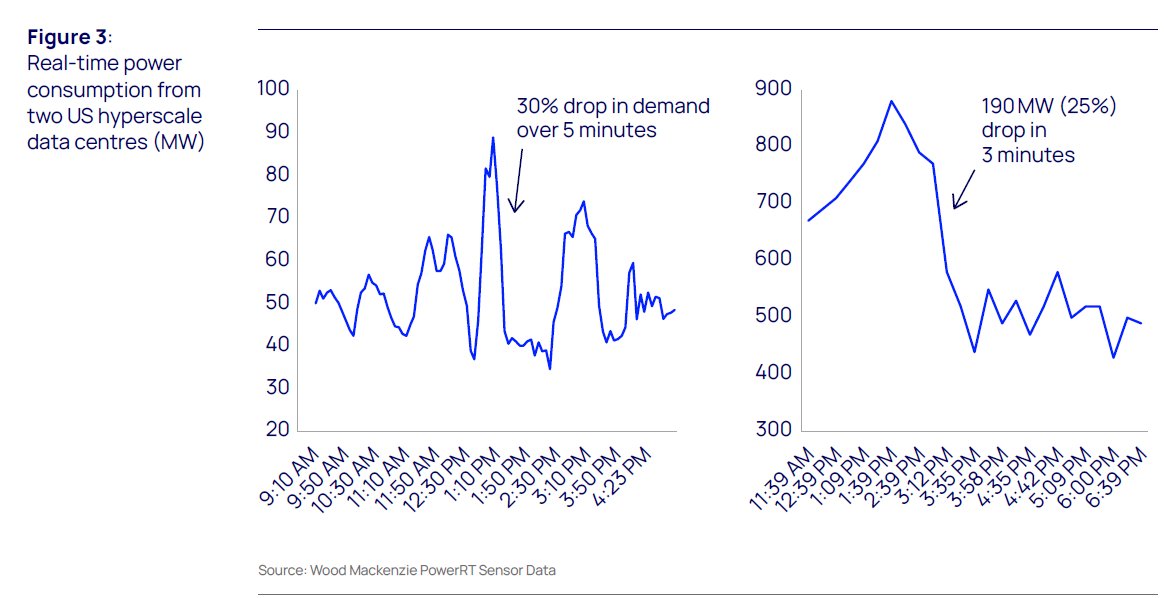
Biggest challenge: minute by minute fluctuations in demand. Load following without the grid introduces "enormous engineering complexity and risk for which data center companies have limited appetite".
@tylerhnorris@JigarShahDC@ArushiSF@Stphn_Lacey we agree! our bet is flex will be the law of the lines. Critical Loop is leading in flexible connection deployments in SoCal Edison - getting business online faster and getting more out of the grid